March 8 is one of those holidays that has accumulated so many layers of meaning that it is hard to separate the gesture from the intention. Flowers, greeting cards, drugstore promotions. But underneath — beneath the tulips and the mimosa — International Women's Day carries a question that is psychologically deeper than any card in an envelope: what is feminine strength, and why do so many people struggle to recognize it in themselves?
Carol Gilligan's In a Different Voice (1982) forced psychology to recalibrate. The dominant theories of moral development — particularly Lawrence Kohlberg's stage model — had been constructed from male experience and measured maturity on a scale where women systematically scored lower. Gilligan's point was not that women were "different." It was that the instruments were too narrow to capture the ethics of care — a morality built on relationship, empathy, and responsibility for others — as strength rather than deficit.
Nimm dir einen Moment, um über das Gelesene nachzudenken. Was passt zu deiner aktuellen Situation?
In short: Four tarot archetypes — the Empress, the High Priestess, Strength, and the Queen of Swords — represent distinct forms of feminine power that psychology validates: generative nurturing, intuitive knowledge, gentle courage, and intellectual clarity. A four-card "Feminine Power" spread helps you identify which aspect is active, which you suppress, what your intuition is saying, and how to integrate the two.
Four decades later, this distinction is still doing its work. Feminine strength continues to be confused with softness, and softness with a lack of power. Tarot, as a symbolic tool, offers something that the greeting-card culture of Women's Day does not: a mirror in which strength does not have to fit a single mold.
Four Archetypes of Feminine Power in Tarot
Jung wrote about the anima — the feminine side of the male psyche — but less discussed is how many tarot archetypes embody distinct aspects of feminine strength in psychologically precise form. Four ways that power manifests, each fully valid.
The Empress is generative strength. She creates, nourishes, sustains. In Erikson's developmental psychology, this aspect corresponds to generativity — the capacity to care for something larger than yourself. The Empress is not gentle because she is weak. She is gentle because she understands that certain things grow only when nurtured, not forced.
The High Priestess is intuitive knowledge. Gerd Gigerenzer, director of the Max Planck Institute, spent his career studying intuition as rapid, unconscious information processing — what he calls "gut feelings that should be taken seriously." The High Priestess represents knowledge that cannot justify itself logically but regularly proves accurate. How many times have you ignored your own gut feeling and regretted it?

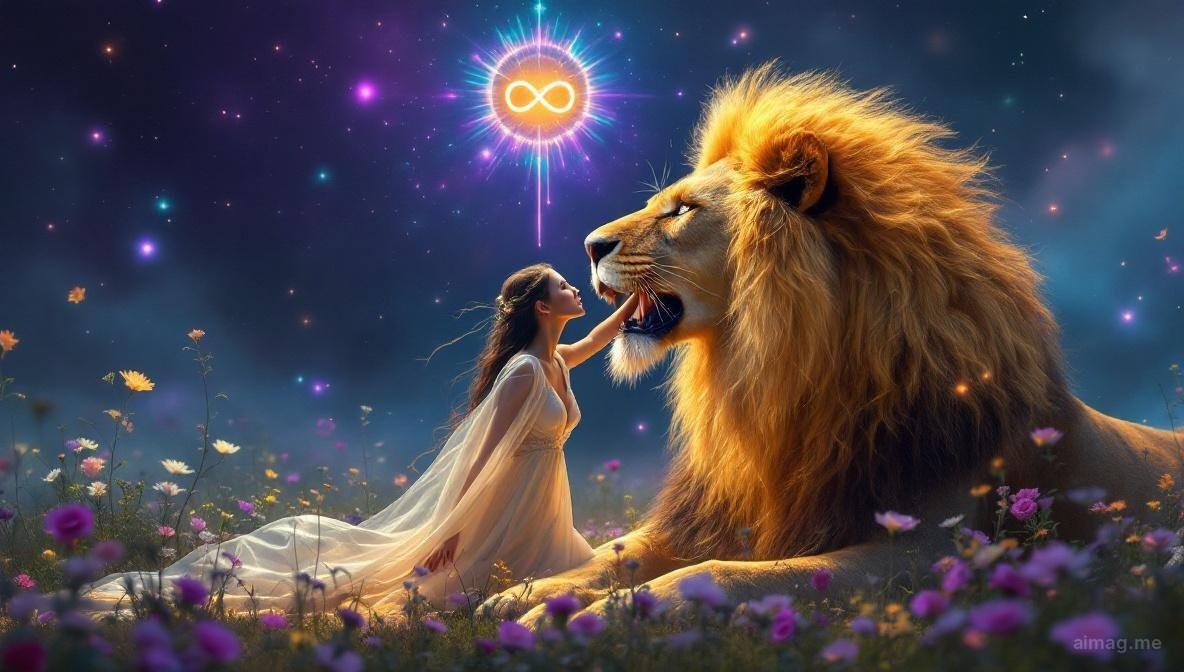
Strength — the eighth Major Arcana — is perhaps the most misunderstood archetype in tarot. A woman holds a lion not by muscular force but by gentleness. This is not passivity. It is courage that does not need aggression to be effective. Clarissa Pinkola Estes in Women Who Run with the Wolves calls this the "Wild Woman" — instinctive strength that is simultaneously tender and unyielding.
The Queen of Swords is intellectual clarity. She sees things as they are — not as she wishes they were — and speaks about them directly. In a culture that often rewards women for avoiding confrontation, the Queen of Swords says: your capacity for clear thinking and direct speech is not a lack of sensitivity. It is a form of power.
Why These Archetypes Exclude Each Other — and Why They Should Not
The problem is that most of us learned to identify with one aspect of femininity at the expense of the others. Someone raised in a family that valued rationality may have developed the Queen of Swords while suppressing the Empress. Someone who internalized the message that being "nice" matters most may have developed nurturing while repressing Strength's decisiveness.
Jung called this enantiodromia — the psyche's tendency to swing into opposites. Suppress one energy long enough and it returns in shadow form. Suppressed High Priestess becomes chronic decision paralysis. Suppressed Strength becomes flashes of anger you do not understand.
This makes Women's Day — read more deeply than a bouquet — an invitation to a psychological check-in: which aspects of my inner strength are active, and which am I suppressing?
The "Feminine Power" Spread — 4 Cards
This spread was designed as a self-reflection tool for Women's Day, but it works at any moment when you want to examine your relationship with your own strength. Four cards, four questions. You do not need a physical deck — an AI reading at aimag.me lets you ask these questions directly.
| Position | Question |
|---|---|
| 1 — Your strength | Which aspect of feminine power is most active in you right now? (Empress, High Priestess, Strength, or Queen of Swords?) |
| 2 — What you suppress | Which aspect have you repressed or kept in shadow? |
| 3 — Your intuition | What is your intuition trying to tell you right now? |
| 4 — Your next step | How can you integrate what you suppress with what is active? |
How to read it: Position 1 is not a personality test. It is a state reading — the card tells you which energy you are functioning in right now, not who you "are." The Empress here says your dominant strength is nurturing and creative. The High Priestess says your power operates through patience and observation. But you might just as easily pull The Chariot or The Magician — archetypes every person carries within.
Position 2 is harder. It points to the part of your power you have hidden. Strength here suggests you are suppressing your ability to set boundaries with gentleness. The Queen of Swords suggests you avoid speaking truth because you fear being perceived as "too sharp." The contrast between Positions 1 and 2 reveals the imbalance working in the background.
Position 3 is the High Priestess card in pure form. Tarot gives intuition a language — images, symbols, narratives — that the conscious mind does not produce but recognizes when it sees them. Whatever appears in this position, treat it not as advice from outside but as a signal from within that has finally found a way to express itself.
Position 4 is about integration. The point is not for the suppressed aspect to suddenly dominate your life. The point is to let it in. The Knight of Cups might suggest that integration requires emotional risk. The Ace of Swords might say the first step is naming directly what you have preferred not to see.
Strength as a Spectrum, Not a Binary
Estes wrote that the Wild Woman is not an "alter ego." She is a layer of the psyche that knows when to growl and when to comfort — the layer socialization teaches us to ignore but that never disappears.
Tarot does not give you permission to be strong. You do not need that permission. But it can be a mirror showing that the strength you already have takes more forms than you were told. The Empress is not less powerful than the Emperor. The High Priestess is not less wise than the Hierophant. Strength is not less effective than the Chariot. They are different — and that difference is richness, not hierarchy.
Gilligan ended In a Different Voice with: "The problem is not the difference but the interpretation of difference as deficit." That sentence describes every woman who has felt that her way of being strong is not enough because it does not look like someone else's. The cards will show you what your strength actually looks like — and ask whether you are ready to claim it.
Women's Day is not a day when someone gives you flowers. It is a day when you can ask yourself: which part of my power is waiting to be recognized? The "Feminine Power" spread will not answer for you. But it will lay the question out across four images you can sit with — images that may turn out to be more honest than any greeting card.
Try a free AI-powered reading at aimag.me/reading
Related Reading
- Shadow work: what your discomfort with a card reveals — why the cards that unsettle you point toward shadow material worth examining
- Archetypes you live by: Major Arcana as a map of the psyche — how the 22 cards map the stages of psychological development
- Spring equinox tarot spread — three layouts for the spring transition and planting intentions
- Tarot and mindfulness: cards as a presence practice — how tarot supports mindful self-reflection