Du suchst nicht jemanden, der dir sagt, dass alles gut wird. Das weißt du bereits — irgendwann, abstrakt, so wie alle wissen, dass Trauer vergänglich ist, weil es die Leute immer wieder sagen. Du suchst etwas anderes. Etwas, das sich schwerer benennen lässt. Eine Möglichkeit, mit dem Geschehenen zu sitzen, ohne darin zu versinken oder es zu überstürzen. Einen Rahmen für das Durcheinander von Gefühlen, das in keine der Beruhigungen deiner Freunde passt.
Deshalb greifen Menschen nach einer Trennung zum Tarot. Nicht weil sie glauben, ein Stapel illustrierter Kartonkarten könne vorhersagen, ob der Ex zurückkommt. Nicht weil sie verzweifelt oder naiv sind. Weil eine Trennung die Geschichte zerstört, in der man gelebt hat — und Tarot in seinem strukturellen Kern ein System ist, das aus gebrochenen Stücken neue Geschichten baut.
Dieser Artikel wird dir nicht helfen, deinen Ex zurückzubekommen. Er wird dir nicht sagen, was die andere Person denkt. Er tut etwas Nützlicheres: Er gibt dir drei konkrete Legeschemata für Herzschmerz an die Hand — verankert in Trauerpsychologie und Neurowissenschaft —, die das chaotische innere Erleben einer Trennung in etwas verwandeln, das du betrachten, untersuchen und zu deuten beginnen kannst. Keine Antworten. Struktur. Und die brauchst du, wenn sich alles formlos anfühlt.
Kurz gesagt: Tarot nach einer Trennung funktioniert als strukturierte Trauerarbeit, nicht als Prophezeiung. Drei Legeschemata — das Klarheits-Schema zum Verstehen des Geschehenen, das Trauerverarbeitungs-Schema zum Fühlen des Gemiedenen und das Vorwärts-Schema zum Entdecken der eigenen Entwicklung — verwandeln formlosen Herzschmerz in etwas Betrachtbares. Karten wie Der Turm, Drei der Schwerter, Tod und Der Stern spiegeln die archetypischen Phasen von Verlust und Erneuerung wider. Frag nach dir selbst, nicht nach deinem Ex.
Warum Trennungen uns nach Bedeutung suchen lassen
Eine Trennung ist nicht nur der Verlust eines Menschen. Es ist der Verlust einer Zukunft, die du bereits in Gedanken bewohnt hattest — die Reisen, die ihr machen wolltet, die Witze, die zu internen Referenzen geworden wären, die Version von dir selbst, die nur in Bezug auf diese Person existierte. William Worden, ein Psychologe, der Jahrzehnte lang Trauer erforschte, identifizierte vier "Traueraufgaben", die auf jeden bedeutenden Verlust zutreffen: die Realität des Verlusts akzeptieren, den Schmerz der Trauer verarbeiten, sich an eine Welt ohne diese Person anzupassen und eine bleibende Verbindung zur verlorenen Beziehung zu finden, während man voranschreitet. Bemerkenswert: Jede dieser Aufgaben erfordert aktives Engagement. Trauer passiert dir nicht einfach. Du tust sie.
Das Problem ist, dass das moderne Leben dir kaum Struktur dafür bietet. Es gibt kein Ritual, keine Zeremonie, keinen kulturell anerkannten Prozess, um eine Beziehung zu betrauern, die durch Entscheidung statt durch Tod endete. Man soll eine Weile traurig sein und dann darüber hinwegkommen — wobei der Zeitplan eher von der Geduld der Freunde als von den eigenen emotionalen Bedürfnissen bestimmt wird.
Tarot bietet das, was die Kultur nicht bietet: ein strukturiertes Ritual zur Trauerverarbeitung. Einen bestimmten Zeitpunkt, eine bestimmte Methode, ein bestimmtes Ergebnis. Es drängt dich nicht. Es sagt dir nicht, du sollst weitermachen. Es fordert dich auf hinzusehen — auf das Geschehene, auf das Gefühlte, auf das, wozu du vielleicht noch nicht bereit bist — und begegnet dir dort, wo du gerade im Prozess stehst.
Die Neurowissenschaft des Herzschmerzes
Hier ist etwas, das bestätigen könnte, was dein Körper schon weiß: Eine Trennung tut physisch weh. Das ist keine Metapher. Helen Fisher, eine biologische Anthropologin an der Rutgers University, führte fMRT-Studien an Menschen durch, die kürzlich ungewollte Trennungen erlebt hatten. Sie zeigte den Teilnehmern im Gehirnscanner Fotos ihrer ehemaligen Partner — und die aktivierten Regionen, der sekundäre somatosensorische Kortex und die dorsale hintere Insula, waren dieselben, die mit körperlichem Schmerz assoziiert werden. Das Gehirn unterschied nicht zwischen einem gebrochenen Arm und einem gebrochenen Herzen.
Fisher fand außerdem heraus, dass Ablehnung das ventrale Tegmentum und den Nucleus accumbens aktiviert — die Belohnungs- und Suchtschaltkreise des Gehirns. Dieselben neuronalen Systeme, die beim Substanzhunger feuern, feuern auch, wenn jemand Verlassenes nach dem ehemaligen Partner verlangt. Deshalb schaust du um 2 Uhr nachts auf ihre Social-Media-Profile, obwohl du weißt, dass es dich schlechter fühlen lässt. Das ist keine Schwäche. Das ist Neurochemie.
Dieses Verständnis nimmt die Scham weg. Du bist nicht erbärmlich, weil du so sehr leidest. Du erlebst eine neurologisch legitime Entzugsreaktion.
Und Tarot bietet eine Ersatzaktivität für dieses Suchverhalten. Statt nach dem Handy zu greifen, greifst du nach einem Kartenstapel. Statt das letzte Gespräch zum vierzigsten Mal zu rekapitulieren, legst du Karten aus und stellst eine andere Frage. Du lenkst das Verlangen des Gehirns nach Beschäftigung von einer Quelle, die dir schadet, zu einer, die dir tatsächlich helfen könnte.
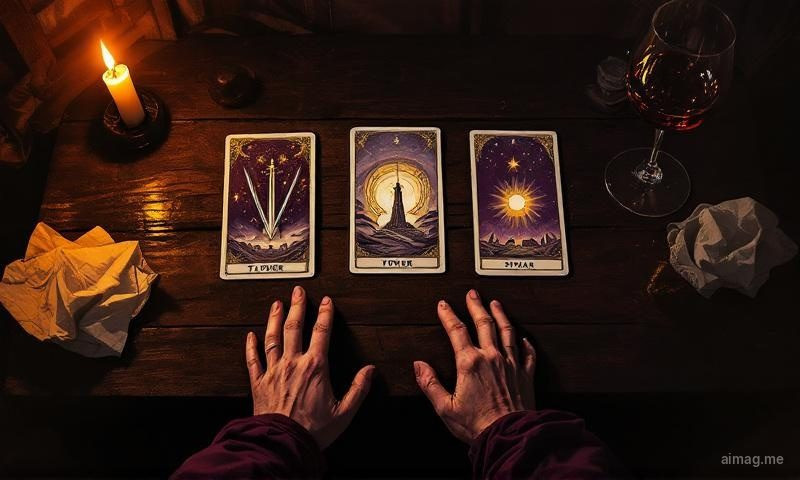
Karten, die du wahrscheinlich ziehen wirst (und warum sie nicht so schlimm sind, wie sie aussehen)
Wenn du nach einer Trennung anfängst, Tarot zu legen, werden bestimmte Karten mit verdächtiger Häufigkeit erscheinen. Das ist kein Zeichen, dass das Universum dich bestraft. Diese Karten repräsentieren die archetypischen Phasen der Erfahrung, die du gerade durchlebst — und weil diese Themen dein Bewusstsein dominieren, beeinflussen sie, wie du mischst und was du ziehst.
Der Turm
Der Turm zeigt ein vom Blitz getroffenes Bauwerk, fallende Figuren, aus der Spitze schlagende Flammen. Es sieht katastrophal aus. Und im Kontext einer Trennung fühlt es sich katastrophal an, weil es genau das spiegelt, was passiert ist — die plötzliche Zerstörung von etwas, das du für solide hieltest.
Aber schau, was wirklich abgebildet ist. Der Turm stand auf einem schmalen Fundament. Er war immer instabil. Der Blitz hat die Schwäche nicht erzeugt; er hat sie enthüllt. Im Kontext einer Trennung sagt Der Turm nicht "etwas Schreckliches ist dir passiert." Er sagt: "Eine Struktur, die nicht halten konnte, ist gefallen — und jetzt kannst du zum ersten Mal den Boden klar sehen." Das ist nicht angenehm. Aber es ist notwendig.
Die Drei der Schwerter
Die Drei der Schwerter ist die Karte, die Menschen in Beziehungslegungen am meisten fürchten — ein von drei Klingen durchbohrtes Herz vor sturmgrauem Himmel. Sichtbar gewordene Trauer. Sie nach einer Trennung zu ziehen fühlt sich redundant an, weil du ja bereits weißt, dass du gebrochen bist. Warum muss das Deck dich daran erinnern?
Weil Anerkennung die erste Traueraufgabe ist. Wordens erste Traueraufgabe — die Realität des Verlusts zu akzeptieren — klingt einfach, ist es aber alles andere als das. Der Geist schützt sich vor überwältigenden Schmerzen durch Verleugnung, Verharmlosung und Ablenkung. Die Drei der Schwerter zu ziehen bedeutet: Ja, das tut so weh, wie du denkst. Hör auf so zu tun, als ob nicht. Die Anerkennung selbst ist heilend — nicht weil sie den Schmerz stoppt, sondern weil sie das zusätzliche Leiden beendet, das entsteht, wenn man gegen den Schmerz ankämpft.
Der Tod
Der Tod ist paradoxerweise eine der hoffnungsvollsten Karten, die du nach einer Trennung ziehen kannst. Sie bedeutet nicht, dass etwas stirbt. Sie bedeutet, dass etwas bereits gestorben ist und eine Transformation im Gange ist. In der Rider-Waite-Smith-Illustration reitet eine Figur auf einem weißen Pferd durch ein Feld, auf dem ein König gefallen ist — aber in der Ferne geht die Sonne zwischen zwei Türmen auf. Das Ende ist nicht das Ende. Es ist der Raum zwischen dem, was war, und dem, was sein wird.
Das deckt sich direkt mit dem, was die Trauerforschung konstant gezeigt hat: Der Wendepunkt in der Trauer ist nicht der Moment, in dem der Schmerz nachlässt. Es ist der Moment, in dem der Trauernde den Verlust nicht mehr als Zerstörung, sondern als Übergang wahrnimmt — nicht "mir wurde etwas genommen", sondern "ich werde jemand, der ich vorher nicht war." Der Tod, die Karte, veranschaulicht genau diesen Wandel.
Der Stern
Wenn Der Stern in einem Trennungs-Legen erscheint, solltest du aufhorchen. Es ist die Karte, die im Großen Arcana nach dem Turm folgt — was bedeutet, dass sie das repräsentiert, was nach der Zerstörung kommt. Eine Figur kniet am Wasser und gießt aus zwei Gefäßen — eines in den Pool, eines auf die Erde. Erneuerung. Heilung. Die stille, unspektakuläre Arbeit, sich wieder aufzufüllen, nachdem man geleert wurde.
Der Stern verspricht nicht, dass morgen alles gut sein wird. Er verspricht, dass die Fähigkeit zur Hoffnung nicht zerstört wurde — dass auch nach dem Schlimmsten noch etwas in dir nach Erneuerung strebt. Den Stern zu ziehen ist keine Vorhersage. Es ist die Anerkennung einer Ressource, die du bereits besitzt.
Drei Legeschemata für Herzschmerz
Diese Legeschemata sind nicht für Wahrsagerei gedacht, sondern für strukturierte Selbstreflexion. Sie basieren auf Wordens Traueraufgaben, angepasst in ein Format, das Tarots symbolisches Vokabular nutzt, um innere Erfahrungen nach außen zu bringen und damit handhabbar zu machen.
Schema 1: Das Klarheits-Schema (5 Karten)
Dies ist für die Phase, in der du verstehen musst, was passiert ist — nicht um Schuld zuzuweisen, sondern um das vollständige Bild zu sehen statt der Fragmente, die dein Geist immer wieder abspielt.
| Position | Bedeutung |
|---|---|
| 1 | Was geschah — die Kerndynamik, die die Beziehung beendete |
| 2 | Mein Anteil — die Muster, die ich in diese Beziehung mitgebracht habe |
| 3 | Ihr Anteil — die Muster, die sie mitgebracht haben |
| 4 | Die Lektion — was diese Beziehung mir beibringen wollte |
| 5 | Was kommt — nicht wer, sondern wer ich gerade werde |
Wie du es liest: Position 1 geht nicht um Ereignisse. Es geht um die zugrundeliegende Dynamik unter den Streitereien, den Schweigen, dem letzten Gespräch. Positionen 2 und 3 gehen nicht um Schuld. Sie gehen um Ehrlichkeit — du hast Muster in diese Beziehung gebracht, die älter sind als sie, und das gilt genauso für die andere Person. Diese Muster klar zu sehen ist der Unterschied zwischen Wiederholen und Überwinden. Position 4 ist oft die unangenehmste Karte, weil Lektionen des Herzschmerzes selten angenehm anzusehen sind. Position 5 ist keine Vorhersage deines nächsten Partners. Sie ist ein Spiegel der Transformation, die bereits in dir stattfindet.
Wenn du einfachere Formate gewohnt bist, möchtest du vielleicht mit einem einfachen Drei-Karten-Schema beginnen, bevor du dieses versuchst. Das Klarheits-Schema erfordert ein Maß an ehrlicher Selbstprüfung, das überwältigend sein kann, wenn du noch in der akuten Phase der Trennung bist.
Schema 2: Das Trauerverarbeitungs-Schema (3 Karten)
Dies ist für die Phase, in der Verstehen nicht Priorität hat — Fühlen schon. Basiert auf der klinischen Beobachtung, dass Trauer kompliziert wird, wenn Emotionen vermieden statt erlebt werden.
| Position | Bedeutung |
|---|---|
| 1 | Was ich fühle — die Emotion, die gerade am stärksten präsent ist |
| 2 | Was ich meide — die Emotion, die ich mir noch nicht zu fühlen erlaubt habe |
| 3 | Was ich brauche — die Unterstützung, Handlung oder Erlaubnis, die ich mir nicht gebe |
Wie du es liest: Position 1 ist meistens leicht zu erkennen — du weißt, dass du wütend oder traurig oder erleichtert bist, oder alles drei gleichzeitig. Position 2 ist die Karte, die am meisten zählt. Vermiedene Emotionen verschwinden nicht. Sie gehen in den Untergrund und tauchen als Schlaflosigkeit, Reizbarkeit oder zwanghafter Drang wieder auf, deinen Ex um Mitternacht anzuschreiben. Position 3 ist die Karte, bei der du am längsten verweilen solltest. Was brauchst du, das du dir nicht gibst? Die Erlaubnis zu trauern? Die Erlaubnis, wütend zu sein? Die Erlaubnis, Erleichterung zu fühlen, ohne Schuldgefühle?
Schema 3: Das Vorwärts-Schema (4 Karten)
Das ist nicht für Tag eins. Das ist für die Phase, wenn der schärfste Schmerz nachlässt und du erkennst, dass diese Erfahrung dich verändert hat — und du herausfinden musst, wer du jetzt bist.
| Position | Bedeutung |
|---|---|
| 1 | Wer ich war — die Person, die ich in dieser Beziehung war |
| 2 | Wer ich werde — die Person, die aus dem Verlust hervorgeht |
| 3 | Was loszulassen ist — die Anhaftung, Überzeugung oder Gewohnheit, die ich loslassen muss |
| 4 | Der erste Schritt — eine konkrete Handlung in Richtung des nächsten Kapitels |
Wie du es liest: Position 1 ist nicht nostalgisch. Sie ist diagnostisch — welche Rolle hast du gespielt, und war das wirklich du, oder eine Anpassung? Position 2 ist oft überraschend; die Person, die aus einer Trennung hervorgeht, ist selten die, die du erwartet hättest. Position 3 ist die schwierigste Karte zu ehren, weil Loslassen bedeutet, vollständig zu akzeptieren, dass das Verlorene nicht zurückkommt. Position 4 ist die freundlichste — sie verlangt nicht, dass du alles verstanden hast. Sie fragt nach einem einzigen Schritt. Nur einem.
Für eine tiefere Erkundung von Beziehungsdynamiken im Tarot bieten das Beziehungs-Schema und das Liebes-Schema ergänzende Perspektiven — obwohl du vielleicht warten möchtest, bis die Trauer sich gesetzt hat, bevor du diese erkundest.

Wie du während des Herzschmerzes für dich selbst liegst (ohne zu spiralisieren)
Tarot für dich selbst nach einer Trennung zu legen birgt ein spezifisches Risiko: Du wirst versucht sein, dieselbe Frage immer wieder zu stellen, bis du die Antwort bekommst, die du willst. "Kommen sie zurück?" Ziehen. Mischen. Nochmal ziehen. Immer wieder, bis die Karten jede Bedeutung verlieren und du das obsessive Denken verstärkst, das du eigentlich unterbrechen wolltest.
Regeln für das Legen bei Herzschmerz:
Frag nach dir, nicht nach ihnen. "Was muss ich über diesen Verlust verstehen?" ist eine nützliche Frage. "Was fühlen sie gerade?" ist es nicht — denn die Karten können dir nicht sagen, was jemand anderes fühlt, und die Antworten, die du generierst, werden Projektionen dessen sein, was du hoffst oder fürchtest.
Eine Lesung pro Frage, pro Tag. Wenn du Karten ziehst und die Antwort unangenehm ist, sitz mit dem Unbehagen. Misch nicht neu. Das Unbehagen ist Information. Die Karte, die dich zusammenzucken lässt, zeigt dir etwas Wahres.
Schreib es auf. Forschungen zu expressivem Schreiben — die gezeigt haben, dass das Verarbeiten emotionaler Erfahrungen durch Schreiben messbare Verbesserungen des psychischen Wohlbefindens bewirkt — gelten direkt hier. Zieh deine Karten, dann schreibe ein Journal über das, was du siehst. Das Schreiben leistet die integrierende Arbeit, die stille Kontemplation allein nicht kann.
Hör auf zu legen, wenn der Schmerz zu akut ist. Wenn du dich in der Phase der Trauer befindest, in der alles roh und unhandhabbar ist, leg die Karten weg. Tarot ist ein Werkzeug zur Trauerverarbeitung, kein Ersatz für die Unterstützung eines Freundes, Therapeuten oder einer Krisenhotline. Die Karten werden noch da sein, wenn du bereit bist.
Die eigentliche Funktion von Tarot nach einer Trennung
Tarot nach einer Trennung dient nicht dazu, Versöhnung vorherzusagen, zu diagnostizieren, was dein Ex denkt, oder die Geschichte zu bestätigen, die du dir bereits erzählt hast. Es dient der strukturierten Trauerverarbeitung — der chaotischen Masse von Gefühlen, die eine Trennung produziert, eine Form zu geben, die du untersuchen kannst. Die obigen Schemata sind Gerüste, keine Wahrsagerei. Sie verwandeln die formlose Erfahrung des Verlusts in etwas, das du auf Abstand halten und klar betrachten kannst.
Das ist es, was Worden meinte, als er Trauern als aktive Arbeit beschrieb. Man heilt nicht, indem man darauf wartet, dass die Zeit vergeht. Man heilt, indem man sich mit dem Verlust auseinandersetzt — fühlt, was man fühlt, versteht, was passiert ist, loslässt, was losgelassen werden muss, und die ersten Schritte in Richtung der Person unternimmt, die man als nächstes wird.
Die Karten wissen nicht, wer du wirst. Du auch nicht. Aber der Akt, sich hinzusetzen, ein Schema auszulegen und sich selbst ehrliche Fragen in den Nachwehen des Herzschmerzes zu stellen — dieser Akt, über Tage und Wochen wiederholt, baut das Selbstwissen auf, aus dem die nächste Version von dir entstehen wird.
Häufig gestellte Fragen
Ist es okay, direkt nach einer Trennung Tarot für sich selbst zu legen?
Ja, mit einer Einschränkung. Wenn du dich den Karten mit echter Neugier auf das, was du fühlst, nähern kannst — statt mit einem verzweifelten Bedürfnis nach einer bestimmten Antwort —, kann Tarot von Tag eins an ein wirksames Werkzeug zur Trauerverarbeitung sein. Wenn du dich dabei ertappst, bei jedem Ziehen "kommen sie zurück?" zu fragen, warte eine Woche und versuche es erneut mit dem Trauerverarbeitungs-Schema, das darauf ausgelegt ist, die Aufmerksamkeit von ihnen auf dich zu lenken.
Was, wenn ich immer wieder dieselbe Karte ziehe?
Wiederholte Karten sind keine Fehlfunktion. Sie weisen darauf hin, dass das Thema dieser Karte das zentrale Problem ist, das du noch nicht vollständig verarbeitet hast. Wenn der Fünf der Kelche immer wieder erscheint, gibt es Trauer, die gefühlt statt verwaltet werden muss. Wenn der Turm immer wieder auftaucht, bist du möglicherweise noch in der Schockphase und hast das volle Ausmaß der Veränderung noch nicht akzeptiert. Sitz bei der wiederkehrenden Karte. Schreibe darüber ein Journal. Frag sie: Was zeigst du mir, wozu ich noch nicht bereit war hinzusehen?
Kann Tarot mir sagen, ob mein Ex zurückkommt?
Nein. Und jeder Leser — menschlich oder KI —, der das Gegenteil behauptet, ist nicht ehrlich mit dir. Tarot zeigt deinen inneren Zustand, deine Muster und die emotionalen Dynamiken, die im Spiel sind. Es sagt nicht die Entscheidungen einer anderen Person voraus. Die nützlichere Frage ist nicht "kommen sie zurück?", sondern "was lerne ich daraus, und wer werde ich deswegen?"
Wann sollte ich aufhören, Tarot zur Trauerverarbeitung zu nutzen, und einen Therapeuten aufsuchen?
Wenn deine Trauer die alltägliche Funktionsfähigkeit beeinträchtigt — du kannst wochenlang nicht essen, schlafen, arbeiten oder grundlegende Selbstfürsorge aufrechterhalten —, ist das ein Zeichen, dass professionelle Unterstützung hilfreich wäre. Tarot ist ein Werkzeug zur Selbstreflexion, keine therapeutische Intervention. Es funktioniert am besten neben, nicht anstelle von, der Unterstützung eines ausgebildeten Fachmanns. Es ist keine Schwäche, beides zu brauchen.
Eine Trennung nimmt dir die Zukunft, die du dir vorgestellt hast, und reicht dir eine, um die du nicht gebeten hast. Die Karten können dir nicht zurückgeben, was du verloren hast. Aber sie können dir helfen, mitten im Sturm klar zu sehen, das zu fühlen, was du fühlst, ohne darin zu ertrinken — und Schritt für Schritt, Schema für Schema, ehrliche Frage für ehrliche Frage, die Arbeit zu beginnen, eine Geschichte aufzubauen, in der du wieder leben kannst.
Probiere eine kostenlose KI-gestützte Lesung auf aimag.me/reading