Astrologie und Tarot sind nicht dasselbe System. Sie teilen eine gemeinsame Wurzel — beide stammen aus der westlichen esoterischen Tradition — aber sie funktionieren verschieden. Die Astrologie kartiert den Himmel in einem bestimmten Moment und liest das Muster. Das Tarot zieht Karten aus einem gemischten Deck und liest das Muster. Das eine ist kosmisch und strukturell. Das andere ist unmittelbar und intuitiv. Zusammen entsteht etwas, das keines der beiden Systeme allein leistet: eine Lesung, die architektonisch präzise und psychologisch lebendig ist.
Die wesentliche Erkenntnis — und Liz Greene hat das in The Astrology of Fate besser formuliert als die meisten anderen — lautet: Astrologische Muster sind keine äußeren Kräfte, die auf dich einwirken. Sie sind Spiegel innerer psychologischer Strukturen. Dein Geburtshoroskop verursacht nicht deine Persönlichkeit. Es beschreibt sie, so wie eine Karte das Gelände beschreibt, ohne die Berge zu erschaffen. Dieses Umdeuten ist es, was Tierkreis-Tarot-Spreads wirklich nützlich macht — statt bloß dekorativ.
Ein astrologisches Haus ist kein kosmischer Aktenschrank, in dem das Schicksal dein Liebesleben oder deine Karriere aufbewahrt. Es ist ein Objektiv — eine Möglichkeit, die Aufmerksamkeit auf eine bestimmte Dimension der Erfahrung zu lenken. Legst du eine Tarotkarte auf eine Hausposition, verbindest du die strukturelle Präzision der Astrologie mit der psychologischen Unmittelbarkeit des Tarots. Das Haus sagt dir, wohin du schaust. Die Karte sagt dir, was dort ist.
Kurz gesagt: Tierkreis-Tarot-Spreads verbinden die strukturelle Präzision der Astrologie mit der psychologischen Unmittelbarkeit des Tarots. Drei Layouts decken einen vollständigen Zwölf-Häuser-Lebensscan ab, einen Drei-Karten-Check für Sonne-Mond-Aszendent sowie eine Vier-Karten-Lesung zur saisonalen Ausrichtung. Kein Wissen über das Geburtshoroskop ist erforderlich; die astrologischen Häuser liefern lediglich fokussierte Linsen dafür, was jede Karte offenbart.
Spread 1: Der Zwölf-Häuser-Spread (12 Karten)
Der große. Zwölf Karten, eine für jedes astrologische Haus, die jeden wichtigen Lebensbereich in einer einzigen Lesung abdecken. Umfassend, zeitaufwendig — und gut gemacht einer der aufschlussreichsten Spreads im Tarot-Kanon.
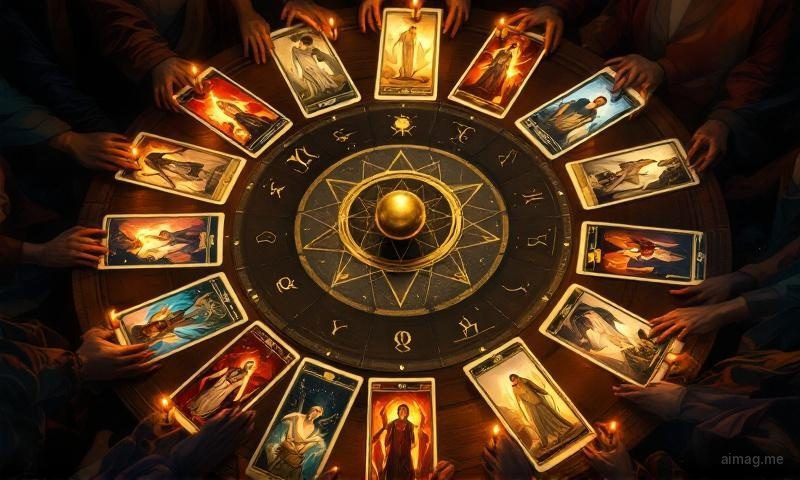
Lege zwölf Karten in einem Kreis ab, gegen den Uhrzeigersinn, beginnend bei der 9-Uhr-Position (das spiegelt das traditionelle astrologische Chartrad). Jede Karte liegt auf einem Haus.
| Position | Haus | Lebensbereich |
|---|---|---|
| 1 | 1. Haus | Identität — wie du dich präsentierst und wie du dich in deiner Haut fühlst |
| 2 | 2. Haus | Ressourcen — Geld, Besitz, Selbstwertgefühl |
| 3 | 3. Haus | Kommunikation — alltägliche Interaktionen, Geschwister, Lernen |
| 4 | 4. Haus | Zuhause — Familie, Wurzeln, emotionales Fundament |
| 5 | 5. Haus | Kreativität — Genuss, Romantik, Selbstausdruck, Kinder |
| 6 | 6. Haus | Gesundheit — Alltagsroutinen, Arbeitsgewohnheiten, körperliches Wohlbefinden |
| 7 | 7. Haus | Partnerschaften — Ehe, Geschäftspartner, verbindliche Beziehungen |
| 8 | 8. Haus | Transformation — gemeinsame Ressourcen, Intimität, Tod und Wiedergeburt |
| 9 | 9. Haus | Philosophie — Reisen, höhere Bildung, Überzeugungen, Sinn |
| 10 | 10. Haus | Karriere — öffentliches Ansehen, Errungenschaften, Autorität |
| 11 | 11. Haus | Gemeinschaft — Freundschaften, Gruppen, Hoffnungen für die Zukunft |
| 12 | 12. Haus | Das Unbewusste — verborgene Muster, Isolation, geistiges Leben |
So liest du ihn: Zwölf Karten sind viel. Die Versuchung besteht darin, jedes Haus einzeln zu lesen, als wäre der Spread zwölf Mini-Lesungen in einem Kreis. Widerstehe dem. Der Kreis ist der Punkt. Das ist ein Porträt deines gesamten Lebens in diesem Moment, und die Beziehungen zwischen den Positionen wiegen genauso schwer wie die einzelnen Karten.
Beginne mit den Achsenpaaren:
- 1. und 7. Haus (Selbst vs. Partnerschaft). Zeigt das 1. Haus The Emperor und das 7. Haus die Zwei der Kelche, bist du gerade jemand, dessen starke unabhängige Identität durch eine echte Partnerschaft gemildert wird. Zeigen beide schwierige Karten, stehen dein Selbstverständnis und deine Beziehungen gleichzeitig unter Druck.
- 4. und 10. Haus (Zuhause vs. Karriere). Die klassische Spannung. Eine warme, nährende Karte beim Zuhause gepaart mit einer harten Karte bei der Karriere — oder umgekehrt — erzählt eine Geschichte, die die meisten Erwachsenen sofort wiedererkennen.
- 2. und 8. Haus (Persönliche Ressourcen vs. Geteilte Ressourcen). Diese Achse offenbart gleichzeitig deine finanzielle und intime Gesundheit. Das Wheel of Fortune auf dem 8. Haus bedeutet, dass geteilte Angelegenheiten — gemeinsame Konten, Intimität, Erbschaft — im Fluss sind. Nichts ist geklärt. Alles dreht sich.
Dann such nach Mustern im Rad:
- Häufung von Großen Arkana. Welche Häuser haben Große Arkana gezogen? Dort sitzt gerade die bedeutendste Energie. Drei Große Arkana in der unteren Hälfte (Häuser 1–6: persönliches, inneres Leben) und keine in der oberen (Häuser 7–12: soziales, äußeres Leben) deutet darauf hin, dass deine innere Welt gerade aktiver und folgenreicher ist als dein öffentliches Leben.
- Farben-Dominanz. Ein von Schwertern dominiertes Rad bedeutet, dass dein Leben gerade in erster Linie mental ist — Denken, Entscheiden, Kommunizieren, Grübeln. Ein von Kelchen gefülltes Rad bedeutet, dass alles emotional aufgeladen ist.
- Leer wirkende Karten. Die Zwei der Schwerter oder die Vier der Kelche in einem Haus deutet auf Stagnation oder Vermeidung in diesem Bereich hin. Keine Krise — Vernachlässigung.
Das 12. Haus: Die Karte, die die meisten überspringen
Das 12. Haus — das Unbewusste, das Verborgene, das Spirituelle — ist die Position, bei der die meisten Menschen kurz hinschauen und dann weitergehen. Es ist abstrakt. Ihm fehlt die unmittelbare Wucht von Karriere oder Liebe. In der Praxis ist die 12.-Haus-Karte aber oft die wichtigste des gesamten Spreads, weil sie zeigt, was du über dich selbst nicht sehen kannst.
Es gibt einen hartnäckigen blinden Fleck im modernen Leben: Wir optimieren für Information und Produktivität, während wir die tiefere, oft irrationale Schicht der Erfahrung ignorieren, die dem Leben Textur und Bedeutung verleiht. Das 12. Haus ist der Ort, an dem diese Schicht in einem Tierkreis-Spread lebt. Es zeigt deine blinden Flecken, dein Schattenmaterial — die Dinge, die unterhalb deines Bewusstseins operieren und dein Verhalten ohne dein Einverständnis formen.
The Moon im 12. Haus ist auffallend mächtig: unbewusste Ängste aktiv, Illusionen am Wirken, etwas Wichtiges verborgen — nicht vor der Welt, sondern vor dir selbst. Eile nicht daran vorbei. Sitz damit. Die 12.-Haus-Karte ist diejenige, die die anderen elf verständlich macht.
Spread 2: Der Sonne-Mond-Aszendent-Spread (3 Karten)
Fühlen sich zwölf Karten zu viel an, erfasst dieser Drei-Karten-Spread die wesentliche astrologische Identitäts-Trias. In der Astrologie ist dein Sonnenzeichen dein Kern-Ich, dein Mondzeichen dein emotionales Ich, und dein Aszendent das Gesicht, das du der Welt zeigst. Drei Dimensionen. Drei Karten. Handhabbar, fokussiert und täuschend tiefgründig.
Lege drei Karten in einer horizontalen Linie ab.
| Position | Archetyp | Bedeutung |
|---|---|---|
| 1 | Sonne | Dein öffentliches Ich — deine bewusste Identität, was du aufbaust, wer du zu sein glaubst |
| 2 | Mond | Dein emotionales Ich — was du fühlst, wenn niemand zuschaut, deine Bedürfnisse und Instinkte |
| 3 | Aszendent | Dein erster Eindruck — wie andere dich wahrnehmen, die Maske, die du trägst (keine Täuschung — soziale Schnittstelle) |
So liest du ihn: Die Beziehung zwischen diesen drei Karten ist die Lesung. Die meisten Menschen haben Lücken zwischen dem, wer sie sind (Sonne), wie sie sich fühlen (Mond), und wie sie wirken (Aszendent). Diese Lücken sind keine Fehler. Sie sind normal und oft notwendig. Wenn die Lücken aber zu Abgründen werden, tauchen Probleme auf.
Erscheint The Sun in der Sonnen-Position — deine bewusste Identität ist klar, hell, selbstsicher — zieht die Mondposition aber die Fünf der Kelche, liegt eine erhebliche Spaltung vor. Du präsentierst dich gut und fühlst dich schrecklich. Das öffentliche Ich gedeiht, während das emotionale Ich trauert. Jeder, der jemals lächelnd durch einen Arbeitstag gegangen ist, während er innerlich auseinanderbrach, kennt dieses Muster.
Die Aszendent-Karte überrascht die Menschen oft. "So wirke ich wirklich?" Wahrscheinlich. Die Königin der Schwerter als Aszendent bedeutet, dass andere dich als scharf, artikuliert und etwas einschüchternd wahrnehmen — unabhängig davon, wie du dich innerlich fühlst. Die Lücke zwischen innerem Erleben und äußerer Wahrnehmung ist eines der wertvollsten Dinge, die dieser Spread enthüllt.
Wichtige Kombinationen, auf die du achten solltest:
- Alle drei Karten aus derselben Farbe: Ungewöhnlich und bedeutsam. Deine Identität ist auf allen Ebenen kohärent. Öffentlich, emotional und sozial dieselbe Person. Kann tiefe Authentizität oder extreme Starrheit signalisieren, je nach den Karten.
- Sonne und Mond aus gegensätzlichen Farben (z. B. Stäbe und Kelche): Dein aktives Ich und dein emotionales Ich sprechen verschiedene Sprachen. Die Arbeit ist Übersetzung, nicht Beseitigung.
- Aszendent-Karte widerspricht sowohl Sonne als auch Mond: Du trägst eine Maske, die weder zu deiner Identität noch zu deinen Emotionen passt. Nicht unbedingt schlecht — soziale Masken erfüllen reale Funktionen — aber auf Dauer erschöpfend.
Spread 3: Der Tierkreis-Saison-Spread (4 Karten)
Jeden Monat bewegt sich die Sonne in ein neues Tierkreiszeichen. Ob du Astrologie aufmerksam verfolgst oder nicht — jede Saison trägt eine eigene kulturelle und psychologische Energie. Die Widder-Saison (Ende März) fühlt sich nach einem Neuanfang an. Die Skorpion-Saison (Ende Oktober) fühlt sich intensiv und nach innen gerichtet an. Das sind keine Aberglauben — es sind Muster, die durch Jahrhunderte der Assoziation im kollektiven Verhalten verankert sind, verstärkt durch tatsächliche saisonale Veränderungen in Wetter, Licht und Aktivität.
Dieser Spread fragt: Wie interagiert die aktuelle Tierkreissaison mit deiner persönlichen Energie?
Lege vier Karten in einer Raute ab. Oben, links, rechts, unten.
| Position | Lage | Bedeutung |
|---|---|---|
| 1 | Oben | Aktuelle Tierkreis-Saison-Energie — die kollektive Stimmung und das Thema |
| 2 | Links | Wie sie dich beeinflusst — wo diese Energie in deinem Leben konkret landet |
| 3 | Rechts | Die Herausforderung — was diese Saison von dir fordert, dem du vielleicht widerstehst |
| 4 | Unten | Das Geschenk — was möglich wird, wenn du dich mit der Energie der Saison ausrichtest |
So liest du ihn: Position 1 setzt den Kontext. Während der Fische-Saison spiegelt diese Karte die kollektive Energie der Auflösung, Imagination und emotionalen Durchlässigkeit wider. Du könntest die Mondkarte ziehen — perfekt passend — oder den König der Pentakel, was andeutet, dass deine besondere Erfahrung selbst in einer träumerischen Saison geerdet und materiell ist.
Position 2 personalisiert das. The World hier während der Steinbock-Saison sagt: Die strukturierte, leistungsorientierte Energie des Steinbocks bringt einen Zyklus in deinem Leben zum Abschluss. Du beendest etwas. Die Saison hilft.
Position 3 ist der Reibungspunkt. Jede Tierkreissaison hat eine Schattenseite. Die Schattenseite der Widder-Saison ist Impulsivität. Die der Krebs-Saison ist emotionale Überwältigung. Die der Waage-Saison ist Unentschlossenheit. Position 3 zeigt, wie dieser Schatten gerade in deinem Leben aussieht. Die Fünf der Stäbe während der Widder-Saison warnt: Die wettbewerbsorientierte Energie, die sich produktiv anfühlt, ist dabei, in unnötige Konflikte zu kippen. Bemerke die Grenze, bevor du sie überschreitest.
Position 4 ist das saisonale Geschenk — was sich öffnet, wenn du aufhörst, gegen die aktuelle Tierkreis-Energie zu kämpfen, und stattdessen mit ihr arbeitest. Diese Karte weist oft auf zeitkritische Möglichkeiten hin: jetzt verfügbar, in dieser Saison, aber wahrscheinlich verschiebend, wenn die Sonne in das nächste Zeichen wechselt.
Mit dem Kalender arbeiten
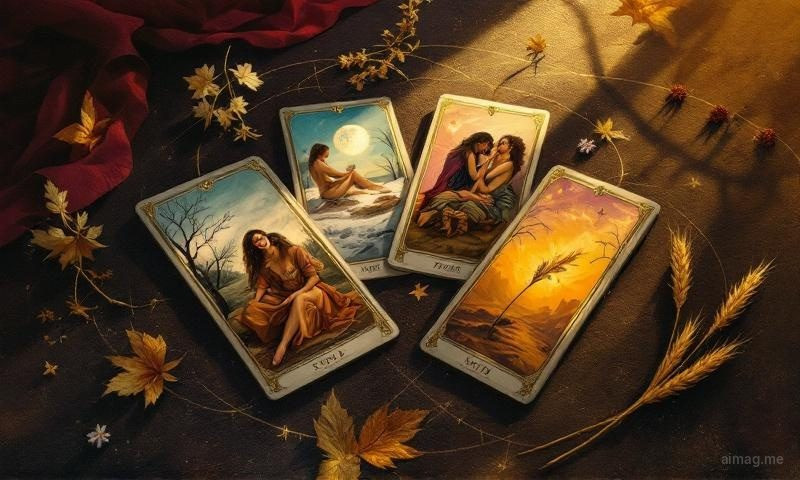
Ein praktischer Rhythmus: Mache den Tierkreis-Saison-Spread zu Beginn jeder Tierkreissaison (ungefähr am 20.–22. jedes Monats, wenn die Sonne das Zeichen wechselt). Über ein Jahr erzeugen zwölf Lesungen ein persönliches Tierkreis-Tagebuch — deine Erfahrung kartiert am astrologischen Kalender.
Du musst dein Geburtshoroskop dafür nicht kennen. Die Tierkreissaisonen beeinflussen das kollektive Feld, und du bist Teil dieses Feldes. Wenn du dein Horoskop kennst, achte besonders darauf, wenn eine Saison einen sensiblen Punkt aktiviert. Bist du Krebs-Sonne und die Krebs-Saison kommt, wird der Spread besonders persönlich. Die kollektive Energie und deine Identität resonieren auf derselben Frequenz.
Die Spreads verbinden
Die drei Tierkreis-Spreads arbeiten auf verschiedenen Ebenen:
Der Zwölf-Häuser-Spread ist die Panoramasicht. Dein gesamtes Leben auf alle Bereiche kartiert. Am besten vierteljährlich oder bei bedeutenden Übergängen gemacht. Er erfordert Zeit, Raum und die Bereitschaft, mit Komplexität zu sitzen.
Der Sonne-Mond-Aszendent-Spread ist der Identitätscheck. Wer du bist, wie du dich fühlst, wie du wirkst. Am besten monatlich oder wenn du einen Abstand zwischen innerem und äußerem Erleben bemerkst. Schnell zu machen, langsam vollständig zu verdauen.
Der Tierkreis-Saison-Spread ist die zeitliche Ausrichtung. Wie du dich zum aktuellen Moment im astrologischen Jahr verhältst. Am besten alle vier Wochen gemacht, wenn die Sonne das Zeichen wechselt. Der leichteste der drei — vier Karten, fokussierte Frage, handlungsrelevante Erkenntnisse.
Zusammen schaffen sie eine geschichtete Praxis: das große Bild (Häuser), persönliche Identität (Sonne-Mond-Aszendent) und den aktuellen Moment (Saison). Jeder füllt die Lücken, die die anderen lassen.
Die Psychologie der astrologischen Struktur
Warum hilft es, dem Tarot eine astrologische Struktur aufzuzwingen? Weil Struktur Fokus erzeugt, und Fokus Einsicht erzeugt. "Wie läuft mein Leben?" ist so weit gefasst, dass es nur breite Antworten hervorbringt. Aber "Wie steht es um mein 4. Haus — mein Zuhause, meine Wurzeln, mein emotionales Fundament?" — das erzeugt spezifische, handlungsrelevante Antworten.
Eine namenlose Angst ist Qual. Eine Angst, die als "Sorge um finanzielle Sicherheit in einer Übergangsphase" identifiziert wurde (Sprache des 2. Hauses), wird bearbeitbar. Der Rahmen verändert das Gefühl nicht. Er gibt dem Gefühl eine Adresse — einen Ort, an dem du es besuchen, untersuchen und schließlich mit ihm Frieden schließen kannst.
Astrologische Häuser bieten zwölf solcher Adressen. Die Tierkreiszeichen bieten zwölf saisonale Texturen. Kombiniert mit den achtundsiebzig Karten des Tarots hast du ein System, das zu außerordentlicher Spezifität fähig ist — nicht weil der Kosmos es so eingerichtet hat, sondern weil dein Unbewusstes, wenn es mit einem ausreichend detaillierten Raster konfrontiert wird, es mit genau den Informationen füllt, die du brauchst.
Häufig gestellte Fragen
Muss ich Astrologie kennen, um Tierkreis-Tarot-Spreads zu nutzen?
Nein. Die Hausbeschreibungen in Spread 1 sind in sich geschlossen — jede Position zeigt dir, welchen Lebensbereich sie abdeckt. Du brauchst weder dein Geburtshoroskop noch dein Aszendentzeichen oder aktuelle Planetentransite. Die Spreads funktionieren strukturell: Die Astrologie liefert den Rahmen, das Tarot liefert den Inhalt. Wenn du Astrologie kennst, gewinnen die Lesungen zusätzliche Schichten, aber die Kerninterpretation funktioniert ganz ohne astrologisches Wissen.
Kann der Zwölf-Häuser-Spread eine Geburtshoroskop-Lesung ersetzen?
Verschiedene Zwecke. Eine Geburtshoroskop-Lesung interpretiert feste Platzierungen, die sich nicht verändern. Der Zwölf-Häuser-Spread erfasst eine Momentaufnahme deines aktuellen Zustands in denselben Lebensbereichen. Denk an das Geburtshoroskop als Blueprint eines Gebäudes und den Zwölf-Häuser-Spread als Foto davon, wie jeder Raum heute aussieht. Der Blueprint ist dauerhaft; das Foto ändert sich jedes Mal.
Woher weiß ich, in welcher Tierkreissaison ich mich befinde?
Die Sonne wechselt ungefähr alle 30 Tage das Zeichen. Der grobe Kalender: Widder (21. März), Stier (20. April), Zwillinge (21. Mai), Krebs (21. Juni), Löwe (23. Juli), Jungfrau (23. August), Waage (23. September), Skorpion (23. Oktober), Schütze (22. November), Steinbock (22. Dezember), Wassermann (20. Januar), Fische (19. Februar). Diese Daten verschieben sich jedes Jahr um ein oder zwei Tage. Eine schnelle Suche nach "aktuelle Tierkreissaison" gibt dir das genaue Datum für ein beliebiges Jahr.
Was passiert, wenn meine Tierkreis-Tarot-Lesung meinem Geburtshoroskop widerspricht?
Sie widerspricht nicht — sie fügt eine zeitliche Ebene hinzu. Dein Geburtshoroskop zeigt grundlegende Tendenzen. Der Tarot-Spread zeigt deinen aktuellen Zustand. Ein Krebs-Aszendent in deinem Geburtshoroskop bedeutet, dass du von Natur aus als fürsorglich und schützend wahrgenommen wirst. Zieht die Aszendent-Karte in deinem Sonne-Mond-Aszendent-Spread aber den Ritter der Schwerter, wirkst du gerade — vorübergehend — scharf und direkt. Beides kann gleichzeitig wahr sein. Das Geburtshoroskop zeigt, wer du konstitutionell bist. Der Tarot-Spread zeigt, wer du diese Woche bist.
Zwölf Häuser. Drei Identitäten. Vier Jahreszeiten. Das sind keine willkürlichen Einteilungen. Es sind Aufmerksamkeitsstrukturen — Möglichkeiten, die überwältigende Ganzheit der menschlichen Erfahrung in Stücke zu zerlegen, die klein genug sind, um untersucht zu werden. Ein Tierkreis-Tarot-Spread setzt nicht voraus, dass du glaubst, Merkur rückläufig bringe deinen Computer zum Absturz, oder dass dein Skorpion-Zeichen deine Beziehungsgeschichte erklärt. Er setzt nur dies voraus: dass du den Wert akzeptierst, dein Leben durch einen detaillierten, organisierten Rahmen zu betrachten, anstatt es als eine undifferenzierte Masse anzustarren. Der Rahmen kommt aus der Astrologie. Der Inhalt kommt aus deinem eigenen Unbewussten, das durch achtundsiebzig Bilder spricht, die in eine Reihenfolge gemischt wurden, die nichts und alles bedeutet. Lege die Karten auf das Rad. Lies, was sie sagen. Der Himmel hat die Nachricht nicht geschrieben. Du hast es getan. Aber du brauchtest die Struktur, um sie zu hören.
Probiere eine kostenlose KI-gestützte Lesung auf aimag.me/reading