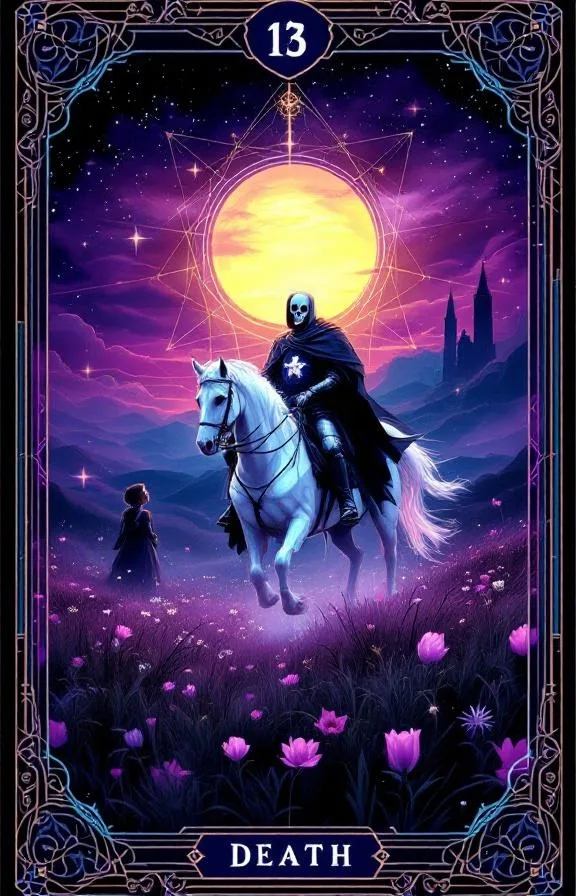
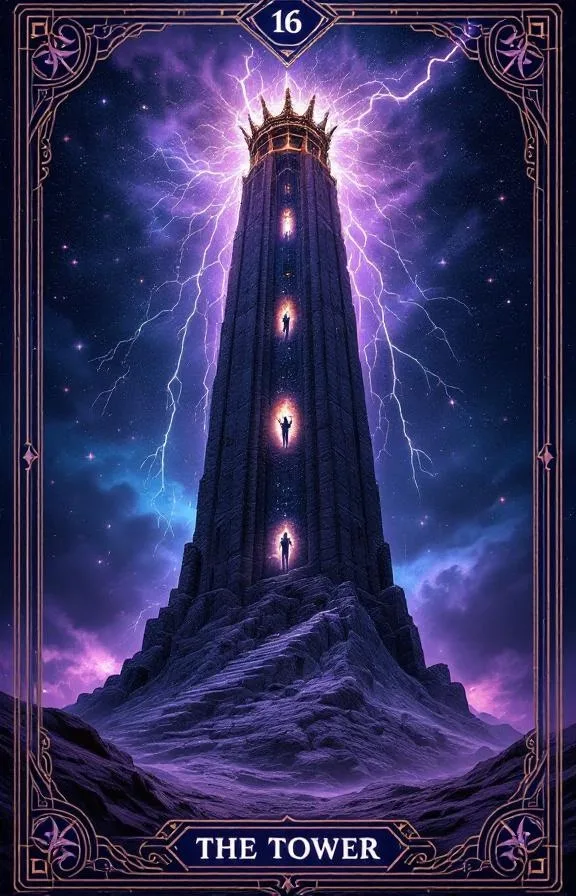
Es gibt Zusammenbrüche, auf die man langsam zugeht — und Zusammenbrüche, die einen mit voller Geschwindigkeit finden. Das Haus, das jahrelang sackte, nachts knarzend, bis eines Morgens das Fundament einfach nachgibt. Das Leben, das man still entwächst, bis etwas — ein Telefonanruf, eine Diagnose, eine Enthüllung — das Dach abreißt und einen blinzelnd unter freiem Himmel stehen lässt, den Blick auf einen Himmel gerichtet, den man vergessen hatte, dass er existiert. Tod und Der Turm zusammen sind das kompromissloseste Paar im Tarot: das langsame Ende und das plötzliche, die im selben Moment ankommen, nichts zu verbergen lassend und alles zum Wiederaufbau.
Tod und Der Turm auf einen Blick
| Tod | Der Turm | |
|---|---|---|
| Zahl | XIII | XVI |
| Element | Wasser / Skorpion | Feuer / Mars |
| Kernthema | Transformation, Enden, Wiedergeburt, Übergang | Zerstörung, Enthüllung, Umbruch, Befreiung |
Gemeinsam: Die Strukturen, die ohnehin schon starben, brechen jetzt zusammen — nicht um dich zu zerstören, sondern um dich von dem zu befreien, was du aus eigener Kraft nicht hättest loslassen können.
Die Kerndynamik
Der Bindungstheoretiker John Bowlby verbrachte Jahrzehnte damit zu erforschen, wie Menschen auf Verlust reagieren — und seine Erkenntnisse enthüllen etwas Kontraintuitives: Die Trauer, die uns am meisten verwüstet, ist oft nicht proportional zu dem, was wir verloren haben, sondern dazu, wie viel unserer Identität darum aufgebaut war. Wenn eine Bindungsfigur verschwindet — ob eine Person, eine Rolle, ein Glaubenssystem oder eine Lebensweise —, verliert der Trauernde nicht einfach das Objekt. Er verliert die Version seiner selbst, die nur in Relation dazu existierte. Tod und Der Turm zusammen beschreiben diesen doppelten Verlust mit erschütternder Präzision.
Der Tod steht für die organische, unvermeidliche Auflösung — die Beziehung, die verblasste, die Karriere, die plateauisiert hatte, das Weltbild, das nicht mehr hielt. Der Turm steht für den Schock, der den Prozess beschleunigt, über jede Kontrolle hinaus. Bowlby identifizierte vier Phasen der Trauerreaktion: Betäubung, Sehnsucht, Desorganisation und Reorganisation. Diese Kartenkombination neigt dazu, irgendwo zwischen Phase eins und drei aufzutauchen — in der Phase maximaler Desorientierung, wenn die alte Welt zerbrochen ist, die neue aber noch keine Form angenommen hat.
Was dieses Paar so mächtig macht, ist seine Weigerung, dir ein graduelles Trauern zu erlauben. Der Tod allein könnte einen langsamen Abschied ermöglichen, ein würdiges Abschließen. Der Turm verhandelt nicht. Er streift Verstellung ab, reißt Halbmaßnahmen nieder und enthüllt das rohe Fundament darunter. Bowlby beobachtete, dass die transformativste Trauerarbeit nicht dann stattfindet, wenn Menschen den Schmerz des Verlusts vermeiden, sondern wenn sie sich vollständig der Desorganisationsphase überlassen — dem erschreckenden freien Fall, bevor der Wiederaufbau beginnt. Tod und Der Turm zusammen bestehen auf diesem freien Fall.
Bleib auf dem Laufenden
Wöchentliche Tarot-Einblicke, Kartenbedeutungen und KI-Lesetipps.
In Liebe und Beziehungen
Im romantischen Kontext taucht diese Kombination selten bei kleinen Meinungsverschiedenheiten oder vorübergehenden Schwierigkeiten auf. Sie erscheint bei seismischen Verschiebungen: der Entdeckung eines fundamentalen Verrats, dem Zusammenbruch eines gemeinsamen Lebensplans oder der plötzlichen Erkenntnis, dass der Mensch vor dir nicht derjenige ist, für den du ihn hieltest. Bowlbys Forschung zur Bindungsunterbrechung zeigt, dass die schmerzhaftesten Trennungen jene sind, bei denen das Bindungsband gleichzeitig stark und unsicher war — wo Liebe und Angst so verwoben waren, dass sich die Beziehung überlebensnotwendig anfühlte, selbst wenn sie schadete.
Wenn du in einer Beziehung bist, bitten dich Tod und Der Turm, das, was bereits gefallen ist, anzuschauen und dem Drang zu widerstehen, es genauso wieder aufzubauen, wie es war. Die alte Struktur ist aus einem Grund gescheitert. Für jene, die eine Trennung erleben oder deren Nachklang, bietet dieses Paar einen schwierigen Trost: Das Ausmaß der Zerstörung steht im Verhältnis zum Ausmaß der Freiheit auf der anderen Seite. Du fällst nicht auseinander. Du wirst auseinandergenommen, damit du ohne die Kompromisse zusammengesetzt werden kannst, die die alte Architektur instabil machten.
In Beruf und Finanzen
Beruflich entsprechen Tod und Der Turm zusammen oft unfreiwilligem Umbruch — einer Entlassung, einem Markteinbruch, einem Unternehmensscheitern oder der plötzlichen Enthüllung einer unhaltbaren Situation. Das ist selten bequem und nie subtil. Die Strukturen, auf denen du deine berufliche Identität aufgebaut hast, werden abgetragen — manchmal öffentlich, manchmal alles auf einmal.
Bowlbys Konzept der "sicheren Basis" — das stabile Fundament, von dem aus ein Mensch die Welt erkundet — trifft hier direkt zu. Wenn deine berufliche sichere Basis zerstört wird, ist der Instinkt, sofort eine neue zu finden, Struktur durch Struktur so schnell wie möglich zu ersetzen. Diese Kombination rät zur Geduld. Der Schutt setzt sich noch. Was aus dieser Freifläche entstehen muss, hat sich noch nicht deklariert. Finanziell signalisiert dieses Paar oft, dass Halbmaßnahmen und Notlösungen nicht halten werden. Das Budget, das Geschäftsmodell, die Finanzvereinbarung — was auch immer rissig war, muss von Grund auf neu aufgebaut, nicht geflickt werden.
Die tiefere Botschaft
Tod und Der Turm zusammen sind die Art des Tarots zu sagen: Du hättest das nicht sanft tun können. Manche Transformationen erfordern Abriss, weil die Struktur zu solide, zu tragend, zu tief in deiner Identität verankert war, um mit einer Pinzette entfernt zu werden. Die Zerstörung ist nicht der Feind deines Werdens — sie ist seine Vorbedingung. Verweile bei dieser Frage: Jetzt, wo die Mauern gefallen sind, was kannst du sehen, was du vorher nicht sehen konntest? Und ist es möglich, dass der Blick vom Schutt aus weiter, klarer und ehrlicher ist als alles, was die alte Architektur je erlaubt hätte?
Neugierig, was Tod und Der Turm für DICH bedeuten? Probiere eine kostenlose KI-Legung und sieh, was die Karten über deine aktuelle Situation spiegeln.