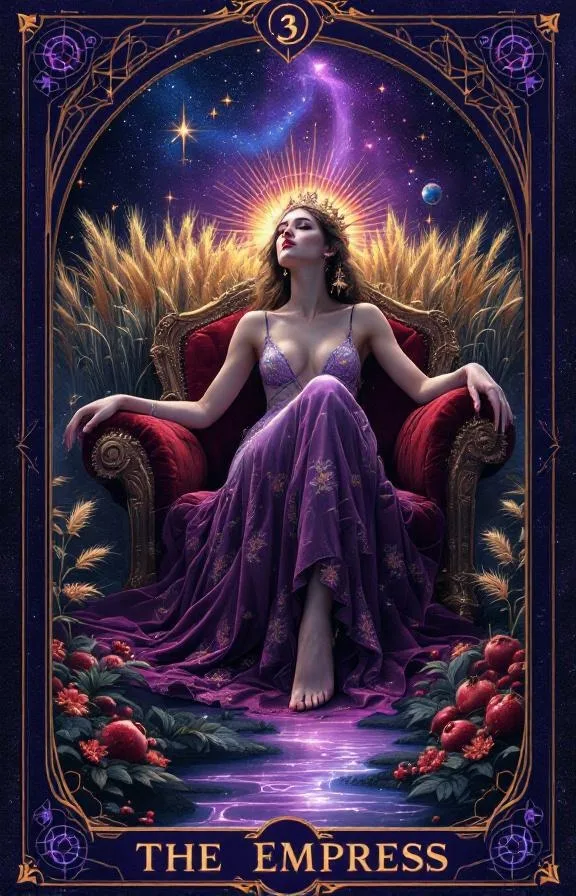

Eine Frau pflegt jahrelang einen Garten — sorgfältig, geduldig, mit einer Art Hingabe, die kein Publikum braucht. Dann geht sie eines Morgens hinaus und erkennt: Der Garten ist nicht mehr das Projekt, das sie begonnen hat. Er ist etwas anderes geworden — wilder, seltsamer, schöner als alles, was sie hätte entwerfen können. Der Garten ruft sie zur Rechenschaft. Sie muss jetzt entscheiden, ob sie dem begegnet, was er geworden ist — oder sich in die Version zurückzieht, die sie ursprünglich geplant hatte. Das ist die Spannung, die Die Herrscherin und das Gericht erzeugen, wenn sie gemeinsam erscheinen.
Die Herrscherin und das Gericht auf einen Blick
| Die Herrscherin | Das Gericht | |
|---|---|---|
| Zahl | III | XX |
| Element | Erde / Venus | Feuer / Pluto |
| Kernthema | Fürsorge, Fülle, Kreativität | Erwachen, Berufung, Rechenschaft |
Zusammen: Was du genährt hast, fordert dich nun auf, ihm zu begegnen — der Moment, in dem die Schöpfung zu ihrem Schöpfer zurückruft.
Die Kerndynamik
Der Entwicklungspsychologe Erik Erikson beschrieb acht Phasen der psychosozialen Entwicklung, jede um einen zentralen Konflikt herum organisiert. Die siebte Phase — die Erikson „Generativität versus Stagnation" nannte — tritt in der Lebensmitte auf und stellt eine spezifische Frage: Hast du etwas hervorgebracht, das dich überdauern wird? Generativität ist nicht auf das Kinderkriegen beschränkt, obwohl sie das einschließt. Sie umfasst jeden Akt der Schöpfung, des Mentorings oder des Beitrags, der das Selbst in die Zukunft ausdehnt. Stagnation ist das Gefühl, dass alles, was man aufgebaut hat, rein persönlich ist — dass es mit einem beginnt und endet.
Die Herrscherin ist die Energie der Generativität selbst: der Impuls zu erschaffen, zu nähren und aufrechtzuerhalten. Das Gericht ist der Moment der Rechenschaft, den Generativität irgendwann einfordert. Es reicht nicht, zu pflanzen und zu pflegen. Irgendwann kommt die Ernte — und mit ihr die Frage, was das alles bedeutete. Ob das Leben, das man aufgebaut hat, das Leben widerspiegelt, das man zu leben berufen war. Die Trompete des Engels auf der Rider-Waite-Gerichtskarte kündigt keine Strafe an. Sie kündigt Anerkennung an: Das bist du geworden. Kannst du es klar sehen?
Diese Kombination taucht häufig bei Übergängen auf, die sich gleichzeitig organisch und seismisch anfühlen. Eine Mutter beobachtet, wie ihr Kind zum Erwachsenen wird, und muss sich mit dem Menschen auseinandersetzen, den sie tatsächlich großgezogen hat — nicht der Fantasieversion. Eine kreative Fachkraft betrachtet das Werk, das sie produziert hat, und erkennt, dass es Wahrheiten enthält, die sie nie bewusst ausdrücken wollte. Eine Pflegeperson — von Menschen, Organisationen, Gemeinschaften — wird mit den kumulativen Folgen jahrelanger stiller, anhaltender Mühe konfrontiert.
Der Psychoanalytiker James Hollis beschrieb in seinen Arbeiten über Übergänge in der Lebensmitte das, was er „die Berufung" nannte — die Erfahrung, von dem eigenen ungelebten Leben zur Rechenschaft gezogen zu werden für die getroffenen Entscheidungen. Hollis unterschied dies sorgfältig von Schuld oder Bedauern. Die Berufung ist kein Urteil. Sie ist eine Einladung. Sie sagt: Hier ist, was du aufgebaut hast. Hier ist, wer du beim Aufbau geworden bist. Bist du bereit, beides zu beanspruchen? Die Herrscherin und das Gericht verkörpern gemeinsam diese Berufung: die nährende Vergangenheit begegnet dem Moment ehrlicher Selbsteinschätzung.
In Liebe & Beziehungen
Für Singles zeigt diese Kombination häufig eine Phase an, in der die eigene Beziehung zur Liebesfähigkeit neu bewertet wird. Möglicherweise erkennt man Muster im eigenen Fürsorge-Verhalten — Tendenzen zur Übergabe oder vielleicht eine Zurückhaltung, sich vollständig einzubringen — die jede eingegangene Beziehung geprägt haben. Das Gericht bittet darum, diese Muster mit Klarheit statt mit Scham zu sehen. Die Herrscherin erinnert daran, dass großzügige Liebesfähigkeit nicht das Problem ist — die Frage ist, ob man sie auf das richtet, was einen wirklich ruft.
In bestehenden Partnerschaften signalisieren die Herrscherin und das Gericht häufig einen Moment tiefgreifender Rechenschaft. Das ist nicht zwingend eine Krise — obwohl es eine begleiten kann. Häufiger beschreibt es eine Beziehung, die gereift ist bis zu dem Punkt, wo beide Partner ehrlich einschätzen müssen, was sie gemeinsam geschaffen haben. Langfristige Beziehungen tragen eine besondere Spannung zwischen Sicherheit und Vitalität — die Art, wie die Stabilität, die man aufbaut (die Herrscherin), zu einer Art behaglicher Taubheit werden kann, die schließlich Erschütterung fordert (das Gericht). Diese Kombination lädt möglicherweise ein zu fragen: Ist die Beziehung, die wir aufrechterhalten, noch die, in der wir tatsächlich leben wollen?
In Karriere & Finanzen
Beruflich erscheint dieses Kartenpaar tendenziell an Wendepunkten. Man hat erhebliche Zeit und Energie in den Aufbau von etwas investiert — eine Karriere, ein Unternehmen, ein Fundus an Expertise — und jetzt sprechen die Ergebnisse zu einem zurück. Vielleicht hat die geleistete Arbeit einen irgendwohin geführt, wo man nicht erwartet hatte zu landen. Vielleicht rufen die für einen Zweck entwickelten Fähigkeiten nun in eine ganz andere Richtung.
Der Einfluss der Herrscherin hier ist das angesammelte Kapital — finanziell, reputationsmäßig, relational — das Jahre produktiver Arbeit generiert haben. Der Einfluss des Gerichts ist das innere Audit: die ehrliche Frage, ob dieses Kapital im Dienst dessen eingesetzt wird, was am wichtigsten ist. Diese Kombination kann darauf hindeuten, dass ein Schwenk möglich ist — nicht weg von dem, was man aufgebaut hat, sondern hin zu einem authentischeren Ausdruck davon. Die Buchhalterin, die Finanztherapeutin wird. Die Lehrerin, die das Buch schreibt. Die Managerin, die endlich die gemeinnützige Organisation gründet, über die sie ein Jahrzehnt lang beim Abendessen gesprochen hat.
Finanziell deuten die Herrscherin und das Gericht zusammen darauf hin, dass die materiellen Ressourcen ausreichen, um einen bedeutungsvollen Übergang zu unterstützen, falls einer benötigt wird. Die Herrscherin zeigt selten Knappheit an. Das Gericht selten Leichtsinn. Zusammen weisen sie auf eine disziplinierte Neubewertung hin, wohin die eigenen Ressourcen — Zeit, Geld, Aufmerksamkeit — tatsächlich fließen, und ob dieser Fluss die tiefsten Prioritäten widerspiegelt.
Die tiefere Botschaft
In der Jungschen Psychologie gibt es einen Begriff: Enantiodromie — die Tendenz jeder psychologischen Kraft, die ins Extrem getrieben wird, sich in ihr Gegenteil zu verwandeln. Ungeprüfte Fürsorge wird zu Kontrolle. Ungezügelte Fülle wird zu Selbstgefälligkeit. Die Herrscherin, an ihre Grenzen getrieben, braucht das Gericht — nicht als Korrektur, sondern als Vollendung: der Moment, in dem die Gärtnerin aufhört zu pflegen und anfängt zu hören, was der Garten selbst zu sagen hat.
Was hast du lange genug genährt, dass es dich nun etwas lehren möchte, das du nicht zu lernen erwartet hast?
Neugierig, was Die Herrscherin und das Gericht für DICH bedeuten? Probiere ein kostenloses KI-Reading und sieh, was die Karten über deine Situation gerade jetzt spiegeln.