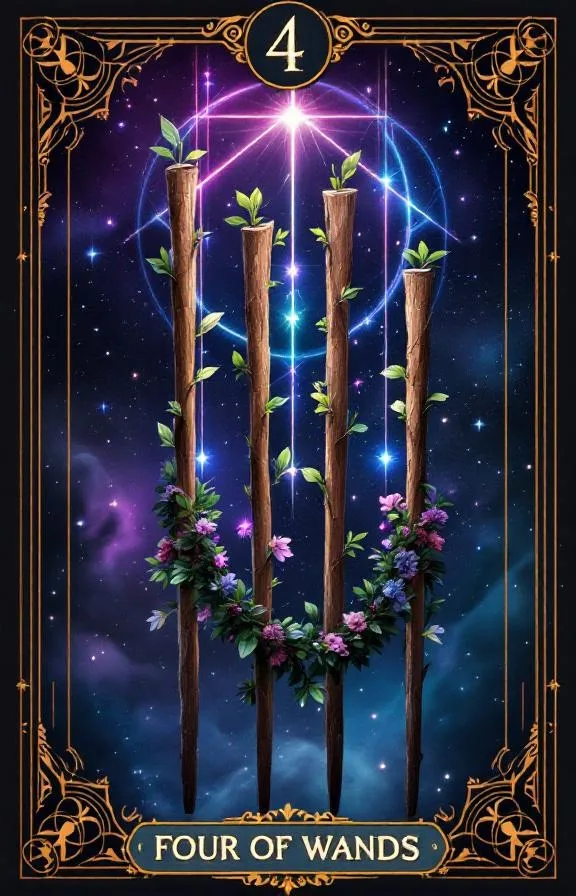
When the Ace of Wands appears as feelings, someone is experiencing the sudden ignition of desire. This is not a slow build or a careful decision to feel something. It is the emotional equivalent of a match striking — instant heat, bright light, and the unmistakable sense that something new has been set in motion. The person feeling this is not analyzing; they are ablaze.
In short: The Ace of Wands as feelings represents the initial spark of passion, creative energy, or desire. Upright, it signals inspired attraction, bold initiative, and genuine enthusiasm. Reversed, it points to blocked motivation or false starts that fizzle before catching. Psychologists Edward Deci and Richard Ryan, creators of Self-Determination Theory, would recognize this card as the embodiment of intrinsic motivation — the drive that comes from within rather than from external reward.
The emotional core of the Ace of Wands
The Ace of Wands is the seed of fire. In the tarot's elemental system, Wands correspond to the fire element — passion, will, creativity, and forward motion. As an Ace, this card represents that element in its purest, most concentrated form. It is the first flicker before the flame takes shape.
Nimm dir einen Moment, um über das Gelesene nachzudenken. Was passt zu deiner aktuellen Situation?
Psychologically, this maps onto what Deci and Ryan call intrinsic motivation — the kind of drive that arises from genuine interest and personal meaning rather than obligation, duty, or the promise of a reward. Their decades of research at the University of Rochester demonstrated that intrinsic motivation produces not only better outcomes but richer emotional experiences. People driven by internal passion report higher levels of vitality, creativity, and well-being than those driven by external pressures.
When the Ace of Wands shows up as a feeling, it signals that the person is operating from this intrinsic place. Something has caught their attention — a person, an idea, a possibility — and they feel pulled toward it with a force that does not require justification. They are not doing a cost-benefit analysis. The feeling itself is the reason.
Mihaly Csikszentmihalyi, the psychologist who identified the concept of flow, described a similar emotional onset. Before entering a flow state, there is a moment of ignition — a flash of interest so strong that it overrides distraction, self-doubt, and competing demands. The Ace of Wands captures this pre-flow state: the instant when passion locks in and everything else fades to background noise.
This is also a fundamentally creative feeling. Not creative in the narrow sense of painting or writing, but in the broader sense of wanting to bring something new into existence — a relationship, a project, a version of yourself that did not exist five minutes ago.
Ace of Wands upright as feelings
When the Ace of Wands appears upright as someone's feelings, the dominant emotional experience is inspired desire. This person feels a surge of energy directed at something specific. In romantic contexts, they are experiencing the first rush of attraction — not the gentle warmth of affection, but the sharp, almost physical jolt of wanting.
This is the person who meets you and cannot stop replaying the conversation in their head afterward. Not because they are anxious, but because something about the interaction lit them up. They feel creatively stimulated by your presence, as though being around you generates ideas, plans, and the urge to act on them.
In self-reflection, drawing the Ace of Wands upright as your own feelings suggests you are at the beginning of something that genuinely excites you. You feel a clarity of desire that cuts through ambivalence. Where other cards might represent conflicted emotions, the Ace of Wands upright is singular: you want this, and the wanting feels clean and energizing.
Imagine someone who wakes up in the middle of the night with an idea so vivid they have to write it down immediately. That urgency, that inability to ignore the spark — that is the Ace of Wands upright. It is not mania or restlessness. It is the arrival of something that matters, and the body knows it before the mind has fully caught up.
Deci and Ryan's research also showed that intrinsic motivation is closely tied to the satisfaction of three basic psychological needs: autonomy, competence, and relatedness. The Ace of Wands upright as a feeling suggests all three are active. The person feels free to pursue what interests them (autonomy), capable of acting on it (competence), and connected to the person or project that sparked them (relatedness).
The risk of this emotional state is mistaking intensity for sustainability. A spark is not a fire, and the Ace is only the beginning. But as beginnings go, this one carries genuine heat.
Ace of Wands reversed as feelings
The Ace of Wands reversed does not extinguish the spark — it traps it. The desire is present, but something prevents it from catching. This is the frustrating emotional state of wanting to feel passionate but finding the energy stuck, diffused, or misdirected.
One common manifestation is creative or emotional blockage. The person senses that they should be feeling more — more excitement, more desire, more drive — but the feeling will not fully ignite. They may describe themselves as "going through the motions" or "waiting for something to click." This is not apathy; it is thwarted motivation, and the difference matters.
Csikszentmihalyi's research on flow identified several preconditions that, when absent, prevent the state from occurring: unclear goals, mismatched challenges, and lack of immediate feedback. The Ace of Wands reversed as a feeling often reflects one of these missing elements. The person wants to feel inspired but does not yet have a clear direction for their energy. They are striking the match, but the air is too damp.
In relationships, the reversed Ace can indicate false starts. This person may feel an initial attraction that repeatedly fails to develop into something sustained. They experience flickers of interest followed by doubt — not because the other person is wrong, but because their own internal conditions are not yet right for passion to take root.
Another manifestation is scattered energy. Instead of one clear flame, the person feels pulled in multiple directions at once, unable to commit their passion to any single thing. They start projects and abandon them. They feel attracted to someone and then lose interest inexplicably. The fire is there, but it lacks a container.
In love and relationships
In romantic readings, the Ace of Wands upright as feelings is electric. It indicates that someone feels a powerful, visceral attraction to you. This is not the slow-building appreciation of the Ace of Cups or the practical evaluation of the Ace of Pentacles. This is desire — physical, creative, and immediate.
When someone feels the Ace of Wands toward you, they experience you as energizing. You make them want to do things, try things, be more alive. This is the card of the person who plans a spontaneous road trip the week after meeting you, not because they are impulsive by nature, but because something about your presence activates their boldest instincts.
For existing relationships, the Ace of Wands suggests a renewal of passion — a moment where the spark that originally brought you together reignites. Perhaps a conversation reminds you both why you chose each other. Perhaps a shared experience creates new fire where routine had settled in.
Psychologist Arthur Aron, known for his research on self-expansion theory, demonstrated that relationships thrive when partners help each other grow, learn, and experience novelty. The Ace of Wands in a love reading reflects this self-expansion in its earliest, most exciting form: the feeling that this person opens doors inside you that you did not know existed.
Reversed in love, the Ace of Wands suggests attraction that is not fully expressed or is being held back. The desire exists, but fear, timing, or unresolved baggage prevents it from becoming action.
When you draw the Ace of Wands as feelings in a reading
If the Ace of Wands shows up as feelings in your reading, pay attention to what has recently sparked your interest. This card confirms that the excitement you are sensing is real and worth pursuing — at least to the point of honest exploration.
Ask yourself: What has recently made me feel alive? Where am I holding back enthusiasm because I am afraid it will not last? What would I start today if I trusted the spark instead of waiting for certainty?
The Ace of Wands does not promise that every fire will burn forever. But it reminds you that nothing burns at all without the willingness to strike the first match.
Explore what the Ace of Wands reflects in your emotional landscape with a free reading.
Frequently asked questions
What does the Ace of Wands mean as feelings for someone?
The Ace of Wands as someone's feelings toward you indicates intense, inspired attraction. They feel energized and creatively stimulated by your presence. This is desire at its most visceral — passionate, immediate, and driven from within.
Is the Ace of Wands a positive card for feelings?
Upright, strongly positive. It signals genuine passion, creative energy, and inspired motivation. Reversed, it suggests blocked or scattered desire rather than negative feelings. The card indicates fire that needs direction, not absence of warmth.
How does the Ace of Wands reversed differ as feelings?
Reversed, the spark is present but cannot fully catch. Instead of clear, directed passion, the person experiences false starts, creative blocks, or scattered enthusiasm that does not settle on any single focus.
Explore the full guide to all 78 cards as feelings or discover the Ace of Wands' complete meaning. Ready to explore what the cards reflect about your emotions? Try a free reading.