Every tarot card carries an emotional signature. When you ask "what does this card mean as feelings?" you are asking a psychologically precise question: what emotional state does this symbol represent when it appears in someone's inner landscape? This guide covers all 78 cards — what each one means when it shows up as a feeling, both upright and reversed — so you can read any card in any position with emotional accuracy.
In short: Each of the 78 tarot cards maps to a specific emotional state. The Major Arcana represent deep, transformative feelings. The Minor Arcana capture everyday emotional experiences across four domains: Cups (emotional connection), Pentacles (security and self-worth), Swords (mental-emotional patterns), and Wands (passion and drive). Below is every card explained as a feeling, upright and reversed.
Why reading cards "as feelings" works psychologically
Reading tarot cards as feelings is not a mystical trick — it is a form of emotional labeling, a technique extensively studied by psychologist James Pennebaker at the University of Texas at Austin. Pennebaker's decades of research on expressive writing demonstrated that the simple act of naming an emotion reduces its physiological intensity and increases cognitive clarity. When you identify a card as representing a specific feeling, you are doing the same work: translating a vague inner state into a concrete, named experience.
Carl Jung went further. In his theory of projection, Jung argued that we see in external symbols what we cannot yet see in ourselves. When you look at the Five of Cups and feel a pang of recognition, that recognition is data — it tells you something about your current emotional state that you might not have articulated without the card as a catalyst.
This is why "as feelings" readings are among the most popular and psychologically productive uses of tarot, especially in love and relationship spreads. The cards give you a vocabulary for feelings that might otherwise remain unnamed.

How to use this guide
For each card below, you will find what it means as a feeling — both the upright emotional state and the reversed. Use these when:
- You draw a card in a relationship spread and want to understand what someone feels
- You are doing a self-reflection reading and want to name your own emotional state
- A card appears in the "feelings" or "emotions" position of any spread
- You want to understand the emotional energy of a situation
Remember: reversed cards do not mean the opposite of upright. They typically represent the same feeling in a blocked, internalized, or distorted form.
Major Arcana as feelings
The 22 Major Arcana represent the deep, archetypal feelings — the ones that reshape your life when they arrive. These are not passing moods. They are emotional states that carry transformative weight.
The Fool — exhilaration and leap of faith
Upright: A feeling of pure excitement before a new beginning — butterflies, reckless optimism, the willingness to risk everything because the unknown feels more alive than the known. In a relationship context, this is the intoxication of early attraction before any walls go up. Reversed: Anxiety disguised as recklessness. The feeling of wanting to leap but being paralyzed by fear, or leaping impulsively to escape the discomfort of standing still.
Read the complete The Fool as feelings guide →
The Magician — confidence and creative power
Upright: Feeling capable, resourceful, and magnetically focused. The emotional state of someone who believes they can make things happen. In love, this is the feeling of actively choosing someone and channeling your energy toward them. Reversed: Self-doubt masquerading as indifference. Feeling like a fraud — having the tools but not trusting your ability to use them.
Read the complete The Magician as feelings guide →
The High Priestess — deep knowing and mystery
Upright: An intuitive certainty that does not need external validation. The feeling of knowing something in your body before your mind catches up. In relationships, this is the quiet sense that something important is happening beneath the surface. Reversed: Ignoring your intuition. The anxious feeling of knowing something is off but refusing to acknowledge it because the truth feels inconvenient.
Read the complete The High Priestess as feelings guide →
The Empress — nurturing love and abundance
Upright: Warm, generous, unconditional affection. The feeling of loving someone so fully that it spills over into everything around you. Sensual contentment, creative fertility, emotional overflow in the best sense. Reversed: Smothering love or emotional depletion. Feeling like you have given everything and there is nothing left, or loving someone so intensely that it becomes controlling.
Read the complete The Empress as feelings guide →
The Emperor — protective stability
Upright: Feeling stable, protective, and in control. The emotional state of someone who wants to build something lasting. In love, this is the desire to provide security and structure for the people you care about. Reversed: Rigidity as a defense mechanism. Feeling emotionally walled off — wanting connection but unable to let go of control long enough to allow vulnerability.
Read the complete The Emperor as feelings guide →
The Hierophant — devotion and commitment
Upright: The feeling of deep commitment to shared values. Devotion that comes from genuine belief, not obligation. In relationships, this is the emotion behind wanting to formalize a bond — not for appearances, but because the commitment itself feels sacred. Reversed: Feeling trapped by convention. The emotional suffocation of doing what you are supposed to feel rather than what you actually feel.
Read the complete The Hierophant as feelings guide →
The Lovers — wholeness through connection
Upright: The feeling of being completely seen and chosen. Not infatuation, but the deeper recognition that another person's presence makes you more fully yourself. This is the card of alignment — heart, mind, and body all pointing the same direction. Reversed: Inner conflict about a relationship. The painful feeling of wanting someone while simultaneously knowing something is fundamentally misaligned.
Read the complete The Lovers as feelings guide →
The Chariot — determined emotional focus
Upright: Emotional willpower — the feeling of channeling all your emotional energy toward a goal. In love, this is the determination to make a relationship work through sheer force of commitment. Reversed: Emotional aggression or feeling out of control. The sensation of being pulled in two directions and trying to force resolution through willpower alone.
Read the complete The Chariot as feelings guide →
Strength — patient courage
Upright: Gentle bravery. The feeling of facing something frightening — a difficult conversation, a vulnerable admission, an uncertain future — with quiet confidence rather than force. In love, this is the courage to stay open when every instinct says to protect yourself. Reversed: Self-doubt eroding your confidence. Feeling emotionally exhausted from the effort of staying brave for too long.
Read the complete Strength as feelings guide →
The Hermit — reflective solitude
Upright: The feeling of needing to be alone — not from pain, but from a genuine need to process something internally before sharing it. In relationships, this is the emotion of someone who cares deeply but needs space to understand their own feelings before they can articulate them. Reversed: Loneliness disguised as independence. The painful feeling of isolation when solitude stops being a choice and starts being a prison.
Read the complete The Hermit as feelings guide →
Wheel of Fortune — surrender to change
Upright: The exhilarating and terrifying feeling of being caught in something larger than yourself. Fate-level emotion — the sense that circumstances are shifting in ways you cannot control but can feel happening. Reversed: Feeling stuck in a cycle. The frustration of watching the same emotional patterns repeat while feeling powerless to break them.
Read the complete Wheel of Fortune as feelings guide →
Justice — clarity and accountability
Upright: The clean feeling of emotional honesty — seeing a situation exactly as it is, without the distortion of wishful thinking or denial. In love, this is the feeling of being fair to yourself and the other person, even when fairness is uncomfortable. Reversed: Feeling wronged or emotionally unbalanced. The bitter sensation that things are not fair, coupled with the difficulty of determining whose perspective is accurate.
Read the complete Justice as feelings guide →
The Hanged Man — willing surrender
Upright: The paradoxical feeling of peace within suspension. Emotional surrender — not giving up, but letting go of the need to control the outcome. In love, this is the feeling of accepting uncertainty without letting it destroy you. Reversed: Emotional martyrdom. The feeling of sacrificing endlessly without purpose, or stubbornly refusing to let go of a perspective that is causing you pain.
Read the complete The Hanged Man as feelings guide →
Death — transformative grief
Upright: The feeling of something ending permanently — not the acute pain of loss, but the deeper recognition that you cannot go back. This is the emotional state of transformation: grief and liberation existing simultaneously. Reversed: Resistance to necessary emotional change. The feeling of clinging to something that has already ended because the unknown feels worse than the known pain.
Read the complete Death as feelings guide →
Temperance — emotional balance
Upright: A feeling of inner harmony — emotions flowing smoothly between extremes rather than getting stuck at either end. In relationships, this is the comfortable feeling of a partnership where both people contribute equally. Reversed: Emotional excess or imbalance. The feeling of being emotionally volatile — swinging between extremes with no middle ground.
Read the complete Temperance as feelings guide →
The Devil — obsessive attachment
Upright: Intense, consuming desire that you know is not entirely healthy but cannot resist. In love, this is the feeling of being addicted to someone — fully aware of the toxicity but unable to walk away because the intensity feels more real than peace. Reversed: Breaking free from an emotional pattern. The feeling of finally seeing a destructive attachment for what it is, accompanied by the terrifying freedom of no longer being bound.
Read the complete The Devil as feelings guide →
The Tower — shock and revelation
Upright: The feeling of the ground disappearing. Emotional shock — not gentle realization but sudden, violent clarity that destroys a structure you built your emotional life around. In love, this is the discovery of betrayal, the sudden end, the moment everything changes. Reversed: Dreading an inevitable emotional collapse. The feeling of knowing something is about to break but not knowing when, which can be worse than the break itself.
Read the complete The Tower as feelings guide →
The Star — hope and healing
Upright: The quiet, tentative feeling of hope after devastation. Not manic optimism but the gentle return of belief that things can be good again. In love, this is the feeling of being willing to trust again after heartbreak. Reversed: Lost hope. The feeling of despair — not dramatic despair, but the quiet kind where you stop believing things will improve and begin to accept pain as permanent.
Read the complete The Star as feelings guide →
The Moon — anxiety and illusion
Upright: Emotional confusion. The feeling of not knowing what is real — your fears, your hopes, or the story you are telling yourself. In relationships, this is the unsettling feeling of not knowing where you stand and being unable to trust your own perception. Reversed: Suppressed fears surfacing. The feeling of anxieties you have been pushing down finally demanding to be acknowledged.
Read the complete The Moon as feelings guide →
The Sun — joy and clarity
Upright: Pure, uncomplicated happiness. The feeling of emotional warmth without shadows or second-guessing. In love, this is the rare experience of feeling completely happy with someone without the anxious undercurrent of waiting for something to go wrong. Reversed: Dimmed joy. The feeling of happiness being blocked by self-consciousness, past trauma, or the inability to let yourself fully enjoy something good.
Read the complete The Sun as feelings guide →
Judgement — awakening and calling
Upright: The feeling of being called to something larger. Emotional clarity that arrives not through analysis but through a deep inner reckoning — the sense that you have been living a smaller emotional life than you are capable of. Reversed: Self-judgment. The feeling of harsh inner criticism preventing you from moving forward — knowing what you need to do but being paralyzed by guilt or shame about the past.
Read the complete Judgement as feelings guide →
The World — wholeness and completion
Upright: The feeling of emotional completion — not perfection, but the deep satisfaction of having gone through an entire cycle and arrived somewhere meaningful. In love, this is the feeling of a relationship that has survived its trials and reached genuine integration. Reversed: Feeling incomplete. The emotional ache of being almost there — close to wholeness but unable to cross the final threshold, often because of unfinished business with yourself.
Read the complete The World as feelings guide →
Suit of Cups as feelings
The Cups are the suit of emotion, love, and connection. When Cups appear in a "feelings" reading, they speak directly — this is their native language.
Ace of Cups — new emotional beginning
Upright: The overwhelming feeling of new love or deep emotional opening. A heart that is suddenly full and cannot explain why. Pure receptivity to feeling. Reversed: Emotional blockage. The feeling of wanting to feel but being unable to let anything in — a closed heart that knows it is closed.
Read the complete Ace of Cups as feelings guide →
Two of Cups — mutual attraction
Upright: The feeling of genuine, reciprocated connection. Not one-sided longing but the rare experience of looking at someone and knowing they see you too. Reversed: Imbalanced feelings. The painful awareness that emotional investment is not equal — one person feels more, and both know it.
Read the complete Two of Cups as feelings guide →
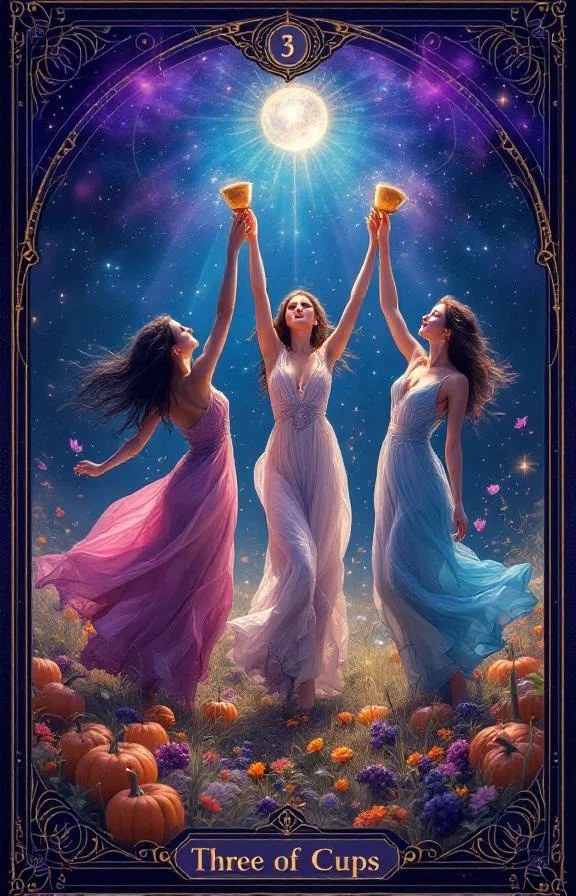
Three of Cups — communal joy
Upright: The warm feeling of belonging. Emotional celebration shared with people who genuinely care about your happiness. Reversed: Feeling excluded or jealous. The sting of watching others celebrate while you feel on the outside.
Read the complete Three of Cups as feelings guide →
Four of Cups — emotional apathy
Upright: The feeling of emotional numbness — not sadness, but a flat refusal to engage. Something is being offered but you cannot bring yourself to care. Reversed: Renewed interest. The feeling of waking up from emotional withdrawal and noticing opportunities you had been ignoring.
Read the complete Four of Cups as feelings guide →
Five of Cups — grief and regret
Upright: The feeling of fixating on what was lost while ignoring what remains. Deep regret — not guilt, but the aching awareness that something cannot be recovered. Reversed: Beginning to accept loss. The tentative feeling of turning away from grief and noticing that not everything was destroyed.
Read the complete Five of Cups as feelings guide →
Six of Cups — nostalgia and innocence
Upright: Warm, bittersweet longing for simpler times. The feeling of remembering how love felt before it got complicated — not wanting to go back, but missing the simplicity. Reversed: Being trapped in the past. The feeling of comparing every present experience to an idealized memory, making the present feel permanently insufficient.
Read the complete Six of Cups as feelings guide →
Seven of Cups — emotional fantasy
Upright: The intoxicating feeling of possibility mixed with confusion. Wanting everything and everyone, unable to commit because each option looks equally appealing in imagination. Reversed: Cutting through illusion. The sobering feeling of seeing your fantasies for what they are and choosing reality, even when reality is less exciting.
Read the complete Seven of Cups as feelings guide →
Eight of Cups — walking away
Upright: The quiet, heavy feeling of knowing you need to leave something that once mattered. Not anger or drama — just the exhausted recognition that staying would cost more than leaving. Reversed: Fear of abandonment. The feeling of wanting to leave but being terrified of what you will find — or will not find — on the other side.
Read the complete Eight of Cups as feelings guide →
Nine of Cups — emotional satisfaction
Upright: The feeling of having what you wished for. Deep contentment — not excitement, but the quieter and more sustainable experience of emotional fulfillment. Reversed: Hollow satisfaction. The feeling of getting what you wanted and discovering it does not fill the space you expected it to fill.
Read the complete Nine of Cups as feelings guide →
Ten of Cups — emotional wholeness
Upright: The feeling of belonging to something bigger — a family, a community, a love that extends beyond two people. Deep, sustainable happiness rooted in real connection. Reversed: Family tension or idealization. The feeling of chasing a picture-perfect emotional life while reality keeps refusing to match the image.
Read the complete Ten of Cups as feelings guide →
Page of Cups — tender curiosity
Upright: The feeling of encountering emotion with childlike openness. A crush, a creative impulse, a sudden emotional softness that surprises you with its sincerity. Reversed: Emotional immaturity. The feeling of being overwhelmed by emotions you do not yet have the tools to process.
Read the complete Page of Cups as feelings guide →
Knight of Cups — romantic pursuit
Upright: The feeling of being swept up in romantic idealism. A heart that leads and expects the world to follow — passionate, devoted, and not particularly interested in practical concerns. Reversed: Moodiness and unreliability. The feeling of emotional intensity that flares and disappears without warning.
Read the complete Knight of Cups as feelings guide →
Queen of Cups — empathic depth
Upright: Deep emotional intelligence. The feeling of holding space for your own emotions and others' simultaneously — compassionate without losing yourself in someone else's experience. Reversed: Emotional overwhelm. The feeling of absorbing too much from others and losing track of which feelings are yours.
Read the complete Queen of Cups as feelings guide →
King of Cups — emotional mastery
Upright: Calm, composed emotional strength. The feeling of experiencing intense emotions without being controlled by them — the kind of emotional maturity that comes from having felt everything and survived. Reversed: Emotional suppression. The feeling of controlling emotions so tightly that they begin to leak out in destructive ways — outbursts, coldness, or passive aggression.
Read the complete King of Cups as feelings guide →
Suit of Pentacles as feelings
The Pentacles represent the element of Earth — security, stability, and the physical world. As feelings, they speak to how safe, valued, and grounded someone feels. These are not dramatic emotions. They are the steady, practical feelings that determine whether a relationship (or a life) feels sustainable.
Ace of Pentacles — feeling of new opportunity
Upright: The grounded excitement of a new beginning that feels real and tangible. In love, this is the feeling that a relationship has genuine potential — not just chemistry, but the sense that something solid could be built here. Reversed: Missed opportunity. The nagging feeling that you let something valuable slip away because you were not ready or paying attention.
Read the complete Ace of Pentacles as feelings guide →
Two of Pentacles — emotional juggling
Upright: The feeling of managing competing priorities and trying to keep everything balanced. In relationships, this is the sensation of caring about someone but struggling to give them adequate time and attention. Reversed: Overwhelm. The feeling of dropping balls — too many demands on your emotional energy and not enough of you to go around.
Read the complete Two of Pentacles as feelings guide →
Three of Pentacles — collaborative appreciation
Upright: The feeling of being valued for your contribution. In love, this is the satisfying sense that both people are building something together and each one's efforts are recognized. Reversed: Feeling undervalued. The resentment of putting in effort that goes unnoticed or unappreciated.
Read the complete Three of Pentacles as feelings guide →
Four of Pentacles — emotional guarding
Upright: The feeling of holding on tightly — to security, to a relationship, to control. Not generosity but the fear that if you loosen your grip, you will lose everything. Reversed: Letting go of control. The vulnerable feeling of opening your hands and trusting that what matters will stay.
Read the complete Four of Pentacles as feelings guide →
Five of Pentacles — emotional poverty
Upright: The feeling of being left out in the cold. Emotional abandonment — the sense that everyone else has warmth and connection while you stand outside looking in. Reversed: Recovery beginning. The feeling of realizing help was available all along but pride or shame prevented you from accepting it.
Read the complete Five of Pentacles as feelings guide →
Six of Pentacles — generosity and gratitude
Upright: The warm feeling of giving or receiving generously. In love, this is the emotional experience of a relationship where both people give freely without keeping score. Reversed: Power imbalance. The uncomfortable feeling of emotional debt — someone gives more, someone owes more, and both feel it.
Read the complete Six of Pentacles as feelings guide →
Seven of Pentacles — patient evaluation
Upright: The feeling of waiting and wondering whether your emotional investment will pay off. Not impatience exactly — more the reflective assessment of whether what you are building is worth the effort. Reversed: Frustration with slow progress. The feeling of having invested heavily and not seeing results, which begins to look like a sunk cost.
Read the complete Seven of Pentacles as feelings guide →
Eight of Pentacles — dedicated focus
Upright: The feeling of quiet, disciplined emotional work. Not glamorous, not exciting — the steady satisfaction of showing up and putting effort into something meaningful day after day. Reversed: Perfectionism. The feeling of working endlessly on yourself or a relationship without ever feeling like it is good enough.
Read the complete Eight of Pentacles as feelings guide →
Nine of Pentacles — self-sufficient contentment
Upright: The feeling of having built something beautiful on your own. Emotional independence — enjoying your own company and the life you have created, without needing someone else to complete it. Reversed: Loneliness behind success. The feeling of having everything except the one thing you actually want — connection.
Read the complete Nine of Pentacles as feelings guide →
Ten of Pentacles — legacy and belonging
Upright: The deep feeling of generational stability. Emotional wealth — not just personal happiness but the sense that what you have built will endure and benefit the people who come after you. Reversed: Family burden. The feeling of inheriting emotional patterns or obligations that constrain your freedom.
Read the complete Ten of Pentacles as feelings guide →
Page of Pentacles — earnest interest
Upright: The feeling of sincere, practical interest in someone or something. Not dramatic passion but the steady, curious attention of someone who wants to learn more and is willing to put in the work. Reversed: Lack of follow-through. The feeling of being interested in theory but unwilling to do the actual emotional labor.
Read the complete Page of Pentacles as feelings guide →
Knight of Pentacles — steady devotion
Upright: The feeling of reliable, unglamorous commitment. In love, this is the person who may not sweep you off your feet but will absolutely show up every single time. Loyalty as an emotional state. Reversed: Stubbornness or stagnation. The feeling of being stuck in a routine that provides security but no growth.
Read the complete Knight of Pentacles as feelings guide →
Queen of Pentacles — grounded nurturing
Upright: The feeling of creating a warm, stable environment for the people you love. Practical care as an expression of deep feeling — love shown through actions, not words. Reversed: Neglecting yourself for others. The feeling of pouring all your nurturing energy outward until there is nothing left for your own emotional needs.
Read the complete Queen of Pentacles as feelings guide →
King of Pentacles — secure abundance
Upright: The feeling of having enough — enough resources, enough stability, enough confidence — to be generous without anxiety. Emotional maturity expressed through practical wisdom. Reversed: Materialism substituting for emotional connection. The feeling of using success or possessions to avoid dealing with emotional vulnerability.
Read the complete King of Pentacles as feelings guide →
Suit of Swords as feelings
The Swords represent air — thought, communication, and mental patterns. As feelings, Swords describe the emotional states that arise from how we think. Anxiety, clarity, conflict, and breakthrough all live here. These are often the most uncomfortable cards in a feelings reading because they reveal the places where thought patterns create emotional suffering.
Ace of Swords — breakthrough clarity
Upright: The sharp, clean feeling of sudden understanding. An emotional "aha" moment — seeing through confusion to the truth of a situation with uncomfortable but liberating precision. Reversed: Mental fog. The frustrating feeling of knowing a truth exists but being unable to reach it through the noise of overthinking.
Read the complete Ace of Swords as feelings guide →
Two of Swords — emotional stalemate
Upright: The feeling of being stuck between two options, arms crossed, eyes shut, refusing to choose because both choices involve loss. Emotional paralysis born from wanting to avoid pain. Reversed: Information overload. The feeling of being forced to decide before you feel ready, or making a choice with insufficient information and fearing it is wrong.
Read the complete Two of Swords as feelings guide →
Three of Swords — heartbreak
Upright: Pure grief. The feeling of a heart pierced by truth — betrayal, rejection, or the painful clarity that arrives when denial finally breaks. This card does not soften. It is the feeling of pain at its most honest. Reversed: Healing from heartbreak. The feeling of still carrying the wound but beginning to remove the swords — the slow, deliberate process of letting yourself feel the pain so you can eventually release it.
Read the complete Three of Swords as feelings guide →
Four of Swords — emotional rest
Upright: The feeling of needing to withdraw and recover. Not depression but deliberate rest — the emotional equivalent of a body that needs sleep after illness. In relationships, this is the feeling of needing a pause, not an ending. Reversed: Restlessness. The feeling of being forced back into emotional engagement before you have finished processing, or the inability to rest even when you desperately need to.
Read the complete Four of Swords as feelings guide →
Five of Swords — hollow victory
Upright: The bitter feeling of winning an argument but losing the relationship. Conflict that leaves everyone diminished. The emotional hangover of choosing to be right over choosing to be kind. Reversed: Wanting to make amends. The feeling of regretting a conflict and wanting to repair what was damaged, even if pride makes the first step difficult.
Read the complete Five of Swords as feelings guide →
Six of Swords — emotional transition
Upright: The quiet, melancholy feeling of leaving something painful behind. Not excited about the destination, not destroyed by what you are leaving — just the steady feeling of forward movement through grief toward something calmer. Reversed: Feeling unable to move on. The emotional experience of being stuck in turbulent waters with no clear path to calmer shores.
Read the complete Six of Swords as feelings guide →
Seven of Swords — deception and avoidance
Upright: The feeling of hiding something — from others or from yourself. Emotional dishonesty, the nervous energy of maintaining a facade, or the guilt of avoiding a confrontation you know needs to happen. Reversed: Getting caught. The feeling of secrets surfacing and the complicated relief-and-panic that follows when hiding is no longer possible.
Read the complete Seven of Swords as feelings guide →
Eight of Swords — trapped by thoughts
Upright: The feeling of being imprisoned by your own thinking. Not actually trapped — the bindings are loose and the blindfold could be removed — but feeling so overwhelmed by anxiety that escape seems impossible. In love, this is the feeling of being unable to leave a situation you know is wrong because fear has paralyzed you. Reversed: Breaking free from mental prison. The feeling of removing the blindfold and realizing you were never as stuck as you believed.
Read the complete Eight of Swords as feelings guide →
Nine of Swords — anxiety and dread
Upright: The feeling of lying awake at three in the morning, consumed by worry. Pure anxiety — not about anything specific, but the generalized dread that turns every concern into a catastrophe. This is the card of the mind attacking itself. Reversed: Irrational fears recognized. The feeling of beginning to distinguish between real threats and the stories your anxiety invents.
Read the complete Nine of Swords as feelings guide →
Ten of Swords — rock bottom
Upright: The feeling of having been completely defeated. Not one blow but many — the cumulative emotional devastation of a situation that has exhausted every coping mechanism. Paradoxically, this card also carries the seed of relief: when you hit the bottom, you stop falling. Reversed: Surviving the worst. The feeling of realizing you endured something you thought would destroy you, and discovering you are still here.
Read the complete Ten of Swords as feelings guide →
Page of Swords — curious vigilance
Upright: The feeling of being mentally alert and slightly on guard. Curiosity mixed with suspicion — wanting to know the truth but also bracing for what the truth might be. Reversed: Gossip and paranoia. The feeling of overthinking someone's words or motives until every interaction becomes a puzzle to decode.
Read the complete Page of Swords as feelings guide →
Knight of Swords — aggressive pursuit
Upright: The feeling of charging toward a goal with single-minded intensity. In love, this is the person who pursues what they want without hesitation — exciting but potentially overwhelming. Reversed: Impulsive and scattered. The feeling of acting on emotion before thinking, then dealing with the aftermath of words that cannot be taken back.
Read the complete Knight of Swords as feelings guide →
Queen of Swords — clear-eyed honesty
Upright: The feeling of seeing a situation with complete emotional honesty — caring deeply while refusing to let emotion cloud judgment. The emotional state of someone who has been hurt and learned to protect themselves without closing down entirely. Reversed: Emotional coldness. The feeling of using intellect as a shield — analyzing feelings instead of actually feeling them.
Read the complete Queen of Swords as feelings guide →
King of Swords — rational authority
Upright: The feeling of emotional clarity combined with intellectual discipline. Making decisions from a place of calm analysis rather than reactive emotion. Reversed: Emotional detachment taken too far. The feeling of being so committed to rationality that you have lost access to your own emotional truth.
Read the complete King of Swords as feelings guide →
Suit of Wands as feelings
The Wands represent fire — passion, ambition, creativity, and drive. As feelings, Wands describe the energetic, action-oriented emotions: desire, enthusiasm, determination, and the restless need to move. When Wands appear as feelings, the emotional state is dynamic — something wants to happen.
Ace of Wands — passionate inspiration
Upright: The feeling of sudden, fiery desire. A spark of passion that demands action — creative, sexual, or spiritual. In love, this is raw attraction. Not the gentle warmth of Cups but the urgent heat of wanting someone. Reversed: Blocked passion. The frustrated feeling of knowing what you want but being unable to act on it — desire without an outlet.
Read the complete Ace of Wands as feelings guide →
Two of Wands — anticipation and planning
Upright: The feeling of standing at a threshold with a plan forming. Anticipation mixed with ambition — the world feels full of possibility and you are deciding which direction to pursue. Reversed: Fear of commitment. The feeling of having options but being afraid to choose one because choosing means giving up the others.
Read the complete Two of Wands as feelings guide →
Three of Wands — expanding horizons
Upright: The feeling of watching something you initiated begin to grow. In love, this is the hopeful emotion of a relationship moving beyond its initial phase into something with real future potential. Reversed: Frustration with delays. The feeling of having put plans in motion and waiting for results that are slower to arrive than expected.
Read the complete Three of Wands as feelings guide →
Four of Wands — celebration and homecoming
Upright: The feeling of joyful stability — the excitement of arriving somewhere that feels like home. In relationships, this is the warm, celebratory emotion of a milestone: moving in together, meeting the family, reaching a stage that feels solid and shared. Reversed: Instability beneath the surface. The feeling of celebrating while privately worrying that the foundation is not as solid as it looks.
Read the complete Four of Wands as feelings guide →
Five of Wands — competitive tension
Upright: The feeling of friction and competition. Not hostile conflict but the energetic tension of clashing egos, competing desires, or too many people wanting different things simultaneously. Reversed: Avoiding conflict. The feeling of backing down from a disagreement not because it is resolved but because the tension has become exhausting.
Read the complete Five of Wands as feelings guide →
Six of Wands — pride and recognition
Upright: The feeling of triumph and public recognition. Emotional validation — the experience of being seen, admired, and celebrated for something you achieved. Reversed: Private shame or fear of failure. The feeling of needing external validation to feel good about yourself, or the anxiety of maintaining a public image that feels fragile.
Read the complete Six of Wands as feelings guide →
Seven of Wands — defensive determination
Upright: The feeling of standing your ground. Emotional defiance — the refusal to back down from a position you believe in, even when you are outnumbered. Reversed: Feeling overwhelmed by opposition. The emotional exhaustion of defending yourself against criticism or pressure from multiple directions.
Read the complete Seven of Wands as feelings guide →
Eight of Wands — rushing excitement
Upright: The feeling of everything happening at once — messages flying, plans accelerating, momentum building. In love, this is the breathless pace of a relationship that is moving fast and both people are letting it. Reversed: Delays and miscommunication. The frustrated feeling of messages not landing, plans stalling, and momentum dying for reasons you cannot identify.
Read the complete Eight of Wands as feelings guide →
Nine of Wands — weary resilience
Upright: The feeling of being battered but still standing. Emotional exhaustion combined with stubborn refusal to quit. In love, this is the feeling of someone who has been hurt before and approaches new vulnerability with guarded determination. Reversed: Paranoia and burnout. The feeling of being so damaged by past experiences that you see threats everywhere, even where none exist.
Read the complete Nine of Wands as feelings guide →
Ten of Wands — emotional burden
Upright: The feeling of carrying too much. Emotional overload — responsibilities, expectations, and commitments piled so high that the weight is crushing your ability to enjoy any of it. Reversed: Delegation or collapse. The feeling of finally admitting you cannot carry everything alone, or the crash that follows trying.
Read the complete Ten of Wands as feelings guide →
Page of Wands — enthusiastic discovery
Upright: The feeling of infectious enthusiasm. A new interest, a new attraction, a spark of curiosity that fills you with energy and makes everything feel possible. Reversed: Scattered energy. The feeling of having enthusiasm without direction — starting everything, finishing nothing, and feeling frustrated by your own inconsistency.
Read the complete Page of Wands as feelings guide →
Knight of Wands — passionate pursuit
Upright: The feeling of bold, impulsive desire. In love, this is the person who arrives like a wildfire — intense, exciting, consuming everything in their path with passionate attention. Reversed: Recklessness. The feeling of acting on desire without considering consequences, then facing the damage left behind when the fire burns out.
Read the complete Knight of Wands as feelings guide →
Queen of Wands — magnetic confidence
Upright: The feeling of radiant self-assurance. Warm, magnetic, and genuinely comfortable in your own skin. In love, this is the emotional state of someone who does not need validation but welcomes it — confident enough to love generously without losing themselves. Reversed: Jealousy or insecurity. The feeling of comparing yourself to others and coming up short, leading to either withdrawal or overcompensation.
Read the complete Queen of Wands as feelings guide →
King of Wands — visionary passion
Upright: The feeling of commanding your own emotional energy with charisma and vision. In love, this is the person whose presence transforms a room — not through control but through the force of their passion and conviction. Reversed: Tyrannical or overbearing. The feeling of needing to dominate emotional situations because losing control feels unbearable.
Read the complete King of Wands as feelings guide →
FAQ
Can tarot really tell me how someone else feels?
Tarot does not read another person's mind. What it does is give you a structured way to examine your perceptions and intuitions about someone's emotional state. When you ask "how does he feel?" and draw a card, your reaction to that card reveals what you already suspect, hope, or fear. The card is a mirror, not a telephone. For a dedicated relationship spread, see our love tarot spread.
Which cards are the strongest indicators of love?
The Ace of Cups, Two of Cups, The Lovers, and Ten of Cups are the four cards most directly associated with love and deep emotional connection. But any card can appear as a love feeling — even Swords and Pentacles — because love is not just romance. It includes the practical care of Pentacles and the honest communication of Swords.
What does it mean when I get mostly reversed cards in a feelings reading?
A spread dominated by reversals suggests emotional states that are blocked, internalized, or operating beneath conscious awareness. This does not mean feelings are absent — it means they are not flowing freely. Read more about reversed tarot cards and their meaning.
How do I learn to read cards as feelings more accurately?
Practice emotional labeling. Before looking up any card meaning, sit with the image and ask yourself: "What does this make me feel?" Your instinctive response is the most psychologically valuable data. The descriptions above provide a framework, but your personal associations will always be more revealing than any guidebook. Start with a daily practice using a simple three-card spread focused on emotional states.
Is reading tarot for feelings different from a regular reading?
The structure is the same — you draw cards and interpret them in positions. The difference is the lens. In a feelings reading, every card is filtered through the question "What emotion does this represent?" rather than "What action should I take?" or "What will happen?" This emotional lens tends to produce more nuanced, psychologically rich readings because it forces you to engage with the feeling layer beneath surface events.
Explore your own emotional landscape
Understanding what each card means as feelings is valuable, but nothing replaces the experience of drawing cards for your own question and discovering which emotional truths surface. A structured reading gives these 78 symbols the context they need to speak directly to your situation.
If you are curious about your own emotional state — or what someone in your life might be feeling — try a free AI tarot reading. The cards are waiting. Your feelings already know the answer. The reading is just the bridge.