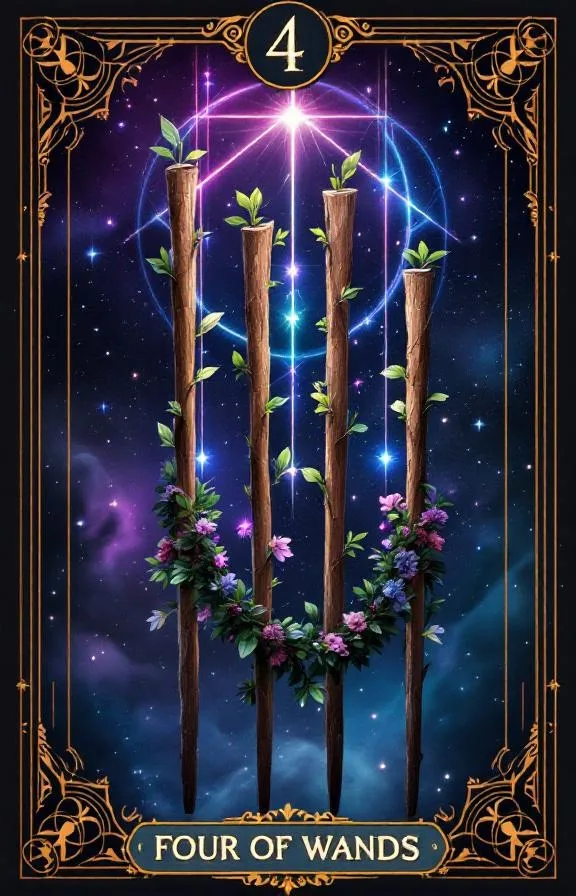
When the Four of Swords appears as feelings, someone has emotionally stepped back from the world. This is not coldness or indifference — it is the deliberate withdrawal that follows exhaustion. The mind has been overworked, the heart has been overstimulated, and the only honest response is to stop. To rest. To let the noise settle into something navigable.
In short: The Four of Swords as feelings represents emotional retreat born from genuine exhaustion. Environmental psychologist Stephen Kaplan's Attention Restoration Theory demonstrates that cognitive fatigue is real and measurable — and that recovery requires environments and behaviors that allow the mind to rest without demand. Upright, this card signals needed recovery and protective withdrawal. Reversed, it points to restlessness, forced isolation, or the inability to find peace.
The emotional core of the Four of Swords
The Four of Swords shows a figure lying in repose, eyes closed, three swords above and one below. As a feeling, it captures the moment when the body and mind jointly declare: enough. Not surrender — strategic retreat.
Nimm dir einen Moment, um über das Gelesene nachzudenken. Was passt zu deiner aktuellen Situation?
Stephen Kaplan's Attention Restoration Theory, developed through decades of environmental psychology research, identified that directed attention — the kind we use to analyze, decide, argue, and navigate — is a depletable resource. When it runs out, we experience what Kaplan called "directed attention fatigue": irritability, impulsivity, difficulty concentrating, and emotional flatness. The Four of Swords as a feeling is this fatigue recognized and honored.
What makes this card distinct from other withdrawal cards is its intentionality. The figure is not hiding from enemies or nursing wounds in secret. They have laid down their sword by choice, in a sacred space, with the expectation that rest will restore what effort has depleted. This is not collapse. It is discipline.
Psychologist Alex Soojung-Kim Pang, in his research on deliberate rest, found that the most productive and creative people throughout history structured their lives around intentional recovery periods. Darwin took long walks. Poincare stepped away from mathematics to let solutions surface unconsciously. The Four of Swords as a feeling reflects this wisdom: sometimes the most emotionally intelligent thing you can do is stop trying to feel anything at all and simply let yourself be quiet.
Four of Swords upright as feelings
When the Four of Swords appears upright as someone's feelings, the dominant emotional state is protective stillness. This person is not emotionally available — not because they do not care, but because they have temporarily exhausted their capacity to engage. They need space, and that need is non-negotiable.
In relationships, this manifests as withdrawal that can be easily misread. The partner who suddenly stops texting with their usual frequency, who declines invitations without detailed explanations, who seems present but not quite reachable — they may be experiencing the Four of Swords. The crucial distinction is that this withdrawal is not about you. It is about their depleted reserves.
Kaplan's research showed that restoration requires what he called "soft fascination" — gentle environmental stimulation that engages the mind without demanding directed attention. A walk through nature, gazing at clouds, listening to rain. The person feeling the Four of Swords is seeking their version of this: conditions where they can exist without performing, processing, or producing.
Imagine someone who has spent weeks navigating a family crisis while maintaining a demanding job and processing the end of a friendship. One evening, they come home, turn off their phone, and sit in silence. They are not depressed. They are not angry. They are simply full — unable to absorb one more piece of emotional information without risking breakdown. That deliberate emptying is the Four of Swords' emotional signature.
In self-reflection, this card validates your need for rest. If you feel guilty about withdrawing, the Four of Swords says: this is not selfishness. This is maintenance.
Four of Swords reversed as feelings
Reversed, the Four of Swords describes the inability to rest despite desperately needing to. The exhaustion is still present, but the conditions for recovery are absent — either because external demands will not relent or because the person's own mind will not quiet itself.
The primary feeling is restless exhaustion. The body is tired but the mind races. Sleep comes in fragments punctuated by anxiety. Quiet moments fill with intrusive thoughts rather than restoration. This is what happens when Kaplan's directed attention fatigue is not addressed: the system keeps running on empty, producing increasingly degraded output.
In relationships, the Four of Swords reversed can indicate forced isolation rather than chosen retreat. Perhaps someone is alone not because they needed space but because they have been shut out or abandoned during a vulnerable period. The solitude that should heal instead intensifies the pain.
Another manifestation is premature return. The person rested briefly but not long enough, pushed back into engagement before their resources were replenished. They function, but poorly — snapping at small provocations, unable to listen with genuine attention, emotionally brittle in ways that surprise them.
The warning sign is the glorification of exhaustion as productivity. Someone who insists they are "fine" while visibly depleted is often in the Four of Swords reversed — needing rest they will not allow themselves to take.
In love and relationships
In romantic readings, the Four of Swords as feelings asks for patience. When someone feels this card toward you, they are not pulling away from you specifically. They are pulling away from everything to protect their ability to be present for anyone, including you, in the future.
Relationship therapist Esther Perel has written extensively about the space needed within intimate partnerships. She argues that desire requires distance — not emotional coldness but the recognition that two people cannot continuously merge without losing the individuality that made them attractive in the first place. The Four of Swords in love aligns with this principle: sometimes the most loving thing a partner can do is take space so they can return to you whole.
If you are drawing this card about your own feelings in a relationship, it may be signaling that you need to replenish before you can give. This is not failure. It is emotional honesty about your current capacity.
Reversed in love, the card warns that someone's need for rest is being ignored — either by their partner or by themselves. A relationship that demands constant emotional availability without allowing for recovery will eventually deplete both people.
When you draw the Four of Swords as feelings in a reading
If the Four of Swords appears as feelings in your reading, the message is permission. Permission to stop performing emotional labor. Permission to be unavailable. Permission to close your eyes and let the world manage itself for a while.
Ask yourself: When did I last rest without guilt? What am I afraid will happen if I stop being available? Am I confusing emotional exhaustion with emotional failure?
The Four of Swords reminds you that rest is not the opposite of love. It is its prerequisite.
Explore what this period of restoration reveals with a free reading.
Frequently asked questions
What does the Four of Swords mean as feelings for someone?
The Four of Swords indicates someone is emotionally exhausted and needs space to recover. Their withdrawal is not rejection — it is self-preservation. They care but currently lack the capacity to engage fully.
Is the Four of Swords a positive card for feelings?
It is a card of necessary pause. Upright, it positively signals self-awareness about emotional limits and the wisdom to rest. Reversed, it warns that needed rest is not happening, which can lead to breakdown.
How does the Four of Swords reversed differ as feelings?
Reversed, the need for rest remains but the ability to rest is compromised. The person is exhausted but cannot find peace — either due to external pressure, internal anxiety, or forced isolation that prevents genuine recovery.
Explore the full guide to all 78 cards as feelings or discover the Four of Swords' complete meaning. Ready to explore what the cards reflect about your emotions? Try a free reading.