
Hier ist eine Wahrheit, die die meisten Tarot-Ratgeber nicht aussprechen: Die Qualität deiner Deutung wird zu etwa 90 Prozent bestimmt, bevor du das Deck auch nur berührst. Sie wird durch die Frage bestimmt, die du mitbringst. Eine vage Frage liefert eine vage Deutung. Eine Frage, die am Thema vorbeigeht, beantwortet das Falsche. Und eine Frage, die im Grunde eine verkleidete Bitte um Bestätigung ist, liefert nichts außer der Bestätigung, die du dir schon zurechtgelegt hattest.
Schlechter Input, schlechter Output. Kein mystisches Prinzip — ein Informationsprinzip. Es gilt für Therapiegespräche, Vorstellungsgespräche, Google-Suchen und Tarotlektüren gleichermaßen. Das Werkzeug funktioniert nur so gut, wie der Input es erlaubt. Die antike Philosophie verstand das vor vierundzwanzig Jahrhunderten: Das untersuchte Leben beginnt nicht mit Antworten, sondern mit den richtigen Fragen. Die Qualität deiner Selbsterkenntnis ist dauerhaft begrenzt durch die Qualität deiner Selbstbefragung. Ein Tarotdeck ist eines der zugänglichsten Instrumente zur Selbstbefragung, die je erfunden wurden — aber nur so gut, wie das, was du es fragst.
Dieser Leitfaden gibt dir fünfzig Fragen, die wirklich funktionieren — geordnet nach Lebensbereich, geprüft an den psychologischen Prinzipien, die reflektierendes Fragen wirksam machen, und so gestaltet, dass sie Deutungen liefern, die dir etwas sagen, was du noch nicht wusstest.
Kurz gesagt: Die Qualität einer Tarotlektüre wird zu 90 Prozent durch die Frage bestimmt, die du mitbringst. Gute Fragen sind offen, auf dich selbst ausgerichtet, gegenwartsbezogen und aufrichtig neugierig. Ersetze "Kommt er zurück?" durch "Was sehe ich in dieser Beziehung nicht?" — und die Deutung wechselt von Wahrsagerei zu Einsicht. Fünfzig Impulse zu Liebe, Beruf, Selbstentdeckung, schwierigen Situationen und täglicher Praxis sind hier nach Lebensbereich geordnet.
Der Aufbau einer guten Tarot-Frage
Nicht alle Fragen sind gleich. In der motivierenden Gesprächsführung — einem klinischen Rahmen, der in den 1980er Jahren entwickelt wurde, um Menschen bei der Auflösung von Ambivalenz zu helfen — ist die wichtigste Einzelfähigkeit das Stellen "offener Fragen". Das sind Fragen, die nicht mit einem einzigen Wort beantwortet werden können. Sie erfordern Reflexion. Sie laden dazu ein, nach innen statt nach außen zu schauen.
Dasselbe Prinzip gilt für Tarot. Eine gute Tarot-Frage hat vier Eigenschaften:
Sie ist offen. Sie beginnt mit "Was", "Wie" oder "Wo" statt mit "Wird", "Wann" oder "Tut". Offene Fragen erzeugen Einsicht. Geschlossene Fragen erzeugen Angst.
Sie ist auf dich selbst ausgerichtet. Sie fragt nach dir — deinen Mustern, deinen blinden Flecken, deinen Entscheidungen — nicht nach den Gefühlen oder Absichten einer anderen Person. Du bist die einzige Variable in dieser Deutung, die du wirklich verändern kannst.
Sie ist gegenwartsbezogen oder wachstumsorientiert. Sie fragt nach der aktuellen Situation oder dem nächsten Schritt, nicht nach einem festgelegten zukünftigen Ergebnis. "Was kann ich tun, um das zu verbessern?" bringt dich voran. "Wird das gut gehen?" hält dich fest.
Sie ist aufrichtig neugierig. Sie sucht Informationen, die du noch nicht hast, statt Bestätigung für etwas, das du bereits entschieden hast. Der Unterschied ist subtil, aber entscheidend: "Was sehe ich in dieser Situation nicht?" ist Neugier. "Wird alles gut werden?" ist eine Bitte um Trost.
Vergleiche diese Paare:
| Schwache Frage | Starke Frage |
|---|---|
| Kommt er zurück? | Was sehe ich in dieser Beziehung nicht? |
| Wann bekomme ich einen neuen Job? | Was blockiert mich bei der Arbeit, die ich wirklich will? |
| Liebt sie mich? | Was braucht diese Beziehung jetzt von mir? |
| Werde ich glücklich sein? | Was steht heute zwischen mir und Zufriedenheit? |
| Ist das die richtige Entscheidung? | Was müsste ich wissen, um mir hier selbst zu vertrauen? |
Die schwachen Fragen teilen alle dieselbe Struktur: Sie bitten eine externe Kraft, ein festgelegtes Ergebnis vorherzusagen. Die starken Fragen teilen eine andere Struktur: Sie laden dich ein, deine eigene Situation ehrlicher zu untersuchen. Die eine Gruppe liefert Wahrsagerei. Die andere liefert Einsicht.
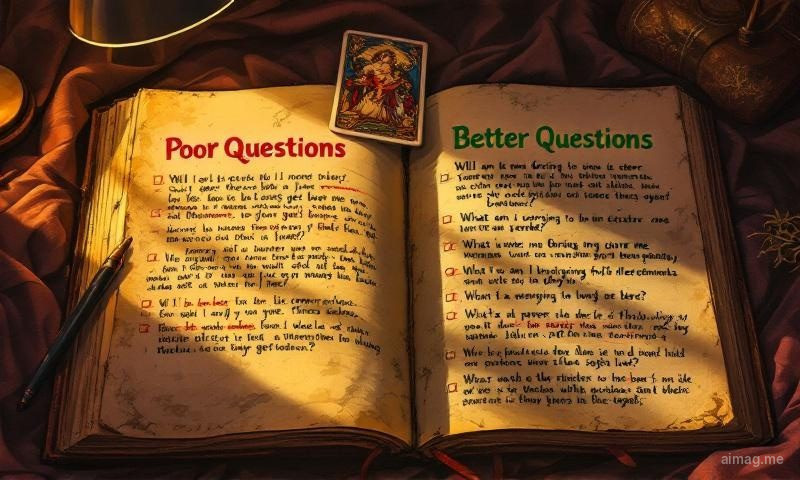
Fragen, die du vermeiden solltest — und warum
Bevor es zu den fünfzig Impulsen geht, die funktionieren, hier die drei Kategorien, die konsequent zu leeren Deutungen führen:
Ja/Nein-Fragen. "Bekomme ich die Beförderung?" "Ist er mein Seelenverwandter?" "Soll ich umziehen?" Diese Fragen behandeln Tarot wie einen Münzwurf. Selbst wenn du eine Antwort bekommst, sagt sie dir nichts über das Warum — und im Warum liegen all die nützlichen Informationen. Wenn du merkst, dass du eine Ja/Nein-Frage formulierst, wandle sie um: "Was muss ich über diese Beförderung verstehen?" öffnet eine Tür, die "Bekomme ich sie?" geschlossen lässt. (Mehr dazu in unserem Leitfaden zu jenseits von Ja oder Nein.)
Fragen über das Innenleben anderer Menschen. "Vermisst mein Ex mich?" "Was denkt meine Chefin?" "Ist meine Freundin neidisch auf mich?" Du kannst nicht für jemanden legen, der nicht anwesend ist. Noch wichtiger: Diese Fragen handeln fast nie wirklich von der anderen Person. Sie handeln von deiner Angst. Die eigentliche Frage hinter "Vermisst mein Ex mich?" lautet meistens: "Bin ich es wert, vermisst zu werden?" — und diese Frage kannst du zu einer Deutung mitbringen.
Timing- und Vorhersagefragen. "Wann werde ich jemanden kennenlernen?" "Wie lange, bis ich mich erhole?" "In welchem Monat ändern sich die Dinge?" Tarot hat keinen Kalender. Diese Fragen setzen eine feststehende Zukunft voraus, und die Zukunft ist nicht feststehend. Sie wird durch deine Entscheidungen geformt, die durch dein Bewusstsein geprägt werden — und genau das soll eine gute Deutung verbessern. Tarot um Timing zu bitten heißt, das falsche Werkzeug für die falsche Aufgabe einzusetzen.
David Cooperrider, der Organisationspsychologe, der in den 1980er Jahren Appreciative Inquiry entwickelte, zeigte, dass die Fragen, die ein System stellt, buchstäblich die Richtung bestimmen, in die es sich bewegt. Gemeinschaften, die fragen "Was stimmt mit uns nicht?", finden Probleme. Gemeinschaften, die fragen "Was funktioniert, und wie bauen wir darauf auf?", finden Lösungen. Deine Tarotpraxis funktioniert genauso. Die Fragen, die du mitbringst, bestimmen nicht nur die Antworten, die du erhältst, sondern auch die Richtung, in die sich dein Denken nach der Deutung bewegt.
Liebe und Beziehungen — 10 Fragen
Diese Fragen funktionieren für romantische Beziehungen, Freundschaften, familiäre Dynamiken und die Beziehung, die du zu dir selbst hast. Jede ist darauf ausgelegt, etwas Bestimmtes sichtbar zu machen.
-
Was sehe ich in dieser Beziehung gerade nicht? Zielt auf blinde Flecken — die Muster, Dynamiken oder Gefühle, denen du ausgewichen bist, weil sie unbequem oder schmerzhaft sind. Das ist die produktivste Beziehungsfrage, die du einem Deck stellen kannst.
-
Was braucht diese Beziehung von mir, das ich bisher nicht gegeben habe? Verlagert den Fokus davon, was du bekommst, auf das, was du einbringst. Oft zeigt sie die Lücke zwischen dem, wie du deine Bemühungen erlebst, und der Art, wie sie wirklich ankommen.
-
Welches Muster aus meiner Vergangenheit wiederhole ich in dieser Beziehung? Lädt die Deutung ein, vererbte Vorlagen sichtbar zu machen — Bindungsstile, Kommunikationsgewohnheiten oder Erwartungen, die aus der Familie oder früheren Partnerschaften stammen.
-
Wo gebe ich zu viel von mir, und warum? Nützlich für Menschen, die in Beziehungen über-funktionieren und dann die Unausgewogenheit als Groll erleben. Das "Und warum" ist der wichtige Teil — es geht über das Verhalten hinaus zur Überzeugung, die es antreibt.
-
Wie würde eine gesündere Version dieser Verbindung aussehen? Erzeugt eine zukunftsorientierte Vision statt einer vergangenheitsorientierten Klage. Besonders wirksam, wenn du weißt, dass etwas nicht stimmt, aber nicht artikulieren kannst, was "besser" bedeuten würde.
-
Was habe ich Angst, dieser Person zu sagen — und was sagt mir diese Angst? Deckt das Unausgesprochene auf. Die Angst selbst ist oft aufschlussreicher als das, was du zurückhältst. Diese Frage funktioniert besonders gut mit dem Drei der Schwerter oder dem Sieben der Schwerter.
-
Wie schütze ich mich auf eine Weise, die Liebe tatsächlich fernhält? Adressiert defensive Strategien — emotionale Mauern, vorweggenommenen Rückzug, Loyalitätstests —, die aus gutem Grund entstanden, aber womöglich ihre Nützlichkeit überlebt haben.
-
Was muss ich vergeben — an dieser Person oder an mir selbst —, um vorwärtszukommen? Vergebungsfragen umgehen den Widerstand des Egos, Schmerz zuzugeben. Eine Deutung zu dieser Frage zeigt oft, dass die Person, der du am meisten vergeben musst, du selbst bist.
-
Was lehrt mich diese Beziehung gerade, auch wenn die Lektion unbequem ist? Rahmt die Beziehung als Spiegel statt als Transaktion. Nützlich in Konflikten, wenn die Versuchung groß ist, sich ganz darauf zu konzentrieren, was die andere Person falsch macht.
-
Bleibe ich aus Liebe — oder aus Angst? Eine klärende Frage für alle, die den Verdacht hegen, aus den falschen Gründen in einer Beziehung zu sein, aber nicht direkt auf die Antwort schauen möchten. Ehrlich, unbequem und meistens erhellend. Für eine tiefere Deutung zu diesem Thema probiere den Beziehungs-Spread.
Beruf und Berufung — 10 Fragen
Arbeit ist Identität für die meisten Menschen, ob sie das zugeben oder nicht. Diese Fragen behandeln den Beruf nicht als Logistikproblem, sondern als Frage der Ausrichtung.
-
Welche Arbeit würde ich auch tun, wenn mich niemand dafür bezahlen würde? Umgeht die pragmatischen Filter und geht direkt zur intrinsischen Motivation. Die Antwort ist selten eine konkrete Berufsbezeichnung — meistens ist es eine Art von Tätigkeit oder eine Qualität des Engagements.
-
Was lehrt mich meine aktuelle Arbeit, auch wenn ich nicht hier bleiben möchte? Rahmt einen unbefriedigenden Job als Klassenzimmer statt als Gefängnis. Fast jede Stelle lehrt etwas Übertragbares, wenn du bereit bist, danach zu suchen.
-
Was weiche ich in meinem Berufsleben aus — und was würde passieren, wenn ich mich dem stellen würde? Ausweichen ist Information. Das, was du aufgeschoben hast — das schwierige Gespräch, die Bewerbung, der Kurswechsel — ist fast immer das, was am meisten zählt.
-
Wo trifft Angst meine beruflichen Entscheidungen statt echtem Wunsch? Trennt angstgesteuerte Entscheidungen (Bleiben, weil Gehen beängstigend ist) von wunschgesteuerten (Bleiben, weil man hier wächst). Die meisten Menschen entdecken, dass Angst mehr Entscheidungen getroffen hat, als ihnen bewusst war.
-
Welche Fähigkeiten oder Stärken unterschätze ich in mir? Cooperriders Appreciative-Inquiry-Prinzip, auf die Karriere angewendet: Baue auf dem auf, was bereits funktioniert, statt zwanghaft auf das zu starren, was fehlt.
-
Was müsste ich über mich glauben, um den nächsten Schritt in meiner Karriere zu wagen? Zeigt die Selbstkonzept-Barriere. Oft ist das Hindernis nicht Ressourcen, Timing oder Gelegenheit — sondern die Geschichte, die du dir selbst darüber erzählst, wer du bist und was du verdienst.
-
Was ist der Unterschied zwischen dem, was ich will, und dem, was ich glauben, wollen zu sollen? Trennt authentischen Ehrgeiz von übernommenen Erwartungen. Viele Berufskrisen handeln nicht vom falschen Job — sie handeln von der falschen Definition von Erfolg.
-
Wie kann ich der Arbeit, die ich bereits tue, mehr Sinn geben? Nützlich für Menschen, die ihren Job nicht sofort wechseln können. Sinn findet sich nicht nur in Traumkarrieren — er lässt sich auch innerhalb bestehender Rahmenbedingungen gestalten.
-
Was bin ich bereit, beruflich loszulassen, um Raum für etwas Neues zu schaffen? Wachstum erfordert Loslassen. Das könnte ein Titel sein, eine Gehaltserwartung, eine berufliche Identität oder eine Vorstellung davon, wie die Karriere "bis jetzt" hätte aussehen sollen. Für eine vollständige Berufslesung probiere den Karriere-Spread.
-
Wenn ich mir selbst vollständig vertrauen würde, was wäre mein nächster Karriereschritt? Entfernt die Selbstzweifel-Variable und fragt, was du bereits weißt. Die Antwort wartet oft in deinem peripheren Blickfeld auf Erlaubnis, ernst genommen zu werden.
Selbstentdeckung und Wachstum — 10 Fragen
Das sind die Fragen für Zeiten, in denen das Projekt keine Beziehung oder Karriere ist — sondern du. Sie funktionieren besonders gut mit dem Selbstentdeckungs-Tarot-Spread.
-
Welchen Teil von mir habe ich in letzter Zeit vernachlässigt? Weit genug, um alles an die Oberfläche zu bringen — Kreativität, Ruhe, körperliche Gesundheit, Freude, Spiritualität, Verspieltheit. Die Karte, die erscheint, sagt dir genau, welcher Teil sich gemeldet hat.
-
Welche Überzeugung über mich stimmt nicht mehr, aber ich trage sie noch mit mir? Zielt auf veraltete Selbsterzählungen. Die Person, die du mit zwanzig warst, hat Überzeugungen darüber geformt, was du kannst und was nicht. Viele dieser Überzeugungen sind abgelaufen, aber noch in Betrieb.
-
Was tue ich so, als würde ich es nicht wissen? Eine entwaffnende Frage. Die meisten Menschen, wenn sie ehrlich damit sitzen, werden entdecken, dass sie die Antwort auf das, was sie beschäftigt, bereits haben — sie weigern sich nur, hinzusehen.
-
Was muss mein Schatten-Selbst von mir anerkannt bekommen? Schattenarbeit auf eine einzige Frage destilliert. Der Schatten enthält alles, was du abgelehnt hast — Wut, Ehrgeiz, Verletzlichkeit, Begehren — und er taucht immer wieder auf, bis du es anerkennst. Der Schattenarbeit-Tarot-Spread ist speziell dafür konzipiert.
-
Wo wachse ich gerade, auch wenn es sich nicht nach Wachstum anfühlt? Wachstum fühlt sich oft wie Verwirrung, Unbehagen oder Verlust an. Diese Frage rahmt schwierige Phasen als entwicklend statt zerstörend.
-
Wie würde Selbstmitgefühl für mich heute aussehen? Konkret und gegenwartsbezogen. Nicht "Wie kann ich mich mehr lieben?" (zu vage), sondern "Was würde Mitgefühl heute aussehen, in dieser Situation, für diese Version von mir?"
-
Welche Geschichte erzähle ich mir über mein Leben, die mich begrenzt? James Pennebakers Forschung an der University of Texas zeigte, dass die Erzählungen, die Menschen über ihre Erfahrungen konstruieren, ihre psychische und körperliche Gesundheit direkt beeinflussen. Die Geschichten sind keine neutralen Beschreibungen — sie sind aktive Kräfte. Diese Frage fragt, welche deiner Geschichten zum Käfig geworden ist.
-
Wozu bin ich bereit geworden, wozu ich vor einem Jahr noch nicht bereit war? Wachstumsorientiert und zeitbewusst. Lädt dich ein, deine eigene Entwicklung anzuerkennen, statt dich auf den Weg zu konzentrieren, der noch vor dir liegt.
-
Was versucht mein Körper mir mitzuteilen, was mein Verstand immer wieder ignoriert? Überbrückt den Geist-Körper-Graben. Körperliche Anspannung, Erschöpfung, Rastlosigkeit und chronische Schmerzen sind oft die Art, wie der Körper kommuniziert, was das bewusste Denken sich weigert zu hören.
-
Was würde ich anders machen, wenn ich wüsste, dass ich so, wie ich jetzt bin, genug bin? Hinterfragt die Annahme, dass du jemand anderes werden musst, bevor du handeln kannst. Die meisten Menschen stellen fest, dass "genug" schon eingetreten ist — sie haben es nur noch nicht bemerkt.
Schwierige Situationen — 10 Fragen
Trauer, Konflikt, Angst, das Gefühl des Feststeckens. Diese Fragen sind für die harten Zeiten — wenn der Boden unsicher ist und die üblichen Ratschläge leer wirken.
-
Was muss ich an dieser Situation akzeptieren, dem ich mich widersetzt habe? Akzeptanz ist keine Zustimmung. Es ist die Entscheidung, aufzuhören, gegen die Realität zu kämpfen, um ihr klar begegnen zu können. Diese Frage benennt das Konkrete, dem du dich widersetzt.
-
Welche Stärke habe ich, an die ich gerade vergesse? In schwierigen Phasen verengt sich dein Selbstbild. Du vergisst, wozu du fähig bist. Diese Frage bittet die Deutung, dich daran zu erinnern.
-
Was versucht mir dieser Konflikt über meine eigenen Grenzen zu sagen? Rahmt Konflikt als Information darüber, wo deine Grenzen liegen — und wo sie gestärkt oder neu verhandelt werden müssen.
-
Was muss ich trauern, wozu ich mir keine Erlaubnis gegeben habe? Unverarbeitete Trauer verschwindet nicht. Sie steuert das Verhalten aus dem Hintergrund — Reizbarkeit, Taubheit, Ausweichen, emotionale Überflutung. Diese Frage benennt sie. Wer einen Verlust durchlebt, findet weitere Gedanken in Tarot für die Trauer.
-
Wohin zeigt mir meine Angst, wohin ich mich nicht zu schauen traue? Angst ist kein zufälliges Rauschen. Sie ist ein Signal — oft ein genaues —, dass etwas deine Aufmerksamkeit braucht. Diese Frage folgt dem Signal, statt zu versuchen, es zum Schweigen zu bringen.
-
Wie würde "gut genug" in dieser Situation aussehen, da Perfektion nicht zur Verfügung steht? Für Perfektionisten und Grübler. Wenn das ideale Ergebnis nicht möglich ist, lautet die pragmatische Frage, was "gut genug" tatsächlich bedeutet. Die Antwort ist meistens erreichbarer, als du denkst.
-
Woran halte ich fest, das das schwerer macht als es sein müsste? Benennt die Anhaftung — an ein Ergebnis, eine Version der Vergangenheit, eine Erwartung, einen Groll —, die eine schwierige Situation in eine unerträgliche verwandelt.
-
Wie kann ich mich durch das hier unterstützen, so wie ich eine Freundin oder einen Freund unterstützen würde? Forschung zum Selbstmitgefühl zeigt, dass Menschen anderen gegenüber konsequent freundlicher sind als sich selbst. Diese Frage schließt diese Lücke, indem sie dich zur Empfängerin deines besten Rates macht.
-
Was ist der kleinste Schritt, den ich heute in Richtung etwas Besserem unternehmen kann? Schrumpft das Problem auf eine handhabbare Größe. Wenn alles überwältigend wirkt, ist die Antwort auf "Was ist der kleinste Schritt?" fast immer machbar — und ihn zu tun schafft Schwung. Mehr dazu in unserem Leitfaden zu Entscheidungsmüdigkeit.
-
Was werde ich mir wünschen, getan zu haben, wenn ich in einem Jahr auf diese Zeit zurückblicke? Die Perspektive des zukünftigen Ichs. Distanz klärt. Diese Frage leiht sich diese Klarheit von deinem zukünftigen Ich und wendet sie jetzt an.
Tägliche und wöchentliche Praxis — 10 Fragen
Diese Fragen sind für den regelmäßigen Gebrauch gedacht — tägliche Züge, wöchentliche Check-ins oder Morgenrituale. Sie sind einfach genug, um sie bei einem Kaffee zu halten, und konkret genug, um echte Einsicht zu liefern.
-
Worüber muss ich mir heute am meisten bewusst sein? Die klassische Frage für den täglichen Zug. Offen, gegenwartsbezogen und aufrichtig neugierig. Sie funktioniert, weil sie nicht vorannahm, aus welcher Kategorie die Antwort kommen wird.
-
Welche Energie soll ich in diesen Tag tragen? Fragt nach einer Qualität statt nach einer Vorhersage. Die Karte wird zu einer Linse — "heute Geduld tragen" oder "heute Mut tragen" —, die formt, wie du dem begegnest, was auch immer kommt.
-
Was werde ich heute wahrscheinlich übersehen, wenn ich nicht aufpasse? Zielt auf den blinden Fleck des Moments. Besonders nützlich an vollen Tagen, wenn wichtige Dinge im Lärm untergehen.
-
Was aus der vergangenen Woche muss ich verarbeiten, bevor ich weitermache? Eine wöchentliche Check-in-Frage. Verhindert emotionalen Rückstau, indem sie benennt, was aufgenommen, aber nicht verdaut wurde — das Gespräch, das dich mehr gestört hat als zugegeben, der Erfolg, den du nicht gefeiert hast, das Gefühl, das du beiseitegeschoben hast.
-
Was ist meine Absicht für diese Woche — und was könnte ihr im Weg stehen? Eine zweiteilige Frage für die Montagslektüre. Der erste Teil setzt die Richtung. Der zweite benennt Hindernisse, solange sie noch theoretisch und handhabbar sind.
-
Wo bin ich diese Woche gewachsen, ohne es zu bemerken? Eine Freitagsfrage. Wachstum ist leise. Es geschieht im Hintergrund, während du auf Aufgaben und Fristen fokussiert bist. Diese Frage macht es sichtbar.
-
Welches Gespräch muss ich führen, das ich aufgeschoben habe? Das vermiedene Gespräch ist fast immer das wichtigste. Diese Frage bringt es sanft an die Oberfläche.
-
Wovon muss ich mich heute ausruhen? Nicht "Soll ich mich ausruhen?" (du kennst die Antwort bereits: Ja), sondern "Was braucht konkret Ruhe?" — dein Ehrgeiz, deine Wachsamkeit, deine soziale Performance, dein problemlösender Verstand.
-
Wofür bin ich dankbar, was ich als selbstverständlich betrachtet habe? Dankbarkeitsfragen sind mächtiger, wenn sie auf das Konkrete abzielen statt auf das Allgemeine. Diese Frage bittet dich, das zu finden, was du aufgehört hast zu bemerken, weil es zuverlässig wurde.
-
Was muss das heutige Ich von mir hören? Die persönlichste Frage auf dieser Liste. Sie bittet die Deutung, direkt zu dir zu sprechen — nicht zu einem generischen Suchenden, sondern zu der konkreten Person, die mit diesen Karten an diesem konkreten Tag sitzt. Wenn du neu in der täglichen Praxis bist, führt dich unser Leitfaden für die erste Tarotlektüre durch die Grundlagen.
Diese Fragen auf deine Situation personalisieren
Die fünfzig Fragen oben sind Ausgangspunkte. Die beste Tarot-Frage ist immer die, die du selbst schreibst — weil sie aus deiner tatsächlichen Situation kommt, nicht aus einer Liste, die jemand anderes gemacht hat.
Hier ist ein einfaches Rahmenwerk, um jedes vage Anliegen in eine produktive Tarot-Frage umzuwandeln:
Schritt 1: Benenne die Situation in einem Satz. "Ich stecke in einem Job fest, den ich hasse." "Meine Partnerin und ich streiten immer wieder über dasselbe." "Ich weiß nicht, was ich will."
Schritt 2: Erkenne, was du wirklich fühlst. Nicht das, was du fühlen solltest — sondern was du tatsächlich fühlst. Frustriert? Verängstigt? Taub? Verbittert? Erleichtert und schuldig wegen der Erleichterung?
Schritt 3: Wandle das Gefühl in eine "Was"- oder "Wie"-Frage um. "Was versucht mir meine Frustration über diesen Job zu sagen?" "Wie trage ich zu diesem wiederkehrenden Konflikt bei?" "Was würde ich wollen, wenn ich keine Angst hätte, das Falsche zu wollen?"
Schritt 4: Stelle sicher, dass die Frage auf dich selbst ausgerichtet ist. Wenn sie das Verhalten, die Gefühle oder Entscheidungen einer anderen Person betrifft, lenke sie um. "Warum verhält er sich so?" wird zu "Was verrät mir meine Reaktion auf sein Verhalten über mich?"
James Pennebakers vier Jahrzehnte Expressives-Schreiben-Forschung zeigten, dass Menschen, die über ihre Erfahrungen mit kausaler Sprache schreiben — "weil", "Grund", "verstehen" —, größere psychologische Verbesserungen zeigen als diejenigen, die Ereignisse nur beschreiben. Dasselbe gilt für Tarot-Fragen. Fragen, die danach suchen zu verstehen, warum du fühlst, was du fühlst, liefern bessere Deutungen als Fragen, die das Gefühl nur beschreiben.
Die Frage hinter der Frage
Manchmal ist die Frage, die du zu einer Deutung mitbringst, nicht die eigentliche Frage. Es ist die Oberfläche — die sozial akzeptable, ego-sichere Version von etwas Tieferem und Schwieriger.
"Soll ich diesen Job annehmen?" meint oft wirklich: "Darf ich mehr wollen als Stabilität?"
"Was denkt er von mir?" meint oft wirklich: "Glaube ich, dass ich es wert bin, über mich nachzudenken?"
"Was ist mein Lebenszweck?" meint oft wirklich: "Ist es in Ordnung, dass ich das noch nicht herausgefunden habe?"
Die Frage hinter der Frage ist der Ort, wo die eigentliche Deutung lebt. So findest du sie:
Stelle deine Frage — und frage dann "Warum ist mir das wichtig?" Frag immer weiter warum, bis du auf etwas stößt, das eine emotionale Reaktion auslöst — ein Kloß im Hals, ein Engegefühl in der Brust, ein plötzlicher Drang, das Thema zu wechseln. Das ist die eigentliche Frage.
Beobachte Widerstand. Wenn eine Frage dich unwohl fühlen lässt, ist sie wahrscheinlich näher an der Wahrheit als die, die sich sicher anfühlte. Das Ego schützt sich, indem es auf Fragen zulenkt, deren Antworten es schon kennt. Die Psyche wächst, indem sie bei denen sitzt, die sie nicht kennt.
Lies für das Gefühl, nicht für die Fakten. Wenn du Karten als Antwort auf deine Frage ziehst, achte weniger auf konkrete Vorhersagen und mehr auf den emotionalen Ton. Eine Deutung voller Kelche als Antwort auf eine Karrierefrage könnte sagen, dass dein Berufsproblem eigentlich ein emotionales Problem ist. Eine Deutung voller Schwerter als Antwort auf eine Beziehungsfrage könnte sagen, dass du Klarheit brauchst, keine Romantik.
FAQ
Wie viele Fragen sollte ich in einer einzigen Deutung stellen? Eine. Vielleicht zwei, wenn sie eng miteinander verbunden sind. Fünf Fragen in einer Sitzung stellt verwässert deine Aufmerksamkeit und liefert verstreute, unfokussierte Deutungen. Wähle die eine Frage, die jetzt am meisten zählt. Sitz vollständig mit ihr. Die anderen kannst du morgen stellen. Wenn du einen Drei-Karten-Spread machst, reicht eine Frage vollkommen.
Was, wenn ich nicht weiß, was ich fragen soll? Beginne mit "Was muss ich jetzt am dringendsten wissen?" — das ist das weitestmögliche Netz, und die Karten zeigen oft auf den spezifischen Bereich in deinem Leben, der Aufmerksamkeit braucht. Von dort aus kannst du verfeinern. Dein Nichtwissen ist an sich nützliche Information: Es bedeutet meistens, dass die eigentliche Frage eine ist, die du noch nicht bereit bist zu formulieren — und die Deutung kann dir helfen, sie zu finden.
Kann ich dieselbe Frage zweimal stellen, wenn mir die Antwort nicht gefallen hat? Du kannst. Aber beobachte, was du tust. Wenn die erste Antwort unangenehm war und du jetzt neu mischst in der Hoffnung auf eine angenehme, liegt das Problem nicht bei den Karten — sondern bei deiner Bereitschaft, mit dem zu sitzen, was sie dir gezeigt haben. In therapeutischen Begriffen heißt das "Beruhigungssuche", und sie macht Angst zuverlässig schlimmer, nicht besser. Sitz mit der ersten Deutung. Komm nach einer Woche mit derselben Frage zurück, wenn du eine andere Perspektive möchtest.
Soll ich immer über mich fragen, oder kann ich über eine Situation fragen? Du kannst absolut über Situationen fragen — "Was braucht dieses Projekt?" oder "Welche Energie ist in diesem Konflikt vorhanden?" sind vollkommen gültige Fragen. Die wichtige Unterscheidung ist zwischen einer Situation, an der du beteiligt bist (produktiv), und dem privaten Innenleben einer anderen Person (nicht produktiv, und nicht dein Recht zu erfahren). Eine nützliche Regel: Wenn die Antwort erfordern würde, den Verstand einer anderen Person zu lesen, formuliere die Frage um.
Deine Frage ist die Deutung
Jede Tarot-Leserin und jeder Tarot-Leser — menschlich oder KI — wird dir dasselbe sagen: Wer mit einer klaren, ehrlichen, auf sich selbst gerichteten Frage kommt, erhält eine Deutung, die etwas verändert. Wer mit "Sag mir meine Zukunft" kommt, erhält Unterhaltung. Beides ist in Ordnung. Aber nur eines davon ist ein Werkzeug für Wachstum.
Die fünfzig Fragen in diesem Leitfaden sind keine Vorschriften. Sie sind Einladungen zu einer bestimmten Qualität der Selbstbefragung — der Art, die antike Philosophen meinten, als sie sagten, das unbetrachtete Leben sei nicht lebenswert. Du brauchst nicht alle fünfzig. Du brauchst die eine, bei der du beim Lesen innegehalten hast, die eine, die ein kleines Aufflackern von Unbehagen ausgelöst hat, die eine, die du fast übersprungen hättest, weil sie zu nah an etwas Echtem war.
Das ist deine Frage. Bring sie zu den Karten.
Bring deine beste Frage zu einer kostenlosen KI-Tarotlektüre auf aimag.me/reading