There is a moment — and you know the one — when life seems to pivot on an axis you did not install. A job opens. A relationship ends. A phone call arrives at precisely the wrong hour and rearranges everything. You look back later and think: was that luck? Was that me? The Wheel of Fortune sits at the exact center of that question, spinning. It does not answer. It turns.
Card number ten in the Major Arcana, the Wheel marks the midpoint of the Fool's Journey and carries the weight of that position. Everything before it — the structures, the choices, the internal battles from The Magician through The Hermit — was preparation. Everything after it will be consequence. The Wheel itself is the hinge. And like all hinges, it moves in both directions.
In short: The Wheel of Fortune represents cycles, turning points, and the interplay of fate and free will at the midpoint of the Fool's Journey. Upright, it signals change already underway and the arrival of a genuine crossroads. Reversed, it reflects resistance to natural cycles or a conviction that misfortune is permanent. The card's deepest teaching is that you are both the figure on the wheel and the calm awareness watching it turn.
Wheel of Fortune at a Glance
| Attribute | Detail |
|---|---|
| Number | X |
| Element | Fire |
| Zodiac | Jupiter |
| Keywords (Upright) | cycles, destiny, turning points, expansion, fortune |
| Keywords (Reversed) | resistance, bad luck, stagnation, clinging |
| Yes / No | Yes |

What Does the Wheel of Fortune Mean?
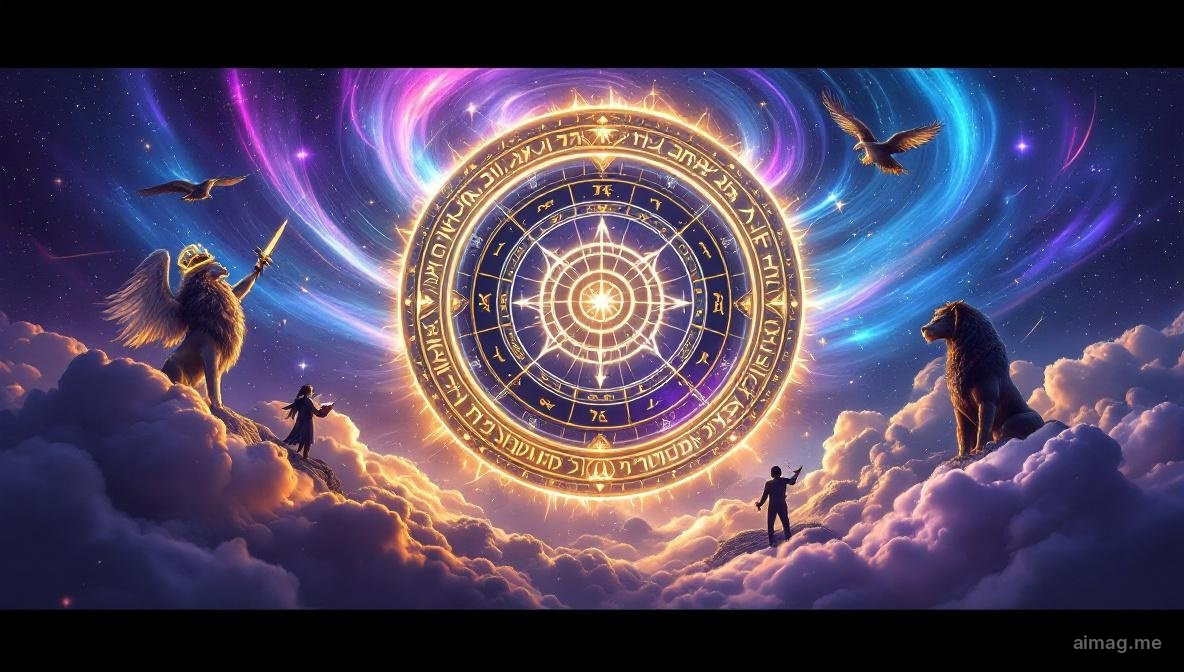
Look at the Rider-Waite-Smith card closely. The great wheel hangs in the sky — not resting on anything, not supported by any visible structure. Around its rim, letters alternate: T-A-R-O (or T-O-R-A, depending on where you start reading), interspersed with the Hebrew letters Yod-Heh-Vav-Heh, the unpronounceable name of the divine. Alchemical symbols mark the wheel's spokes. Three figures cling to its circumference: a serpent descending on the left, Anubis rising on the right, and a sphinx at the top, holding a sword. In the four corners of the card sit the same four creatures from The World — the angel, eagle, lion, and bull — each reading from an open book, calm and unbothered by the motion below them.
The symbolism is dense, but the central message is startlingly simple. Things change. They always have. They always will. And your relationship with that fact — whether you white-knuckle the rim or learn to read from the book — determines whether the Wheel's turning is experienced as catastrophe or as life itself doing what it does.
Jung named the phenomenon enantiodromia — a term borrowed from Heraclitus, describing the tendency of things to turn into their opposites at the point of their greatest intensity. Joy becomes sorrow. Power collapses into vulnerability. The miser becomes recklessly generous. It is not punishment; it is the inherent logic of psychic energy, which moves always toward balance. The Wheel of Fortune is enantiodromia made visible, painted on a card, placed at the exact center of the archetypal journey. As Arthur Edward Waite wrote in The Pictorial Key to the Tarot (1911), the Wheel represents "the perpetual motion of a fluidic universe and the flux of human life" — not a wheel of gambling, but a wheel of becoming.
In practice I've noticed that the Wheel tends to appear when someone is standing at a genuine crossroads but has not yet recognized it as one. The turning has already begun. The card is not warning of future change — it is naming change that is already underway.
 The four fixed creatures in the corners are often overlooked, but they are essential. They represent the four evangelists, the four elements, the four fixed signs of the zodiac — and they are not spinning. They sit above the wheel, reading, calm, witnessing. They are the part of consciousness that can observe the turning without being dragged by it. This is the card's deepest teaching: you are not only the figure on the wheel. You are also the awareness watching it turn. The question the Wheel poses is not "what will happen next?" but "from which vantage point are you watching?"
One reading that stayed with me involved a woman who had recently been laid off from a job she'd held for eleven years. She drew the Wheel of Fortune upright and immediately said, "I knew it." Not with despair — with something closer to relief. The wheel had been stuck for a long time, and she had been waiting for it to move again without quite admitting it to herself. Sometimes the turn is the mercy.
Wheel of Fortune Reversed
When the Wheel appears reversed, the turning has not stopped — it cannot stop — but the querent's relationship with it has become adversarial. There is a clinging to what was, a resistance to the natural rhythm of gain and loss that defines any human life. Or rather — there is an attempt to freeze the wheel in a position that feels safe, which produces exactly the kind of stuckness the card reversed often describes.
 Rachel Pollack notes in Seventy-Eight Degrees of Wisdom (1980) that the reversed Wheel often signals a period when external circumstances feel particularly beyond one's control — and the inner response to that lack of control is where the real work lies. The reversal does not mean that fate is conspiring against you. It means that the part of you designed to ride the wheel — to flex, adapt, release, and receive — has seized up. The machinery of acceptance has jammed.
A common pattern I see with the reversed Wheel is what might be called bad luck consciousness: a conviction that the universe is specifically targeting you, that the downturn is personal rather than cyclical. This conviction becomes self-reinforcing because it produces rigidity, and rigidity makes adaptation harder, which generates more negative outcomes, which confirms the belief. Breaking the loop requires — and this is genuinely difficult — the willingness to accept that the downturn is part of the cycle, not the entirety of it. The wheel will turn again. It always does.
Wheel of Fortune in Love & Relationships
Upright
The Wheel of Fortune in a love reading is one of the more exciting cards to encounter. It signals a turning point — a shift in romantic energy that is already in motion or about to arrive. For singles, this often manifests as a chance meeting, a sudden connection, or an unexpected reopening of a door that seemed permanently closed. The card does not promise permanence (nothing on the Wheel is permanent, that's the point), but it does promise movement.
In existing relationships, the upright Wheel often marks a new chapter. Perhaps a period of difficulty is ending and a fresh season of connection is beginning. Perhaps the relationship itself is evolving — deepening, changing form, entering new territory. The key quality the Wheel brings to love is dynamism. Stagnant relationships are shaken loose. Comfortable routines are disrupted in ways that, while initially destabilizing, tend to produce renewed vitality.
Reversed
Reversed in love, the Wheel signals resistance to a natural transition. Someone — you, your partner, or both — is trying to keep the relationship in a phase it has already outgrown. This might look like refusing to have a necessary conversation, ignoring signs that the dynamic has shifted, or clinging to an early-stage idealization long after reality has introduced its corrections.
There may also be a sense of romantic bad luck — a feeling that love keeps not working, that the pattern is always the same, that you are somehow cursed in this area of life. The reversed Wheel gently challenges this narrative. The pattern is not fate; it is a cycle, and cycles can be understood, which is the first step toward changing them.
Ready to explore what the Wheel of Fortune reveals about your love life? Get your free AI tarot reading →
Wheel of Fortune in Career & Finances
Upright
In career contexts, the Wheel of Fortune upright is one of the strongest signals of positive change. A promotion, a new opportunity, a shift in industry that works in your favor — the wheel is turning toward expansion. Jupiter's influence here is significant: this is a card of growth, luck, and the kind of opportunity that arrives when preparation meets circumstance. The Wheel does not create talent or skill out of nothing, but it does open doors that talent and skill can walk through.
Financially, the upright Wheel suggests an improvement in material circumstances. Investments may pay off. A period of financial difficulty may be ending. But — and this is important — the Wheel also reminds you that financial seasons are cyclical. The upswing is real, and it is also not permanent. Wise use of the good period prepares you for the next turn.
Reversed
Reversed in career, the Wheel can indicate setbacks that feel particularly unfair: a missed promotion, a market downturn, a project that collapses despite good work. The temptation is to interpret these as personal failures. The Wheel reversed suggests they are better understood as part of a larger cycle — not to dismiss the pain, but to prevent it from hardening into a narrative of permanent defeat.
Financially, the reversed Wheel may point to unexpected expenses or losses. The advice encoded in the reversal is: do not make permanent decisions based on temporary conditions. The wheel will turn. Build what you can while it does.
Wheel of Fortune in Personal Growth
The Wheel of Fortune touches one of the oldest questions in human psychology: the relationship between fate and agency. How much of your life do you control? How much controls you? The card's answer — characteristically — is: yes. Both. Simultaneously. The external circumstances of your life are, to a significant degree, beyond your direct control. The way you respond to those circumstances is not.
Joseph Campbell wrote in The Hero with a Thousand Faces (1949) about the mythological cycle of departure, initiation, and return — a wheel in its own right. The hero does not choose every obstacle, but the hero's growth comes from engaging each one fully rather than demanding a different journey. The Wheel of Fortune encodes this teaching at the structural level: you cannot stop the turning, but you can choose whether you turn with it.
Shadow work with the Wheel asks you to examine your relationship with control. Where are you gripping too tightly? Where have you surrendered agency you actually possess? The Wheel's shadow is fatalism on one side and control addiction on the other. Both are distortions of the same truth: life is a collaboration between your will and something larger than your will, and the art is in finding the rhythm between them. Not forcing. Not collapsing. Turning.
Wheel of Fortune Combinations
- Wheel of Fortune + The Tower: Dramatic, sudden change that may feel overwhelming but carries genuine transformative power. This pairing suggests that the turning point is sharp rather than gradual — prepare for rapid shifts rather than slow evolution.
- Wheel of Fortune + The Star: After the turn, hope. This is one of the most reassuring pairings in the deck — it suggests that the change the Wheel brings will lead to healing, clarity, and renewed faith in the process of life.
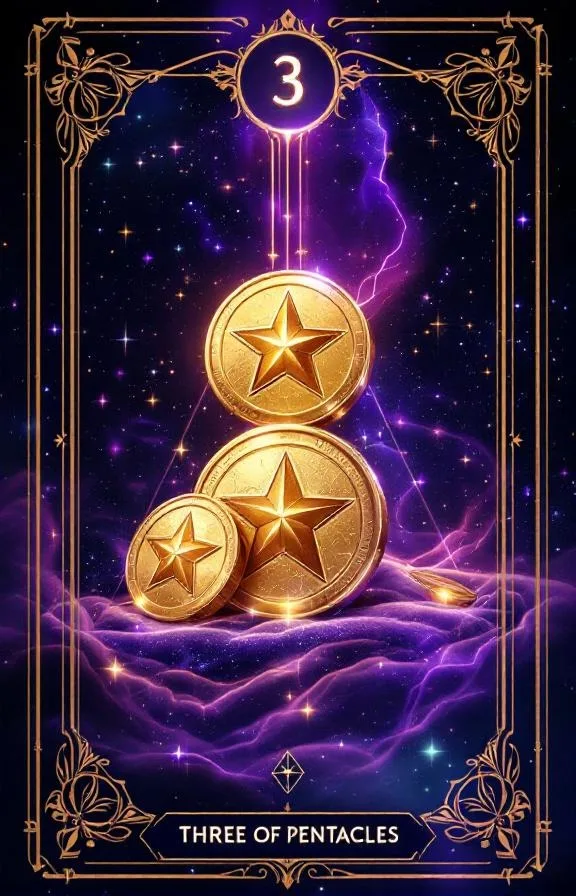
- Wheel of Fortune + Three of Pentacles: Collaborative success driven by good timing. The wheel turns in your professional favor, and the results will be best captured through teamwork and shared skill rather than solo effort.
- Wheel of Fortune + The Hermit: The turning point requires introspection before action. Don't rush the next move — withdraw, reflect, and let the wheel settle before committing to a direction.
- Wheel of Fortune + Ten of Swords: An ending that feels catastrophic but is actually the bottom of the cycle — meaning the only direction left is up. The Wheel promises that this nadir is not permanent.
Frequently Asked Questions
What does the Wheel of Fortune mean in a yes or no reading?
The Wheel of Fortune is generally a "yes" card, particularly when the question involves timing, change, or opportunity. Its energy favors movement and expansion. However, the yes comes with a caveat: the outcome is part of a larger cycle, and what arrives will itself transform over time. It is a yes to the next turn, not a yes to permanence.
Does the Wheel of Fortune mean good luck?
It can — but "luck" is a simplification the card resists. The Wheel represents cycles of fortune and misfortune as natural, interconnected phenomena. When upright, it tends to signal a favorable turn. But the deeper message is about your relationship with change itself: the person who can ride the wheel's turning without clinging or collapsing is, in the card's framework, genuinely fortunate regardless of external circumstances.
Is the Wheel of Fortune a fate card?
The Wheel addresses fate but does not endorse fatalism. It acknowledges that some events in life are beyond personal control — timing, circumstance, the actions of others — while simultaneously insisting that your response to those events remains your own. The four creatures in the corners of the card, calmly reading their books while the wheel turns below, represent the part of you that can witness and choose even when you cannot control.
How does the Wheel of Fortune relate to karma?
The Wheel is sometimes interpreted as a karma card, and there is a basis for this in its cyclical symbolism — actions produce consequences that produce further actions. But the card is less about cosmic reward and punishment than it is about pattern recognition. The cycles it depicts are psychological as much as metaphysical: what you have not integrated tends to return, wearing different costumes each time, until it is finally seen clearly enough to be met differently.
The wheel is already turning. Try a free AI-powered reading at aimag.me/reading and find out where you stand in the cycle — and what the next turn might bring.
Related Reading
- The Wheel of Fortune tarot card — full symbolism and imagery — the four creatures, the Hebrew letters, the sphinx, and the cyclical symbols on the wheel
- Archetypes you live by: Major Arcana as a map of the psyche — the Wheel as the humbling encounter with forces beyond individual control in the individuation journey
- Saturn return tarot reading: navigating major life transitions — the Wheel and Saturn return share themes of cyclical change and unavoidable reckoning
- Tarot predictions for 2026: what the major arcana reveals — the Wheel of Fortune as a framing card for reading large-scale cycles and annual themes