La herradura lleva siglos como símbolo de fortuna por una razón. No es magia. Es geometría. El arco crea una dirección de lectura natural — de izquierda a derecha, del pasado al futuro — que refleja la manera en que la mayoría de nosotros organizamos mentalmente el tiempo. No necesitas creer en la suerte. Necesitas una estructura que coincida con la forma en que tu mente ya funciona.
La tirada en herradura es uno de los esquemas de tarot más antiguos que aún se usan activamente, y su longevidad no es accidental. Funciona porque se corresponde con algo que el psicólogo cognitivo George Miller identificó en su influyente artículo de 1956, "El número mágico siete, más o menos dos". Miller demostró que la memoria de trabajo humana puede retener aproximadamente siete fragmentos de información discreta de forma simultánea. Una tirada de siete cartas no abruma la mente como a veces lo hace la Cruz Celta de diez cartas. Se sitúa justo en el límite superior del procesamiento cómodo: suficiente complejidad para ser significativa, pero sin que el lector se ahogue.
He usado tiradas en herradura durante años, y sigo volviendo a ellas cuando la pregunta es sobre trayectoria. ¿Dónde he estado? ¿Dónde estoy ahora? ¿A dónde lleva esto? Ese arco — pasado a través del presente hacia el futuro — es el lenguaje nativo de la herradura. Otras tiradas responden mejor a otras preguntas. Pero cuando la pregunta es sobre movimiento, dirección y la forma de un viaje, ningún esquema iguala esta disposición.
En resumen: La tirada en herradura del tarot mapea la trayectoria — pasado a través del presente hacia el futuro — usando un arco que coincide con la manera natural en que tu mente organiza el tiempo. Tres variantes sirven a preguntas distintas: una Herradura Clásica de siete cartas que funciona como un análisis de campo de fuerzas de tu situación, una Herradura para Resolución de Problemas de cinco cartas que rastrea los asuntos hasta su causa raíz, y una Herradura para Relaciones de siete cartas que revela cómo cada persona percibe la dinámica de manera diferente.
Tirada 1: La Herradura Clásica (7 cartas)
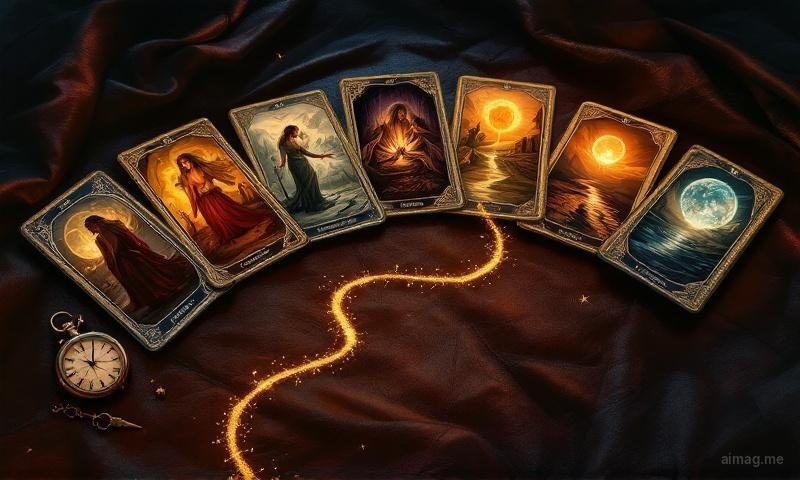
Siete cartas dispuestas en un arco que se curva hacia arriba, como una U invertida. Comienza desde la parte inferior izquierda, sube por la cima y desciende hacia la parte inferior derecha.
| Posición | Significado |
|---|---|
| 1 | El pasado — lo que te trajo aquí |
| 2 | El presente — dónde te encuentras ahora |
| 3 | Influencias ocultas — lo que no puedes ver pero está moldeando los eventos |
| 4 | Obstáculos — lo que se interpone entre tú y la resolución |
| 5 | Influencias externas — otras personas, circunstancias, el momento |
| 6 | Consejo — lo que tu conciencia más profunda está sugiriendo |
| 7 | El resultado probable — a dónde lleva esta trayectoria si nada cambia |
Cómo leerla: El poder de esta tirada vive en el arco. Las posiciones 1 a 7 no existen de forma aislada — cuentan una sola historia con un comienzo, una complicación y una resolución. Léelas secuencialmente primero, como capítulos. Luego vuelve y busca las relaciones entre ellas.
El par más importante es el de las posiciones 1 y 7. El pasado y el resultado. ¿Son armoniosos? Si El Carro está en la posición 1 (llegaste aquí con impulso y dirección) y La Rueda de la Fortuna está en la posición 7 (el resultado implica un punto de inflexión), la tirada te está diciendo que tu impulso inicial te llevará a un cambio significativo — pero un cambio, no un destino. El viaje cambia de carácter a mitad de camino.
La posición 3 — influencias ocultas — es donde la mayoría de la gente pasa demasiado rápido. Esta carta representa lo que tu mente consciente aún no ha registrado. Puede ser un sentimiento que has estado reprimiendo, una persona cuyo impacto has subestimado, o un patrón que repites sin darte cuenta. Tómate tiempo aquí. Si sacas La Justicia en esta posición, hay un ajuste de cuentas ocurriendo bajo la superficie. Algo está siendo sopesado, medido, evaluado — y quizás no lo sepas hasta que la balanza se incline.
La posición 6, la carta de consejo, merece atención especial. El universo no te está mandando un telegrama. Es tu propia mente inconsciente — la parte de ti que ha estado procesando esta situación en segundo plano, notando cosas que tu atención despierta pasó por alto — finalmente teniendo la oportunidad de hablar. Cuando El Seis de Espadas aparece aquí, el consejo es claro: márchate. Sigue adelante. La transición será incómoda, pero quedarte es peor.
El campo de fuerzas detrás del arco
Kurt Lewin, el psicólogo social que básicamente inventó la teoría moderna del cambio organizacional, desarrolló algo que llamó análisis de campo de fuerzas en los años cuarenta. La idea es engañosamente simple: cualquier situación se mantiene en su lugar por dos conjuntos de fuerzas — fuerzas impulsoras que empujan hacia el cambio y fuerzas restrictivas que empujan en contra. Para entender por qué algo está estancado, no solo miras el objetivo. Mapeas las fuerzas.
La Herradura Clásica es, lo supieran o no sus creadores, un análisis de campo de fuerzas desplegado en cartas. Las posiciones 1 y 2 establecen dónde estás. La posición 4 (obstáculos) y la posición 5 (influencias externas) representan las fuerzas restrictivas. La posición 6 (consejo) representa la fuerza impulsora que tu inconsciente recomienda activar. La posición 7 muestra qué ocurre cuando esas fuerzas se resuelven.
Por eso la tirada se siente tan completa. No solo te está mostrando una línea temporal. Te está mostrando un sistema de tensiones — y un sistema, a diferencia de una lista de eventos, puede trabajarse activamente.
Tirada 2: La Herradura para Resolución de Problemas (5 cartas)
Cinco cartas en un arco más pequeño. Misma forma de herradura, enfoque más estrecho. Esta es la tirada a la que recurro cuando la pregunta no es "¿cuál es la forma de mi viaje?" sino "tengo un problema específico y necesito analizarlo".
Coloca las cinco cartas en una curva suave, de izquierda a derecha.
| Posición | Significado |
|---|---|
| 1 | El asunto — cuál es el problema realmente (no lo que crees que es) |
| 2 | La causa raíz — qué creó esta situación |
| 3 | El obstáculo — qué está impidiendo la resolución |
| 4 | La acción recomendada — qué hacer a continuación |
| 5 | El resultado probable — a dónde lleva la acción |
Cómo leerla: La posición 1 suele ser la carta más reveladora de esta tirada, porque con frecuencia contradice el problema tal como lo describiste. Te sentaste pensando que el problema era tu trabajo. La carta dice que el problema es tu autoestima. Creías que el problema era una relación. La carta dice que el problema es tu miedo a estar solo. Presta atención a la brecha entre lo que esperabas y lo que apareció. Esa brecha es la lectura.
La posición 2 es arqueológica. Excava bajo el problema para encontrar su origen. No se trata de culpa — se trata de comprensión. Si El Diez de Bastos aparece aquí, la causa raíz es el exceso crónico de compromisos. No llegaste a este problema de repente. Entraste en él de a poco, un "sí" a la vez, durante meses o años, hasta que el peso se volvió insoportable.
La relación entre la posición 3 (obstáculo) y la posición 4 (acción) es donde vive el valor práctico. El obstáculo nombra la resistencia. La acción nombra la respuesta. Léelas como un par: "Esto es lo que está en el camino, y así es como abordarlo". Si el obstáculo es el Cinco de Copas (duelo, fijación en la pérdida) y la acción es el As de Bastos (nuevo comienzo creativo), la tirada está diciendo: el obstáculo es que sigues mirando hacia atrás, y la solución es empezar algo nuevo. No olvidar la pérdida. Comenzar de todas formas.
Lewin reconocería esta estructura de inmediato. La posición 1 es el estado actual. La posición 5 es el estado deseado. Las posiciones 2, 3 y 4 son el campo de fuerzas entre ellas — la causa raíz (una fuerza restrictiva que quizás olvidaste), el obstáculo (la fuerza restrictiva que sientes ahora mismo), y la acción (la fuerza impulsora que necesitas activar).
Tirada 3: La Herradura para Relaciones (7 cartas)
Siete cartas. El mismo arco. Pero ahora cada posición mapea una faceta diferente de una relación — romántica, platónica, familiar, profesional. Cualquier relación en la que dos personas intentan navegar un territorio compartido.
| Posición | Significado |
|---|---|
| 1 | Tu perspectiva — cómo ves la relación |
| 2 | Su perspectiva — cómo la experimenta la otra persona |
| 3 | La dinámica — el patrón que se desarrolla entre ustedes |
| 4 | La tensión — lo que no se dice o no se ha resuelto |
| 5 | El camino hacia la resolución — lo que ayudaría |
| 6 | La lección — lo que esta relación te está enseñando |
| 7 | La trayectoria — hacia dónde se dirige la relación |
Cómo leerla: Las posiciones 1 y 2 son un ejercicio de espejo. Tu visión frente a la suya. Estas dos cartas casi nunca coinciden, y esa discrepancia en sí misma es la información más valiosa de la tirada. Si la posición 1 muestra el Dos de Copas (tú ves armonía, conexión, afecto mutuo) y la posición 2 muestra el Siete de Espadas (la otra persona siente que algo se está ocultando, o ella misma está ocultando algo), acabas de identificar una brecha perceptual que ninguna cantidad de conversación superficial podrá remediar. La relación se ve diferente desde cada lado.
La posición 3 — la dinámica — describe el baile. Toda relación tiene uno. Es el patrón repetido, lo que ocurre entre ustedes quieran o no. El Emperador aquí significa que uno de ustedes controla y el otro se adapta. El Dos de Pentáculos significa que ambos están haciendo malabarismos, sin encontrar nunca la estabilidad del todo. La Templanza significa que realmente han encontrado el equilibrio — pero requiere un ajuste constante y consciente.
La posición 4, la carta de tensión, nombra lo que nadie está diciendo. Esta es la carta que incomoda a la gente porque casi siempre es precisa. La cosa no dicha. La conversación evitada. El resentimiento que ha estado fermentando silenciosamente en el fondo durante meses. Leer esta carta con honestidad es un acto de valentía, y con frecuencia es lo más productivo que ofrece toda la tirada.

La posición 7, la trayectoria, no es un veredicto. Es una proyección basada en la dinámica actual. Si la tensión sigue sin decirse y el patrón continúa sin cambios, aquí es donde terminarás. Es un futuro condicional — lo que significa que puedes cambiarlo cambiando los elementos de entrada. Si no te gusta lo que muestra la posición 7, vuelve a la posición 5 (el camino hacia la resolución) y empieza por ahí.
Cuando siete cartas se sienten como siete puertas
La investigación de Miller sobre la memoria de trabajo tiene una implicación práctica para el tarot que la mayoría de los lectores pasan por alto: siete no es solo un número conveniente. Es el límite de la comprensión simultánea. Cuando colocas siete cartas, tu mente puede mantener todas en procesamiento activo a la vez. Crea una sensación de totalidad — puedes ver el arco completo sin perder de vista las posiciones individuales.
Baja a cinco cartas y ganas enfoque pero pierdes complejidad. Sube a diez y ganas profundidad pero pierdes la capacidad de sostener la imagen completa de forma simultánea. Siete es el punto óptimo cognitivo, y no es una coincidencia que la tirada en herradura — con sus siete posiciones — haya sobrevivido mientras docenas de otras disposiciones de siete cartas han caído en desuso. La forma refuerza la secuencia. El arco le dice a tus ojos a dónde ir. De izquierda a derecha, de abajo hacia arriba y de vuelta abajo. Del pasado al presente al futuro. La tirada hace la mitad del trabajo interpretativo antes de que siquiera mires las cartas.
Consejos prácticos para la herradura
La disposición física importa. Deja espacio entre las cartas. Las cartas apretadas crean lecturas apretadas. El arco debe parecer una sonrisa suave sobre la mesa — abierto, amplio, con espacio para respirar. Si estás leyendo en una superficie pequeña, usa la Tirada 2 (cinco cartas) en lugar de forzar siete en un espacio reducido.
Lee la forma antes que las cartas. Antes de voltear cualquier cosa, observa dónde comienza el arco y dónde termina. El lado izquierdo es tu fundamento. El lado derecho es tu horizonte. La cima del arco — la posición 4 en la Clásica, la posición 3 en la de Resolución de Problemas — es el pico, el fulcro, el punto de bisagra. Cualquier carta que caiga ahí lleva un peso extra simplemente por su posición en la geometría.
Registra el arco, no solo las cartas. Cuando anotas una lectura en herradura, dibuja el arco y señala dónde cayó cada carta. Tres meses después, cuando mires hacia atrás, la forma de la lectura activará tu memoria con más eficacia que una lista de nombres de cartas. Recordarás el arco de la historia, no solo sus componentes.
Las cartas invertidas en la herradura añaden tensión direccional. Una carta invertida en la posición 1 (el pasado) sugiere asuntos pendientes — algo del pasado que no se ha integrado correctamente. Una carta invertida en la posición 7 (el resultado) sugiere que la trayectoria es incierta, inestable, o sujeta a cambios según decisiones que aún no has tomado.
Cartas que resuenan en la herradura
El Carro — En cualquier posición, El Carro confirma un movimiento dirigido. En la posición 1, llegaste aquí a través de la fuerza de voluntad. En la posición 7, el resultado implica tomar las riendas y elegir tu dirección conscientemente.
La Justicia — En la posición 3 (influencias ocultas), La Justicia advierte que un ajuste de cuentas se está gestando bajo la superficie. En la posición 6 (consejo), dice: sé justo. Incluso cuando ser justo es inconveniente.
La Rueda de la Fortuna — En la posición 7, la Rueda dice que el resultado es un punto de inflexión, no una conclusión. Algo cambiará. Si ese cambio te beneficia depende de cómo hayas manejado las posiciones 4 a 6.
El Seis de Espadas — En cualquier lugar de la herradura, esta carta habla de una transición necesaria. En la posición 4 (consejo en la de Resolución de Problemas), es la instrucción más clara posible: sigue adelante. Toma el bote. Cruza el agua.
El Diez de Bastos — En la posición 2 (causa raíz, Resolución de Problemas) o la posición 4 (obstáculo, Clásica), esta carta identifica la carga como el problema central. Estás cargando demasiado, y la tirada no puede mostrarte un buen resultado hasta que sueltes algo.
Preguntas frecuentes
¿En qué se diferencia la herradura de la Cruz Celta?
La Cruz Celta es panorámica — cubre tu situación desde diez ángulos simultáneamente. La herradura es cinematográfica — cuenta una historia con un principio, un nudo y un desenlace. La Cruz Celta responde "¿Qué está pasando?" La herradura responde "¿A dónde lleva esto?" Si tu pregunta es sobre entender un momento presente complejo, usa la Cruz Celta. Si tu pregunta es sobre trayectoria y movimiento, la herradura es la herramienta más adecuada.
¿Puedo usar la herradura para preguntas de sí o no?
Puedes, pero la estarás subutilizando. La herradura está diseñada para preguntas narrativas — preguntas sobre viajes, desarrollos y arcos. Para preguntas de sí o no, una tirada de tres cartas o una extracción de una sola carta te dará una respuesta más directa con menos ruido.
¿Qué pasa si la misma carta aparece en múltiples lecturas en herradura?
La repetición es énfasis. Si La Justicia sigue apareciendo en múltiples lecturas, tu mente inconsciente está insistiendo en un tema: justicia, responsabilidad, la necesidad de una autoevaluación honesta. No desestimes las cartas que se repiten como coincidencia. Son el equivalente en lectura de que tu mente te da un toque en el hombro y dice: "Todavía no hemos terminado con esto".
¿La herradura es buena para principiantes?
Excelente, de hecho. La estructura secuencial — pasado, presente, futuro — ofrece a los principiantes un marco narrativo que facilita la interpretación. No estás mirando siete cartas desconectadas. Estás leyendo una historia, y las historias son algo que la mente humana procesa de forma natural. Empieza con la Tirada 2 (cinco cartas) para ganar confianza, luego pasa a la Clásica completa de siete cartas cuando estés listo para mayor complejidad.
Un arco sobre la mesa. Siete cartas curvándose desde lo que fue hasta lo que podría ser, con el presente enredado y complicado sentado justo en la cima donde no puedes evitarlo. La herradura no predice tu futuro — mapea las fuerzas que actúan sobre tu situación ahora mismo, de la manera en que Lewin mapeó la dinámica organizacional hace setenta años, de la manera en que Miller mapeó los límites de la atención humana en 1956. El pasado empuja. El presente resiste. El futuro espera. Y tú, sentado en el centro de ese arco, puedes ver la imagen completa de una vez — las siete piezas sostenidas en tu mente simultáneamente, que es exactamente tantas como tu memoria de trabajo puede cargar. Eso no es una coincidencia. Es diseño. La tirada funciona porque respeta cómo piensas. Diez minutos, siete cartas, un arco. Y de repente la trayectoria que no podías ver tiene una forma, una dirección y — si lees la posición 6 con honestidad — una recomendación sobre qué hacer a continuación.