
Nadie te avisa de que el duelo te vuelve torpe. No de manera permanente — sino en ese sentido inmediato y funcional en que dejas las llaves en el frigorífico, olvidas tu propio número de teléfono y te quedas cuarenta minutos en la ducha porque no recuerdas qué viene después del champú. La disrupción cognitiva del duelo es uno de los aspectos de la pérdida mejor documentados y menos discutidos. El cerebro, desbordado por el trabajo de reconfigurar un mundo que ya no contiene a la persona en torno a la cual se organizaba, empieza a soltar todo lo demás.
Y en esa niebla, la gente te ofrece palabras. "Lo siento mucho." "Está en un lugar mejor." "El tiempo lo cura todo." Estas frases no son exactamente incorrectas. Simplemente son inútiles — recipientes perfectamente formados sin nada dentro. Quien las dice lo hace con buena intención. Quien las escucha se siente más solo que antes, porque la distancia entre lo que está viviendo y lo que el lenguaje puede sostener nunca ha sido mayor.
Aquí es donde el tarot se convierte en algo distinto a un juego de salón o una aplicación de moda. No porque las cartas sepan algo sobre la persona que perdiste. No lo saben. Pero el duelo es, en su esencia, un problema de falta de forma — una experiencia tan grande e informe que la mente no puede asirla — y el tarot es, en su núcleo estructural, un sistema para dar forma a lo que no la tiene. Toma el caos interior inmanejable de la pérdida y lo traduce en imágenes que puedes mirar, contemplar y empezar a comprender. No respuestas. Estructura. Y cuando tu mundo se ha derrumbado en un único hecho insoportable, eso es lo que más necesitas.
En resumen: El tarot ayuda a procesar el duelo externalizando el dolor informe en imágenes con las que puedes sentarte, creando un ritual con principio y fin, y ofreciendo vocabulario simbólico para experiencias que resisten el lenguaje. Cartas como el Cinco de Copas, la Muerte y la Estrella cartografían el terreno del duelo. Dos tiradas — la Silla Vacía y la Vela — proporcionan marcos estructurados para el luto, sin reemplazar el apoyo profesional.
La psicología del duelo — qué ocurre realmente dentro de ti
El duelo no es un sentimiento. Es un conjunto de procesos que se despliegan simultáneamente, a menudo en contradicción entre sí. Estás enfadado y te sientes culpable por estarlo. Sientes alivio y vergüenza por ese alivio. Echas de menos a alguien con una intensidad feroz mientras también estás furioso con él por haberse ido — aunque la partida no fuera su elección.
El marco más útil para entender este caos no viene de las famosas cinco etapas (que la propia Kübler-Ross dijo que nunca pretendió que fueran lineales ni universales) sino de las cuatro tareas del duelo de William Worden (1991). Worden, psicólogo en Harvard y en la Rosemead School of Psychology, pasó décadas estudiando el duelo y llegó a un modelo que lo trata no como algo que te sucede, sino como algo que haces activamente:
Tarea 1: Aceptar la realidad de la pérdida. Suena obvio. No lo es. La primera respuesta de la mente ante una pérdida catastrófica suele ser una negación suave y persistente — no "no ha muerto" sino "esto no puede ser permanente de verdad." Esperas que entren por la puerta. Alargás la mano hacia el teléfono para llamarles. Piensas "tengo que contarles esto" antes de recordar, otra vez, que no puedes.
Tarea 2: Elaborar el dolor del duelo. No manejarlo, no minimizarlo, no "mantenerse fuerte" a través de él — elaborarlo. Sentir el peso completo de lo que ha ocurrido. Esta es la tarea que la cultura moderna maneja peor, porque requiere que seas no funcional durante un tiempo, y la no funcionalidad no es algo que el mundo que te rodea tolere bien.
Tarea 3: Adaptarse a un mundo sin el fallecido. No es solo logístico (¿quién saca la basura ahora, a quién llamo cuando algo bueno sucede?). Es existencial. Construiste una identidad en relación con esa persona — como su pareja, su hijo, su amigo — y esa identidad ya no tiene un ancla viva.
Tarea 4: Encontrar una conexión duradera con el fallecido mientras se avanza hacia una nueva vida. Worden fue cuidadoso con este lenguaje. No dijo "dejar ir." Dijo "encontrar una conexión duradera" — una forma de llevar a la persona contigo que no te impida seguir viviendo. Esta es la tarea que lleva años, y nunca se termina del todo.
La investigación constructivista sobre el duelo añadió una dimensión crucial: la reconstrucción del significado. Los estudios sobre resultados del duelo mostraron que el único predictor más fuerte de si alguien desarrollaría un duelo complicado no era la naturaleza de la pérdida, sino su capacidad para encontrar significado en ella — para integrar la pérdida en una narrativa coherente sobre quién es y de qué trata su vida. Las personas que no podían encontrar sentido a la pérdida tenían una probabilidad significativamente mayor de desarrollar un trastorno de duelo prolongado.
Y luego está el modelo del proceso dual de Stroebe y Schut (1999), que observó algo que cualquiera que haya sufrido un duelo ya sabe: no se llora continuamente. Se oscila. Una hora estás inmerso en el dolor. La siguiente te ríes de algo en la televisión y luego te sientes culpable por esa risa. Stroebe y Schut llamaron a esta oscilación entre el afrontamiento orientado a la pérdida y el afrontamiento orientado a la restauración no un fracaso del duelo, sino el mecanismo saludable del duelo. La mente no puede sostener una confrontación plena con la pérdida indefinidamente sin romperse.
Por qué el tarot funciona para el duelo — y no es por la razón que crees
El tarot no funciona para el duelo porque las cartas contengan verdades místicas sobre el más allá o porque una baraja barajada pueda canalizar mensajes de los muertos. Funciona por tres razones psicológicas específicas que se corresponden directamente con la literatura clínica sobre el duelo.
Externalización
El duelo es interno, informe y abrumador. El tarot toma esa experiencia interna y la hace externa — literalmente la saca fuera de tu cuerpo, sobre una mesa, en forma de imágenes que puedes mirar desde cierta distancia. Es el mismo principio que hay detrás de la terapia de artes expresivas: el acto de externalizar una experiencia crea una separación entre tú y la experiencia que hace posible examinarla en vez de simplemente soportarla.
Cuando sacas el Cinco de Copas y ves una figura con la cabeza inclinada mirando tres copas volcadas mientras dos copas llenas permanecen de pie a sus espaldas, estás viendo tu duelo reflejado en una forma que es separada de ti. Esa separación — aunque sea temporal — es el comienzo de poder trabajar con el duelo en vez de ser consumido por él.
Ritual y contención
El duelo sin estructura se expande hasta llenar todo el espacio disponible. Sin límites, se convierte en el aire que respiras — constante, ineludible, indistinguible del resto de tu experiencia.
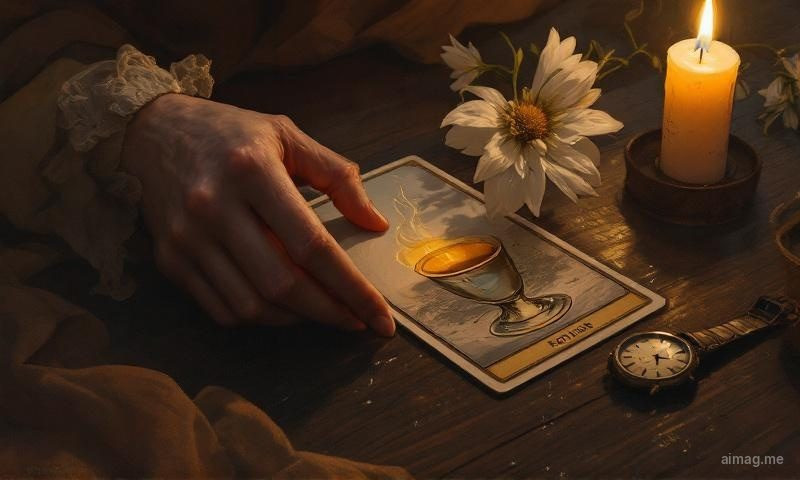
El tarot proporciona lo que los consejeros de duelo llaman un "contenedor del duelo" — un tiempo y espacio acotados en los que el duelo no solo está permitido sino invitado. Te sientas. Barajas. Extiendes las cartas. Miras. Sientes. Y luego las recoges. El ritual tiene un principio y un fin. Le da al duelo una ubicación — aquí, en esta mesa, con estas cartas — en lugar de dejar que esté en todas partes, todo el tiempo. Esto no es supresión. Es crear un espacio dedicado donde el duelo puede estar plenamente presente, lo que paradójicamente hace posible que el duelo esté ausente el resto del tiempo.
Vocabulario simbólico para lo indecible
La cualidad específica de la ausencia — la forma en que una habitación se siente cuando alguien que debería estar en ella no está, el vértigo de un futuro que ha sido amputado — estas experiencias resisten el lenguaje. Las palabras las aproximan pero siempre se quedan cortas, por eso "lo siento mucho" suena tan vacío.
Los símbolos hacen lo que las palabras no pueden. La imagen de la Muerte — un esqueleto sobre un caballo blanco, un rey caído, un sol que asoma en la distancia — dice fin-y-transformación-e-inevitabilidad-y-continuación todo a la vez, sin obligarte a elegir cuál de esas cosas estás sintiendo. Puedes mirar la carta y sentir todo eso simultáneamente, lo cual se acerca más a la experiencia real del duelo que cualquier frase.
Las cartas que hablan del duelo
Ciertas cartas aparecen con notable frecuencia en las lecturas de duelo — no porque la baraja sea sensible, sino porque su contenido simbólico se corresponde con las etapas arquetípicas del duelo. Estas son las cinco que es más probable que encuentres, y lo que realmente te están mostrando.
Cinco de Copas
El Cinco de Copas es la carta del duelo agudo. Una figura encapuchada está de pie con la cabeza inclinada, mirando tres copas volcadas — la pérdida, visible e innegable. Detrás de ella, dos copas permanecen en pie, pero la figura no las ve. No puede. Todavía no.
Esta carta no te está diciendo que "mires el lado positivo." Está validando la fase en la que te encuentras: la fase en que la pérdida es todo lo que puedes ver, y la idea de que algo permanece se siente como un insulto. La segunda tarea de Worden — elaborar el dolor — requiere que te pongas frente a esas copas volcadas y sientas el peso total de lo que se ha ido. Las dos copas detrás de ti seguirán ahí cuando estés listo para darte la vuelta. Ahora mismo, tu único trabajo es llorar lo que se ha perdido.
La Muerte
La Muerte es la carta más malentendida del mazo, y en ningún contexto más que el de la pérdida real. Sacarla cuando estás de duelo por una muerte real puede sentirse cruel. Pero la Muerte, la carta, no es sobre morir. Es sobre la transformación que sigue. La imagen Rider-Waite-Smith muestra un amanecer en el horizonte. Algo nuevo está emergiendo — no reemplazando lo que se perdió, sino creciendo desde el suelo que ocupaba.
Esto se corresponde directamente con el modelo de reconstrucción del significado del duelo. La carta no dice "supéralo." Dice: "estás en medio de una transformación tanto si la elegiste como si no, y la persona en que te estás convirtiendo llevará esta pérdida como parte de sus cimientos, no como una herida que necesita borrarse."
La Estrella
La Estrella sigue a La Torre en los Arcanos Mayores — es la carta que aparece después de la destrucción. Una figura se arrodilla junto al agua, vertiendo de dos vasijas, reponiendo lo que se había agotado. El cielo está abierto. Lo peor ya ha ocurrido.
En el duelo, La Estrella es el primer momento en que te das cuenta de que tu capacidad de esperar no fue destruida junto con todo lo demás. No es felicidad. Es algo más silencioso y más fundamental: el reconocimiento de que sobrevivirás esto, y que sobrevivir no es traición. Habla de la orientación a la restauración de Stroebe y Schut — los momentos en que vuelves a comprometerte con la vida no porque el duelo haya terminado sino porque eres más que tu duelo.
Tres de Espadas
El Tres de Espadas — un corazón atravesado por tres espadas contra un cielo de lluvia. No hay ambigüedad. Es dolor, representado sin eufemismos. Y sacarlo mientras estás de duelo puede sentirse redundante: ya sabes que estás sufriendo. ¿Por qué necesita mostrártelo la baraja?
Porque el reconocimiento en sí mismo es terapéutico. Uno de los hallazgos más consistentes en la investigación sobre el duelo es que el duelo que es presenciado — visto, validado, reflejado — se resuelve más completamente que el duelo soportado en aislamiento. El Tres de Espadas es un testigo. Dice: sí, esto es tan malo como crees que es. No estás exagerando. No estás siendo dramático. Tu corazón ha sido atravesado, y fingir lo contrario no es fortaleza. Es evasión.
Diez de Espadas
El Diez de Espadas muestra una figura boca abajo con diez espadas en la espalda — derrota total, fondo absoluto. Y, paradójicamente, es una de las cartas más consoladoras de sacar durante el duelo. Porque confirma lo que sientes: que esto es lo peor. No hay ningún lugar más bajo adonde ir.
Mira el fondo. El cielo es más oscuro justo encima, pero en el horizonte, la luz dorada está abriéndose paso. La imagen sostiene la dualidad del punto más bajo del duelo: la verdad simultánea de que estás completamente roto y de que la rotura es finita. No continuará para siempre — no porque alguien te lo prometa, sino porque hay un límite estructural a cuánto puede destruirse. Lo has alcanzado. Lo que viene después es diferente.
Dos tiradas para el duelo
Estas tiradas están diseñadas no para la predicción sino para un compromiso estructurado con la pérdida. Son marcos para realizar las tareas del duelo de Worden con las manos además de con el corazón.
La Tirada de la Silla Vacía (5 cartas)
Nombrada en referencia a la técnica de terapia Gestalt en la que un cliente le habla a una silla vacía como si la persona perdida estuviera sentada en ella. Esta tirada crea el mismo tipo de diálogo estructurado, usando las cartas como intermediarias.
| Posición | Significado |
|---|---|
| 1 | Lo que he perdido — la cualidad específica de la ausencia que más lloro |
| 2 | Lo que queda — lo que la relación dejó dentro de mí que la muerte no puede tocar |
| 3 | Lo que necesito decir — la conversación inacabada, las palabras que no se llegaron a pronunciar |
| 4 | Lo que ellos me dirían — no un mensaje del más allá, sino lo que sé de ellos suficientemente bien como para imaginarlo |
| 5 | Lo que llevo hacia adelante — cómo este amor da nueva forma a quien me estoy convirtiendo |
Cómo leerla: La posición 1 habla de la forma específica del agujero — el silencio particular, la rutina que falta, el chiste interno que nadie más entendería. La posición 2 es la cuarta tarea de Worden hecha visible: la conexión duradera, la parte de ellos que vive en ti ahora. La posición 3 suele ser la carta más difícil — casi siempre tenemos algo que no llegamos a decir. La posición 4 no es canalización. Es un acto de imaginación arraigado en el conocimiento íntimo — conocías a esta persona, y alguna parte de ti sabe lo que diría. La posición 5 no es "seguir adelante." Es seguir con.
Cuándo usarla: Cuando la pérdida no es reciente pero se ha asentado en el dolor constante de la ausencia. Cuando te encuentras queriendo hablar con alguien que ya no está.
La Tirada de la Vela (3 cartas)
Más sencilla, más inmediata, diseñada para la fase aguda cuando cinco cartas parecen demasiadas y todo lo que puedes hacer es sentarte con el dolor.
| Posición | Significado |
|---|---|
| 1 | La llama — lo que sigue vivo en mí, incluso ahora |
| 2 | La cera — lo que estoy soltando, lo que se está derritiendo |
| 3 | La luz — lo que este duelo está iluminando que antes no podía ver |
Cómo leerla: La posición 1 es la más importante. En el duelo agudo, puede sentirse como si todo hubiera muerto junto con la persona que perdiste — tu capacidad de alegría, de conexión, de importarte cualquier cosa. Esta carta te muestra lo que sobrevivió. Puede ser pequeño. Puede estar apenas parpadeando. Pero está ahí. La posición 2 es lo que el duelo está quemando — ilusiones sobre la permanencia, suposiciones sobre el futuro, quizás aspectos de ti mismo que solo estaban definidos en relación con la persona que perdiste. La posición 3 no trata de encontrar el lado bueno. El duelo no tiene lado bueno. Pero sí tiene claridad. La pérdida despoja todo lo que no importa y te muestra, con brutal precisión, lo que sí.
Cuándo usarla: Cuando el duelo es fresco y crudo. Cuando no puedes pensar con claridad. Cuando necesitas algo lo suficientemente sencillo para hacerlo entre lágrimas.

Cómo leer para ti mismo durante el duelo agudo
Leer el tarot mientras estás de duelo activo es diferente a leer en cualquier otro estado emocional. El duelo añade complicaciones que merecen una orientación específica.
No leas cuando estás buscando contacto. Si lo que quieres es un mensaje de la persona que murió, guarda las cartas. El tarot no es un médium, y usarlo como tal lleva a proyectar significado sobre imágenes aleatorias de maneras que se sienten temporalmente reconfortantes y en última instancia vacías. Las tiradas anteriores están diseñadas para la autorreflexión, no para sesiones de espiritismo.
Limítate a una tirada al día. El duelo tiene una cualidad compulsiva en la búsqueda de significado — el mismo impulso que te hace repasar las últimas conversaciones. Las lecturas repetidas no profundizan la comprensión. La difuminan. Saca las cartas una vez. Siéntate con ellas.
Escribe en un diario después de cada lectura. La investigación sobre la escritura expresiva ha demostrado que procesar la experiencia emocional a través de la escritura produce mejoras medibles en la salud psicológica y física. Escribe lo que sacaste. Escribe lo que sentiste. Escribe lo que todavía no entiendes. La escritura hará un trabajo integrador que la lectura sola no puede.
Para cuando el dolor se vuelva inmanejable. Si una carta desencadena una respuesta de duelo tan intensa que no puedes funcionar, detén la lectura. Cierra la tirada. Aléjate. Llama a alguien. El tarot es una herramienta para procesar el duelo, no un sustituto de la conexión humana o el apoyo profesional. El límite entre la autorreflexión terapéutica y la retraumatización es real, y solo tú sabes dónde está.
Deja que las cartas se equivoquen. Sacarás cartas que no coincidan con lo que estás sintiendo. Una carta alegre cuando estás devastado. Una carta sobre nuevos comienzos cuando no quieres que nada comience. No tienes que aceptar el mensaje aparente de cada carta. Puedes decir "todavía no" y seguir adelante.
Si encuentras que las lecturas de tarot durante el duelo siguen volviendo a los mismos temas, puede que estés listo para un trabajo de sombra más profundo — la práctica de examinar las partes de ti mismo que la pérdida ha expuesto. El duelo a menudo revela no solo lo que has perdido sino lo que estabas escondiendo detrás de la relación, el rol, la identidad que la pérdida desmanteló.
Preguntas frecuentes
¿Cuánto tiempo después de una pérdida puedo usar el tarot para procesarla?
No hay un período de espera obligatorio. Algunas personas encuentran que el ritual es reconfortante incluso en los primeros días — le da algo que hacer a sus manos y una estructura que seguir a su mente. Otras encuentran que las imágenes simbólicas son demasiado cuando el dolor es agudo. La Tirada de la Vela está diseñada para el duelo temprano. La Tirada de la Silla Vacía funciona mejor una vez que el shock inicial ha remitido. Confía en tu propio estado de preparación. Si coger las cartas se siente como demasiado, es demasiado.
¿Qué pasa si saco una carta "positiva" y me siento culpable por ello?
Sacar El Sol o La Estrella en una lectura de duelo puede provocar culpa — como si sentir esperanza fuera una traición a la persona que perdiste. No lo es. Las cartas positivas en un contexto de duelo no están diciendo "supéralo." Están reflejando una parte de ti que ya se está sanando, aunque el resto de ti no haya llegado todavía. El modelo del proceso dual de Stroebe y Schut identifica específicamente esta oscilación entre el duelo y la restauración como saludable. Se te permite sostener el dolor y la esperanza al mismo tiempo. Se te permite reír el día del funeral. Se te permite sacar La Estrella y sentir el más leve calor sin que eso signifique que has dejado de amar a la persona que se ha ido.
¿Puede el tarot reemplazar la orientación para el duelo?
No. El tarot es una herramienta de autorreflexión que puede complementar el apoyo profesional, pero no es terapia. Si tu duelo está interfiriendo con el funcionamiento diario durante un período prolongado, un consejero de duelo o terapeuta especializado en duelo es el recurso adecuado. El tarot proporciona estructura, simbolismo y ritual. Un terapeuta proporciona experiencia clínica e intervenciones basadas en evidencia. Para muchas personas el enfoque más eficaz es ambos: la práctica de autodescubrimiento del tarot junto con orientación profesional.
¿Es irrespetuoso usar las cartas de tarot cuando se está de duelo por una muerte real?
La pregunta asume que el tarot es trivial — un juego, un pasatiempo, algo que carece de la gravedad suficiente para sostener una pérdida real. Pero el tarot se ha usado para contemplar la mortalidad y la transición durante siglos. La carta de la Muerte existe porque la transformación a través de la pérdida es una de las experiencias humanas fundamentales. Usar el tarot para procesar el duelo no es una falta de respeto. Es usar un sistema simbólico exactamente para el tipo de experiencia que fue diseñado para sostener.
El duelo no es un problema que se resuelve. Es un proceso que se vive — de manera desordenada, no lineal, con retrocesos y avances y largas mesetas donde nada parece cambiar. Las cartas no pueden devolverte a la persona que perdiste. No pueden explicar por qué ocurrió esto. No pueden hacer que la ausencia duela menos.
Lo que sí pueden hacer es darte una manera de sentarte con el dolor que no es ni evitación ni ahogamiento. Un momento específico. Un lugar específico. Un conjunto de imágenes que sostienen una complejidad que tu mente sola no puede manejar. Y en ese encuentro estructurado con tu propio duelo — repetido a lo largo de días, semanas, meses — algo cambia. No el dolor. La relación con el dolor. Dejas de ser consumido por él y empiezas a ser moldeado por él. Y la persona que perdiste deja de ser alguien que dejaste atrás para convertirse en alguien que llevas contigo — en cada pregunta honesta que tienes el valor de hacerte en el espacio silencioso que dejó tras de sí.