The year 2026 reduces to the number 10 in tarot numerology (2+0+2+6=10), making it a Wheel of Fortune year — a period defined by cycles, turning points, and the uncomfortable truth that change is not something that happens to you occasionally but something that is happening constantly, whether you cooperate with it or not.
In short: 2026 is a Wheel of Fortune year, meaning its dominant theme is cyclical change — the recognition that what goes up comes down, what contracts eventually expands, and your relationship to change matters more than the changes themselves. Understanding this archetype psychologically can transform how you navigate the year's inevitable turning points.
This is not a mystical claim. The Wheel of Fortune, when understood psychologically rather than supernaturally, describes a set of cognitive and emotional dynamics that are well-documented in behavioral science: how humans respond to change, how we construct narratives of control and helplessness, and how the most adaptive people learn to work with cycles rather than against them.
The numerology: how 2026 becomes the Wheel
Tarot numerology works by reducing a year to a single number (or, in this case, a two-digit major arcana number) by adding its digits: 2+0+2+6=10. The tenth card of the major arcana is The Wheel of Fortune.
If you reduce further (1+0=1), you arrive at The Magician — the card of conscious creation and resource mastery. This double resonance matters: 2026 is a year where change is constant (Wheel of Fortune), but where your conscious response to that change determines whether it is generative or destructive (The Magician). The Wheel turns. The Magician decides what to do with each turn.
Previous Wheel of Fortune years — 1927, 1936, 1945, 1954, 1963, 1972, 1981, 1990, 1999, 2008, 2017 — share a common quality: they were years of significant transition, often experienced as turning points that were only fully understood in retrospect. The pattern is not predictive. It is descriptive. Wheel years feel like hinge points because the archetype they activate — change as a permanent condition rather than an interruption — creates a psychological context where transitions are noticed and named.
The psychology of cycles: why the Wheel matters
The Wheel of Fortune describes a psychological reality that most people resist: life is cyclical. Periods of growth follow periods of contraction. Success follows struggle. Clarity follows confusion. And then struggle follows success again. This is not pessimism. It is pattern recognition — and the research supporting it is extensive.

Julian Rotter, the psychologist who developed the concept of "locus of control" in 1954, identified a fundamental divide in how people relate to change. People with a strong internal locus of control believe that their actions significantly influence their outcomes. People with a strong external locus of control believe that outcomes are determined primarily by forces beyond their control — luck, fate, other people, or circumstances.
Neither extreme is accurate. The Wheel of Fortune embodies this nuance. The wheel turns — that is beyond your control. But where you position yourself on the wheel — clinging to the top, tumbling passively, or finding the still center — is within your control. Rotter's research demonstrated that the healthiest orientation is what might be called "realistic internality": believing that your actions matter while acknowledging that they do not determine everything.
Steven Hayes, the developer of Acceptance and Commitment Therapy (ACT), takes this further. Hayes identifies what he calls the "paradox of control": the observation that trying to control things that are inherently uncontrollable — other people's behavior, economic conditions, the passage of time — produces more suffering than the uncontrolled events themselves. ACT's solution is not resignation. It is a shift in what you try to control. Stop trying to stop the wheel from turning. Start choosing how to respond to each position it brings you to.
This is the Wheel of Fortune's core teaching for 2026: the wheel will turn. It always does. The question is not whether change will come — it will — but whether you have the psychological flexibility to turn with it.
The four quarters of the Wheel: 2026 month by month
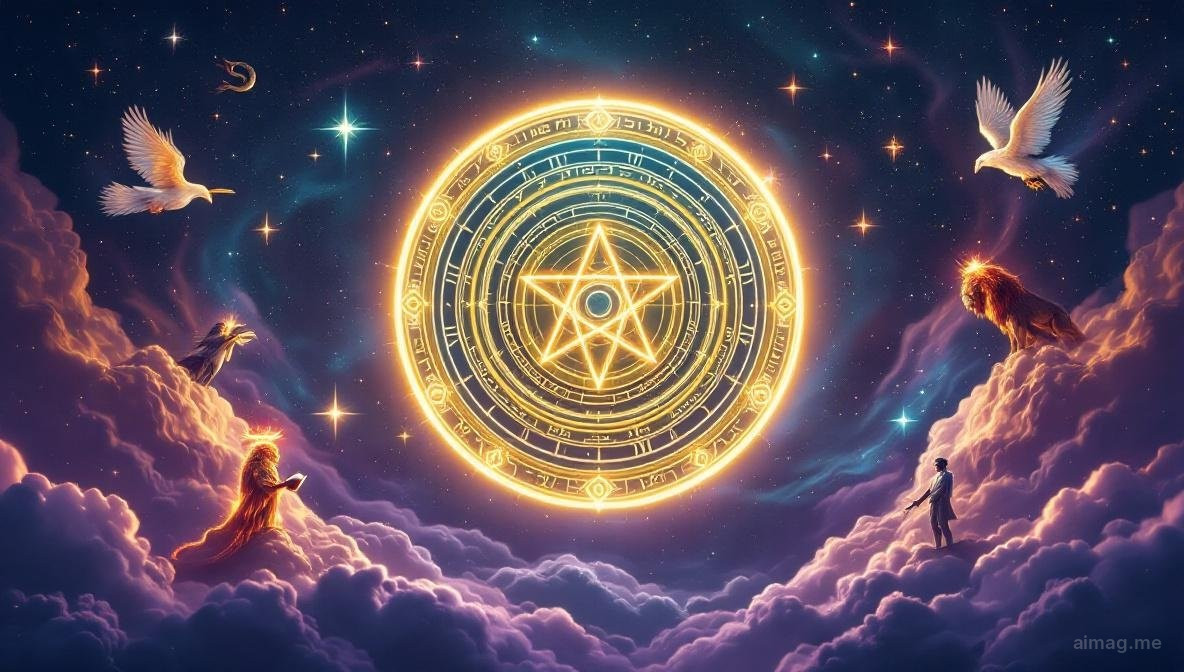
The Wheel of Fortune has four positions, traditionally represented by four figures at the corners of the card. These map naturally onto the four quarters of the year, each carrying a distinct psychological emphasis.
Q1 (January-March): The Ascent
The first quarter of a Wheel of Fortune year carries rising energy — projects launched, optimism expanding, the sense that things are building. If you began 2026 with new commitments, goals, or directions, Q1 likely felt like momentum.
The psychological work of the ascending phase is avoiding what behavioral economists call the "planning fallacy" — the systematic tendency to underestimate how long things will take, how much they will cost, and how many obstacles will arise. Daniel Kahneman, who identified this bias in his research with Amos Tversky, found that even people who are aware of the planning fallacy still fall prey to it. The Wheel reminds you that ascent is real but incomplete. The rising phase is not the whole story.
Q2 (April-June): The Peak
The second quarter represents the top of the wheel — maximum visibility, maximum exposure, and the exhilarating but precarious position of having climbed as high as this particular cycle will go. This does not mean Q2 is the best quarter. It means it is the most exposed.
The psychological work of the peak is practicing what the Stoics called "premeditatio malorum" — the anticipation of difficulty not as pessimism but as preparation. Marcus Aurelius wrote: "When you wake up in the morning, tell yourself: the people I deal with today will be meddling, ungrateful, arrogant, dishonest, jealous, and surly." He was not being cynical. He was inoculating himself against surprise, so that when difficulty arrived, he could respond from principle rather than reaction.
At the top of the wheel in Q2, consider: what will you do when the descent begins? Not because it is certainly coming, but because preparation for change is the most adaptive thing a person at the peak can do.
Q3 (July-September): The Descent
The third quarter is the wheel's most psychologically challenging position. Energy contracts. The effortless momentum of Q1 and the bright exposure of Q2 give way to something heavier: the sense that things are getting harder, that results require more effort, that the wind has shifted from tailwind to headwind.
The descent is not failure. This is the single most important thing to understand about the Wheel of Fortune. The descent is part of the cycle — as necessary and as productive as the ascent, but experienced very differently because human psychology is asymmetrically weighted toward loss. Kahneman and Tversky's prospect theory (1979) demonstrated that losses feel approximately twice as painful as equivalent gains feel pleasurable. A descending quarter does not mean things are going badly. It means things feel like they are going badly, and the feeling is disproportionate to the reality.
The psychological work of Q3 is maintaining perspective. The wheel is turning, not breaking. What you built during the ascent has not disappeared — it is being tested, refined, and consolidated. This is where Hayes's ACT framework becomes most valuable: accept the difficulty, commit to your values, and take action aligned with who you want to be rather than how you feel in the moment.
Q4 (October-December): The Still Point
The fourth quarter represents the bottom of the wheel and, counterintuitively, the position of greatest potential. The still point — the center of the wheel, the place where turning stops — is accessible only from the bottom, not the top. This is because the descent strips away the illusions, distractions, and false certainties that obscured your view at the peak.
Q4 of a Wheel of Fortune year is not glamorous. It is quiet, consolidating, and preparatory. The psychological work is what psychologists call "sense-making" — the process of constructing a coherent narrative from the year's experiences. Research by James Pennebaker (University of Texas) has shown that expressive writing about difficult experiences produces measurable improvements in physical health, emotional well-being, and cognitive function. Q4 is the quarter for this writing. What happened in 2026? What did the turning teach you? What do you want to carry forward?
The Year Wheel Spread
Use this four-card spread at any point in 2026 to understand your current position on the wheel and what each quarter holds for you personally.
Card 1 — Q1 Foundation: What was planted in the first quarter? What seeds are already in the ground, whether you planted them consciously or not? This card reveals the starting conditions of your 2026 cycle.
Card 2 — Q2 Illumination: What is becoming visible at the year's peak? This card shows what the light of maximum exposure reveals — your strengths, your vulnerabilities, and the things you have been able to ignore in dimmer light.
Card 3 — Q3 Refinement: What must be released or restructured during the contraction phase? This card identifies the attachments, assumptions, or strategies that served you during the ascent but will not survive the descent intact.
Card 4 — Q4 Integration: What wisdom becomes available at the still point? This card suggests what the full cycle of 2026 — ascent, peak, descent, and rest — is designed to teach you. It is the year's thesis statement, visible only from the vantage point of completion.
Use this spread alongside a Celtic Cross reading for a comprehensive picture of where you stand in 2026's Wheel of Fortune cycle. The Celtic Cross provides depth on your current situation; the Year Wheel provides context across the full annual cycle.
Working with the Wheel: practical strategies for 2026
Understanding that 2026 is a Wheel of Fortune year is useful only if it changes how you navigate the year. Here are concrete strategies derived from the psychological research underlying the archetype.
1. Build change tolerance
The Wheel turns. You cannot stop it. But you can increase your capacity to ride it without panic. Hayes's ACT offers a practical tool here: the "willingness dial." Imagine a dial numbered 1 to 10 that represents your willingness to experience discomfort — uncertainty, disappointment, frustration — without immediately acting to eliminate it. At a 1, any discomfort triggers avoidance. At a 10, you can sit with any experience without needing to fix it.
Practice incrementally raising the dial. Not all the way to 10 — that is not realistic and not necessary. But from a 3 to a 5. From a 5 to a 7. Each increment increases your flexibility when the wheel turns.
2. Identify your personal cycles
The Wheel of Fortune is about collective cycles, but it also activates awareness of your personal ones. What patterns repeat in your life? Do you start projects with enthusiasm and abandon them at the first plateau? Do you pursue relationships intensely and then withdraw when they stabilize? Do you achieve a goal and immediately feel empty?
These are personal wheel patterns, and 2026 is the year to name them. Journal about your recurring cycles. Map them. The first step in changing a pattern is seeing it — and the Wheel of Fortune year provides the symbolic context for that seeing.
3. Practice Rotter's realistic internality
You cannot control what happens. You can control your response. This sounds like a platitude, but Rotter's research gives it empirical weight. People who believe their actions matter — while accepting that actions do not determine everything — experience less anxiety, make better decisions, and recover from setbacks faster than people at either extreme (total control beliefs or total helplessness beliefs).
In practical terms: when something changes in 2026, ask two questions. "What can I influence here?" and "What must I accept here?" Answer both honestly. Act on the first. Practice equanimity with the second.
4. Use temporal landmarks consciously
The Wheel of Fortune year amplifies the power of temporal landmarks — beginnings of months, seasons, quarters. Use them. Dai's research shows that fresh starts are most effective when accompanied by concrete behavioral changes, not just good intentions. At each quarterly transition in 2026, set one specific behavioral goal. Not a vague aspiration. A behavior you will do, at a specific time, in a specific context.
FAQ
What does it mean that 2026 is a Wheel of Fortune year? In tarot numerology, adding the digits of the year (2+0+2+6=10) produces a number corresponding to a major arcana card — in this case, The Wheel of Fortune. This does not predict specific events. It identifies a thematic archetype for the year: cyclical change, turning points, and the psychology of adaptation. Think of it as a lens for understanding the year's character, not a prophecy of its events.
Does a Wheel of Fortune year mean bad things will happen? No. The Wheel of Fortune is not a negative card. It describes change — both positive and challenging. The wheel goes up and down. A Wheel of Fortune year is one where change is particularly prominent, and where your ability to adapt determines your experience more than the changes themselves. The research is clear: psychological flexibility (Hayes, 2006) is the best predictor of well-being during periods of change, regardless of whether the changes are welcome or unwelcome.
How is a universal year card different from a personal year card? The universal year card (Wheel of Fortune for 2026) describes collective themes. Your personal year card is calculated by adding your birth month and day to the current year. For example, if your birthday is March 15: 3+1+5+2+0+2+6=19, reducing to The Sun (XIX). Your personal year card operates within the context of the universal year, creating a unique combination of themes. You can try a reading to explore how these intersect in your life.
Can I use the Year Wheel Spread at any time during the year? Yes. The spread is designed to be used at any point — the cards drawn will reflect your current understanding of each quarter. Using it quarterly provides the richest data: draw it in January, April, July, and October, and compare the results. Your understanding of the year's cycle will deepen each time, as lived experience fills in what the cards only suggested.
The still center of the turning wheel
There is a detail in The Wheel of Fortune card that most people overlook. The wheel turns, yes — figures rise and fall on its rim. But at the center of the wheel, there is a point that does not move. The hub. The axis. The still center around which everything else revolves.
This is the Wheel of Fortune's deepest teaching, and it is the most psychologically sophisticated: you are not the circumstances that change around you. You are the awareness that observes the change. The part of you that was there before the rise and will be there after the fall — the part that watches the wheel turn and chooses how to respond — that part does not turn. It remains.
In 2026, the wheel will turn. It will bring gains and losses, beginnings and endings, moments of brilliant exposure and moments of quiet contraction. Your work is not to stop the turning. Your work is to find the center — the place where you can see the whole cycle without being thrown by any single position on its rim.
The wheel is not your enemy. It is your teacher. And 2026 is the year it has the most to teach.
Discover where you stand on the Wheel of Fortune in 2026. Try a free AI tarot reading and explore the cycles shaping your year.