You have a question. Not a sprawling, philosophical, what-does-it-all-mean question — a real one. Should I take this job? Is this relationship worth saving? Will this project succeed? You do not need ten cards and forty minutes of interpretation. You need a yes or a no.
Tarot can give you that. But it gives it in a way that is distinctly, sometimes maddeningly, tarot: the answer arrives wrapped in context, trailing nuance, hinting that maybe you asked the wrong question. This guide teaches you how to get the clearest possible yes-or-no answer from the cards — and how to hear the intelligence in the moments when the answer refuses to be simple.
In short: Yes-or-no tarot works by drawing a single card and reading its directional energy — The Sun is an emphatic yes, The Tower a definitive no, The High Priestess a patient "not yet." A well-phrased question with a specific action and timeframe produces the clearest answer. For higher confidence, draw three cards and count the yes-versus-no ratio. When the cards say "maybe," that ambiguity is itself the answer.
How Yes-or-No Tarot Works
Draw a single card. If its energy is predominantly positive, forward-moving, and affirmative — yes. If predominantly negative, blocked, or cautionary — no. If ambiguous — "not yet" or "ask a better question."
This is not vague. Most tarot cards carry a clear directional charge. The Sun is an emphatic yes. The Tower is a definitive no — or at least a "not like this." The difficulty comes with the roughly twenty percent of cards that genuinely refuse to commit. Their meaning depends so heavily on context that stripping them to binary feels like asking a novel to be a headline.
For those cards, the system below brings clarity. But first — the most important step in any yes-or-no reading happens before you touch the deck.

How to Phrase Your Yes-or-No Question
The quality of a yes-or-no reading depends almost entirely on the quality of the question. A sharp question produces a clear answer. A blurry question produces confusion — not because tarot is unreliable, but because the question itself carried the confusion in.
Good yes-or-no questions:
- "Is now the right time to apply for this promotion?"
- "Will pursuing this relationship bring me growth?"
- "Should I accept the offer on the table?"
Poor yes-or-no questions:
- "What should I do about my career?" (Too open — use a three-card spread instead)
- "Does he love me?" (You are asking tarot to read someone else's mind — it reads your situation)
- "Will I ever be happy?" (Too broad, too existential — narrow the scope)
The formula: A good yes-or-no question contains a specific action, a specific timeframe (even if implied), and a single decision point. If your question has an "and" in it, split it into two separate readings.
The Complete Yes or No Card List
Major Arcana
| Card | Answer | Notes |
|---|---|---|
| The Fool | Yes | Take the leap. The risk is worth it. |
| The Magician | Yes | You have everything you need. Act now. |
| The High Priestess | Maybe | The answer exists but is not ready to be revealed. Wait. |
| The Empress | Yes | Growth, abundance, and nurturing energy support this. |
| The Emperor | Yes | Structure and authority favor this path. |
| The Hierophant | Yes | Follow the established path. Tradition supports you. |
| The Lovers | Yes | But this yes requires a conscious choice. Choose deliberately. |
| The Chariot | Yes | Move forward with determination. Victory through will. |
| Strength | Yes | You have the inner resources. Proceed with courage and patience. |
| The Hermit | Maybe | Not yet. More reflection is needed before action. |
| Wheel of Fortune | Yes | Luck and timing are with you. Cycles turning in your favor. |
| Justice | Maybe | The answer depends on fairness and truth. Are you being honest? |
| The Hanged Man | No | Pause. This is not the right time. Surrender the timeline. |
| Death | No | Not in its current form. Something must end before this can begin. |
| Temperance | Yes | With patience and balance, yes. Not immediately, but eventually. |
| The Devil | No | Attachment, illusion, or unhealthy patterns are clouding this. |
| The Tower | No | Not as planned. Expect disruption. The current approach will not hold. |
| The Star | Yes | Hope is well-placed. Healing and renewal ahead. |
| The Moon | No | Something is hidden. You do not have the full picture yet. |
| The Sun | Yes | Absolutely, unambiguously, joyfully yes. |
| Judgement | Yes | A calling. Answer it. This is the right direction. |
| The World | Yes | Completion and fulfillment. Everything aligns. |
Minor Arcana — Quick Reference
Aces: All four Aces are Yes — new beginnings carry forward energy.
Twos: Generally Maybe — Twos represent choices and balance, suggesting the answer depends on what you decide next.
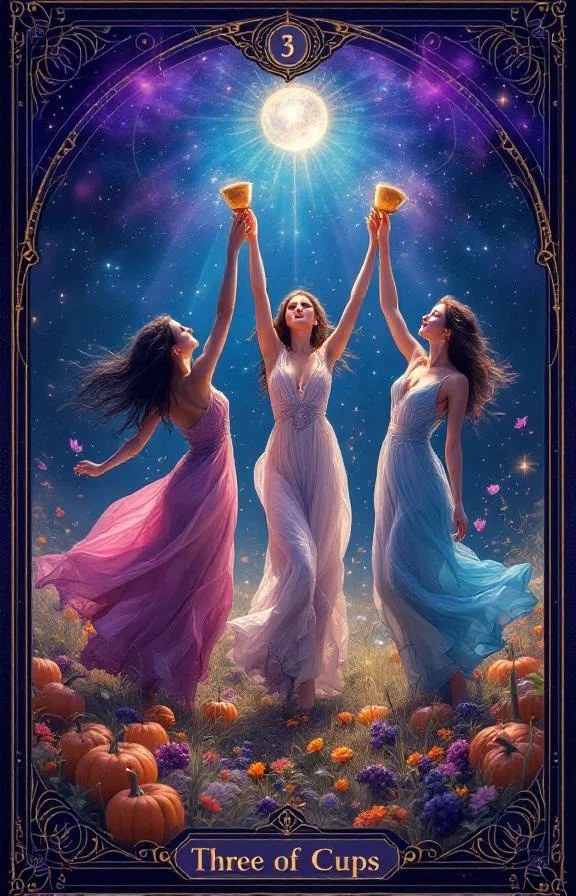
Threes: Mostly Yes — Threes represent growth and expansion.
Fours: Mixed — Fours represent stability but also stagnation. Four of Wands is yes (celebration), Four of Cups is no (apathy).
Fives: Mostly No — Fives represent conflict, loss, and challenge.
Sixes: Mostly Yes — Sixes represent harmony and resolution.
Sevens: Mixed — Sevens represent inner challenge and strategy.
Eights: Mixed — depend heavily on suit. Eight of Wands is a strong yes (momentum), Eight of Swords is no (feeling trapped).
Nines: Mostly Yes — Nines represent near-completion and fulfillment. Exception: Nine of Swords (no — anxiety).
Tens: Mixed — Ten of Cups and Ten of Pentacles are strong yes. Ten of Swords is definitive no. Ten of Wands is "yes, but at great cost."
Court Cards: Pages are maybe (learning, not yet ready). Knights are yes (action, movement). Queens are yes (mastery, confidence). Kings are yes (authority, leadership). Reversed court cards lean no.

What About Reversed Cards?
Reversals add a real layer to yes-or-no readings. The general principle:
- A "yes" card reversed becomes "not yet" or "no" — the positive energy is blocked, delayed, or flipped.
- A "no" card reversed becomes "maybe" or "the obstacle is lifting" — the negative energy is weakening.
Take The Sun. Upright — unconditional yes. Reversed — still positive, but the joy is dimmed. More "yes, with complications" than an unconditional green light. The Tower upright — clear no. Reversed — the worst has already passed. More "the danger is fading" than "disaster ahead."
If you find reversals confusing in yes-or-no readings, reading all cards upright only is perfectly valid. Many experienced readers do this for binary questions, finding that the card's upright meaning provides enough clarity on its own.
The Three-Card Yes-or-No Method
For questions that feel too important for a single card:
- Draw three cards
- Count the yes and no cards using the reference above
- Two or three yes cards = Yes. The energy clearly supports this.
- Two or three no cards = No. The obstacles outweigh the momentum.
- Mixed results (one yes, one no, one maybe) = Not clear. The situation is genuinely undecided. Rephrase or wait for more clarity before acting.
This method is more reliable than a single card because it reduces the impact of ambiguous cards and gives you a cleaner signal.
When Tarot Refuses to Give a Simple Answer
Sometimes the cards will not commit. You draw a High Priestess or a Hanged Man or a pile of Twos and Sevens, and the answer is neither yes nor no but wait. This is not the method failing. This is the method working correctly.
Not every question is ready for a binary answer. Some situations are genuinely undecided — forces still in motion, information still arriving, your own feelings still forming. When tarot says "not now," it is not stalling. It is telling you that acting on insufficient clarity will cost more than waiting for the picture to complete itself.
Learning to accept "maybe" when you wanted "yes" or "no" is one of the most valuable things tarot teaches. It trains you to tell the difference between situations that are ripe for decision and situations that need more time — a distinction most people make poorly because the discomfort of uncertainty pushes them toward premature action.
Frequently Asked Questions
Is yes-or-no tarot accurate?
Yes-or-no tarot reflects the current energies and trajectory of a situation, not a predetermined fate. The cards do not predict the future with certainty — they show the direction things are heading and the forces at play. A "yes" card drawn today might become a "no" situation in a month if circumstances shift. Treat the answer as valuable guidance, not as a guarantee.
Can I ask the same yes-or-no question twice?
You can, but not immediately. If you did not like the answer and want a different one, re-drawing is not seeking clarity — it is seeking validation. If the first answer was genuinely unclear (a maybe card, for instance), wait at least 24 hours before asking again. The situation may have shifted enough to produce a cleaner signal.
Do I need a special deck for yes-or-no readings?
No. Any standard 78-card tarot deck works. The Rider-Waite-Smith and its derivatives are the most widely used, and the yes-or-no associations in this guide follow that tradition. If you use a different deck, the fundamental energies remain the same even if the imagery varies.
What if I get a card I do not understand?
Look at the card's imagery before reaching for a guide. Your first instinct — does this card feel like a yes or a no? — is surprisingly reliable for binary readings. The cards were designed with visual symbolism that communicates before intellectual interpretation kicks in. A card showing celebration, light, and movement feels like yes. A card showing conflict, darkness, and restriction feels like no. Trust that gut response.
The desire for a clear yes or no is not a weakness. It is a sign that you have sharpened your question to the point where a direct answer is both possible and useful. The cards respect that clarity by matching it — offering their energy as a compass reading rather than a map. Yes means the current is with you. No means it is against you. Maybe means the river has not decided its course yet, and neither should you. In each case, the card is not making the decision. It is showing you what the decision looks like from a wider angle — which, used well, is all the guidance you need.