La plupart des descriptions du Verseau commencent par le mot « excentrique » et se terminent par « visionnaire ». Les deux sont flatteurs. Les deux ratent l'essentiel. Le Verseau n'est pas excentrique parce qu'il cherche à être différent. Il l'est parce qu'il ne comprend vraiment pas pourquoi tout le monde fait la même chose. Ce n'est pas une pose. C'est une réalité perceptuelle — l'outsider qui voit le schéma que les initiés sont trop proches pour remarquer.
Le onzième signe du zodiaque (20 janvier — 18 février) appartient à l'Air, gouverné par Uranus (avec Saturne comme souverain traditionnel), portant la qualité Fixe qui en fait le signe le plus obstinément indépendant de la roue. L'Air Fixe ressemble à une contradiction, et c'en est une. Le Verseau tient à ses idées comme le Taureau à ses possessions : avec une conviction absolue et inflexible. Mais les idées que le Verseau défend sont généralement celles qui remettent en question tout ce sur quoi les autres se sont mis d'accord. Les célèbres expériences de Stanley Milgram sur l'obéissance ont montré qu'environ 65 % des gens suivent l'autorité même quand elle contredit leur propre jugement. Le Verseau vit dans les 35 % restants — non par défi, mais parce qu'il lui est genuinement impossible d'écraser sa propre perception simplement parce qu'une foule voit les choses autrement (Milgram, 1963, Behavioral Study of Obedience).
C'est pourquoi la carte de tarot du Verseau n'est pas l'une des Épées à l'esprit acéré qu'on pourrait attendre d'un signe d'Air. C'est L'Étoile — la carte XVII des Arcanes Majeurs, une carte sur ce qu'on fait après que tout s'est effondré.
En résumé : L'Étoile est la carte de tarot principale du Verseau, représentant la vision qui survit à la destruction et l'impulsion humanitaire de guérir ce qui est brisé. Les cartes d'appui comprennent Le Fou, le Chevalier d'Épées, le Sept d'Épées et le Valet d'Épées. Ensemble, elles cartographient l'outsider qui voit le système clairement et conçoit quelque chose de mieux à partir des décombres. Le Tirage du Visionnaire aide le Verseau à combler l'écart entre ce qui pourrait être et ce qui est, reliant vision, émotion et action concrète.
L'Étoile — la carte principale du Verseau
Si vous demandez « quelle carte de tarot est le Verseau », la réponse est L'Étoile. Non pas parce que le Verseau est optimiste (bien qu'il puisse l'être), mais parce que L'Étoile est la carte de la vision qui survit à la destruction — et c'est le schéma central de toute la psychologie du Verseau.
Regardez où se trouve L'Étoile dans la séquence des Arcanes Majeurs. Elle vient immédiatement après La Tour — la carte de l'effondrement soudain, l'éclair qui démantèle les structures bâties sur de fausses fondations. Tout autre signe regarderait les décombres et pleurerait. Le Verseau regarde les décombres et commence à concevoir quelque chose de mieux. Non pas parce que la perte ne fait pas mal, mais parce que la vision de ce qui pourrait être construit compte plus que le deuil de ce qui a été perdu.
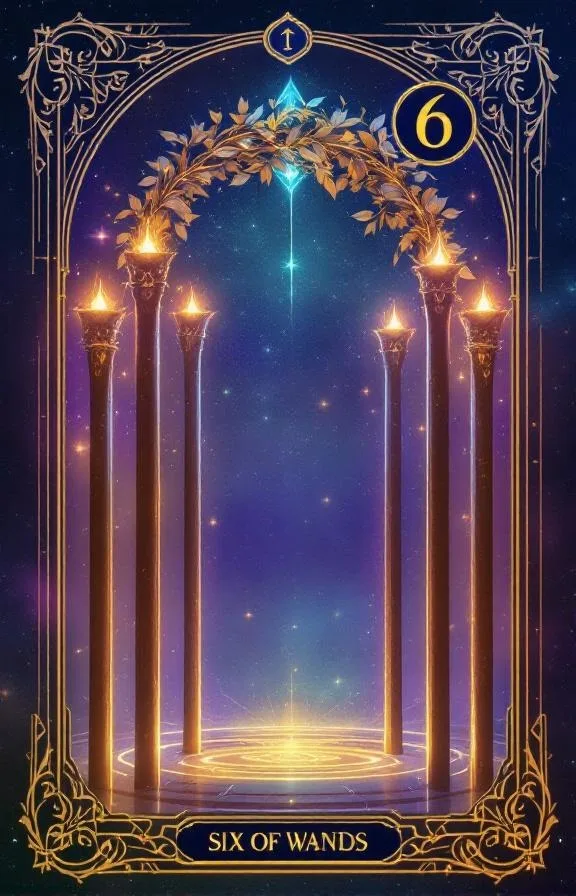
L'imagerie traditionnelle montre une figure nue agenouillée près de l'eau, versant de deux vases — l'un sur la terre, l'autre dans le bassin. Des étoiles flambent au-dessus, avec une grande étoile centrale entourée de sept plus petites. La figure est complètement exposée, complètement vulnérable, et complètement en paix. Pas de public. Pas de performance. Pas de stratégie. Juste le travail silencieux de reconstituer ce qui a été épuisé.
C'est le Verseau dans sa forme la plus authentique. Abraham Maslow, qui a passé des décennies à étudier ce qu'il appelait les personnes « s'actualisant » et a ensuite étendu sa hiérarchie pour inclure la « transcendance de soi », décrivait des individus qui opèrent au-delà de l'ambition personnelle, motivés par des valeurs et des visions servant quelque chose de plus grand qu'eux-mêmes (Maslow, 1969, The Farther Reaches of Human Nature). Il aurait pu décrire L'Étoile. Il aurait pu décrire le Verseau. L'eau versée sur la terre nourrit le collectif. L'eau versée dans le bassin nourrit le soi. Les deux sont nécessaires. Rien n'est gaspillé.
La leçon de la carte pour le Verseau est contre-intuitive : votre vision de l'avenir n'est pas séparée de votre vulnérabilité dans le présent. L'Étoile ne verse pas d'eau en portant une armure. Elle le fait nue. Le Verseau qui pense pouvoir réformer le monde tout en se protégeant de ressentir quoi que ce soit à ce sujet construit une Tour en attente d'explosion. La vision sans vulnérabilité est de l'idéologie. La vision avec vulnérabilité est de la sagesse.

Les cartes d'appui — la constellation du Verseau dans le tarot
L'Étoile est la carte principale du Verseau, mais un signe aussi complexe ne s'exprime pas à travers un seul archétype. Plusieurs autres cartes du jeu portent l'énergie du Verseau dans des domaines spécifiques.
Le Fou — Liberté radicale
Le Fou est la carte de l'entrée dans l'inconnu avec pour seule ressource la confiance. Carte 0, sans numéro, libre de toute séquence — Le Fou existe en dehors du système. C'est là la relation du Verseau à la convention : pas hostile, pas délibérément transgressive, mais genuinement libre. Le Fou ne rejette pas les règles. Il ne les voit tout simplement pas comme contraignantes.
Pour le Verseau, Le Fou représente le moment de pure indépendance — la volonté de s'éloigner de la sécurité, du consensus et de l'approbation parce que quelque chose en soi dit « pas ça ». Tous les Verseaux n'agissent pas sur cette impulsion. Mais tous la reconnaissent. La falaise du Fou n'est pas un danger. C'est une promesse : il existe des façons de vivre que personne n'a encore essayées.
Quand Le Fou apparaît dans une lecture de tarot du Verseau, il valide ce que le Verseau soupçonne déjà — que le chemin le plus sûr n'est pas le bon, et que l'inconnu recèle davantage pour vous que le connu ne pourra jamais offrir.
Le Chevalier d'Épées — Intensité intellectuelle
Le Chevalier d'Épées charge à toute vitesse, épée levée, le vent déchirant son armure. C'est la férocité intellectuelle du Verseau — l'esprit qui saisit une idée et fonce en avant avec une conviction absolue. Là où d'autres signes délibèrent, le Verseau a déjà construit une théorie, trouvé ses implications et commencé à la défendre.
La recherche sur les intelligences multiples a identifié la capacité à reconnaître les systèmes, à classer les schémas et à voir comment les parties se connectent aux ensembles. Le Verseau opère avec une forme d'intelligence systémique que ces catégories suggèrent sans jamais tout à fait saisir : la capacité à regarder une structure sociale, une institution ou un système de croyances et voir non seulement ce qu'il est, mais ce qu'il pourrait être s'il était repensé à partir des principes fondamentaux.
Le Chevalier d'Épées, c'est cette vision en mouvement. Le danger, comme pour tous les Chevaliers, est que la vitesse remplace la sagesse. Le Verseau peut devenir si certain de son analyse systémique qu'il oublie que le système est fait de personnes — des personnes qui ressentent, résistent, et ne peuvent pas être reprogrammées.
Le Sept d'Épées — Stratégie non conventionnelle
Le Sept d'Épées montre une figure qui s'éloigne furtivement d'un camp avec cinq épées, en laissant deux derrière. Les interprétations standard parlent de « tromperie ». Mais pour le Verseau, cette carte concerne quelque chose de plus subtil : la stratégie de faire les choses différemment quand l'approche conventionnelle s'est déjà révélée inadéquate.
Le Verseau ne combat pas toujours de front. Parfois, la rébellion la plus intelligente consiste simplement à faire les choses à sa propre façon pendant que tout le monde regarde ailleurs. Le Sept d'Épées est le refus aquarien de jouer selon des règles qui produisent de mauvais résultats — non pas par confrontation, mais par innovation silencieuse. Vous ne vous disputez pas avec les gardes du camp. Vous prenez simplement ce dont vous avez besoin et construisez quelque chose de nouveau ailleurs.
Cette carte représente la veine pragmatique du Verseau, l'influence de Saturne sous l'idéalisme uranien. La révolution ne ressemble pas toujours à une révolution. Parfois, elle ressemble à quelqu'un qui s'éloigne d'un système brisé avec exactement les outils nécessaires pour en construire un meilleur.
Le Valet d'Épées — L'observateur curieux
Le Valet d'Épées se tient en alerte, épée levée, scrutant l'horizon. C'est l'intelligence d'observation du Verseau — la capacité à regarder une situation sociale, un système politique ou une dynamique personnelle avec clarté parce qu' il se tient légèrement en dehors.
La distance émotionnelle du Verseau, si souvent critiquée comme de la froideur, est en réalité le même mécanisme qui rend les anthropologues précieux : la capacité d'observer une culture sans y être si profondément intégré qu'on ne peut plus en voir les présupposés. Le Valet d'Épées est le Verseau en tant qu'outsider-insider permanent, recueillant des informations non pour médire mais pour comprendre. L'épée est levée non pour attaquer mais pour la clarté : « Je vois ceci. Je le nomme. Qu'allons-nous faire à ce sujet ? »
Le Verseau en amour
Le Verseau aime à travers les idées. Si cela semble froid, c'est que vous n'avez jamais été vraiment compris par un Verseau — non pas l'empathie superficielle de quelqu'un qui vous renvoie vos sentiments, mais la reconnaissance structurelle profonde de quelqu'un qui voit comment vous pensez, saisit l'architecture de votre monde intérieur, et le trouve fascinant.
Les meilleures relations du Verseau sont construites sur la liberté intellectuelle. Pas seulement la tolérance des différences, mais leur véritable célébration — la reconnaissance que l'étrangeté d'une autre personne n'est pas un problème à résoudre mais un paysage à explorer. Le Verseau tombe amoureux des esprits qui le surprennent, et reste amoureux quand ces esprits demeurent genuinement indépendants. Le moment où un partenaire commence à penser comme un Verseau pour lui faire plaisir, l'attraction commence à mourir. Le Verseau ne veut pas d'un miroir. Il veut un contrepoint.
L'ombre, c'est l'inaccessibilité émotionnelle. Le Verseau peut théoriser sur les sentiments avec une sophistication remarquable tout en restant fondamentalement déconnecté des siens. Le partenaire d'un Verseau fait souvent face à une solitude particulière : la personne à côté d'eux peut décrire la sociologie de la solitude, la psychologie de l'attachement, la philosophie de l'amour — et ne pas dire « tu me manques » quand c'est important. Ce n'est pas de la cruauté. C'est une vraie limite. La nature Aérienne du Verseau traite les émotions par l'intellect, et certaines émotions perdent leur sens quand on les traduit en concepts.
Le travail du Verseau en amour consiste à apprendre que la présence émotionnelle n'est pas la même chose que la performance émotionnelle. Pas besoin de devenir dramatique, sentimental ou conventionnel. Il faut être là — pas dans sa tête à observer la relation, mais dans la pièce, dans le corps, dans l'instant. L'Étoile verse l'eau des deux mains. Une main nourrit le monde. L'autre nourrit le lien qui se trouve juste devant vous.
Dans une lecture de tarot du Verseau axée sur l'amour, surveillez L'Étoile (vulnérabilité authentique), Le Fou (volonté de prendre des risques), et le Sept d'Épées renversé (abandonner les défenses émotionnelles qui vous gardent en sécurité mais seul).
Le Verseau en carrière
Le Verseau prospère dans tout rôle qui récompense la pensée systémique, l'innovation et la volonté de remettre en question la façon dont les choses ont toujours été faites. Technologues, entrepreneurs sociaux, chercheurs, militants, urbanistes, dirigeants d'ONG, scientifiques des données, futurologues — toute profession où la question « pourquoi fait-on ça comme ça ? » est bienvenue plutôt que sanctionnée.
Le défi, c'est la collaboration. Le Verseau voit le système clairement et sait comment il devrait être repensé. Le problème est que repenser des systèmes exige de travailler avec des personnes qui sont intégrées dans ces systèmes — des personnes qui ont construit leurs identités, leurs routines et leur sentiment de sécurité autour des structures mêmes que le Verseau veut démanteler. Le Verseau qui entre dans une réunion d'équipe en disant « tout ce que vous faisiez était faux, voici une meilleure façon » n'a pas tort. Il est juste inefficace.
C'est la leçon de Saturne cachée dans l'idéalisme uranien du Verseau. Uranus dit « démolissez et recommencez ». Saturne dit « vous devez quand même travailler avec des êtres humains, et les êtres humains changent lentement ». Les leaders aquariens les plus efficaces apprennent à tenir leur vision tout en respectant le rythme auquel les autres peuvent l'absorber. L'intelligence interpersonnelle — la capacité à comprendre les motivations des autres et à travailler efficacement avec eux — est la compétence que le Verseau a le plus besoin de développer. La vision n'est jamais le problème. La transmission l'est souvent.
Dans les lectures de carrière pour le Verseau, L'Étoile à l'endroit est un signal puissant — votre approche non conventionnelle est exactement ce dont la situation a besoin. Le Chevalier d'Épées renversé avertit que l'arrogance intellectuelle aliène des alliés potentiels. Le Hiérophante — l'opposé naturel du Verseau dans le tarot — apparaissant dans une lecture de carrière suggère que travailler dans les structures existantes, du moins temporairement, peut accomplir davantage que de tenter de construire à partir de zéro.
L'ombre du Verseau
Chaque signe a une ombre, et celle du Verseau est celle qu'il est le moins susceptible de reconnaître, parce qu'elle se déguise en vertu.
Le détachement émotionnel. La capacité du Verseau à l'observation objective est un vrai don intellectuel. Mais quand elle s'étend aux relations personnelles, elle devient un mécanisme de défense se faisant passer pour de la sagesse. Le Verseau qui dit « je ne m'emballe simplement pas émotionnellement » ne décrit pas un trait de personnalité. Il décrit un mur. Derrière le mur se trouve tout ce qu'il a décidé de ne pas ressentir — le deuil, le besoin, le désir de connexion qui contredit son image de soi comme celui qui n'a besoin de personne. La vulnérabilité de L'Étoile est l'antidote. On ne peut pas verser de l'eau pour le monde tout en prétendant qu'on n'a pas soif soi-même.
Le contrariéisme pour lui-même. Il existe une version du Verseau qui est en désaccord avec tout non pas parce qu'il a une meilleure idée, mais parce que l'accord ressemble à une soumission. C'est l'ombre de l'indépendance : l'incapacité à dire « vous avez raison » sans se sentir diminué. La recherche de Milgram sur l'obéissance a montré que les non-conformistes ont une vraie valeur — ils brisent les consensus dangereux. Mais la non-conformité qui fonctionne en automatique, qui est en désaccord avant même d'avoir entendu l'argument, n'est que du conformisme portant un uniforme différent. La question que le Verseau doit se poser régulièrement est : « Est-ce que je m'oppose à ça parce que je vois quelque chose que les autres ne voient pas, ou parce que s'opposer aux choses, c'est qui j'ai décidé d'être ? »
La supériorité intellectuelle. La pensée systémique du Verseau peut tourner en un mépris silencieux pour les personnes qui pensent de façon plus concrète, plus émotionnelle ou plus traditionnelle. Le présupposé non dit — « je vois la vue d'ensemble et pas vous » — crée une distance que le Verseau confond avec de la clarté. La carte qui parle à cela est le Chevalier d'Épées renversé : l'intellect qui a cessé d'écouter parce qu'il a déjà conclu qu'il n'y a rien qui vaille la peine d'être entendu.
L'aliénation. L'ombre aquarienne la plus profonde est la solitude confondue avec la liberté. La position d'outsider qui donne au Verseau une vision si claire a aussi un vrai coût : le sentiment de ne jamais tout à fait appartenir, d'être en permanence légèrement décalé par rapport aux gens qui l'entourent. Certains Verseaux romantisent cette aliénation, construisant une identité autour d'être « celui qui n'entre pas dans les cases ». Mais une identité construite sur l'exclusion est quand même définie par ce qu'elle exclut. Le Verseau vraiment libre est celui qui peut appartenir sans se perdre — qui peut s'asseoir dans le cercle sans avoir besoin d'en être à l'extérieur, et en être à l'extérieur sans avoir besoin de prouver qu'il s'en fiche.
Le Tirage du Visionnaire — un tirage tarot pour le Verseau
Ce tirage de six cartes est conçu spécifiquement pour l'énergie du Verseau : l'expérience de voir un avenir que les autres ne peuvent pas encore percevoir, et le défi d'apporter cette vision dans un monde qui résiste au changement. Utilisez-le chaque fois que vous ressentez la tension caractéristique du Verseau entre ce qui pourrait être et ce qui est.
| Position | Carte | Signification |
|---|---|---|
| 1 | Le Système | La structure, la croyance ou le schéma actuel que vous voyez clairement — ce qui existe maintenant |
| 2 | La Fracture | Où le système se décompose — ce que vous avez remarqué que les autres n'ont pas |
| 3 | La Vision | Ce que vous voyez de l'autre côté — l'avenir vers lequel vous construisez |
| 4 | Le Coût | Ce que cette vision exige de vous personnellement — ce que vous devez risquer ou libérer |
| 5 | Le Pont | Comment relier votre vision aux personnes autour de vous — l'étape de traduction |
| 6 | Le Premier Acte | L'action concrète unique qui fait passer la vision dans la réalité aujourd'hui |
Comment le lire :
Les cartes 1 et 2 représentent le don diagnostic du Verseau — la capacité à voir un système et à identifier exactement où il échoue. Faites confiance à ce que ces cartes vous montrent. Votre perception n'est pas de la paranoïa. Les fractures que vous voyez sont réelles.
La carte 3 est votre carte Étoile — la vision qui émerge des ruines. C'est ce qui distingue le Verseau des simples critiques. Vous ne voyez pas seulement ce qui est brisé. Vous voyez ce qui pourrait le remplacer. Faites attention à savoir si cette carte est des Arcanes Majeurs ou Mineurs. Une carte des Arcanes Majeurs suggère une vision avec un véritable pouvoir de transformation. Une carte mineure suggère quelque chose de plus personnel, de plus immédiat, également précieux.
La carte 4 est la carte sur laquelle le Verseau a le plus besoin de s'attarder. La vision a toujours un coût personnel. Le Verseau, qui opère souvent comme s'il pouvait repenser le monde sans être transformé par le processus, doit se confronter à ce que sa vision lui demande à lui — pas seulement au monde. Si une carte de Coupes apparaît ici, le coût est émotionnel. Si Pentacles, matériel. Épées, certitude intellectuelle. Bâtons, énergie créatrice.
La carte 5 aborde le défi le plus persistant du Verseau : la communication. Non pas dans le sens géminien de l'articulation, mais dans le sens plus profond de se faire comprendre par des personnes qui ne partagent pas votre perspective. Cette carte révèle souvent si le Verseau doit ralentir, simplifier, ou trouver des alliés avant d'avancer.
La carte 6 est délibérément singulière et concrète. Le Verseau vit naturellement dans le monde des idées, des théories et des états futurs. Cette position ancre la lecture dans le présent : que pouvez-vous réellement faire, maintenant, avec les ressources dont vous disposez, pour avancer d'un pas vers le monde que vous voyez ?
Questions fréquemment posées
Quelle carte de tarot est le Verseau ?
La carte de tarot principale du Verseau est L'Étoile (XVII), qui représente la vision après la destruction, l'espoir tranquille et l'impulsion humanitaire de guérir ce qui est brisé. Les cartes d'appui comprennent Le Fou (liberté radicale), le Chevalier d'Épées (intensité intellectuelle), le Sept d'Épées (stratégie non conventionnelle) et le Valet d'Épées (observation curieuse).
Le Verseau est-il un bon signe pour la lecture de tarot ?
La capacité naturelle du Verseau à reconnaître les schémas, sa pensée systémique et son aise avec les cadres non conventionnels en font un signe fort pour la pratique du tarot. La même perspective d'outsider qui donne au Verseau une vision sociale claire se traduit directement en une capacité à lire les schémas symboliques sans les forcer dans des interprétations conventionnelles. Le Verseau lit le tarot comme il lit tout — fraîchement, sans préjugés, prêt à voir ce qui est réellement là.
Sur quoi le Verseau devrait-il se concentrer dans une lecture de tarot ?
Le Verseau bénéficie le plus des lectures qui relient la vision à l'émotion et à l'action. Les tirages qui incluent des positions pour le coût personnel et les prochaines étapes concrètes (comme le Tirage du Visionnaire ci-dessus) contrebalancent la tendance du Verseau à rester dans le monde des idées sans les ancrer dans l'expérience vécue. Si vous êtes un Verseau et que votre lecture vous semble intellectuellement satisfaisante mais émotionnellement plate, c'est un signal pour regarder à nouveau — en particulier les cartes que vous avez écartées comme « non pertinentes ».
Comment l'énergie du Verseau affecte-t-elle une lecture de tarot ?
Quand l'énergie du Verseau domine une lecture — L'Étoile, de multiples cartes d'Épées, Le Fou, prévalence de l'élément Air — la lecture pointe vers l'indépendance, le changement systémique et la nécessité d'équilibrer vision et vulnérabilité. Les cartes disent : vous voyez clairement, et ce que vous voyez est réel. La question n'est pas de savoir si votre vision est correcte. C'est de savoir si vous êtes prêt à faire le travail humain, désordonné et émotionnellement exigeant de l'amener à l'existence.
Le paradoxe au cœur du Verseau est le suivant : l'esprit qui voit l'avenir le plus clairement est le même qui peine le plus à vivre dans le présent. Les cartes qui vous représentent — L'Étoile, Le Fou, les Épées qui tranchent à travers le consensus — ne vous demandent pas de voir moins, de vous soucier moins, ou de vous rapprocher du centre. Elles vous demandent de vous souvenir que l'avenir que vous construisez sera habité par des êtres humains, vous-même inclus. La vision n'est pas le point d'arrivée. C'est le point de départ. Après que La Tour est tombée, après que les structures se sont effondrées, après que l'éclair s'est dissipé — quelqu'un doit s'agenouiller près de l'eau et verser. Ce quelqu'un, Verseau, c'est vous. Non pas parce que le monde le mérite. Parce que vous ne pouvez pas vous en empêcher. L'eau allait toujours couler. La seule question était de savoir si vous la laisseriez couler à travers vous ou autour de vous.
Essayez une lecture de tarot Verseau gratuite avec IA sur aimag.me/reading