If you have ever searched "how to read tarot," the Celtic Cross found you before anything else. It is the most recognized, most reproduced, and most frequently misunderstood spread in the tarot tradition — ten cards arranged in a distinctive pattern that has survived a century of interpretation without losing its central insight: that every question worth asking has more layers than you think.
The spread's power is not in its complexity. Ten positions sounds intimidating until you realize that the Celtic Cross is actually two simple structures placed side by side — a six-card cross that maps the inner landscape of a situation, and a four-card staff that traces its trajectory from foundation to outcome. Together, they create a reading environment that forces you to consider not just what is happening, but why it is happening, what you cannot see, and where it is going.
This guide walks through every position, explains what each one actually asks, and offers the interpretive framework that separates a mechanical card-by-card recitation from a reading that changes how you think.
In short: The Celtic Cross is a 10-card tarot spread with two structures — a six-card cross mapping the inner landscape of a situation and a four-card staff tracing its trajectory from foundation to outcome. Each position asks a specific question, from unconscious motivations to hopes and fears to likely results. It works best for complex, multidimensional situations where a simpler spread would not capture enough layers.
The History of the Celtic Cross
The Celtic Cross spread entered the tarot canon through Arthur Edward Waite's The Pictorial Key to the Tarot (1911), where he called it "an ancient Celtic method of divination." Whether it is genuinely ancient or Waite's invention dressed in Celtic clothing remains debated — there is no documentary evidence of the spread before Waite published it, and Waite had a well-documented tendency to attribute his own innovations to mysterious older traditions. What is not debatable is its effectiveness. Whatever its origins, the Celtic Cross has endured because it works — because the ten positions, arranged in their distinctive pattern, create a cognitive architecture that consistently produces insight.
The spread's survival is itself evidence. Tarot readers have experimented with thousands of spread designs over the past century. Most were used briefly and forgotten. The Celtic Cross persists because its structure mirrors the way humans actually process complex situations: we start with what is immediately present, we look at what opposes it, we consider what lies beneath and above, we examine the recent past and near future, and then — only then — do we zoom out to consider the external environment, our hopes and fears, and the likely outcome. The ten positions are not arbitrary. They follow the natural arc of meaningful inquiry.
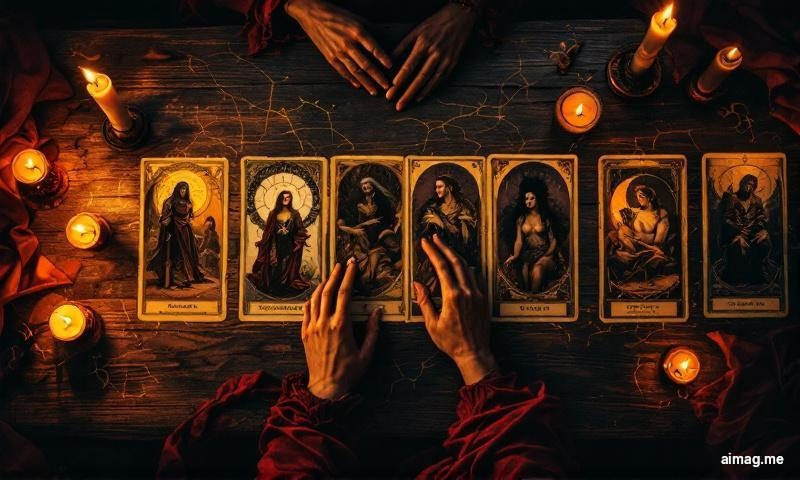
The 10 Positions Explained
The Central Cross (Positions 1-6)
Position 1 — The Present / The Significator
The card at the center of the cross represents the current situation — the heart of the matter, the thing that is most immediately alive in the querent's experience. This is not the whole story. It is the page the book is open to right now. When reading this position, resist the temptation to interpret the card in isolation. It gains its full meaning only in relationship to Position 2, which crosses it.
What this position asks: What is the essential nature of this situation right now?
Position 2 — The Challenge / The Crossing Card
This card is placed horizontally across Position 1, forming the cross at the center of the spread. It represents the primary challenge, obstacle, or complementary force acting on the situation. Importantly, this is not always a negative card. Sometimes the "challenge" is an opportunity that is difficult to accept, a gift that requires change, or a truth that complicates a comfortable narrative.
What this position asks: What is the main force acting on this situation — the thing you must deal with, whether you want to or not?
Position 3 — The Foundation / What Lies Beneath
Placed below the central cross, this card represents the unconscious foundation of the situation — the root cause, the hidden motivation, the thing you may not be aware of but that shapes everything above it. In Jungian terms, this is the shadow material. It is often the most revealing card in the entire spread because it shows what you are not looking at.
What this position asks: What is the deeper, possibly unconscious, basis of this situation?
Position 4 — The Recent Past
Placed to the left of the central cross, this card represents what is passing — events, energies, or circumstances that are fading from direct influence but whose effects are still present. This position provides context. It explains how you arrived at Position 1.
What this position asks: What has recently happened that led to the current situation?
Position 5 — The Crown / Conscious Influences
Placed above the central cross, this card represents what is on your mind — your conscious goals, aspirations, or the best possible outcome as you currently envision it. This is what you think you want. Whether it aligns with what you actually need is a question the rest of the spread will answer.
What this position asks: What are you consciously aiming for? What is the ideal outcome in your mind?
Position 6 — The Near Future
Placed to the right of the central cross, this card represents what is coming — not the final outcome (that is Position 10) but the next phase, the energy that is about to enter the situation. Think of this as the weather forecast for the next few weeks rather than the climate prediction for the year.
What this position asks: What energy or event is approaching in the near future?
The Staff (Positions 7-10)
The four cards arranged vertically to the right of the cross form what is called "the staff." They zoom out from the intimate detail of the cross to examine the broader context.
Position 7 — Your Attitude / Self-Perception
The bottom card of the staff represents how you see yourself in relation to the situation — your self-image, your attitude, your emotional stance. This is subjective rather than objective. It shows your inner narrative, which may or may not match reality.
What this position asks: How do you see yourself in this situation? What is your current attitude?
Position 8 — External Influences / Environment
This card represents the people, circumstances, and environmental factors surrounding the situation — everything that is not you. Other people's opinions, institutional structures, social pressures, cultural expectations, the practical constraints of money or time or geography. This position reminds you that you are not operating in a vacuum.
What this position asks: What external forces — people, circumstances, environment — are affecting this situation?
Position 9 — Hopes and Fears
The most psychologically interesting position in the spread. This card represents what you hope for and what you fear — and the Celtic Cross's deepest insight is that these are often the same thing. The person who hopes for love fears it too. The person who fears failure is also drawn to it. This position does not separate hope from fear because in the unconscious, they are frequently entangled.
What this position asks: What do you most hope for — and most fear — about this situation?
Position 10 — The Outcome
The final card. It represents the most likely outcome given the current trajectory — not fate, not destiny, but the direction things are heading if nothing changes. This is crucial: Position 10 is a forecast, not a sentence. It shows where you are going, which means it also shows what you might need to change if the destination does not appeal to you.
What this position asks: Where is this situation heading? What is the most likely outcome?

How to Read the Celtic Cross as a Story
The most common mistake beginners make with the Celtic Cross is reading each position independently — treating the spread as ten separate readings rather than one connected narrative. The spread's power lies in the relationships between positions, not in the individual cards.
The Inner Narrative (Positions 1-2-3-5): These four positions form a vertical axis through the center of the cross. Read together, they tell the story of the situation's internal structure: what is happening (1), what challenges it (2), what lies beneath it unconsciously (3), and what you consciously want from it (5). When Position 3 and Position 5 contradict each other — when what lies beneath and what you think you want are at odds — the reading has found its central tension.
The Timeline (Positions 4-1-6): These three positions form a horizontal axis — past, present, future. They tell the story of motion: where you were, where you are, where you are going next. This is the simplest narrative in the spread and often the most immediately useful.
The Self and World (Positions 7-8): These two positions mirror each other — inner attitude versus outer reality. When they align, you are perceiving your situation accurately. When they conflict, there is a gap between how you see things and how things actually are. This gap is often the source of the problem.
The Resolution Arc (Positions 9-10): Hope/fear and outcome. These two positions together reveal whether you are moving toward what you want or away from what you fear — and the tarot's insistence that these are different things, even when they look similar, is one of its most sophisticated psychological insights.
When to Use the Celtic Cross
The Celtic Cross is not the right spread for every question. It is designed for complex, multidimensional situations — the kind that have history, psychology, external forces, and uncertain futures. Use it when:
- You have been sitting with a question for weeks and cannot find clarity
- The situation involves multiple people, competing interests, or institutional forces
- You need to understand not just what to do but why you are stuck
- A simpler spread (like the three-card spread) returned cards that raised more questions than they answered
Do not use it for simple yes-or-no questions. The Celtic Cross will give you ten cards' worth of nuance for a question that needs one card's worth of directness, and the result will be confusion rather than clarity.
Try a free Celtic Cross reading at aimag.me →
Tips for Beginners
-
Read the cross before the staff. The six-card cross is the situation's core. Understand it fully before zooming out to context and outcome.
-
Look for repeated suits or numbers. Three Cups in a spread suggests emotional themes dominate. Multiple Major Arcana cards signal that large archetypal forces are at work. Patterns across positions reveal the reading's deeper structure.
-
Pay special attention to Position 3. The unconscious foundation is almost always the key to unlocking the reading. If you cannot make sense of the other positions, return to Position 3 and ask: what am I not seeing?
-
Do not read Position 10 as fate. The outcome card shows the most likely result if nothing changes. You are not nothing. You can change. That is why you are doing the reading.
-
Journal your Celtic Cross readings. This spread is too complex to hold entirely in memory. Write down each position, your interpretation, and — this is the important part — revisit it in a month. The Celtic Cross teaches you things you cannot hear at the time of the reading, and the journal is how those delayed insights find you.
Frequently Asked Questions
How many cards are in the Celtic Cross spread?
Ten. Six form the cross (the inner situation) and four form the staff (the outer context and trajectory). Some readers add an optional significator card chosen before the reading begins, making eleven, but this practice has fallen out of favor with most modern readers who prefer to let the spread speak for itself.
Can I do a Celtic Cross reading for myself?
Absolutely. The Celtic Cross is one of the best spreads for self-reading because its structured positions prevent the kind of free-association that can turn self-readings into wish-fulfillment exercises. The positions force you to consider angles you would naturally avoid — the unconscious foundation, the external influences, the fears you are pretending not to have.
How long does a Celtic Cross reading take?
A thorough Celtic Cross reading takes 20-45 minutes. If you are finishing in five, you are reading each card in isolation rather than as part of a connected narrative. If you are taking more than an hour, you may be overthinking individual positions rather than letting the story emerge from their relationships.
Is the Celtic Cross too advanced for beginners?
It is more complex than a three-card spread, but it is not inherently advanced. The positions are clearly defined, and the spread's structure actually helps interpretation by telling you what each card is supposed to address. Beginners sometimes find the Celtic Cross easier than simpler spreads because the positions reduce ambiguity — you know what each card means in context, rather than having to decide what an unpositioned card is trying to say.
The Celtic Cross endures because complexity endures. A century after Waite published it, the spread still works because the questions it asks — what is happening, what opposes it, what lies beneath, what you want, what is coming, how you see yourself, what surrounds you, what you hope and fear, and where this is all going — are the same questions that every human being asks about every situation that matters. The ten positions do not predict the future. They organize the present so clearly that the future becomes, if not visible, then at least navigable. And that, in the end, is all any spread can offer: not answers, but a better architecture for the questions.
Try a free AI-powered reading at aimag.me/reading
Related Reading
- The three-card tarot spread: the most versatile layout in tarot — start here before the Celtic Cross; the workhorse spread that handles most questions well
- Beyond yes or no: understanding tarot spreads — how to choose the right spread structure for your question's actual complexity
- Best questions to ask tarot cards: 50 prompts that actually work — the Celtic Cross only works as well as the question you bring to position 1
- Tarot reading mistakes (and how to avoid them) — the Celtic Cross is where many of the most common interpretation errors appear; this article covers them