Carl Jung n'a jamais écrit de livre sur le tarot. Il n'a jamais publié d'article analysant les cartes, jamais proposé de système pour les lire, ni cautionné ni condamné cette pratique. Et pourtant, les idées de Jung traversent l'interprétation moderne du tarot si profondément qu'il est presque impossible d'aborder la dimension psychologique des cartes sans emprunter son vocabulaire. Les archétypes. L'Ombre. L'inconscient collectif. La synchronicité. L'individuation. Ces concepts, élaborés au fil de six décennies de travail clinique et théorique, correspondent au jeu de tarot avec une précision qui tient soit à une coïncidence remarquable, soit à une source commune dans les structures de l'esprit humain.
Le lien entre Jung et le tarot n'est pas fortuit. Jung étudiait les systèmes symboliques avec une passion obsessionnelle — alchimie, astrologie, I Ching, textes gnostiques, imagery des mandalas, mythologies de dizaines de cultures. Ce qui l'intéressait, c'était ce que ces systèmes avaient en commun — non parce qu'il les croyait littéralement vrais, mais parce qu'il était convaincu qu'ils reflétaient quelque chose de vrai sur la psyché. Le tarot, avec ses soixante-dix-huit images couvrant l'ensemble de l'expérience humaine, des commencements innocents à l'achèvement cosmique, est exactement le genre de système symbolique qui l'attirait.
Comprendre Jung ne vous oblige pas à accepter chaque élément de sa théorie. Certaines de ses idées ont été confirmées par des recherches ultérieures. D'autres ont été remises en question ou affinées. Ce qui compte pour les lecteurs de tarot, ce n'est pas de savoir si Jung avait raison sur tout, mais que son cadre de pensée offre une manière pratique et psychologiquement fondée de réfléchir à ce que font les cartes — et à pourquoi elles semblent parfois savoir des choses qu'elles ne devraient pas savoir.
En bref : Les concepts jungiens d'archétypes, d'inconscient collectif, d'Ombre et de synchronicité fournissent le cadre le plus psychologiquement rigoureux pour comprendre le fonctionnement du tarot. Les Arcanes Majeurs correspondent à son modèle d'individuation — le Voyage du Fou, de la plénitude inconsciente en passant par la différenciation et les rencontres avec l'Ombre jusqu'à l'intégration consciente du Monde — et des cartes comme le Diable, la Papesse et l'Empereur correspondent directement aux archétypes de l'Ombre, de l'Anima et de l'Animus.
L'inconscient collectif : là où vivent les symboles
L'idée la plus controversée de Jung — et celle qui est la plus pertinente pour le tarot — est l'inconscient collectif. Contrairement à l'inconscient personnel, qui contient vos souvenirs individuels, vos refoulements et vos expériences oubliées, l'inconscient collectif est une couche de la psyché partagée par tous les êtres humains. Elle n'est pas transmise par la culture ou l'apprentissage. Elle fait partie, arguait Jung, de notre héritage biologique, au même titre que nos pouces opposables ou notre capacité au langage.
Le contenu de l'inconscient collectif n'est pas fait de souvenirs ni d'images. Ce sont des patterns — des tendances à organiser l'expérience de certaines façons. Jung appelait ces patterns des archétypes, du grec arkhetypon, qui signifie « modèle originel ». Un archétype n'est pas une image particulière, mais une disposition à produire certains types d'images. L'archétype de la Mère, par exemple, n'est pas une mère précise. C'est la tendance innée de la psyché à organiser les expériences de nourrissage, de protection et d'origine autour d'une figure maternelle. Chaque culture produit des déesses-mères, des fées marraines et une Mère Nature — non parce qu'elles se sont copiées les unes les autres, mais parce que l'archétype génère des images similaires de façon indépendante.
C'est pourquoi le tarot fonctionne à travers les cultures et les siècles. Les soixante-dix-huit cartes ne sont pas des images arbitraires. Ce sont des visualisations de patterns archétypaux que la psyché humaine reconnaît instinctivement, de la même façon qu'un nouveau-né reconnaît un visage avant d'avoir appris ce qu'est un visage. Quand vous regardez l'Impératrice et que vous ressentez quelque chose — chaleur, abondance, fertilité créatrice — vous ne réagissez pas à une image sur une carte. Vous réagissez à l'archétype de la Mère que cette image active.
Joseph Henderson, analyste jungien ayant travaillé directement sous la direction de Jung, écrit dans L'Homme et ses symboles (1964) que les images archétypales servent de « ponts entre l'esprit conscient et l'inconscient ». Elles donnent forme à une matière qui resterait autrement informe et inaccessible. C'est exactement ce que font les cartes de tarot dans une lecture — elles offrent une forme visuelle concrète sur laquelle la psyché peut projeter son contenu inconscient, rendant l'invisible visible, le vague précis.
Les quatre archétypes majeurs dans les cartes
Jung a identifié de nombreux archétypes, mais quatre se distinguent comme étant au cœur de son modèle de la psyché : la Persona, l'Ombre, l'Anima/Animus et le Soi. Chacun apparaît avec une clarté frappante dans les Arcanes Majeurs.
La Persona
La Persona est le masque que nous portons en public — le rôle que nous jouons, l'image que nous projetons, la version de nous-mêmes que nous construisons pour la consommation sociale. Elle n'est pas fausse, à proprement parler, mais elle est partielle. C'est qui nous sommes quand on nous regarde.
Dans le tarot, la Persona apparaît le plus clairement dans le Magicien. Voici un personnage debout devant une table d'outils — Coupes, Pentacles, Épées, Bâtons — une main levée vers le ciel et l'autre pointant vers la terre. Le Magicien est en représentation. Il montre au monde ce dont il est capable. Il est compétent, délibéré, et entièrement public. Rien n'est dissimulé chez le Magicien. Tout est sur la table.
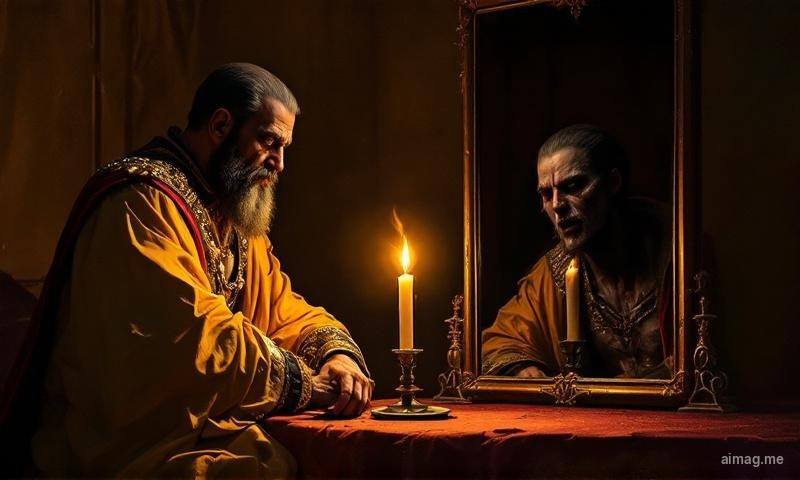
Le danger de la Persona, dans le cadre jungien, est de s'y identifier trop complètement — de croire que le masque est le visage. Le Magicien renversé, dans de nombreuses traditions du tarot, évoque précisément ce danger : manipulation, tromperie, utilisation de ses aptitudes au service des apparences plutôt que de la substance. Une lecture qui fait apparaître le Magicien pose souvent cette question : pour qui jouez-vous la comédie, et quelle part de votre performance est authentique ?
L'Ombre
L'Ombre est tout ce que vous avez rejeté de vous-même — les qualités que vous niez, les impulsions que vous réfrimez, les aspects de votre personnalité qui ne cadrent pas avec l'image que vous souhaitez projeter. Elle n'est pas mauvaise en soi, même si elle en donne souvent l'impression, parce que l'acte de rejet charge la matière rejetée de l'énergie de l'interdit. Ce que nous refusons d'admettre sur nous-mêmes ne disparaît pas. Cela s'enfonce, et cela prend de la force.
Dans le tarot, l'Ombre trouve son expression la plus directe dans le Diable. La carte montre deux personnages enchaînés à un piédestal sur lequel trône une figure cornue — mais regardez attentivement la plupart des versions de la carte, et vous remarquerez que les chaînes autour du cou des personnages sont lâches. Ils pourraient les enlever. L'asservissement est volontaire, ou du moins entretenu par un refus de regarder ce qui les retient réellement. C'est l'essence de l'Ombre : non pas une force extérieure mais une force intérieure, maintenue par le refus de la voir clairement.
Comme nous l'explorons en profondeur dans notre article sur le travail sur l'ombre et le tarot, l'Ombre n'est pas quelque chose à détruire. C'est quelque chose à intégrer — à amener à la conscience, à reconnaître, et à accueillir à la table plutôt qu'à enfermer à la cave. La carte du Diable, lue psychologiquement, est une invitation à examiner vos chaînes, non un avertissement que vous êtes condamné.
L'Anima et l'Animus
Jung proposait que chaque personne porte en elle une image inconsciente du sexe opposé — l'Anima chez les hommes, l'Animus chez les femmes. Il ne s'agit pas de simples stéréotypes de genre. Ce sont les représentations par la psyché de sa propre altérité — les qualités et les perspectives que la personnalité consciente n'a pas développées parce qu'elles étaient attribuées à « l'autre ». L'Anima se manifeste souvent comme la vie émotionnelle intérieure de l'homme, sa capacité à ressentir, son intuition, sa réceptivité. L'Animus se manifeste souvent comme la vie intellectuelle intérieure de la femme, sa capacité à raisonner, à s'affirmer, à agir avec décision.
La psychologie jungienne moderne a largement dépassé la binarité de genre dans l'interprétation de ces archétypes, les comprenant plutôt comme le rapport de la psyché à son propre potentiel non développé, indépendamment de l'identité de genre de la personne. Ce qui reste utile, c'est l'idée centrale : chaque personne entretient une relation avec une partie d'elle-même qui lui semble « autre », et cette relation est projetée sur le monde extérieur — sur les partenaires amoureux, les figures idéalisées et les images archétypales.
Dans le tarot, la Papesse et l'Impératrice représentent différents aspects de l'Anima, tandis que l'Empereur et le Pape représentent des aspects de l'Animus. La Papesse est le monde intérieur de l'intuition, du mystère et du savoir-sans-savoir. L'Impératrice est la force créatrice, sensuelle, génératrice. L'Empereur est la structure, l'autorité et l'ordre rationnel. Le Pape est la tradition, l'enseignement et la sagesse héritée. Ces cartes apparaissent souvent dans les lectures quand le consultant négocie son rapport à ces qualités — cherchant à accéder à sa propre intuition, aux prises avec sa relation à l'autorité, apprenant à faire confiance à ses élans créateurs.

Le Soi
Le Soi, dans le cadre jungien, est la totalité de la psyché — consciente et inconsciente, lumière et ombre, développée et non développée, le tout maintenu ensemble dans un ensemble unifié. Ce n'est pas le moi, qui n'est que le centre de la conscience. Le Soi est le centre de la psyché tout entière, et le but du développement psychologique — ce que Jung appelait l'individuation — est d'aligner le moi sur le Soi.
Dans le tarot, le Monde représente le Soi. C'est la dernière carte des Arcanes Majeurs, numérotée 21, représentant une figure qui danse dans une couronne d'accomplissement, entourée des quatre signes fixes du zodiaque — les mêmes quatre éléments représentés par les quatre couleurs du tarot. Le Monde n'est pas la perfection. C'est la plénitude — l'intégration de toutes les parties, la danse qui maintient les contraires en équilibre. Quand le Monde apparaît dans une lecture, il parle d'un moment d'intégration, d'un point dans le voyage où les différents fils de votre vie se rejoignent pour former quelque chose qui semble complet, même si c'est provisoire.
La synchronicité : pourquoi la carte « juste » se présente
Aucun concept jungien n'a peut-être été plus mal compris — ni plus utile aux lecteurs de tarot — que la synchronicité. Jung définissait la synchronicité comme « une coïncidence significative de deux événements ou plus, où quelque chose d'autre que la probabilité du hasard est impliqué ». Ce n'est pas de la causalité. La carte que vous tirez ne cause pas votre situation, et votre situation ne cause pas la carte. Mais la carte et votre situation correspondent parfois d'une façon qui dépasse ce que le hasard pur expliquerait, et cette correspondance est en elle-même significative.
Jung ne prétendait pas que la synchronicité était surnaturelle. Il la proposait comme une alternative au cadre causal qui domine la pensée occidentale — une façon de comprendre des connexions qui ne sont pas causales mais qui sont néanmoins réelles et psychologiquement significatives. Quand vous tirez la Tour le jour où votre relation se termine, Jung ne dirait pas que la carte a prédit la rupture ou l'a causée. Il dirait que la carte et l'événement sont reliés par le sens, non par un mécanisme.
Pour les lecteurs de tarot, la synchronicité offre un cadre à la fois honnête et utile. Vous n'avez pas besoin de prétendre que les cartes sont magiques, que des esprits guident votre main, ou que l'univers vous envoie des messages. Vous pouvez simplement observer que les cartes et votre état intérieur s'accordent parfois de façons qui produisent une vision utile, et que cet accord — quelle qu'en soit la cause — mérite attention. C'est l'approche que nous adoptons dans notre exploration de la science du hasard : le tirage est aléatoire, mais le sens que vous y trouvez ne l'est pas.
Le Voyage du Fou : l'individuation en vingt-deux étapes
Le concept jungien d'individuation — le processus de toute une vie consistant à devenir qui l'on est vraiment en intégrant les différentes parties de sa psyché — correspond aux Arcanes Majeurs avec une clarté remarquable. Les vingt-deux cartes, du Fou (0) au Monde (21), racontent l'histoire d'une psyché passant de la plénitude inconsciente à travers la différenciation, le conflit et l'intégration, pour retrouver une plénitude consciente.
Le Fou est le moi au début de son voyage — informe, inconscient, sautant d'une falaise sans savoir ce qui l'attend en bas. Ce n'est pas de la stupidité. C'est l'innocence nécessaire qui précède l'expérience. Le Fou ne sait pas ce qu'il ne sait pas, et c'est cet état d'ignorance qui permet au voyage de commencer.
Les sept premières cartes (du Magicien au Chariot) représentent le développement de la Persona — la construction d'un moi fonctionnel capable de naviguer dans le monde extérieur. Le Magicien apprend à se servir d'outils. La Papesse découvre l'intuition. L'Impératrice et l'Empereur établissent des capacités créatrices et structurelles. Le Pape apprend de la tradition. Les Amoureux font face au premier vrai choix. Le Chariot atteint la volonté et la direction.
Les cartes du milieu (de la Force à la Tempérance) représentent la rencontre avec l'inconscient. La Force est la première confrontation avec l'instinct brut — non pas dompter le lion, mais tenir sa gueule avec des mains douces. L'Ermite est le retrait nécessaire pour entendre la voix intérieure. La Roue de Fortune est la reconnaissance que le moi ne contrôle pas tout. La Justice est l'ajustement avec la loi de cause à effet. Le Pendu est l'abandon de la perspective habituelle du moi. La Mort est la transformation qu'on ne peut éviter. La Tempérance est la première intégration réussie des contraires.
Les cartes tardives (du Diable au Jugement) représentent les rencontres les plus profondes avec l'Ombre, la destruction des fausses structures et l'approche du Soi. Le Diable révèle les chaînes que nous avons choisies. La Tour détruit les structures bâties sur de fausses fondations. L'Étoile offre l'espoir après la destruction. La Lune confronte directement les ténèbres de l'inconscient. Le Soleil restaure la clarté et la joie. Le Jugement est l'ultime convocation — l'appel à devenir ce que l'on a toujours été.
Et puis le Monde : l'individuation accomplie, la plénitude réalisée, la danse d'une psyché qui a intégré ses parties. Jusqu'à ce que le Fou réapparaisse, comme il le fait toujours, parce que l'individuation n'est pas une destination. C'est une spirale.
Marie-Louise von Franz : le lien avec les contes de fées
Marie-Louise von Franz, la collaboratrice la plus proche de Jung et l'auteure la plus prolifique sur le symbolisme archétypal après lui, a consacré des décennies à étudier les contes de fées comme expressions de patterns archétypaux. Son travail, notamment L'Interprétation des contes de fées (1970) et L'Ombre et le Mal dans les contes de fées (1974), établit un pont entre la théorie abstraite de Jung et l'imagerie concrète du tarot.
Von Franz affirmait que les contes de fées sont « l'expression la plus pure et la plus simple des processus psychiques de l'inconscient collectif ». Ils dépouillent les patterns archétypaux jusqu'à leur essence : un héros part en quête, affronte des épreuves, rencontre des aides et des adversaires, subit une transformation et rentre chez lui changé. C'est précisément la structure des Arcanes Majeurs, et ce n'est pas une coïncidence. Les contes de fées et le tarot puisent tous deux à la même source archétypale.
Ce que von Franz a ajouté au cadre de Jung, c'est une méthode pour travailler avec les images. Elle insistait sur le fait que les symboles archétypaux ne doivent pas être réduits à des concepts intellectuels. Le dragon dans le conte n'est pas « juste » un symbole de l'Ombre — c'est un dragon, et l'expérience émotionnelle et viscérale de la confrontation avec un dragon fait partie du sens. De même, la Tour n'est pas « juste » un changement soudain. C'est une tour frappée par la foudre, des gens qui en tombent, des flammes jaillissant de son sommet. La violence de l'image est précisément le propos. La sensation qu'elle produit en vous — peur, choc, un étrange soulagement — est une donnée, au même titre que n'importe quelle définition livresque.
C'est pourquoi le tarot fonctionne mieux comme pratique expérientielle que comme exercice intellectuel. Les cartes sont conçues pour produire des réponses émotionnelles, et ces réponses constituent la matière de l'interprétation. Quand vous vous sentez attirés par une carte, ou repoussés par elle, ou troublés par elle, vous êtes en relation avec un archétype. Cette relation — et non la définition de dictionnaire de la carte — est là où vit le sens. Comme nous le discutons dans notre article sur les archétypes qui guident votre vie, ces patterns ne sont pas des idées abstraites — ce sont des expériences vécues, à l'œuvre dans votre vie que vous les nommiez ou non.
Exercice pratique : identifiez votre carte de l'Ombre
Voici un exercice ancré dans la pratique jungienne qui ne requiert rien d'autre que votre jeu de tarot et quelques minutes d'attention honnête.
Étalez les Arcanes Majeurs face visible devant vous. Regardez chaque carte à tour de rôle — non pas pour les lire, non pas pour vous rappeler ce qu'elles signifient, mais simplement pour observer les images et noter vos réactions.
Trouvez la carte que vous aimez le moins. Celle qui vous met mal à l'aise, vous irrite ou vous laisse indifférent. Celle que vous préféreriez passer. Celle qui semble fausse, laide ou sans pertinence.
C'est votre carte de l'Ombre.
Elle représente une qualité que vous avez exclue de l'image que vous avez de vous-même. Si l'Empereur vous repousse, examinez votre rapport à l'autorité, à la structure et au contrôle — évitez-vous ces qualités parce qu'elles vous semblent oppressives, ou parce qu'elles requièrent une discipline que vous ne voulez pas développer ? Si la Papesse vous paraît inutile, demandez-vous si vous avez relégué vos capacités intuitives au profit de la pure rationalité. Si la Mort vous fait détourner le regard, interrogez-vous sur la transformation que vous refusez.
La carte de l'Ombre n'est pas votre ennemie. C'est la partie de vous-même que vous avez exilée, et elle contient une énergie dont vous avez besoin. Jung était clair sur ce point : l'Ombre ne renferme pas seulement les qualités que nous jugeons négatives, mais aussi des qualités positives que nous avons refoulées — créativité, affirmation de soi, vulnérabilité, puissance. Intégrer l'Ombre ne signifie pas devenir ce que vous craignez. Cela signifie reconnaître que ce que vous craignez fait déjà partie de vous, et que cette reconnaissance vous donne le choix là où vous n'aviez auparavant que la réaction.
Passez quelques jours avec votre carte de l'Ombre. Sortez-la du jeu et placez-la là où vous la verrez. Notez quand la qualité qu'elle représente se manifeste dans votre vie — dans vos réactions, vos jugements sur les autres, vos rêves. La carte n'a pas changé. Mais votre rapport à ce qu'elle représente commencera à évoluer.
Questions fréquentes
Jung utilisait-il vraiment les cartes de tarot ?
Rien ne prouve de façon fiable que Jung utilisait le tarot dans sa pratique clinique, mais il en connaissait clairement l'existence et s'intéressait au système symbolique qu'il représente. Dans une conférence de 1933, il mentionnait le tarot comme exemple d'imagery archétypale, et dans une lettre de 1960 à un collègue, il décrivait les cartes comme des « images psychologiques, des symboles avec lesquels on joue ». Son principal outil divinatoire était le I Ching, qu'il a longuement évoqué dans sa préface à la traduction de Richard Wilhelm. La valeur de Jung pour le tarot ne réside pas dans son utilisation directe des cartes, mais dans le cadre théorique qu'il a développé, et qui offre une façon psychologiquement rigoureuse de comprendre ce qui se passe lors d'une lecture.
Le tarot est-il une forme de thérapie jungienne ?
Non, et il ne devrait pas être présenté comme tel. La thérapie jungienne est une pratique clinique conduite par des analystes formés ayant suivi un enseignement approfondi et une analyse personnelle. Le tarot est une pratique réflexive qui peut emprunter des concepts jungiens comme cadre interprétatif, mais il n'implique ni diagnostic, ni traitement, ni la relation thérapeutique qui définit le travail clinique. Cette distinction compte, tant sur le plan éthique que pratique. Le tarot peut soutenir la réflexion sur soi. Il ne peut pas remplacer un suivi psychologique professionnel.
Comment savoir quel archétype une carte représente ?
La plupart des cartes des Arcanes Majeurs peuvent être associées à plusieurs archétypes selon le contexte. L'Impératrice est la Mère, mais elle est aussi l'Amante, la Créatrice et la Nourricière. L'Ermite est le Vieux Sage, mais il est aussi le Chercheur et l'Introverti. Plutôt que d'essayer d'associer chaque carte à un seul archétype, pensez aux cartes comme activant différents archétypes dans différentes situations. L'archétype qu'une carte représente pour vous dépendra de votre question, de vos circonstances de vie actuelles et de l'aspect de votre psyché qui cherche à s'exprimer. C'est ce qui fait du tarot une pratique vivante plutôt qu'un système figé.
Puis-je utiliser les concepts jungiens sans croire à l'inconscient collectif ?
Absolument. Vous n'avez pas besoin d'accepter les affirmations métaphysiques de Jung pour trouver son cadre psychologique utile au tarot. Même si l'inconscient collectif n'existe pas en tant que structure psychique littérale, le constat que des êtres humains de cultures différentes produisent des images symboliques similaires — et que ces images produisent des réponses émotionnelles cohérentes — est bien documenté. Vous pouvez concevoir les archétypes comme des patterns cognitifs plutôt que comme des entités métaphysiques et les utiliser efficacement dans vos lectures. La valeur pratique du cadre ne dépend pas de sa vérité théorique. Ce qui compte, c'est qu'il vous aide à donner sens aux cartes et, à travers elles, à vous-même.
Jung a offert aux lecteurs de tarot quelque chose d'inestimable : un langage pour parler de ce que font les cartes, qui n'est ni superstitieux ni méprisant. Les cartes ne sont pas magiques, mais elles ne sont pas non plus dépourvues de sens. Ce sont des images qui activent les patterns les plus profonds de la psyché humaine — des patterns que Jung a passé une vie à cartographier et que chaque être humain porte en lui, qu'il le sache ou non. Quand vous vous installez avec un jeu et que vous disposez des cartes, vous ne prédisez pas l'avenir. Vous engagez une conversation avec votre propre inconscient, médiée par des images assez anciennes pour porter le poids de toute l'expérience humaine. Cette conversation, abordée avec honnêteté et la volonté de voir ce que vous préféreriez éviter, est l'une des choses les plus profitables qu'une personne puisse faire pour son propre développement psychologique.
Essayez une lecture gratuite propulsée par l'IA sur aimag.me/reading
Lectures connexes
- Les archétypes qui guident votre vie : les Arcanes Majeurs comme carte de la psyché — comment les 22 étapes archétypales de Jung correspondent au Voyage du Fou à travers les Arcanes Majeurs
- Le travail sur l'ombre : ce que votre malaise face à une carte révèle — la théorie jungienne de l'ombre appliquée directement à la pratique du tarot et aux réactions aux cartes
- Les quatre couleurs comme quatre dimensions de la vie — les quatre fonctions psychologiques de Jung et leur correspondance avec les quatre couleurs du tarot
- Lecture de tarot par IA : réflexion, pas prédiction — l'argument philosophique pour le tarot comme miroir jungien plutôt qu'oracle