Most people think gratitude is something you feel. A warm rush of thankfulness that arrives when life delivers something good — the promotion, the diagnosis that came back clear, the friend who showed up without being asked. And if your circumstances are not fortunate, you are supposed to find something to be grateful for anyway, which often produces guilt rather than gratitude. Forcing yourself to feel thankful for small blessings while large problems persist is not psychological health. It is performance.
The research tells a different story. Gratitude is not a feeling that happens to you. It is a skill you build. And like any skill, it responds to deliberate practice far more reliably than it responds to waiting for the right moment to feel it.
Prenez un moment pour réfléchir à ce que vous venez de lire. Qu'est-ce qui résonne avec votre situation actuelle ?
In short: Gratitude is a trainable cognitive skill, not a spontaneous emotion. Robert Emmons' research shows that structured gratitude practices produce measurable improvements in sleep, resilience, and goal progress. This article presents a 5-card Harvest of Thanks spread designed to uncover hidden blessings, find growth in difficulty, honor formative relationships, identify what you can give, and plant tomorrow's seeds.
The Science: Gratitude Is Trainable
Robert Emmons, professor of psychology at UC Davis and the world's leading gratitude researcher, has spent over twenty years demonstrating that people who keep gratitude journals — writing three to five specific things they are grateful for weekly — show measurable improvements in optimism, sleep, and physical health within three weeks. The key word is specific. Writing "I'm grateful for my family" produces minimal change. Writing "I'm grateful my sister called Tuesday when she sensed I was struggling" activates the prefrontal cortex in ways that vague positivity does not.
Sara Algoe at the University of North Carolina developed the "find, remind, bind" theory: gratitude helps you find responsive people, reminds you of existing relationships' value, and binds you closer through reciprocal appreciation. Gratitude is not just a pleasant feeling. It is a social navigation system.
Alex Korb, a neuroscientist at UCLA, documented what happens in the brain during gratitude practice. When you actively search for something to appreciate — even before finding it — your brain increases dopamine and serotonin production. The search itself changes your neurochemistry. The more you practice, the easier it becomes for your brain to notice things worth appreciating, because you are strengthening the neural pathways involved in positive appraisal.
The key insight: gratitude depends not on your circumstances but on your attention. And attention is something you can train.
The Harvest of Thanks Spread (5 Cards)
Lay five cards in a gentle arc, left to right, like seeds that have grown into a harvest.
| Position | Question |
|---|---|
| 1 — The Gift You Overlook | What blessing has become so familiar you stopped seeing it? |
| 2 — The Challenge That Grew You | What difficulty are you now grateful for, because of who it made you? |
| 3 — The Person Who Shaped You | Who contributed to who you are in ways you have not fully acknowledged? |
| 4 — What You Can Give Back | What is gratitude asking you to do — not just feel? |
| 5 — Tomorrow's Seed | What are you planting now that your future self will be grateful for? |
Position 1: The Gift You Overlook
Emmons calls this "gratitude adaptation" — the same psychological mechanism that makes lottery winners return to baseline happiness within months. Good things that persist stop registering as good. They become normal. The hidden blessing is always the most familiar one.
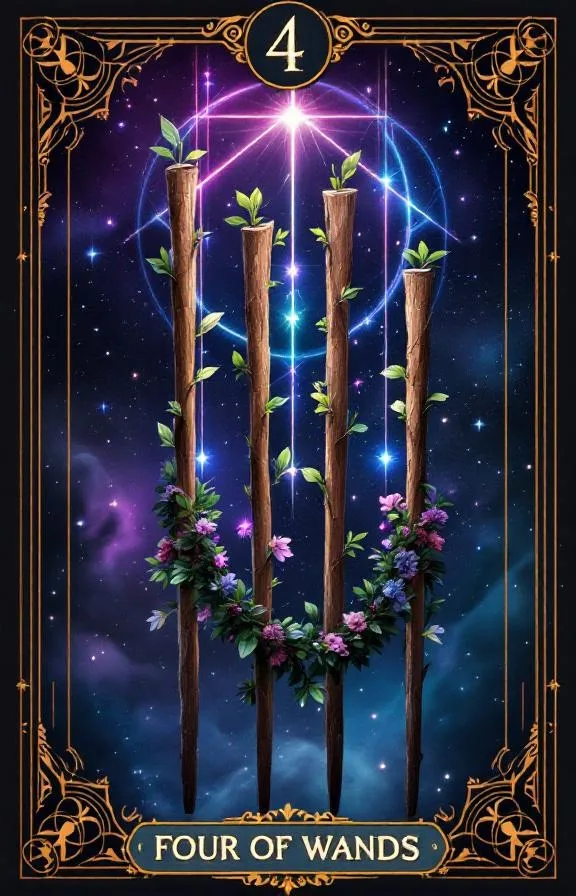
The Star here might mean quiet, reliable hope operating in your background that you stopped noticing. The Nine of Cups — the card of contentment, sometimes called the "wish card" — might reveal you are living closer to your wished-for life than you realize, but daily frustrations have obscured the view. The Four of Wands could point to stable community, a home, a sense of belonging you have started taking for granted.
Whatever appears, sit with it. Not "I should be more grateful." Instead: "I had stopped seeing this. Now I see it again."
Position 2: The Challenge That Grew You
The hardest and most sophisticated position. Emmons' later work explored "gratitude in the face of adversity" — the capacity to find genuine (not performed) thankfulness for difficult experiences, not because suffering is good, but because of what you built in response to it. This is not toxic positivity. You are not being asked to be grateful for the pain. You are being asked whether, standing on the other side of it, you can see something in yourself that exists because of how you navigated that difficulty.
The Tower here is honest: something collapsed, and what rose from the rubble was stronger. Strength means the challenge taught you that you could endure more than you thought — and that knowledge is now part of your foundation.
Position 3: The Person Who Shaped You
Algoe's framework is most alive here. The Empress might point to someone who nurtured you. The Hierophant might indicate a mentor whose influence you internalized so deeply you forgot where it came from. The Six of Cups might remind you of an old friendship that planted something still growing in you. This position often prompts people to reach out — and Algoe's research confirms that expressed gratitude strengthens bonds far more than gratitude merely felt.

Position 4: What You Can Give Back
Korb's research reveals something counterintuitive: the brain does not clearly distinguish between receiving a gift and giving one. Both activate reward circuits. Gratitude that becomes action has significantly more benefits than gratitude that stays internal. The Six of Pentacles is almost literal here — generosity, sharing, balance between giving and receiving. The Queen of Cups might suggest emotional generosity. Temperance might suggest that what you can give is equanimity itself.
Position 5: Tomorrow's Seed
The forward-looking position, grounded in what psychologists call "prospective gratitude" — gratitude not for what has happened, but for what you are building. This is the card that turns reflection into momentum. The Ace of Pentacles means a new material beginning that will bear fruit. The Page of Wands means a creative spark you are nurturing. The Two of Cups might suggest a relationship in its early stages that your future self will look back on with profound gratitude.
Whatever appears, the question is: "What am I doing right now that I will thank myself for later?" This is not planning. It is recognition — seeing the seeds you are already planting, even if you had not framed them as such.
Cards That Carry Gratitude Energy
The Star — Hope renewed after hardship. In Emmons' framework, the Star represents gratitude that comes from survival, not abundance.
Nine of Cups — Contentment, wishes realized. Stop reaching and look at what is already in your hands.
Six of Pentacles — The cycle of giving and receiving. Gratitude as social practice creating reciprocal generosity.
Four of Wands — Celebration, homecoming, community. The gathering of people who belong to each other, marking the harvest of another year.
Gratitude is not a feeling that descends once a year in late November. It is a practice — a deliberate, trainable redirection of attention toward what is present, what grew, who helped, and what you can give. The neuroscience confirms it: every time you search for something to appreciate, your brain changes slightly, becoming more inclined to notice the next good thing without prompting. A tarot spread does not manufacture this gratitude. It structures it — five cards, five questions, five opportunities to see what was there all along, waiting, patient, undiminished by your inattention. The harvest does not shrink because you forgot to count it. It waits for you to look.