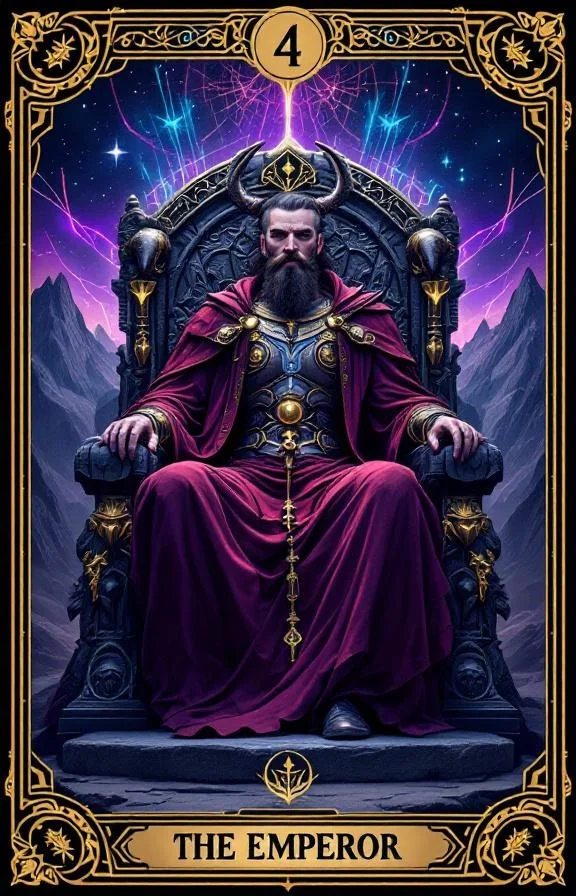
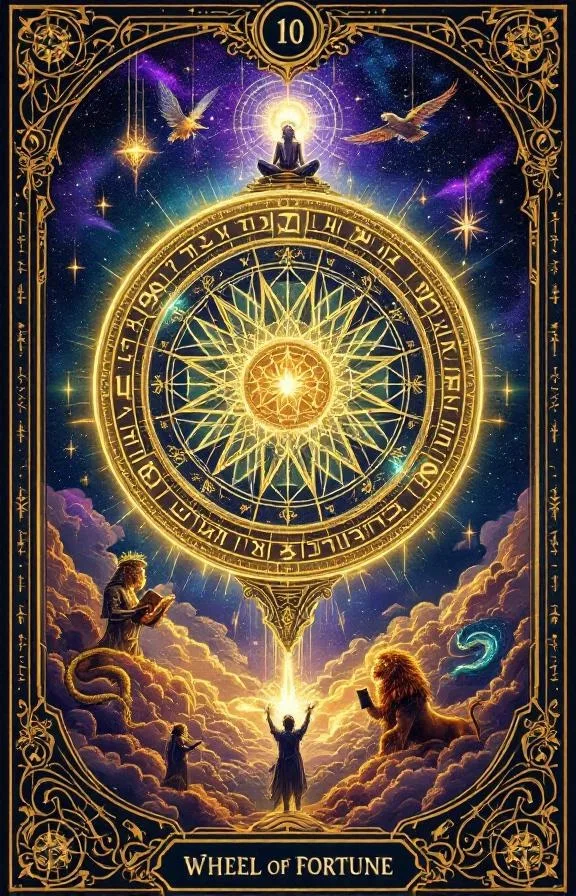
Alcune persone costruiscono imperi. Altre cavalcano le onde. La domanda psicologica più interessante è cosa accade dentro una persona che ha investito tutto nel costruire muri solidi — e poi il terreno sotto quei muri comincia a girare. L'Imperatore e la Ruota della Fortuna, apparendo insieme, illuminano una delle tensioni umane più antiche: il desiderio di permanenza in un mondo che è fondamentalmente impermanente.
L'Imperatore e La Ruota della Fortuna a Colpo d'Occhio
| L'Imperatore | La Ruota della Fortuna | |
|---|---|---|
| Numero | IV | X |
| Elemento | Fuoco / Ariete | Fuoco / Giove |
| Tema centrale | Struttura, autorità, stabilità | Cicli, cambiamento, punti di svolta |
Insieme: Il grande costruttore che si confronta con la realtà che nulla di ciò che costruisce è esente dalle forze del cambiamento.
La Dinamica Centrale
Lo psicologo evolutivo Jean Piaget descrisse due modalità fondamentali di funzionamento cognitivo: l'assimilazione, dove adattiamo le nuove esperienze ai nostri schemi mentali esistenti, e l'accomodamento, dove dobbiamo ristrutturare quegli schemi completamente perché la realtà non coopera più con la nostra mappa di essa. L'Imperatore è un assimilatore per eccellenza — crea sistemi, stabilisce gerarchie e si aspetta che il mondo si organizzi secondo il suo piano. La Ruota della Fortuna è la carta che esige l'accomodamento. Qualcosa si è spostato, si sta spostando o si sposterà, e nessun rinforzo strutturale può impedirlo.
Questa non è una storia di debolezza contro forza. Si tratta di due diversi tipi di intelligenza. L'intelligenza dell'Imperatore è architettonica: comprende causa ed effetto, catena di comando, la logica del "se faccio X, allora segue Y." La Ruota opera su una logica completamente diversa — quella che i teorici dei sistemi chiamano emergenza, dove i sistemi complessi producono risultati che non possono essere previsti analizzando i loro singoli componenti. Puoi costruire il piano più razionale del mondo, e il mercato crolla comunque, la relazione si trasforma comunque, il corpo invecchia comunque. La Ruota non punisce la pianificazione. Ricorda semplicemente che la pianificazione ha una giurisdizione, e quella giurisdizione ha confini.
La ricerca di Martin Seligman sull'impotenza appresa e il suo opposto — l'ottimismo appreso — offre una lente utile. Seligman scoprì che la resilienza psicologica non dipende dal fatto che le cose brutte accadano, ma da come spieghiamo quegli eventi a noi stessi. L'ombra dell'Imperatore è uno stile esplicativo rigido: "Se perdo il controllo, ho fallito." La Ruota invita una narrativa più flessibile: "Il cambiamento non è la prova del mio fallimento; è la natura del sistema in cui opero." Questa combinazione, al suo meglio, suggerisce lo sviluppo di quella che gli psicologi chiamano competenza adattiva — la capacità di applicare conoscenze profonde in modo flessibile nelle situazioni nuove anziché ripetere rigidamente ciò che funzionava prima.
In Amore e Relazioni
Nelle partnership, questa combinazione emerge spesso quando uno o entrambi i partner hanno costruito una relazione su ruoli chiari, routine consolidate e aspettative prevedibili — e qualcosa ha perturbato quell'architettura. Una perdita di lavoro, un trasferimento, una crisi di salute, o semplicemente il lento allontanamento che avviene quando due persone crescono a ritmi diversi. L'istinto dell'Imperatore è di ripristinare l'ordine. La Ruota suggerisce che il ripristino potrebbe non essere possibile o nemmeno desiderabile — che la relazione ha bisogno di evolversi, non solo di riprendersi.
Per chi esplora nuove connessioni, questa associazione potrebbe indicare che la persona verso cui ti senti attratto, o la dinamica che si forma tra voi, non si adatta al tuo solito schema. La psicologa Esther Perel ha scritto ampiamente su come il desiderio erotico e la sicurezza domestica spesso esistano in tensione. L'Imperatore vuole la rassicurazione del noto; la Ruota introduce l'elettricità dello sconosciuto. La domanda non è se puoi controllare la direzione della relazione, ma se puoi rimanere presente e coinvolto quando la direzione ti sorprende.
In Carriera e Finanze
Questa è un'associazione che compare spesso nei punti di inflessione professionale — momenti in cui la struttura di carriera che hai costruito con cura incontra una forza più grande del tuo sforzo individuale. Disruption del settore, ristrutturazione organizzativa, spostamenti economici, o semplicemente la realizzazione che la scala che hai scalato conduce da qualche parte in cui non vuoi più andare. L'Imperatore conferma la tua competenza; la Ruota conferma che la competenza da sola non garantisce la continuità.
L'economista Joseph Schumpeter coniò il termine "distruzione creativa" per descrivere come l'innovazione smantelli necessariamente le strutture esistenti per crearne di nuove. Questa combinazione porta quell'energia. Se ti aggrappi a una posizione, a un modello di business o a una strategia finanziaria principalmente perché ha funzionato in passato, la Ruota suggerisce che il passato potrebbe non essere più una guida affidabile. Il dono dell'Imperatore qui è che sai già come costruire. Ciò che la Ruota aggiunge è il coraggio di costruire qualcosa di nuovo — forse su un terreno che non hai scelto.
Finanziariamente, questa associazione consiglia preparazione senza rigidità. Fondi di emergenza, investimenti diversificati e piani di contingenza sono tutte strategie allineate all'Imperatore che onorano la realtà della Ruota. L'obiettivo non è prevenire il cambiamento ma essere abbastanza solidi da navigarlo senza rompersi.
Il Messaggio Profondo
Il filosofo stoico Epitteto tracciò una linea netta tra ciò che "dipende da noi" e ciò che non dipende. L'Imperatore rappresenta tutto ciò che dipende da noi: le nostre decisioni, la nostra disciplina, il nostro carattere, le strutture che scegliamo di creare. La Ruota rappresenta tutto ciò che non dipende: il tempismo, la fortuna, le forze sistemiche, l'imprevedibilità pura di un mondo complesso. La saggezza, argomentava Epitteto, non sta nel controllare l'incontrollabile ma nel rispondere ad esso con chiarezza e compostezza. Questa combinazione ti chiede di tenere entrambe le verità simultaneamente — che i tuoi sforzi contano profondamente, e che non ti esentano dal girare della ruota. Quale struttura nella tua vita ha bisogno non di essere difesa, ma di essere ricostruita per il paesaggio che sta effettivamente emergendo?
Curioso di cosa significhino L'Imperatore e La Ruota della Fortuna per TE? Prova una lettura gratuita con l'IA e scopri cosa riflettono le carte sulla tua situazione attuale.
