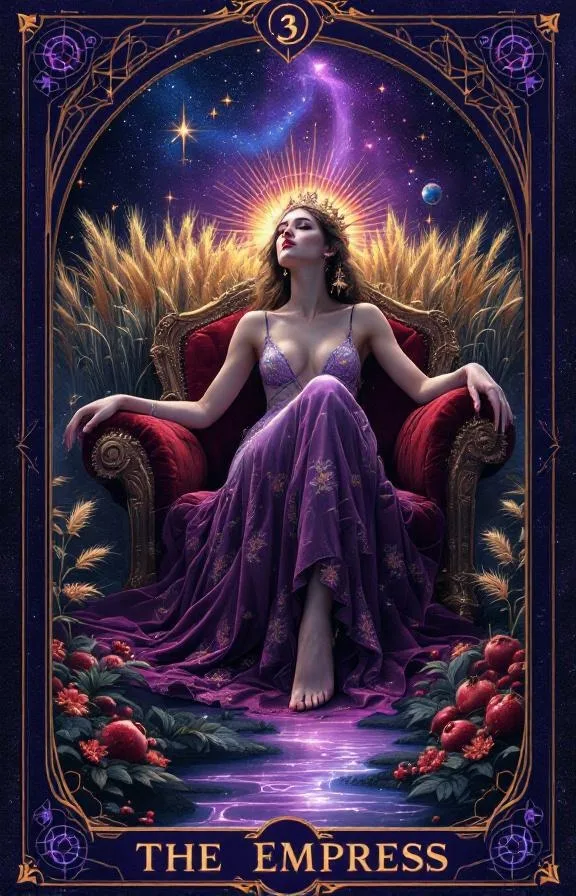
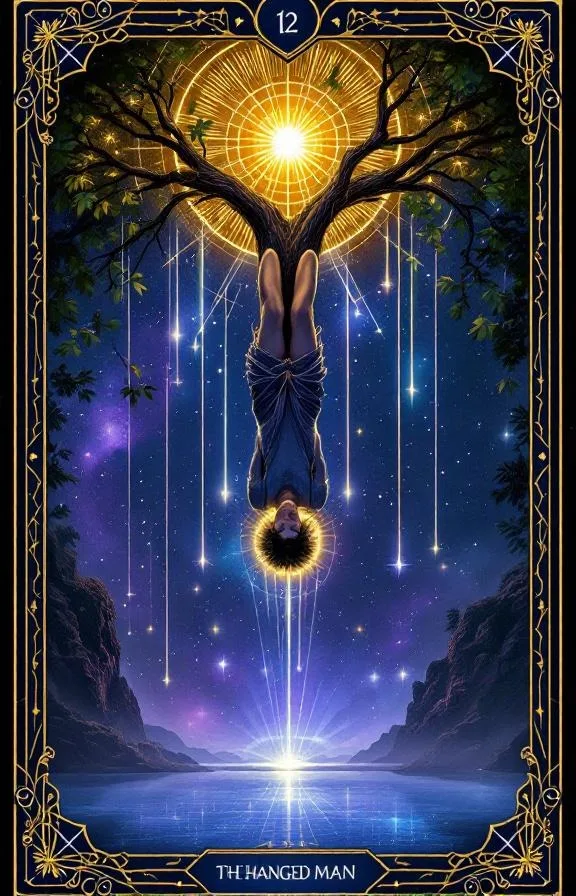
C'è una particolare frustrazione che appartiene ai giardinieri: hai preparato il suolo, scelto i semi, innaffiato con cura — e ora aspetti. Il seme sta facendo qualcosa sotto la superficie che non riesci a vedere, a misurare e che non puoi affrettare. Sai intellettualmente che la crescita sta avvenendo. Le tue mani vogliono scavare per controllare. L'Imperatrice e L'Appeso insieme descrivono esattamente questo momento — l'intersezione scomoda dove l'energia creativa incontra l'immobilità forzata, e dove l'impulso a produrre deve imparare a coesistere con la necessità della pazienza.
L'Imperatrice e L'Appeso a Colpo d'Occhio
| L'Imperatrice | L'Appeso | |
|---|---|---|
| Numero | III | XII |
| Elemento | Terra / Venere | Acqua / Nettuno |
| Tema centrale | Nutrimento, abbondanza, creatività | Resa, nuova prospettiva, lasciar andare |
Insieme: L'attesa fertile — il riconoscimento che ciò che stai coltivando ha bisogno di un tempo che non avevi pianificato.
La Dinamica Centrale
Lo psicanalista Donald Winnicott introdusse il concetto di "capacità di essere soli" — non la solitudine, ma una matura capacità di esistere nel tempo non strutturato senza riempirlo immediatamente con l'attività. Winnicott osservò che questa capacità si sviluppa nell'infanzia quando un bambino gioca tranquillamente in presenza di un caregiver disponibile ma non invadente. Il caregiver crea un ambiente contenitore; il bambino impara che il vuoto è sicuro. L'Imperatrice è l'ambiente contenitore. L'Appeso è il bambino che impara a tollerare il non-ancora-sapere cosa emergerà dall'immobilità.
Questa è un'associazione profondamente controintuitiva. L'Imperatrice è generativa — vuole creare, crescere, nutrire, costruire. È la forza che trasforma il suolo in grano, il potenziale in forma. L'Appeso sospende tutto questo. Si appende a testa in giù, volontariamente, e vede il mondo da un angolo a cui la coscienza orientata all'azione non può accedere. L'Acqua e la Terra qui non producono la semplice fertilità della pioggia sul suolo — invece, l'Acqua allaga la Terra, saturandola, rendendola fangosa e inservibile fino a quando le cose non si assestano e si chiariscono.
La ricerca del neuroscienziato Marcus Raichle sulla rete in modalità predefinita del cervello offre un utile parallelo. Raichle scoprì che quando il cervello sembra "non fare nulla" — quando stai sognando ad occhi aperti, guardando fuori dalla finestra o riposando tra i compiti — si attiva una rete distinta e metabolicamente attiva. Questa rete è responsabile del consolidamento dei ricordi, dell'immaginazione del futuro, dell'elaborazione delle emozioni e delle connessioni creative. In altre parole, il lavoro integrativo più importante del cervello avviene esattamente quando pensi di essere inattivo. La sospensione dell'Appeso non è una pausa nel processo creativo dell'Imperatrice. Potrebbe essere la fase più importante di esso.
Quando queste carte appaiono insieme, suggeriscono spesso che ti trovi in un periodo in cui la cosa più produttiva che puoi fare è smettere di cercare di essere produttivo. Questo è particolarmente impegnativo per le persone che derivano la loro identità dall'output — che sentono che il loro valore si misura da ciò che fanno, guadagnano o realizzano. L'Imperatrice può rafforzare questo pattern quando opera da sola. Abbinata all'Appeso, le viene chiesto di ridefinire l'abbondanza: non come creazione costante ma come disponibilità a lasciare che la creazione trovi il proprio tempismo.
In Amore e Relazioni
Per i single, questa combinazione può indicare che la situazione romantica che vuoi non si è materializzata — non perché ci sia qualcosa di sbagliato in te o nel tuo approccio, ma perché le condizioni si stanno ancora formando. Aumentare le opzioni spesso diminuisce la soddisfazione: ci esauriamo nell'ottimizzazione piuttosto che nell'impegno, e lo scorrimento infinito di possibilità diventa una propria forma di paralisi. Il dono dell'Appeso è la capacità di smettere di ottimizzare e iniziare ad osservare. Se hai cercato, fatto swipe e elaborato strategie attivamente, queste carte suggeriscono delicatamente che un periodo di apertura ricettiva — il calore dell'Imperatrice senza l'agenda dell'Imperatrice — potrebbe permettere a qualcosa di inaspettato e genuinamente adatto di trovarti.
Nelle partnership esistenti, L'Imperatrice e L'Appeso insieme possono segnalare una fase in cui la relazione sembra stagnante in superficie ma sta subendo una ristrutturazione invisibile sotto di essa. Questo è comune dopo le grandi transizioni della vita — un trasferimento, una perdita, un figlio che cresce e va via. I soliti pattern di connessione non funzionano più come funzionavano, e nuovi pattern non sono ancora emersi. La tentazione è di forzare la risoluzione: parliamone, sistemiamolo, definiamolo. Questa combinazione suggerisce che a volte l'atto più coraggioso è stare con il disagio del non sapere dove stanno andando le cose e fidarsi che l'amore sia ancora presente anche quando non riesci a sentirlo produrre qualcosa di tangibile.
In Carriera e Finanze
Professionalmente, questa associazione indica quasi sempre una necessaria pausa creativa. Se sei tra progetti, tra lavori o nel mezzo di un progetto che ha perso slancio, L'Imperatrice e L'Appeso suggeriscono che l'interruzione non è un fallimento ma un riorientamento. Le idee che avevi prima della pausa potrebbero tornare — o potrebbero essere sostituite da quelle migliori che potevano emergere solo dal cambio di prospettiva che la quiete fornisce.
Finanziariamente, questo non è un momento per mosse aggressive. La prospettiva capovolta dell'Appeso tende a rivelare assunzioni che non sapevi di fare — su cosa significa sicurezza, su come appare "abbastanza", su se il tuo rapporto con il denaro sia guidato da un bisogno genuino o dall'ansia travestita da ambizione. L'Imperatrice ti assicura che le tue risorse, per quanto limitate possano sembrare in questo momento, siano sufficienti per questa stagione. Non per sempre. Per ora. E "per ora" potrebbe essere tutta la pianificazione che questo momento richiede.
Il Messaggio Profondo
La romanziera Toni Morrison descrisse una volta il processo creativo come avente due fasi: la raccolta consapevole del materiale, e il compostaggio inconscio che avviene quando ti allontani e lasci che il materiale si trasformi da solo. "Non puoi pensare di arrivare a una storia," disse. "Ad un certo punto, devi aspettare che la storia pensi attraverso di te." L'Imperatrice raccoglie. L'Appeso composta. Insieme, suggeriscono che qualunque cosa tu stia cercando di portare all'esistenza — un progetto, una relazione, una versione di te stesso — non è bloccata. Sta compostando. E il suolo più ricco è fatto esattamente da questa attesa paziente e non appariscente.
Cosa cambierebbe se smettessi di misurare il tuo valore da ciò che stai producendo — e ti fidassi che questa pausa faccia parte della creazione?
Curioso di cosa significhino L'Imperatrice e L'Appeso per TE? Prova una lettura gratuita con l'IA e scopri cosa riflettono le carte sulla tua situazione attuale.
