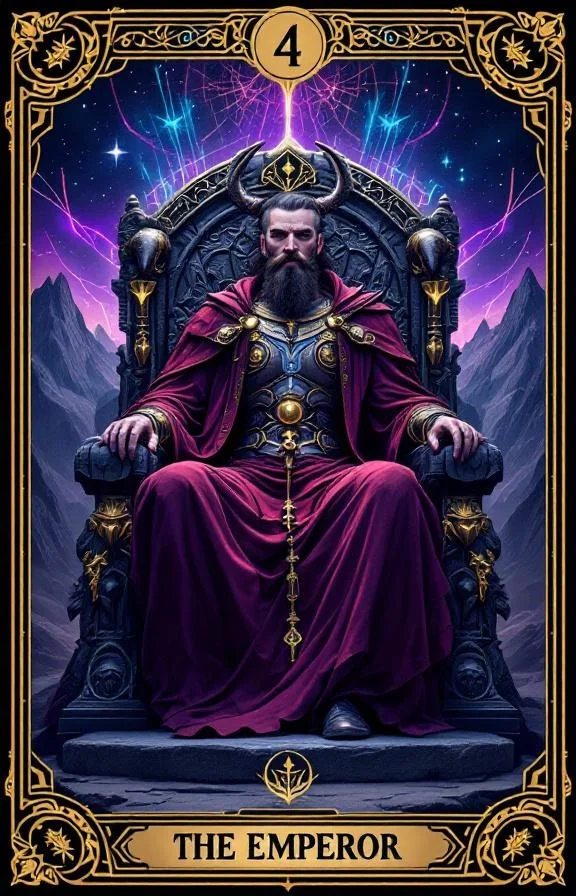
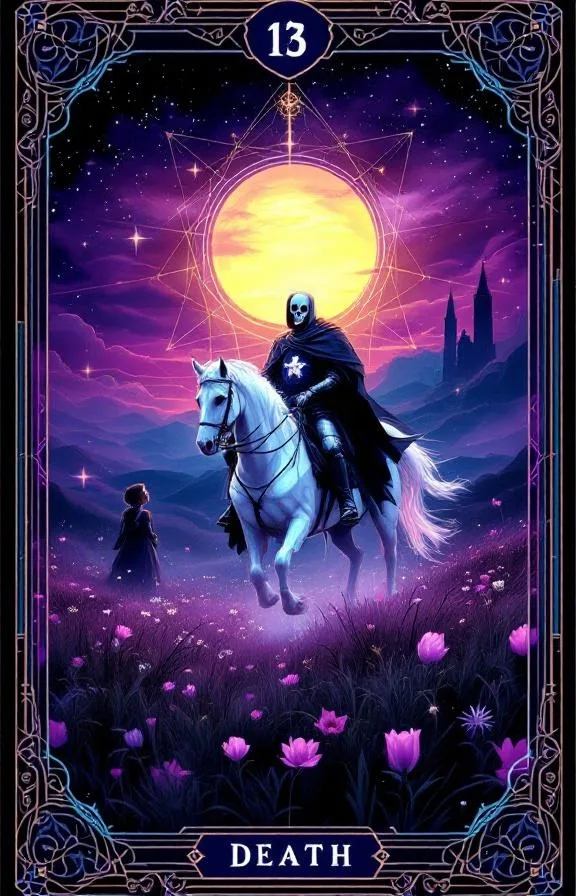
Istnieje szczególny rodzaj żalu, który należy do budowniczych: moment, w którym to, co zbudowałeś/aś z całym swoim kunsztem i wysiłkiem — karierę, strukturę rodzinną, tożsamość, sposób życia — dobiega naturalnego końca. Nie dlatego, że poniosłeś/aś porażkę, lecz dlatego, że wszystko, co żyje, w końcu się przekształca. Cesarz i Śmierć, wyciągnięte razem, stawiają Cię przed najtrudniejszym pytaniem, jakie może usłyszeć osoba zdyscyplinowana i kontrolująca: co dzieje się z Twoim autorytetem, gdy to, nad czym sprawowałeś/aś władzę, przestaje istnieć w dotychczasowej formie?
Cesarz i Śmierć — przegląd
| Cesarz | Śmierć | |
|---|---|---|
| Numer | IV | XIII |
| Żywioł | Ogień / Baran | Woda / Skorpion |
| Główny temat | Struktura, autorytet, stabilność | Transformacja, zakończenie, odnowa |
Razem: Architekt trwałości spotyka siłę, która czyni trwałość niemożliwą — i potencjał, by z tego zderzenia wyłoniło się coś bardziej autentycznego.
Główna dynamika
Psycholożka Elisabeth Kübler-Ross w swoim przełomowym badaniu nad tym, jak ludzie przetwarzają stratę, wyodrębniła pięć etapów żałoby: zaprzeczenie, gniew, targowanie się, depresję i akceptację. Rzadziej się zauważa, że jej model dotyczy nie tylko śmierci w dosłownym sensie, lecz każdego istotnego zakończenia — śmierci roli, epoki, wyobrażenia o sobie, sposobu funkcjonowania w świecie. Cesarz, postawiony wobec Śmierci, najczęściej zaczyna od pierwszego etapu. Zaprzecza. Wzmacnia mury. Podwaja wysiłki w obronie systemów, które zawsze działały — właśnie dlatego, że uznanie ich dezaktualizacji oznaczałoby uznanie granic własnej władzy.
Ale Śmierć w tarocie nie jest czarnym charakterem tej historii. Jest bliższa temu, co biolog nazwałby apoptozą — zaprogramowaną śmiercią komórki, procesem, w którym organizm eliminuje komórki, które przestały pełnić swoją funkcję, by mogła nastąpić nowa budowa. Bez apoptozy powstaje nowotwór: stare struktury mnożą się ponad swój cel, pochłaniając zasoby przeznaczone dla tego, co nadchodzi. Cesarz, który odmawia Śmierci, nie ratuje swojego imperium. Zamienia je w coś, co pożera samo siebie.
Psychoanalityczka Melanie Klein opisała dwie fundamentalne orientacje psychiki: pozycję paranoidalno-schizoidalną, w której świat dzieli się na obiekty wyłącznie dobre i wyłącznie złe, które trzeba idealizować lub niszczyć, oraz pozycję depresyjną, w której człowiek potrafi utrzymać złożoność — opłakiwać to, co stracone, jednocześnie robiąc miejsce temu, co się wyłania. Cień Cesarza żyje w trybie paranoidalno-schizoidalnym: zmiana jest wrogiem, strata jest porażką, a wszystko, co zagraża ustalonemu porządkowi, musi zostać pokonane. Śmierć prosi Cesarza, by wkroczył w pozycję depresyjną — nie depresję w sensie klinicznym, lecz dojrzałą psychologiczną zdolność do opłakiwania tego, co się kończy, bez zapadania się w sobie, i do ponownego budowania bez udawania, że strata nie miała znaczenia.
W miłości i związkach
W kontekście relacji ta kombinacja często sygnalizuje, że w dynamice władzy lub strukturalnych ustaleniach związku zachodzi — lub musi zajść — fundamentalna zmiana. Niekoniecznie oznacza to rozstanie, choć może. Częściej opisuje śmierć pewnej wersji związku: koniec dynamiki miodowego miesiąca, upadek podziału ról, który przestał służyć obojgu partnerom, lub transformację, która następuje, gdy dzieci odchodzą z domu, kariery się zmieniają lub jedno z partnerów rozwija się w kierunku, na który pierwotna architektura związku nie była zaprojektowana.
Terapeuci par rozróżniają związki zbudowane na niezbadanych założeniach odziedziczonych po rodzinie i kulturze od tych, które zostają celowo odbudowane po zakwestionowaniu i, gdzie to konieczne, rozmontowaniu tych założeń. Kombinacja Cesarza i Śmierci może wskazywać, że Twój związek jest dokładnie na tym progu. Stara wersja musi się skończyć, aby mogła rozpocząć się nowa. Pytanie brzmi, czy oboje jesteście gotowi pozwolić, by transformacja się dokonała, zamiast kurczowo trzymać się znajomej struktury ze strachu.
Dla osób samotnych to zestawienie może sugerować, że stary wzorzec relacji — być może zakorzeniony w potrzebie kontroli, być może w konkretnym wyobrażeniu, jaki/a partner/ka „powinien/powinna" być — jest gotowy do uwolnienia. Śmierć nie zabiera rzeczy po to, by zostawić Cię pustym/ą. Oczyszcza grunt pod coś, czego nie dałoby się zasadzić, dopóki stary porośt jeszcze zajmował glebę.
W karierze i finansach
To kombinacja, która pojawia się, gdy tożsamość zawodowa przechodzi transformację — a osoba, która to przeżywa, walczy z tą transformacją ze wszystkich sił. Cesarz zainwestował lata, może dekady, w budowanie struktury kariery: reputacji, ekspertyzy, sieci kontaktów, autorytetu w danej dziedzinie. Śmierć sugeruje, że jakiś istotny element tej struktury dobiegł kresu swojej użyteczności. Branża się zmienia. Rola ewoluowała do niepoznania. Umiejętności, które pięć lat temu czyniły Cię niezastąpionym/ą, są teraz standardem, a przewaga konkurencyjna, na której polegałeś/aś, została zdemokratyzowana lub zautomatyzowana.
Psychologowie organizacji opisują proces, który nazywają „nadawaniem sensu" — konstruowaniem wyjaśnień dla zdarzeń, które już zakłóciły oczekiwaną rzeczywistość. Ta kombinacja prosi Cię o nadawanie sensu, a nie obronę sensu. Instynkt Cesarza każe chronić narrację: „Jestem takim profesjonalistą/ką, w takiej roli, z takim autorytetem." Zaproszenie Śmierci brzmi: pozwól tej narracji się zakończyć, aby mogła zacząć się bardziej adekwatna. Nie oznacza to porzucenia swoich kompetencji. Oznacza przekierowanie ich ku krajobrazowi, który faktycznie istnieje, zamiast ku temu, który pamiętasz.
Finansowo to zestawienie może wskazywać, że źródło dochodu, model biznesowy lub strategia finansowa osiągnęły naturalny punkt końcowy. Rada nie brzmi: panikuj — lecz: przetraw zmianę. Wydobądź to, co cenne ze starej struktury (umiejętności, relacje, wiedzę) i zainwestuj te zasoby w to, co się wyłania, zamiast wlewać je w podtrzymywanie tego, co nie jest już w stanie się utrzymać.
Głębsze przesłanie
Filozof Heraklit napisał, że nie można dwukrotnie wejść do tej samej rzeki — nie dlatego, że rzeka się zmieniła, lecz dlatego, że Ty się zmieniłeś/aś. Cesarz buduje swój tron na brzegu rzeki i nazywa go trwałym. Śmierć jest rzeką. Ta kombinacja nie przepowiada katastrofy. Opisuje psychologiczną prawdę, z którą każdy dojrzały człowiek musi się w końcu zmierzyć: że struktury, które budujemy, nie są stworzone, by trwać wiecznie, i że gotowość, by pozwolić im się przekształcić, nie jest słabością, lecz najgłębszą formą siły, jaka jest dla nas dostępna. Czego się trzymasz nie dlatego, że wciąż Ci to służy, lecz dlatego, że puszczenie oznaczałoby przyznanie, że Ty też się zmieniłeś/aś?
Ciekawi Cię, co Cesarz i Śmierć oznaczają dla CIEBIE? Wypróbuj darmowy odczyt z AI i zobacz, co karty mówią o Twojej obecnej sytuacji.