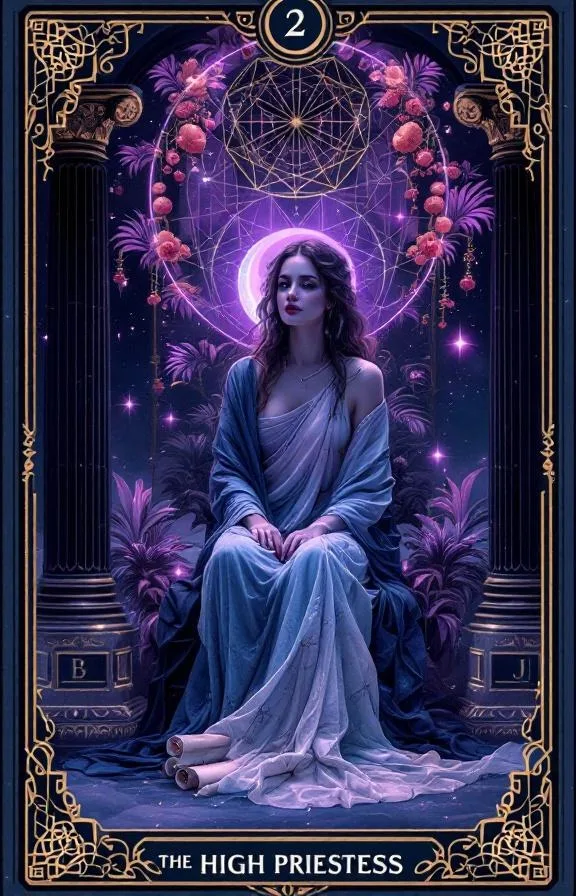

Zapewne znasz taki moment, gdy oficjalna odpowiedź wydaje się niepełna — gdy podręcznik mówi jedno, ale coś cichszego w Tobie mówi co innego. Nie głośniej, nie bardziej dramatycznie. Po prostu inaczej. I być może bardziej prawdziwie. Ta cicha niezgoda między doktryną a intuicją to dokładnie ten teren, na którym spotykają się Wysoka Kapłanka i Hierofant.
Wysoka Kapłanka i Hierofant — przegląd
| Wysoka Kapłanka | Hierofant | |
|---|---|---|
| Numer | II | V |
| Żywioł | Woda / Księżyc | Ziemia / Byk |
| Główny temat | Intuicja, tajemnica, wewnętrzne poznanie | Tradycja, mentoring, struktura |
Razem: Punkt spotkania osobistej intuicji i zbiorowej mądrości — oraz pytanie, która z nich zasługuje na Twoje zaufanie właśnie teraz.
Główna dynamika
Carl Jung wyróżniał to, co nazywał wiedzą osobistą — wglądy wyłaniające się z Twojej własnej nieświadomości — od zbiorowego zasobu odziedziczonej mądrości, przekazywanej przez religię, edukację i kulturę. Żadna z nich nie jest z natury nadrzędna. Ale relacja między nimi rzadko bywa prosta i prawie nigdy nie jest statyczna.
Wysoka Kapłanka reprezentuje tę pierwszą: wiedzę, która wypływa w snach, przeczuciach i momentach niewytłumaczalnej pewności. Hierofant reprezentuje tę drugą: nauczyciela, tradycję, system, który był doskonalony przez stulecia, ponieważ sprawdza się u większości ludzi przez większość czasu. Gdy pojawiają się razem, pytanie nie brzmi, za którym z nich podążać. Pytanie brzmi, czy mogą się wzajemnie inspirować.
Psycholog William James badał podobne napięcie w Doświadczeniach religijnych, obserwując, że zinstytucjonalizowana wiara i bezpośrednie osobiste doświadczenie często współistnieją niespokojnie w jednym człowieku. Mistyk wewnątrz kościoła, wątpiący wewnątrz ceremonii. Ta kombinacja może wskazywać dokładnie na taki rodzaj wewnętrznego dialogu — okres, w którym to, czego Cię uczono, i to, co prywatnie wiesz, nie mówią już tego samego. Dyskomfort, który to wywołuje, nie jest problemem do rozwiązania. Może być początkiem bardziej uczciwej relacji z oboma źródłami rozumienia.
To, co czyni tę parę szczególnie zniuansowaną, to napięcie żywiołów. Woda (Wysoka Kapłanka) płynie, zmienia się i nie daje się przypiąć. Ziemia (Hierofant) jest solidna, stabilna i opiera się zmianom, dopóki presja nie stanie się nie do zniesienia. Razem mogą stworzyć żyzną glebę — albo lawinę błotną. Różnica zazwyczaj zależy od tego, czy jesteś gotowy/a pozwolić obu głosom mówić, nie uciszając przedwcześnie żadnego z nich.
W miłości i związkach
Jeśli nawigujesz nową relację, ta para sugeruje sytuację, w której społeczne oczekiwania i prywatne uczucia ciągną w różnych kierunkach. Być może osoba, która wygląda idealnie na papierze, nie budzi w Tobie nic. A może ktoś, kto nie ma żadnego konwencjonalnego sensu, wywołuje rozpoznanie, którego nie potrafisz wyjaśnić. Wysoka Kapłanka prosi Cię, byś uhonorował/a to uczucie; Hierofant pyta, czy samo uczucie wystarczy, by na nim budować. Oba pytania zasługują na uczciwą odpowiedź.
W ustabilizowanych związkach ta kombinacja często wyłania się wokół rytuałów i niewypowiedzianych umów. Każde długotrwałe partnerstwo wykształca własną liturgię — sposób, w jaki się kłócicie, w jaki świętujecie, założenia o tym, kto się czym zajmuje. Hierofant utrzymuje te struktury na miejscu. Wysoka Kapłanka może sygnalizować, że coś pod tymi rytuałami się przesunęło: znaczenie się zmieniło, mimo że forma pozostała ta sama. Badania pokazują, że związki rozkwitają nie wtedy, gdy partnerzy podążają za scenariuszami, ale gdy pozostają autentycznie ciekawi wewnętrznych światów drugiej osoby. Ta para może być zaproszeniem, byś zapytał/a partnera, co naprawdę czuje, zamiast zakładać, że już wiesz.
W karierze i finansach
Zawodowo Wysoka Kapłanka i Hierofant razem pojawiają się zwykle wtedy, gdy działasz w ramach systemu — firmy, branży, instytucji — jednocześnie wyczuwając, że konwencjonalna ścieżka naprzód nie jest tą, która do Ciebie pasuje. Może to objawiać się jako pracownik, który szanuje misję organizacji, ale intuicyjnie wyczuwa, że pewna polityka po cichu wyrządza szkody. Albo student/ka, który/a ceni edukację, ale wie, że w programie nauczania brakuje czegoś istotnego.
Produktywnym ruchem tutaj zwykle nie jest ani bunt, ani uległość. To artykulacja. Wysoka Kapłanka niesie wiedzę, która często pozostaje niewypowiedziana właśnie dlatego, że opiera się językowi sal konferencyjnych i ocen rocznych. Hierofant natomiast oferuje ramę, w której ta wiedza może stać się komunikowalna. Jeśli potrafisz przetłumaczyć swoją intuicję na język, który instytucja rozumie, możesz ją zmienić. Jeśli nie potrafisz, być może musisz zdecydować, czy instytucja nadal zasługuje na Twoją energię.
Finansowo ta para sugeruje konsultowanie się z ekspertami, jednocześnie zwracając uwagę na transakcje lub okazje, które wywołują niewytłumaczalne wahanie. Należyta staranność i instynkt nie są wrogami — najlepsze decyzje finansowe zazwyczaj zadowalają oba.
Głębsze przesłanie
Wysoka Kapłanka siedzi w świetle księżyca, trzymając zwój, którego nie rozwija do końca. Hierofant siedzi między filarami, oferując klucze do systemu, który gościł pokolenia poszukiwaczy. Razem sugerują, że najgłębsze prawdy nie są ani czysto prywatne, ani czysto odziedziczone. Żyją w rozmowie między tym, co Ci dano, a tym, co sam/a odkryłeś/aś.
Jaka jest ta jedna rzecz, którą wiesz, że jest prawdziwa, a której żaden nauczyciel nigdy Ci nie powiedział — i co by się stało, gdybyś wreszcie jej zaufał/a?
Ciekawi Cię, co Wysoka Kapłanka i Hierofant oznaczają dla CIEBIE? Wypróbuj darmowy odczyt z AI i zobacz, co karty mówią o Twojej sytuacji.
