A maioria das pessoas entende ambição de um jeito errado. Confunde com fome, com inquietação, com a energia frenética de quem quer mais sem saber explicar por quê. Mas quem nasceu entre 22 de dezembro e 19 de janeiro sabe que ambição não é sobre querer mais. É sobre construir algo que vai sobreviver a quem o construiu. Capricórnio não corre atrás. Capricórnio sobe. E subir é um trabalho lento, deliberado, estratégico — que a maioria das pessoas abandona em algum ponto no meio do caminho, quando a altitude fica desconfortável e o cume ainda é invisível.
Capricórnio é o décimo signo do zodíaco, um signo de Terra regido por Saturno, e Cardinal em sua modalidade. Signos Cardinais iniciam. Mas onde Áries inicia com fogo e impulso, Capricórnio inicia com estrutura e cálculo de longo prazo. Este é o signo do estrategista, do construtor de instituições, da pessoa que entende que autoridade não é dada — é conquistada por meio de esforço sustentado ao longo do tempo. Saturno, o planeta regente, não tem glamour. É o planeta da limitação, da disciplina, da consequência, e do tipo de maturidade que só vem de ter atravessado algo difícil sem desistir.
As cartas do tarô associadas a Capricórnio refletem essa psicologia com uma precisão incômoda. Não são cartas confortáveis. Não prometem abundância fácil nem sabedoria gentil. Prometem maestria — mas são honestas sobre o preço.
Em resumo: O Diabo é a carta principal de Capricórnio, representando não o mal, mas a escravidão autoimposta à ambição, ao status e ao mundo material. As cartas de suporte incluem O Mundo, Dez de Ouros, Rei de Ouros e Quatro de Ouros. Juntas, perguntam se as estruturas que você construiu servem a você ou o aprisionam. A Tiragem do Cume e da Fundação examina a relação entre aquilo para o qual você está subindo e o que pode estar sacrificando para chegar lá.
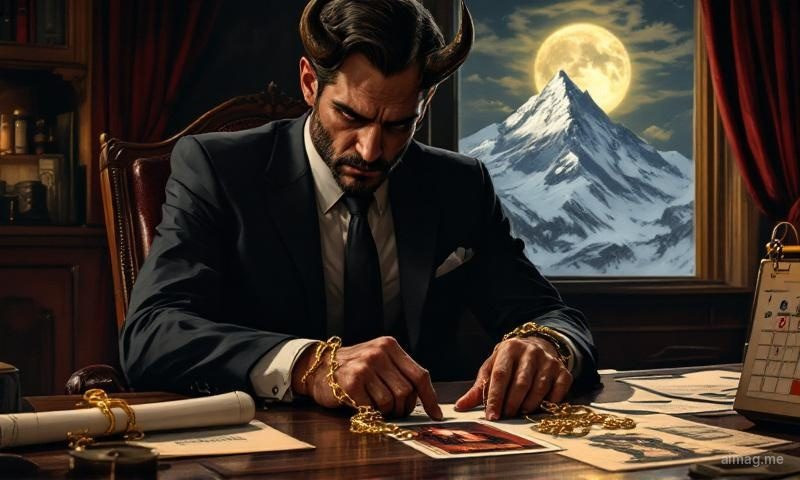
O Diabo — a carta do tarô de Capricórnio
Se você já pesquisou "qual carta do tarô representa Capricórnio", a resposta é O Diabo. Carta número quinze dos Arcanos Maiores, tradicionalmente representada por uma figura com chifres posta acima de dois humanos acorrentados — um homem e uma mulher — cada um usando correntes largas o suficiente para ser removidas. E sua primeira reação é quase certamente: isso não pode estar certo.
Essa reação vale ser examinada, porque revela o mal-entendido central que cerca tanto O Diabo quanto Capricórnio. As pessoas veem O Diabo e pensam em mal. Veem as correntes e pensam em aprisionamento. Veem a figura com chifres e pensam em tentação vinda de fora. Tudo isso erra o ponto por completo.
O Diabo é sobre servidão ao mundo material. Não servidão imposta de fora, mas servidão escolhida por dentro. Olhe para as correntes na imagem clássica do Rider-Waite. Elas são frouxas. As figuras poderiam removê-las a qualquer momento. Elas ficam acorrentadas porque passaram a se identificar com o que as prende. O título do cargo. O salário. O status. A própria ambição. O Diabo não pergunta se você é bem-sucedido. Pergunta se o seu sucesso é que manda em você.
Para Capricórnio, essa não é uma questão periférica. É a questão central da sua vida. O presente de Saturno é a disciplina. A maldição de Saturno é que a disciplina, perseguida sem autoconsciência, se torna compulsão. Você definiu uma meta aos vinte e dois anos. A alcançou aos trinta e cinco. E em vez de parar para perguntar se a meta ainda importa, você estabelece uma mais alta — porque parar parece morrer. A pesquisa de Angela Duckworth sobre grit demonstra que a perseverança em direção a objetivos de longo prazo está entre os preditores mais fortes de realização (Duckworth et al., 2007). O que sua pesquisa também mostra, embora menos citado, é que grit sem flexibilidade vira rigidez. A capacidade de persistir num objetivo precisa ser equilibrada pela capacidade de questionar se o objetivo ainda vale a pena.
O Diabo nomeia essa tensão. Não é uma carta do mal. É uma carta de honestidade. Ela pergunta a todo Capricórnio: a que você está acorrentado, e você ainda quer estar?
O Diabo invertido traz a virada: o momento em que você enxerga as correntes com clareza, reconhece que foi você mesmo quem as colocou, e escolhe sair. Para Capricórnio, essa inversão costuma chegar na meia-vida, quando o cume foi alcançado e a vista de lá de cima levanta uma pergunta que Saturno nunca o preparou para responder: e agora?
Cartas de suporte: a constelação de Capricórnio no baralho
Nenhum signo do zodíaco se define por uma única carta. A energia de Capricórnio atravessa vários Arcanos Maiores e Menores, cada um refletindo uma dimensão diferente da personalidade saturniana.
O Mundo — o cume alcançado
O Mundo é a carta final dos Arcanos Maiores, a vigésima primeira, e representa conclusão, integração, maestria. Uma figura dança dentro de uma coroa de louros, os quatro elementos equilibrados em cada canto, a jornada terminada. Para a maioria dos signos, O Mundo aparece de vez em quando. Para Capricórnio, ele representa o sonho que move toda a escalada.
Capricórnio não quer ganhar. Capricórnio quer concluir. Há uma diferença. Ganhar é competitivo e relativo. Concluir é estrutural e absoluto. Você não mede O Mundo em comparação com o mundo de outra pessoa. Mede em relação ao projeto que desenhou no começo — e quando cada viga está no lugar e cada parede está de pé, você sente a satisfação que só Capricórnio entende completamente: a satisfação de ter construído exatamente o que pretendia construir.
O perigo, claro, é que O Mundo pode se tornar uma obsessão com finalidade. A vida não tem uma carta final. Cada conclusão abre um novo ciclo. Capricórnio às vezes luta com isso, porque a ideia de que o trabalho nunca está verdadeiramente acabado pode parecer menos sabedoria e mais punição.
Dez de Ouros — legado, não apenas riqueza
O Dez de Ouros é a carta da riqueza geracional, do legado familiar e das estruturas que sobrevivem a quem as criou. Uma figura idosa senta sob um arco, rodeada de família, cães e dez pentáculos dourados dispostos no padrão da Árvore da Vida. Não é dinheiro novo. É dinheiro antigo. É riqueza que virou arquitetura.
Para Capricórnio, o Dez de Ouros fala à motivação mais profunda por trás da ambição. Você não está subindo por você mesmo. Está subindo para que as pessoas que vierem depois de você comecem de um terreno mais alto. Erik Erikson identificou esse impulso como generatividade: a preocupação em estabelecer e orientar a próxima geração, que ele considerava a tarefa central do desenvolvimento na maturidade adulta (Erikson, 1950). Capricórnio sente esse chamado antes da maioria — às vezes já na casa dos vinte anos, muito antes de a psicologia convencional dizer que deveria.
A sombra do Dez de Ouros é a dinastia como controle. Construir algo para seus filhos que seus filhos não pediram. Criar um legado tão rígido que se torna uma gaiola para a próxima geração. O pai ou mãe de Capricórnio que já mapeou a carreira inteira do filho antes de a criança ter escolhido sua cor favorita está vivendo a sombra do Dez de Ouros.
Rei de Ouros — maestria material conquistada
O Rei de Ouros senta num trono entalhado com imagens de touro, rodeado pelos frutos do esforço sustentado: vinhedos, um castelo, moedas de ouro tecidas em sua roupa. Não é chamativo. É sólido. Sua riqueza é visível não no que exibe, mas no que construiu.
Para Capricórnio, o Rei de Ouros representa o eu ideal: competente, confiável, materialmente seguro, generoso a partir de uma posição de força — não de ansiedade. Não é o empreendedor que fala sobre disrupção em conferências. É a pessoa que faz o mesmo trabalho há vinte anos e o faz tão bem que o trabalho em si se tornou uma espécie de monumento.
O Rei invertido avisa sobre as mesmas qualidades tornadas frias: o executivo que esqueceu como ser pessoa, o provedor que reduziu o amor a uma transação, o realizador que confundiu patrimônio líquido com autoestima.
Quatro de Ouros — o aperto que sufoca
O Quatro de Ouros é o espelho mais incômodo de Capricórnio. Uma figura abraça um pentáculo contra o peito, dois mais presos sob os pés, um equilibrado na cabeça. Está protegendo tudo e experimentando nada. A segurança que buscou virou confinamento solitário.
O famoso experimento do marshmallow demonstrou que a capacidade de adiar a gratificação é um poderoso preditor de resultados de vida: as crianças que esperaram pelo segundo marshmallow tiveram melhor desempenho acadêmico, ganharam renda mais alta e relataram maior satisfação com a vida décadas depois. Capricórnio é o campeão do zodíaco em adiar a gratificação. Mas essa pesquisa tem um detalhe que Capricórnio precisa ouvir: as crianças que tiveram sucesso não foram as que simplesmente aguentaram. Foram as que desenvolveram estratégias para redirecionar a atenção. Pura resistência, sem flexibilidade psicológica, leva à rigidez — não ao sucesso.
O Quatro de Ouros aparece em leituras de Capricórnio quando o adiamento da gratificação se tornou evitação permanente da gratificação. Quando você treinou a si mesmo tão minuciosamente para adiar o prazer que esqueceu como experimentá-lo. Quando está tão focado em construir o futuro que parou de viver no presente.
Capricórnio no amor: devoção, autoridade e o problema da vulnerabilidade
Capricórnio no amor é um estudo em contradição que não é, na verdade, contraditório. Você é profundamente leal, comprometido de forma absoluta, e constitutivamente incapaz de tratar um relacionamento como casual depois de decidir que ele importa. Você demonstra amor por meio da responsabilidade: pagar as contas, planejar o futuro, ser a pessoa que permanece calma quando tudo desmorona. Seu amor é estrutural. Você constrói uma vida em torno da pessoa que ama — e espera que essa estrutura se sustente.
A complicação é a vulnerabilidade. Saturno é o planeta dos muros, e Capricórnio constrói muros emocionais com a mesma precisão que traz para tudo o mais. Você pode administrar uma casa, dirigir uma empresa, planejar uma aposentadoria — e ainda ser incapaz de dizer "preciso de você" sem sentir que o chão desapareceu sob seus pés. O trabalho emocional da vulnerabilidade parece, para Capricórnio, o único projeto que não tem planta e não tem retorno sobre o investimento garantido.
O Diabo numa leitura de amor para Capricórnio frequentemente aponta para controle disfarçado de cuidado. Você está gerenciando o relacionamento do mesmo jeito que gerencia um projeto: com marcos, expectativas e uma suposição implícita de que se todos seguirem o plano, tudo vai dar certo. Mas amor não é um projeto. Pessoas não são entregas. E as correntes do Diabo num contexto de relacionamento costumam ser as correntes da indisponibilidade emocional vestidas de força.
O Rei de Ouros representa Capricórnio no amor em seu melhor: um parceiro que oferece não apenas segurança material, mas estabilidade emocional — que aparece com confiança, que demonstra amor por meio de ação sustentada em vez de grandes gestos esporádicos. A evolução do Diabo para o Rei é a evolução do amor como controle para o amor como compromisso livremente escolhido.

Capricórnio e carreira: a longa ascensão
Capricórnio não tem ambições de carreira. Capricórnio tem uma arquitetura de carreira. Onde outros signos pensam em termos de empregos e oportunidades, Capricórnio pensa em trajetórias e sistemas. Você não está procurando uma posição. Está procurando um caminho que leva a algum lugar específico — e está disposto a passar anos nos degraus de baixo se puder enxergar a escada com clareza.
Este é o signo mais adequado a carreiras que recompensam paciência, pensamento estratégico e apetite por poder institucional: direito, finanças, governo, engenharia, medicina — qualquer área onde a competência se acumula com o tempo e a senioridade é conquistada por confiabilidade demonstrada. Capricórnio é o signo do CEO que começou no setor de correspondência, não porque a história seja romântica, mas porque o setor de correspondência é onde você aprende como o prédio realmente funciona.
A aversão ao caos é real e vai mais fundo do que preferência. Para Capricórnio, desordem não é irritante. É ameaçadora. Um ambiente de trabalho sem hierarquia clara, sem funções definidas, sem resultados mensuráveis parece a Capricórnio o que águas abertas parecem a alguém que não sabe nadar. Por isso a cultura de startups, com sua ambiguidade celebrada e seu ethos de "mova rápido e quebre coisas", muitas vezes repele a energia de Capricórnio mesmo quando a oportunidade financeira é óbvia. Você não quer quebrar coisas. Quer construir coisas que não possam ser quebradas.
O Mundo numa leitura de carreira é a carta definitiva de Capricórnio: confirmação de que o plano longo está funcionando, que a estrutura é sólida, que a maestria não é apenas possível — está próxima. Quando essa carta aparece, ela frequentemente sinaliza um momento de chegada que Capricórnio estava construindo há anos, às vezes décadas.
O que passa despercebido é a criatividade seca e estratégica de Capricórnio. Saturno é o planeta da forma, e a forma é a base de toda arte. Os criativos de Capricórnio são os arquitetos, os diretores de cinema que fazem quarenta tomadas, os compositores que entendem o contraponto antes de escrever uma melodia, os escritores que estruturam obsessivamente e revisam sem parar. A arte de Capricórnio nunca é espontânea. É sempre construída. E o que é bem construído sobrevive ao que é meramente inspirado.
A sombra de Capricórnio: o que a cabra-do-mar não quer olhar
Todo signo tem uma sombra, e a de Capricórnio está entre as mais consequentes porque Capricórnio tem disciplina suficiente para sustentar suas sombras por décadas sem interrupção.
Workaholismo que substitui a identidade. A ética de trabalho saudável de Capricórnio pode se tornar uma compulsão que consome tudo o mais: amizades, saúde, lazer, a capacidade de alegria desestruturada. Quando o trabalho vira identidade, perder o trabalho significa perder o eu. O Diabo aparece quando esse padrão se instalou — quando você não consegue parar de trabalhar não porque o trabalho exige, mas porque não tem ideia de quem é sem ele.
Supressão emocional como estratégia. Capricórnio aprende cedo que sentimentos são ineficientes. Eles te atrasam, nublam seu julgamento, tornam você vulnerável em ambientes que punem a vulnerabilidade. Então você os suprime. Não dramaticamente. Metodicamente. Você constrói uma burocracia interna de gerenciamento emocional tão eficaz que eventualmente perde acesso às próprias emoções. O Quatro de Ouros numa leitura emocional nomeia esse padrão com precisão: você está segurando tudo tão forte que nada pode entrar ou sair.
Obsessão com status. Capricórnio valoriza a realização, e a realização é frequentemente medida externamente: títulos, salários, posição social, marcadores visíveis de competência. Quando a validação externa se torna a única fonte de autoestima, Capricórnio entra num ciclo que O Diabo conhece bem: mais nunca é suficiente porque suficiente nunca foi definido. Você alcança um cume e imediatamente vê um mais alto — não porque realmente queira subi-lo, mas porque ficar parado parece fracasso.
Rigidez disfarçada de padrões. Capricórnio tem padrões elevados. Isso é um ponto forte. Mas padrões aplicados sem flexibilidade se tornam julgamentos — e julgamentos aplicados sem misericórdia se tornam isolamento. O Capricórnio que exige o impossível de todos eventualmente descobre que ninguém os atinge, e em vez de questionar os padrões, conclui que as pessoas são decepcionantes. Esta é a lição mais solitária de Saturno.
A Tiragem do Cume e da Fundação — um tiragem do tarô para Capricórnio
Esta tiragem de cinco cartas foi desenhada para o temperamento de Capricórnio: estratégico, hierárquico, focado no que perdura. Use-a quando precisar entender a relação entre suas ambições e seu verdadeiro custo — entre o que você está construindo e o que pode estar sacrificando para construí-lo.
Carta 1 — A Fundação. Coloque-a na parte inferior central. Representa a base de sua situação atual: a habilidade, o valor ou o compromisso sobre o qual todo o resto se apoia. Do que você está construindo? A fundação é pedra ou areia?
Carta 2 — A Ascensão. Coloque acima da Carta 1. Representa sua trajetória atual: o caminho que você está escalando e a estratégia que está usando. A rota é sustentável? Você está subindo com eficiência ou apenas subindo com teimosia?
Carta 3 — O Cume. Coloque no topo central. Representa o objetivo pelo qual você está trabalhando, a versão de conclusão que o move. Mas leia esta carta com cuidado. Às vezes o cume para o qual você está subindo não é o cume que você realmente quer. Às vezes é um cume que outra pessoa escolheu por você há anos.
Carta 4 — A Sombra da Montanha. Coloque à esquerda inferior. Representa o que você está negligenciando ou suprimindo em serviço da escalada. Relacionamentos deixados sem atenção. Emoções não sentidas. Prazeres indefinidamente adiados. O Diabo frequentemente aparece aqui, nomeando as correntes que você não pode ver porque está focado demais no pico acima.
Carta 5 — O Legado. Coloque à direita inferior. Representa o que restará depois que a escalada acabar. Não o que você está construindo, mas o que significa. Não a estrutura, mas a história que ela conta. Esta carta fala à pergunta mais profunda de Capricórnio: quando o trabalho estiver feito e você não estiver mais aqui, para que serviu tudo isso?
Leia as cartas de baixo para cima e depois de um lado ao outro: fundação, ascensão, cume — depois sombra e legado juntos. A história que elas contam é a história da sua ambição examinada honestamente. Que é a única maneira de Capricórnio examinar qualquer coisa sem perder respeito pelo processo.
Perguntas frequentes
Qual carta do tarô representa Capricórnio?
O Diabo (Arcanos Maiores XV) é a carta principal associada a Capricórnio. Isso surpreende muita gente, mas a conexão é precisa: O Diabo representa a servidão ao mundo material, as correntes que colocamos sobre nós mesmos por meio da ambição sem freio, e o momento de libertação que vem quando enxergamos essas correntes com clareza. As cartas de suporte incluem O Mundo (conclusão e maestria), Dez de Ouros (legado e riqueza geracional), Rei de Ouros (autoridade material) e Quatro de Ouros (a sombra de se segurar com força demais).
Por que O Diabo é a carta de Capricórnio? Parece negativo.
O Diabo só é negativo se você o lê de forma superficial. Na tradição do tarô, O Diabo é atribuído a Capricórnio porque ambos lidam com o plano material e a relação complicada entre ambição e apego. O maior ponto forte de Capricórnio é sua capacidade de construir estruturas duradouras. O Diabo pergunta se essas estruturas servem a você ou o aprisionam. É uma carta de autoconsciência, não de condenação. As correntes da imagem são frouxas. Você sempre pode escolher removê-las.
Quais cartas do tarô Capricórnio deve observar numa leitura?
Além de O Diabo, quem tem Capricórnio deve prestar atenção a O Mundo (que sinaliza a conclusão de um grande ciclo de vida), Dez de Ouros (que fala de legado e riqueza de longo prazo), Rei de Ouros (maestria material), Quatro de Ouros (o aviso contra rigidez emocional e material), e todo o naipe de Ouros, que ressoa com o elemento Terra de Capricórnio. Cartas relacionadas a Saturno, como O Mundo, têm peso especial para este signo.
Posso usar o tarô para a temporada de Capricórnio mesmo não sendo Capricórnio?
Sim. A temporada de Capricórnio (22 de dezembro a 19 de janeiro) ativa temas de Capricórnio para todos: ambição, estrutura, planejamento de longo prazo, direção de carreira e a relação entre realização e significado. Tirar O Diabo ou cartas de Ouros nesse período muitas vezes reflete a ênfase da temporada em disciplina e autoavaliação honesta — independente do seu signo solar.
O cume não é o ponto
Capricórnio é definido pela sua ambição, e a definição não está errada. Você é ambicioso. Estabelece metas que outras pessoas consideram irrealistas e as alcança por meio de esforço sustentado que outras pessoas consideram levemente desumano. Saturno lhe deu a disciplina. A pergunta que O Diabo coloca é se você deu a Saturno coisas demais em troca.
As cartas do tarô associadas a Capricórnio não o bajulam. O Diabo diz: verifique suas correntes. O Quatro de Ouros diz: verifique seu aperto. O Mundo diz: a conclusão existe, mas só se você souber quando parar de subir. O Dez de Ouros diz: o que você constrói para os outros pode ser mais importante do que o que constrói para si mesmo. E o Rei de Ouros diz: maestria sem calor humano é apenas eficiência.
O cume não é o ponto. O cume é um ponto de observação. O que importa é o que você enxerga de lá — e se deixou para trás alguém que deveria estar ao seu lado para a vista.
Se você é de Capricórnio e busca uma orientação que respeite tanto sua ambição quanto as partes de você que a ambição às vezes enterra, uma leitura de tarô pode servir como esse espelho. Não um espelho que mostra o que você quer ver. Um espelho saturniano. Aquele que mostra o que realmente está lá.
Experimente uma leitura personalizada e veja quais das suas cartas de Capricórnio aparecem. O baralho conhece a sua disciplina. Talvez também saiba o que ela custou.
Referências
Duckworth, A. L., Peterson, C., Matthews, M. D., & Kelly, D. R. (2007). Grit: Perseverance and passion for long-term goals. Journal of Personality and Social Psychology, 92(6), 1087–1101.
Erikson, E. H. (1950). Childhood and Society. W. W. Norton.