Em resumo: O tarô com IA funciona por meio de raciocínio associativo aprendido sobre linguagem, não por misticismo. Grandes modelos de linguagem processam sua pergunta junto com a rede simbólica de cada carta usando as mesmas metáforas conceituais que estruturam o pensamento humano, gerando interpretações contextuais por reconhecimento de padrões em psicologia, mitologia e seis séculos de tradição do tarô. O resultado é um raciocínio simbólico estruturado que ajuda você a enxergar seus próprios padrões por novos ângulos.
Ninguém faz a pergunta certa
"Uma máquina pode realmente ler cartas de tarô?" As pessoas fazem essa pergunta com uma mistura de suspeita e curiosidade genuína, e é — honestamente — a pergunta errada. A mais interessante, a que realmente leva a algum lugar, é: o que significa "ler" em primeiro lugar?
Um leitor de tarô humano olha para A Torre e conecta a imagem de uma estrutura atingida por raios a tudo que está desmoronando na sua vida. Um modelo de linguagem processa a mesma carta por vastas redes de associação textual e produz uma interpretação contextualizada. Nenhum dos dois é "ler" da forma que você lê um termômetro. Os dois são atos de reconhecimento de padrões aplicados a um sistema simbólico — o humano pela experiência corporificada, a máquina pela estrutura estatística sobre linguagem.
A tecnologia por trás do tarô com IA não é trivial nem misteriosa. Está na interseção do processamento de linguagem natural, do raciocínio simbólico, da ciência cognitiva e de um vocabulário visual de 600 anos que, curiosamente, se mapeia muito bem nas abordagens computacionais modernas ao significado. Entender como essas peças se encaixam não diminui a experiência. Se algo, a torna mais interessante.
Processamento de linguagem natural: como as máquinas lidam com o significado
Para entender como a IA interpreta o tarô, você precisa de um modelo básico de como os sistemas de linguagem modernos processam a linguagem humana. Não é a tecnologia de chatbot do início dos anos 2000, onde sistemas correspondiam palavras-chave a respostas roteirizadas. Os grandes modelos de linguagem (LLMs) modernos funcionam em princípios fundamentalmente diferentes.
Um LLM é treinado em um corpus enorme de texto — bilhões de documentos cobrindo psicologia, mitologia, literatura, filosofia, artigos científicos, discussões em fóruns e todo outro domínio da expressão escrita humana. Durante o treinamento, o modelo aprende relações estatísticas entre palavras, frases e conceitos. Não definições no sentido do dicionário, mas padrões distribucionais: quais palavras tendem a aparecer perto de quais outras palavras, em quais contextos, carregando quais conotações.
Essa é uma distinção crucial. O modelo não "sabe" que Morte no tarô simboliza transformação. O que ele aprendeu é que em milhares de textos sobre a carta Morte, as palavras transformação, fim, renovação, transição e deixar ir se agrupam consistentemente — e que esses agrupamentos se conectam para fora à literatura psicológica sobre os estágios do luto, às narrativas mitológicas sobre descida e retorno, e às estruturas terapêuticas em torno da aceitação.
Os pesquisadores de aprendizado profundo escreveram extensivamente sobre como redes neurais aprendem representações distribuídas — estruturas internas onde conceitos são codificados não como símbolos discretos mas como pontos num espaço de alta dimensão. Dois conceitos semanticamente relacionados (digamos, "transformação" e "metamorfose") acabam próximos nesse espaço, enquanto conceitos não relacionados ficam distantes. Essa geometria do significado é o que permite que um modelo de linguagem navegue pelo terreno rico e ambíguo do tarô com algo que, de fora, parece compreensão.
Não é compreensão no sentido humano. Mas também não é simples correspondência de padrões. Algo mais interessante está acontecendo. É uma forma de raciocínio associativo aprendido sobre toda a extensão da expressão simbólica humana.
Janelas de contexto e por que sua pergunta importa
Quando você traz uma pergunta para uma leitura de tarô com IA — digamos, "O que estou evitando no meu relacionamento?" — e tira o Oito de Copas, o modelo não simplesmente produz uma descrição genérica da carta. Ele processa sua pergunta e a carta simultaneamente dentro do que se chama janela de contexto: o trecho de texto que o modelo considera como input unificado.
Dentro dessa janela, o modelo presta atenção à interação entre o domínio emocional da sua pergunta (evitação, relacionamento, algo não abordado) e o campo simbólico da carta (partida emocional, deixar algo para trás, a busca por significado mais profundo). O output emerge dessa interação — não só da pergunta, não só da carta, mas do espaço entre elas.
Isso está mais próximo de como um leitor humano habilidoso opera do que a maioria das pessoas percebe. Um leitor experiente não interpreta cartas isoladamente. Interpreta cartas no contexto da pergunta, da posição no spread e das outras cartas presentes. A IA faz algo estruturalmente análogo, embora por meios computacionais em vez de intuitivos.
Reconhecimento de padrões em sistemas simbólicos
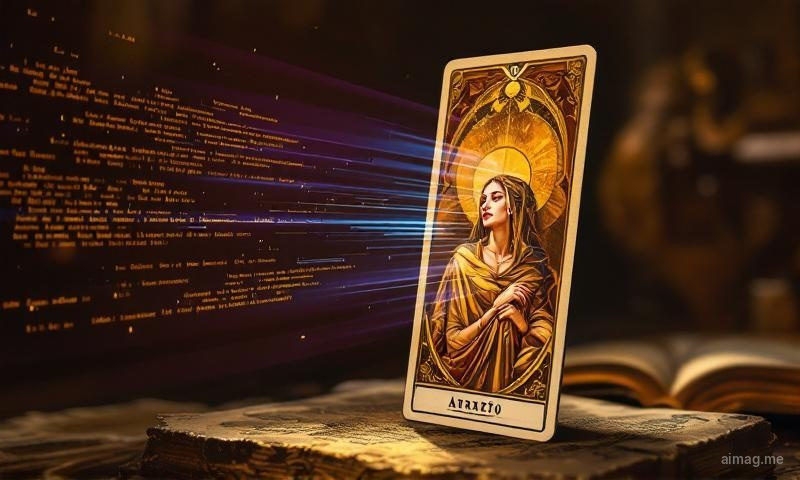
O sistema de 78 cartas do tarô é, do ponto de vista computacional, um vocabulário simbólico notavelmente bem estruturado. Cada carta carrega múltiplas camadas de informação codificada: iconografia visual, significância numerológica, correspondência elemental (Copas/Água, Espadas/Ar, Ouros/Terra, Paus/Fogo), significado posicional dentro do arco narrativo dos Arcanos Maiores e séculos de tradição interpretativa acumulada.
Essa estrutura em múltiplas camadas é o que torna o tarô particularmente adequado para interpretação com IA. Ao contrário de um borrão de Rorschach — que é deliberadamente ambíguo, sem estrutura simbólica inerente — uma carta de tarô carrega conteúdo semântico genuíno que foi refinado ao longo de séculos. A carta não está vazia. Está densa de significado, e essa densidade dá ao sistema de IA material real com que trabalhar.
Como a IA identifica relações entre cartas
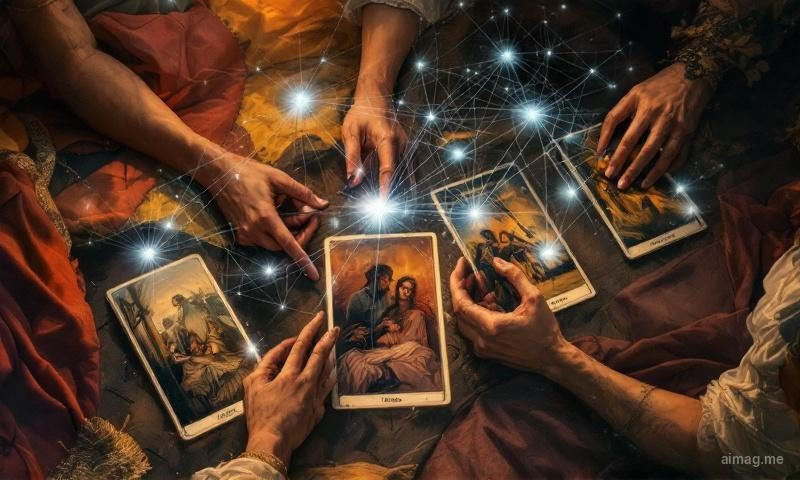
Num spread de múltiplas cartas, o desafio interpretativo se multiplica. As cartas não simplesmente ficam lado a lado — elas interagem. O Três de Ouros numa posição de "fundação" emparelhado com O Mago numa posição de "aspiração" conta uma história diferente do que as mesmas cartas em posições invertidas. A IA precisa sintetizar essas relações numa narrativa coerente.
É aqui que a tecnologia se torna genuinamente impressionante. Modelos de linguagem modernos conseguem sustentar múltiplos fios simbólicos simultaneamente e tecê-los numa interpretação unificada. O modelo reconhece que colaboração (Três de Ouros) como fundação sustentando poder criativo individual (O Mago) como aspiração cria um arco narrativo específico sobre mover-se do trabalho em equipe para a maestria. Ele consegue gerar essa síntese porque processou milhares de textos sobre as duas cartas e, crucialmente, sobre os temas psicológicos que elas codificam.
Quando uma IA processa um spread de tarô, está operando nessas camadas mais profundas — não apenas identificando quais cartas estão presentes, mas reconhecendo as relações temáticas e narrativas entre elas, e conectando essas relações ao contexto emocional e psicológico específico da sua pergunta.
O papel do conhecimento estruturado
A capacidade bruta do modelo de linguagem é apenas parte do quadro. No aimag.me, o intérprete de IA trabalha com uma base de conhecimento estruturada que codifica as associações simbólicas de cada carta, correspondências elementais, relações numerológicas e significados posicionais. Isso não é uma tabela de consulta — é uma rede rica de informação simbólica que dá ao modelo material específico e preciso sobre o qual raciocinar.
Pense assim: o modelo de linguagem fornece a capacidade de raciocínio, enquanto a base de conhecimento estruturada fornece o vocabulário simbólico. A interpretação emerge da interação deles. É por isso que uma leitura de tarô com IA produz algo qualitativamente diferente de simplesmente perguntar a um chatbot "O que significa A Torre?" O sistema não está recuperando uma resposta armazenada. Está gerando uma interpretação contextual a partir da interseção da sua pergunta, das redes simbólicas das cartas e das relações posicionais dentro do spread.
Metáfora conceitual: por que sistemas simbólicos e modelos de linguagem são parceiros naturais
Existe uma razão mais profunda para IA e tarô funcionarem bem juntos, e ela vem da linguística cognitiva em vez da ciência da computação.
Em 1980, George Lakoff publicou Metáforas da Vida Cotidiana, um livro que mudou fundamentalmente como linguistas e cientistas cognitivos entendem o pensamento humano. O argumento central: a metáfora não é um recurso decorativo da linguagem. É o mecanismo primário pelo qual os humanos entendem conceitos abstratos. Não apenas descrevemos o tempo como recurso quando dizemos "passei três horas nisso." Na verdade pensamos sobre o tempo por meio da metáfora estrutural de um recurso limitado. Não apenas falamos sobre argumentos como guerras ("Ela atacou minha posição", "Ele defendeu sua tese"). Conceitualizamos o argumento pela estrutura do conflito.
O framework de Lakoff revela algo essencial sobre o tarô: todo o seu sistema simbólico é construído sobre metáforas conceituais. O naipe de Copas mapeia a vida emocional na metáfora de recipientes que podem ser cheios, esvaziados, oferecidos ou derramados. Espadas mapeia a vida intelectual e comunicativa na metáfora de instrumentos cortantes — clareza como afiação, conflito como colisão, verdade como lâmina de dois gumes. Ouros mapeia a vida material na metáfora de objetos tangíveis e pesados que podem ser acumulados, equilibrados ou perdidos.
Essas não são associações arbitrárias. São metáforas conceituais no sentido preciso de Lakoff: mapeamentos estruturados entre um domínio fonte (objetos e ações físicas) e um domínio alvo (experiência psicológica abstrata). E aqui está a percepção chave: modelos de linguagem são excepcionalmente bons em operar dentro de sistemas de metáfora conceitual, porque essas metáforas estão profundamente incorporadas nos dados de treinamento. Todo texto já escrito sobre emoções usa metáforas de recipiente ("transbordando de alegria", "emocionalmente drenado", "meu cálice transborda"). Todo texto sobre conflito usa metáforas de lâmina ("comentários cortantes", "crítica afiada", "insight penetrante"). O modelo aprendeu esses mapeamentos não como regras explícitas mas como regularidades estatísticas profundas na expressão humana.
É por isso que uma IA pode pegar o Cinco de Copas — uma carta mostrando uma figura lamentando três cálices derramados enquanto dois cálices cheios ficam atrás dela — e conectá-la à sua pergunta sobre uma perda recente de uma forma que parece significativamente específica. A metáfora conceitual (emoções como líquido em recipientes, perda como derramamento, recursos não percebidos como cálices cheios atrás de você) é a ponte. A IA atravessa essa ponte com facilidade porque a ponte está incorporada na própria estrutura da linguagem humana.
A analogia de Hofstadter e o cerne da interpretação
Douglas Hofstadter, o cientista cognitivo e autor de Gödel, Escher, Bach, argumentou ao longo de sua carreira que a analogia é o núcleo da cognição — não uma habilidade cognitiva periférica, mas o mecanismo fundamental pelo qual os humanos dão sentido a situações novas. Em Superfícies e Essências (2013), ele defende que todo ato de categorização, todo momento de reconhecimento, toda instância de compreensão é um ato de analogia: mapear a estrutura de algo familiar sobre algo desconhecido.
Ler o tarô é, em sua essência, raciocínio analógico. Você tira uma carta mostrando uma figura se afastando de três cálices derramados, e mapeia sua estrutura sobre sua própria situação: "Algo foi perdido, e estou focado na perda em vez do que permanece." A carta é a fonte. Sua vida é o alvo. A leitura é o mapeamento.
O que torna isso relevante para a tecnologia de IA é que os modelos de linguagem modernos são, num sentido real, máquinas de analogia. Seu modo inteiro de operação — processar input por referência a padrões aprendidos em vastos domínios textuais — é uma forma de raciocínio analógico. Quando o modelo conecta o Cinco de Copas à sua pergunta sobre um revés na carreira, está realizando uma analogia: mapeando a estrutura simbólica da carta sobre o domínio da sua pergunta. Faz isso não por deliberação consciente mas pelo mesmo reconhecimento distribuído de padrões que a pesquisa em aprendizado profundo descreve.
Essa convergência entre a ciência cognitiva da analogia e a arquitetura computacional dos modelos de linguagem não é coincidência. É a razão pela qual a interpretação de tarô com IA funciona. O tarô é construído sobre analogia. Os modelos de linguagem rodam sobre analogia. O encaixe é estrutural.
Como o aimag.me constrói uma interpretação
Sem revelar detalhes arquitetônicos proprietários, aqui está uma visão de alto nível do que acontece quando você solicita uma leitura no aimag.me:
1. Seleção das cartas. As cartas são sorteadas com aleatoriedade criptográfica — imprevisibilidade genuína, não sequências pseudoaleatórias. Isso importa pela mesma razão que a ciência da aleatoriedade importa em qualquer sistema projetivo: o elemento inesperado é o que cria espaço para reflexão genuína em vez de confirmação do que você já esperava.
2. Mapeamento simbólico. Cada carta sorteada é conectada à sua rede completa de associações simbólicas — significados tradicionais, correspondências elementais e numerológicas, simbolismo visual e a posição da carta dentro do arco narrativo dos Arcanos Maiores ou Menores. Isso não é um único "significado" por carta, mas uma representação rica e multidimensional.
3. Interpretação contextual. Sua pergunta e as redes simbólicas das cartas são processadas juntas. A IA presta atenção à interação entre o domínio da sua pergunta (amor, carreira, crescimento interior, uma decisão específica) e os fios simbólicos relevantes de cada carta. Cartas em diferentes posições do spread são interpretadas por seu contexto posicional.
4. Síntese narrativa. As interpretações individuais das cartas são tecidas numa narrativa coerente que conecta as cartas entre si e à sua pergunta. É aqui que emergem as relações entre múltiplas cartas — como a presença de uma carta modifica o significado de outra, como o spread conta uma história com lógica interna.
5. Enquadramento reflexivo. O output final é enquadrado como um convite à reflexão, não como previsão ou diagnóstico. Esta é uma escolha de design deliberada enraizada na filosofia do Espelho Moderno: a IA é um espelho que ajuda você a ver sua própria situação por novos ângulos, não um oráculo que afirma ver o que você não consegue.
O processo inteiro leva segundos. Mas por trás desses segundos há um pipeline sofisticado que integra conhecimento simbólico, raciocínio contextual e geração narrativa em algo que — quando funciona bem — produz material genuinamente útil para autorreflexão.
O que a IA faz melhor, o que os humanos fazem melhor
A honestidade intelectual exige reconhecer que a IA e os leitores humanos de tarô cada um têm pontos fortes genuínos, e eles não são os mesmos.
Onde a IA tem vantagem
Amplitude de referência. Um leitor humano, por mais experiente que seja, leu um número finito de livros, encontrou um número finito de consulentes e absorveu um corpo finito de tradição interpretativa. Um sistema de IA treinado em bilhões de documentos processou uma gama vastamente maior de material psicológico, mitológico, literário e simbólico. Quando conecta sua carta a um paralelo mitológico obscuro mas relevante, está extraindo de um conjunto que nenhum humano conseguiria igualar.
Consistência. Leitores humanos têm dias bons e dias ruins. Eles trazem suas próprias projeções, humores e vieses para cada leitura. Um leitor de IA aplica a mesma qualidade de atenção a cada pergunta, independentemente da hora do dia, do estado emocional ou de quantas leituras já fez.
Acessibilidade. Uma leitura de IA está disponível às 3 da manhã quando você não consegue dormir e uma pergunta está queimando. Não requer agendamento, deslocamento ou a vulnerabilidade de sentar de frente para um estranho. Para muitas pessoas, essa acessibilidade é o que faz a diferença entre refletir sobre uma pergunta difícil ou não refletir.
Segurança psicológica. Algumas perguntas são mais fáceis de fazer a uma máquina do que a uma pessoa. Perguntas sobre vergonha, medo, sexualidade, fracasso ou desejos que você não admitiu a ninguém. A ausência de julgamento humano — real ou percebida — pode tornar possível uma investigação mais profunda.
Onde os leitores humanos têm vantagem
Intuição corporificada. Um leitor humano habilidoso percebe coisas que nenhum modelo de linguagem consegue detectar: uma mudança na sua respiração quando uma carta é virada, como seus olhos se movem, a leve tensão na sua voz ao descrever sua pergunta. Esses dados somáticos informam a interpretação de formas genuinamente valiosas e atualmente impossíveis de a IA replicar.
Sintonia relacional. A relação terapêutica — o que os psicólogos chamam de "aliança de trabalho" — é em si um fator curativo. Ser visto, ouvido e respondido por outra consciência humana é qualitativamente diferente de receber texto na tela, independentemente de quão cuidadoso seja esse texto.
Improvisação e profundidade. Um leitor humano consegue seguir um fio de conversa para território inesperado, fazer perguntas esclarecedoras, perceber quando uma interpretação chegou e quando errou o alvo, e se ajustar em tempo real. A IA gera uma resposta e espera. A qualidade iterativa e responsiva do diálogo humano é algo que a IA atual não consegue reproduzir completamente.
A comparação não é uma competição. É um mapa de capacidades complementares. Para algumas pessoas, em alguns momentos, uma leitura de IA oferece exatamente o que é necessário. Para outras, ou em outros momentos, a presença de um leitor humano é insubstituível. Saber a diferença é em si uma forma de autoconhecimento.
A questão filosófica por baixo de tudo
Há uma questão que fica sob todos os detalhes técnicos, e vale a pena nomear explicitamente: importa se o intérprete "entende" os símbolos, desde que a interpretação produza insight genuíno?
Filósofos da mente debatem isso desde o experimento mental do Quarto Chinês em 1980 — o mesmo ano, curiosamente, em que Lakoff publicou Metáforas da Vida Cotidiana. O argumento era que um sistema poderia manipular símbolos perfeitamente sem entender o que eles significam. O debate continua. Mas do ponto de vista prático, a questão para o tarô não é se a IA entende a carta Morte da forma que você entende. A questão é se o output ajuda você a entender algo sobre si mesmo que você não via antes.
Se a resposta é sim — e para muitas pessoas, consistentemente é — então a tecnologia está fazendo seu trabalho. Não substituindo a compreensão humana, mas fornecendo um espelho estruturado que torna sua própria compreensão mais visível para você.
É isso que a tecnologia por trás do tarô com IA realmente faz. Não adivinhação. Não misticismo disfarçado de terminologia de aprendizado de máquina. Algo mais modesto e mais útil: raciocínio simbólico estruturado que oferece uma estrutura para ver seus próprios padrões, perguntas e possibilidades com olhos frescos.
Perguntas frequentes
A IA realmente entende o simbolismo do tarô, ou está apenas gerando texto plausível?
Depende do que você entende por "entender." A IA não tem experiência subjetiva do que A Torre faz sentir. Mas aprendeu a estrutura estatística profunda de como os símbolos do tarô se relacionam com conceitos psicológicos, narrativas mitológicas e experiência humana em milhares de textos. Seus outputs não são aleatórios ou genéricos — refletem relações estruturais genuínas dentro do sistema simbólico. Se isso conta como compreensão é uma questão filosófica. Se produz interpretações úteis é uma questão empírica, e as evidências sugerem que sim.
Como o tarô com IA é diferente de um gerador de horóscopo?
Um gerador de horóscopo produz o mesmo texto para todos nascidos sob determinado signo. Uma leitura de tarô com IA processa sua pergunta específica, as cartas específicas sorteadas aleatoriamente, suas posições dentro do spread e as relações entre elas. O output é gerado contextualmente, não recuperado de um banco de dados. Duas pessoas fazendo perguntas diferentes e tirando cartas diferentes receberão interpretações completamente diferentes. A personalização é genuína, não cosmética.
O tarô com IA pode substituir a terapia?
Não, e não deveria tentar. O tarô com IA é uma ferramenta de autorreflexão, não uma intervenção clínica. Pode ajudá-lo a perceber padrões, articular perguntas e explorar perspectivas que não havia considerado. Não consegue diagnosticar, tratar ou fornecer a cura relacional que vem de trabalhar com um terapeuta habilidoso. Se você está lidando com preocupações sérias de saúde mental, procure apoio profissional. Tarô com IA e terapia não são concorrentes — operam em domínios completamente diferentes.
Que papel a aleatoriedade desempenha na precisão das leituras de tarô com IA?
A aleatoriedade não é um defeito — é uma característica. O sorteio aleatório das cartas fornece o que os psicólogos chamam de superfície projetiva: um elemento inesperado ao qual sua mente responde com base no seu estado psicológico atual. A "precisão" de uma leitura de tarô não é sobre se as cartas preveem seu futuro. É sobre se a interação entre o sorteio aleatório, o sistema simbólico e seu próprio processo reflexivo traz algo genuíno à superfície. A aleatoriedade é o mecanismo que impede a autorreflexão de se tornar autoconfirmação.
A tecnologia por trás do tarô com IA é sofisticada, mas a experiência não requer entender a tecnologia. Se você tem curiosidade sobre como uma leitura de tarô estruturada e movida por IA realmente parece, tente uma leitura gratuita e veja o que as cartas trazem para você.