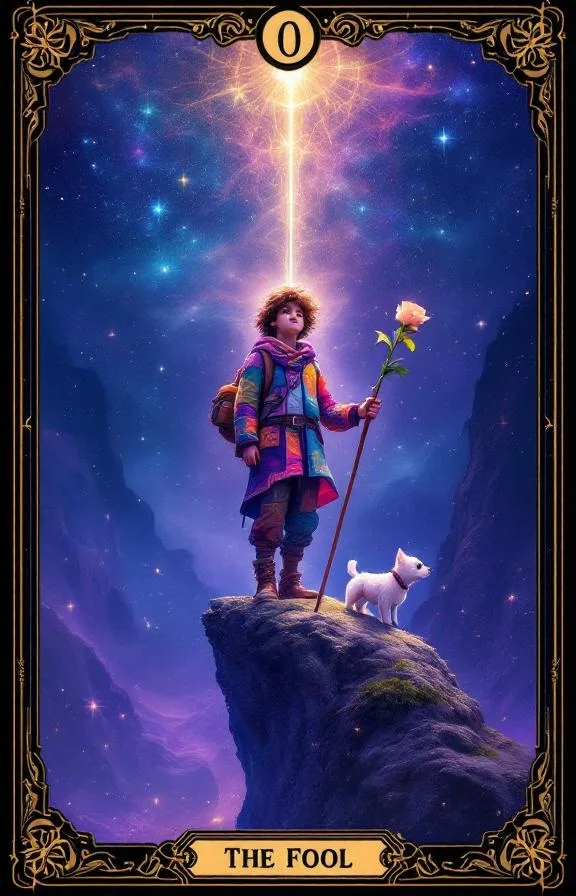
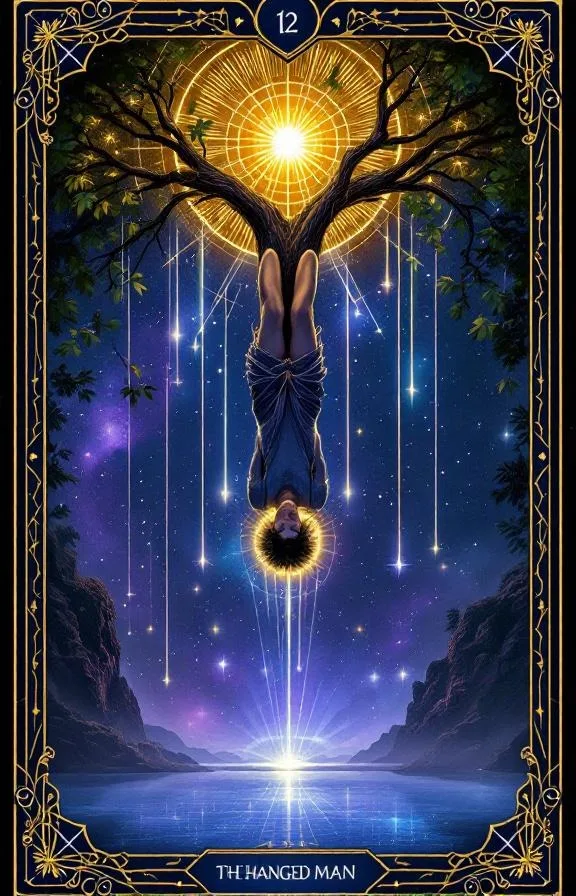
Você sabe que precisa seguir em frente. Mas em algum lugar abaixo dessa ansiedade, algo diz ainda não é a hora de avançar. Não é medo — o medo é fácil de nomear. Isso é mais desorientador do que isso. A situação pede que você pare de tentar resolver. Esse paradoxo está no centro de O Louco e O Enforcado.
O Louco e O Enforcado em Resumo
| O Louco | O Enforcado | |
|---|---|---|
| Número | 0 | XII |
| Elemento | Ar | Água / Netuno |
| Tema central | Começos, confiança | Rendição, nova perspectiva |
Juntos: Um começo que só pode chegar depois que você solta a ideia de como deveria ser.
A Dinâmica Central
O Louco é movimento puro para frente — o primeiro passo no desconhecido, movido pela confiança em vez de evidências. O Enforcado é suspensão deliberada — uma figura pendurada de cabeça para baixo, calma em vez de angustiada, vendo o mundo de um ângulo que a maioria das pessoas evita. Juntos, esses dois criam o que parece uma contradição: como você salta e pausa ao mesmo tempo?
A contradição se dissolve quando você ouve o que cada carta realmente pede. O Louco diz comece. O Enforcado diz mas não do jeito que você planejou.
D.W. Winnicott escreveu sobre o que chamou de "capacidade de estar num estado de desintegração" — distinto do colapso. O colapso é destruição. A desintegração é a disposição de flutuar sem forçar coerência, deixar a experiência permanecer não organizada tempo suficiente para que algo novo possa realmente emergir. A maioria dos adultos acha esse estado quase insuportável. Nos apressamos para organizar, narrar, criar sentido antes que os dados brutos tenham terminado de chegar. O Enforcado é a carta que pede que você resista a essa pressa.
Essa combinação diz que você está à beira de algo novo. Mas a versão de "novo" que você estava imaginando ainda tem a forma das velhas suposições. Na psicologia cognitiva, os pesquisadores chamam isso de "fixidez funcional" — a tendência de ver objetos e situações apenas em termos de seu uso convencional. Quebrá-la exige desengajamento deliberado do problema. Você para de empurrar. A solução chega de lado.
Ar encontra Água. O desejo da mente de se mover rapidamente encontra a profundidade emocional acessível apenas através da quietude. O começo que você está buscando já está disponível — mas só é visível de uma perspectiva que você ainda não tentou.
No Amor e Relacionamentos
Para solteiros, o relacionamento que vale a pena perseguir provavelmente não vai parecer com o que você esperava. Você pode se sentir atraído por alguém que não se encaixa nos seus critérios habituais. Ou a conexão se desenvolve num cronograma que parece contraintuitivo — mais devagar quando você quer rápido, mais profundo quando esperava algo casual. Deixe o relacionamento revelar sua própria forma em vez de forçá-lo num molde familiar.
Em relacionamentos estabelecidos, um ou ambos precisam liberar uma narrativa fixa sobre como as coisas "deveriam" evoluir. Talvez você esteja se agarrando a uma visão específica do próximo capítulo — morar junto, ter uma conversa específica, atingir um marco em determinada data. O Enforcado diz que o próximo passo real exige abandonar esse cronograma.
Isso não é estagnação. O psicólogo Rollo May traçou uma linha entre espera produtiva e evasão passiva. Espera produtiva significa permanecer totalmente presente e aberto enquanto permite que algo se desenvolva no seu próprio ritmo. O relacionamento não está parado. Está compostando — transformando material velho em algo que pode realmente nutrir um novo crescimento.
Na Carreira e Finanças
Profissionalmente, O Louco e O Enforcado aparecem quando alguém está tentando forçar um avanço pelo esforço puro — mais candidaturas, mais propostas, mais trabalho — enquanto a situação pede uma pausa estratégica. Esta é a combinação do empreendedor que percebe que sua melhor ideia de produto veio durante uma semana de folga. Não durante uma maratona de brainstorming.
A oportunidade de carreira à sua frente exige soltar um resultado específico antes de você conseguir ver a possibilidade mais ampla.
Financeiramente, paciência sem passividade. Um investimento ou despesa precisa de mais tempo para revelar seu verdadeiro valor. A disposição do Louco de arriscar não diminui — é redirecionada. Em vez de apostar no movimento óbvio, fique com a incerteza tempo suficiente para identificar a opção que só se torna visível quando você para de procurar aquela que esperava. Se uma decisão financeira parece travada, pergunte-se se está vendo o quadro completo ou apenas o ângulo em que está olhando há tempo demais.
A Mensagem Mais Profunda
A expressão serena do Enforcado — suspenso, invertido, profundamente em paz — diz algo com que a cultura da produtividade tem dificuldade: o progresso às vezes parece imobilidade. O salto mais corajoso pode ser a decisão de parar de saltar por um momento.
O Louco não desaparece nessa combinação. A energia do começo permanece. Mas está sendo filtrada por uma lente que exige que você veja sua situação de um ponto de vista que você tem evitado.
Como seria seu próximo passo se você parasse de assumir que já sabe o que é?
Curioso sobre o que O Louco e O Enforcado significam para VOCÊ? Faça uma leitura gratuita com IA e veja o que as cartas refletem sobre sua situação agora.