Court cards are the only tarot cards that look back at you. That's not a coincidence. Every other card in the deck depicts a situation, an event, a force, an archetype. Court cards depict people. And people — whether they represent someone in your life or an aspect of yourself — demand a fundamentally different kind of reading than "three swords through a heart" or "a tower struck by lightning." You have to decide who this person is, what they want, and what their presence in your spread means. That decision is where most tarot readers stall.
In short: The 16 court cards (Page, Knight, Queen, King across four suits) represent people, personality aspects, or developmental stages. Understanding them requires two frameworks: the four ranks as maturity levels (learning, acting, mastering internally, mastering externally) and the four suits as domains of life (creativity, emotion, intellect, material world). Combine rank with suit and you have a precise psychological profile for each card.
Why court cards confuse people
The confusion is structural. When the Three of Swords appears, nobody asks "is this a person or a situation?" It is obviously a situation — heartbreak, betrayal, painful truth. But when the Queen of Cups appears, the question splits immediately: is this me? Someone I know? A quality I should embody? An energy entering my life? The card does not specify. You have to.
This ambiguity is not a design flaw. It is the point. Court cards sit at the intersection of identity and experience. They ask you to think about who is doing the feeling, acting, thinking, or building — not just what is happening. That extra layer is why they produce richer readings once you learn to work with them instead of freezing up.
The four ranks: a developmental ladder
Each rank represents a stage of maturity. Think of them less as fixed identities and more as positions on a developmental arc — the same person moves through all four stages in any skill, relationship, or domain of life.
Pages — the learner
Pages are beginners. Not incompetent — curious. They encounter their suit's domain with fresh eyes and no preconceptions, which makes them simultaneously naive and perceptive. A Page sees things the King has learned to overlook.
In developmental psychology, Pages correspond to the exploration stage: the child's mode of engaging with the world through open-ended curiosity, trial and error, and the willingness to look foolish while learning. In Jung's framework, the Page carries elements of the child archetype — potential that has not yet been shaped by experience.
Pages in readings often signal messages, new beginnings, or the early stages of learning something. They can represent young people, students, or the part of you that is genuinely new at something and willing to admit it.
Knights — the actor
Knights are Pages who stopped studying and started doing. They have enough knowledge to act but not enough experience to act wisely. Every Knight in the deck is in motion — riding somewhere, pursuing something, committing fully to their suit's domain with the intensity (and sometimes the recklessness) of someone who has not yet been humbled by failure.
Developmentally, Knights occupy the performance stage: the adolescent or young adult mode of testing oneself against the world. Jung's hero archetype lives here — the figure who must leave home, face trials, and prove something before wisdom becomes available.
Knights in readings signal action, movement, arrival or departure, and the particular kind of energy that comes from conviction unchecked by experience.
Queens — the inner master
Queens have what Knights lack: depth. They have moved through the acting stage, absorbed its lessons, and developed an internal mastery of their suit's domain. The Queen of Cups does not just feel — she understands feeling. The Queen of Swords does not just think — she wields thought with precision.
Queens correspond to the integration stage: the developmental moment when external competence becomes internal wisdom. Jung's anima archetype (the inner feminine, present in all people regardless of gender) operates here — the mode of consciousness that processes experience inward, creating depth, nuance, and the capacity to hold complexity without needing to resolve it immediately.
Queens in readings represent maturity, nurturing mastery, emotional or intellectual depth, and the kind of authority that comes from understanding rather than force.
Kings — the outer master
Kings are Queens turned outward. They have the same depth but direct it toward the external world — building systems, leading people, structuring environments, wielding authority. A King's mastery is visible. It shapes the world around it.
Developmentally, Kings represent the generative stage: the mature adult mode of creating structures, mentoring others, and managing complex systems. Jung's wise old man / senex archetype operates here — accumulated experience deployed in service of something larger than personal growth.
Kings in readings signal authority, mastery, responsibility, and the particular kind of power that comes from having nothing left to prove.
Court cards by suit
Wands: the fire court
The Wands court operates in the domain of creativity, passion, ambition, and identity. These four cards trace the development of creative and entrepreneurial energy from first spark to established vision.
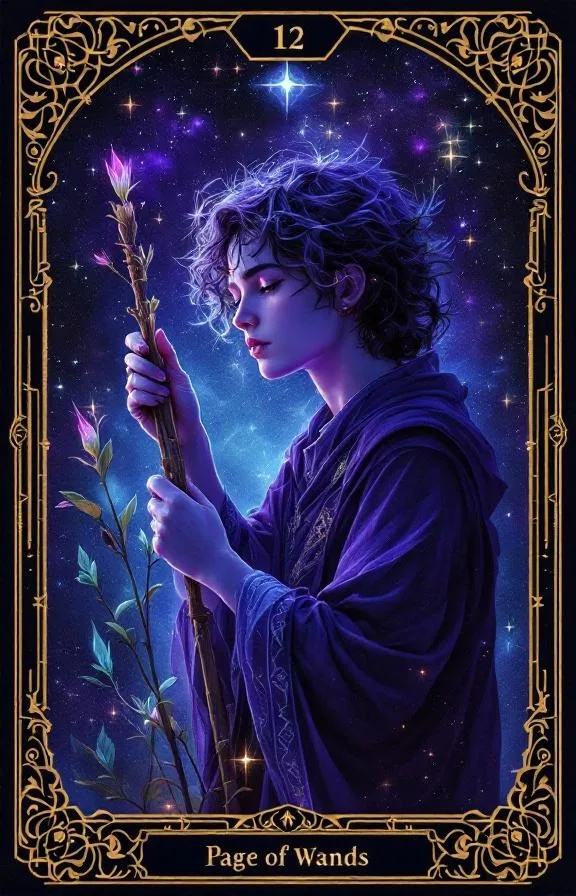
A young figure studies a tall wand, standing in a barren landscape that seems to bore him. He is looking at the wand like it is a boarding pass. Somewhere else, something better, something exciting. The Page of Wands is pure creative restlessness — the itch to start, to explore, to follow an idea before knowing where it leads.
This card shows up when a new passion is emerging. Not the commitment stage. The "I just discovered this and I can't stop thinking about it" stage.
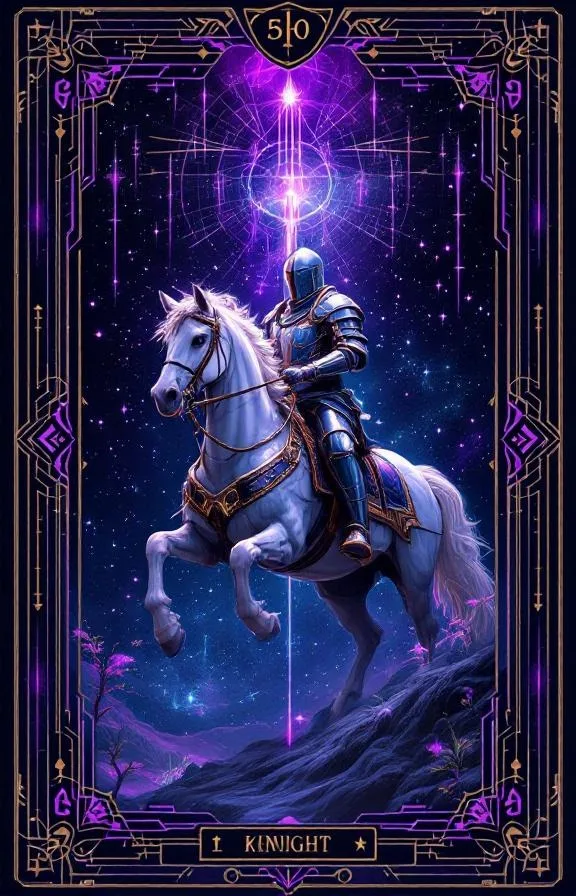
A knight charges forward on a rearing horse, wand raised, cloak billowing. Maximum velocity. Zero hesitation. The Knight of Wands is passion in action — bold, charismatic, and entirely capable of burning out or burning bridges because slowing down feels like dying.
He represents the person (or the part of you) who moves fast, commits hard, inspires everyone in the room, and sometimes leaves wreckage behind. Courage and recklessness share a border, and this Knight lives on it.
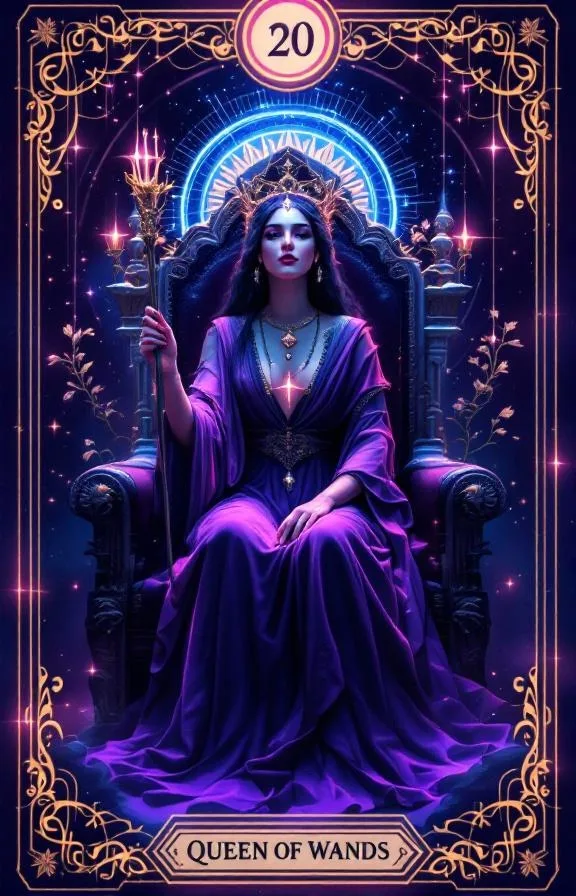
The Queen sits on her throne holding a sunflower and a wand, a black cat at her feet. She radiates warmth and confidence — not the Knight's brash energy but something steadier. She knows who she is and that knowledge fills the room.
The black cat signals comfort with shadow, with the parts of creative identity that are not polished for public consumption. The Queen of Wands does not perform confidence. She has it. The difference is visible from across a room.
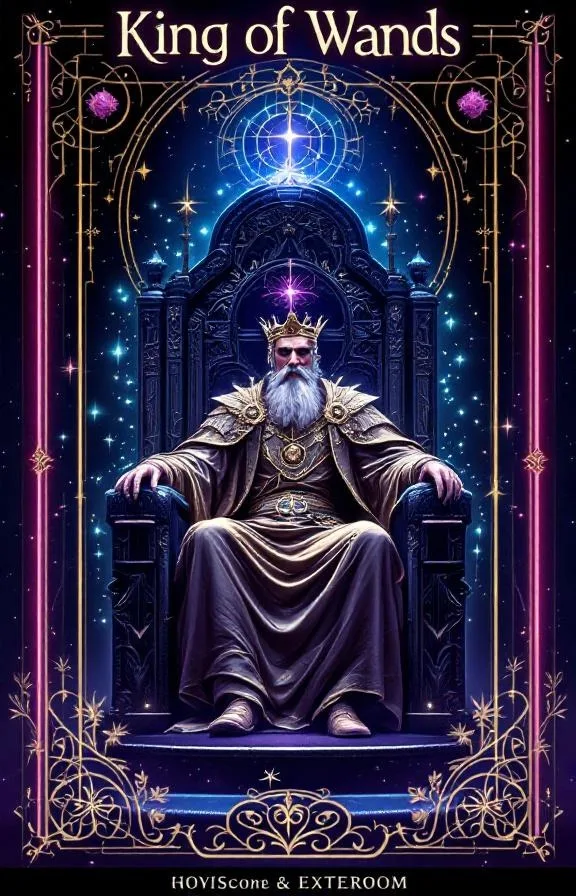
The King sits with a wand in hand, a salamander at his feet (the elemental symbol of fire), gazing forward with the expression of someone who has built what he envisioned and is now deciding what to build next. Visionary leadership. Not micromanagement — direction.
He leads through inspiration rather than control. People follow him because his conviction is contagious, and because he has the track record to back it up. The Knight had charisma. The King has charisma and results.
Cups: the water court
The Cups court operates in the domain of emotion, relationships, empathy, and the unconscious. These cards trace emotional development from the first encounter with feeling to composed emotional mastery.
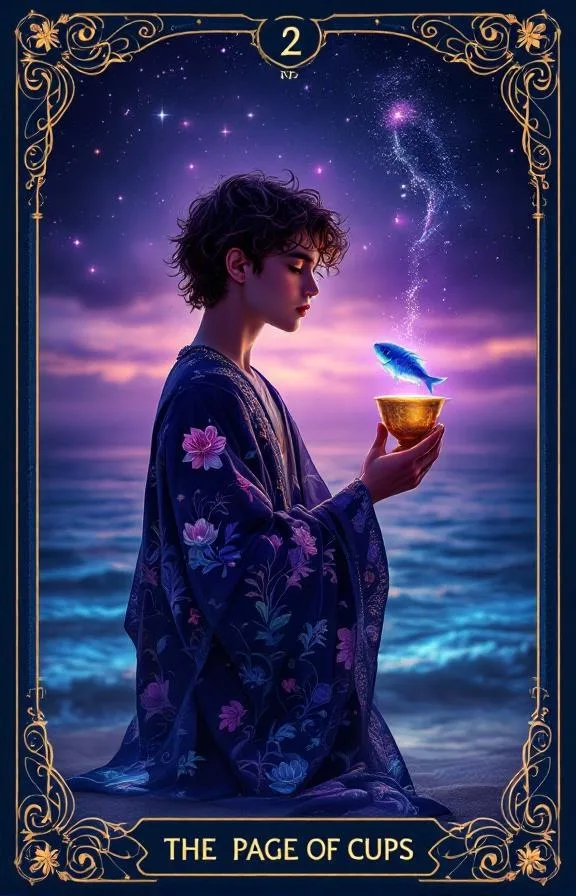
A young figure looks at a fish popping out of a cup with an expression somewhere between surprise and delight. The emotional beginner — encountering a feeling that doesn't fit into any existing category and responding with openness rather than defense. This is the inner child before learned cynicism taught it to suppress what it feels.
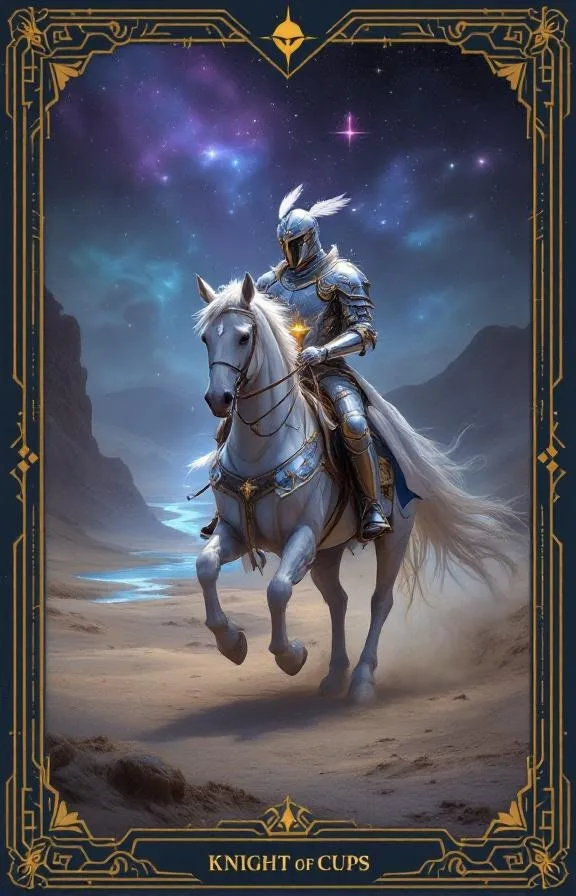
A knight rides forward on a white horse, cup extended like an offering. The romantic. The idealist. The one who follows feeling with complete commitment and sometimes discovers, three months later, that feeling and wisdom were pointing in different directions. The Knight of Cups must pursue what he feels deeply before discernment becomes available. You cannot learn to choose well without first choosing passionately and wrong.
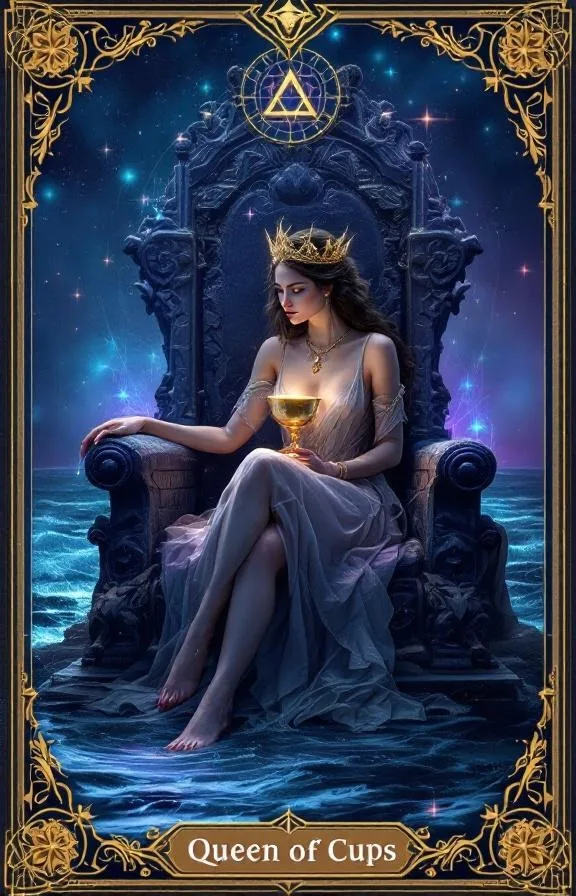
The Queen sits beside the ocean, holding a closed, lidded cup — the only sealed cup in the entire suit. She sees into you. She feels what you feel. And she does not spill.
That closed cup is everything. She has access to the full depth of emotional experience, but she has learned containment. Empathy without boundaries is drowning. The Queen of Cups has boundaries. She opens the cup when the situation requires it and closes it when it doesn't. That is the difference between emotional sensitivity and emotional wisdom.
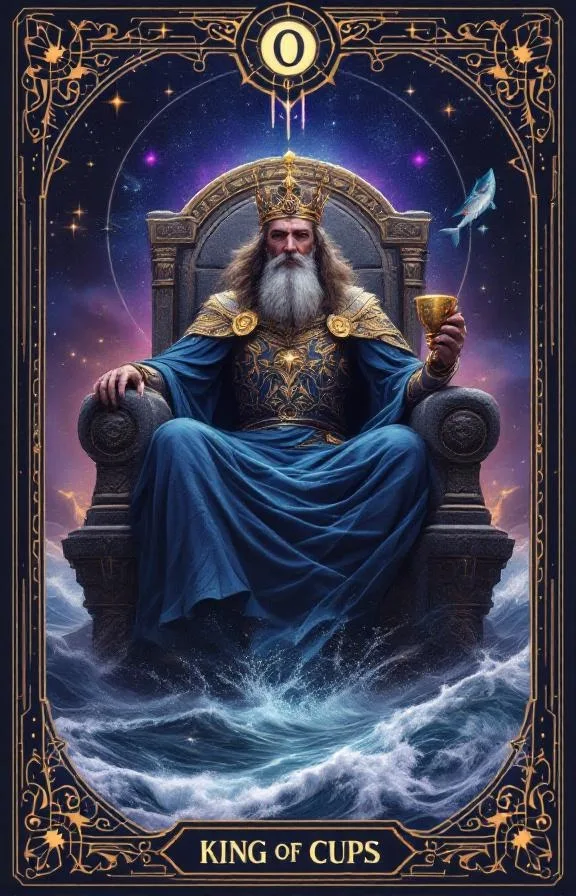
The King sits on a stone throne in turbulent water. A fish leaps on one side. A ship rocks on the other. The sea churns. And the King is calm — not because he has suppressed his feelings but because he has learned to hold the full weight of emotion without being capsized by it. He sits in the ocean. He acknowledges every wave. He simply does not let the waves steer.
Swords: the air court
The Swords court operates in the domain of thought, communication, truth, and conflict. These cards trace intellectual development from first questions to the kind of mental authority that can cut through complexity without cruelty.
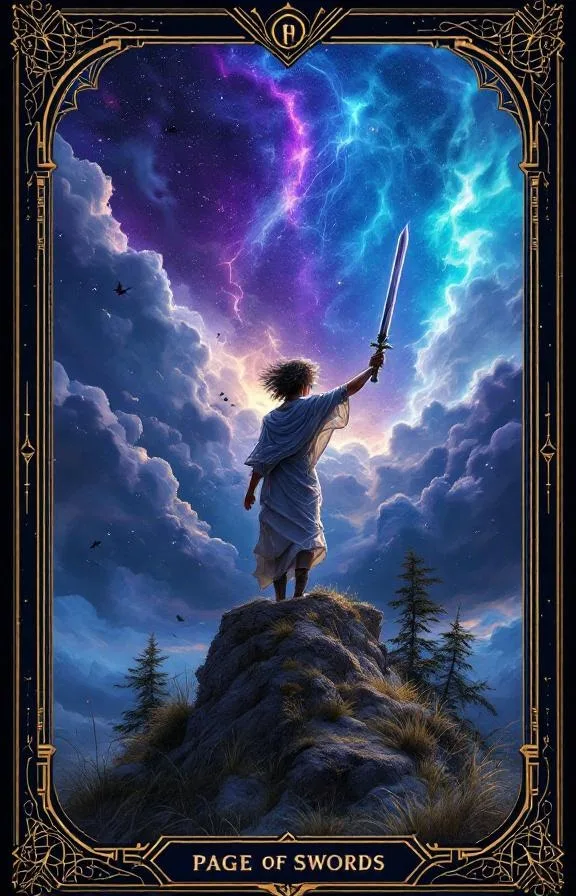
A young figure stands on uneven ground, sword raised, looking over one shoulder with an expression of alert vigilance. The intellectual beginner — sharp, watchful, full of questions, and sometimes so eager to prove how smart they are that they argue for sport. The Page of Swords is the part of you that just learned something and wants to test it against every idea in the room.
Exhausting to be around. Also completely necessary. This is where critical thinking begins.
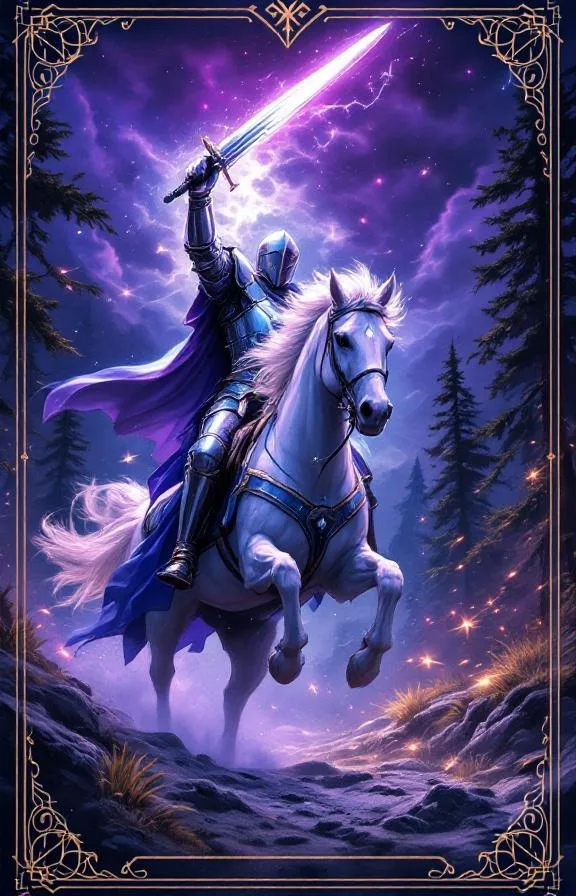
A knight charges into a windstorm, sword raised, horse at full gallop. The fastest Knight. The most dangerous. The Knight of Swords represents intellect in aggressive action — the debater, the investigator, the person who pursues truth with the intensity of a cavalry charge and sometimes confuses being right with being helpful.
He cuts through confusion. He also cuts through people. The blade does not distinguish.
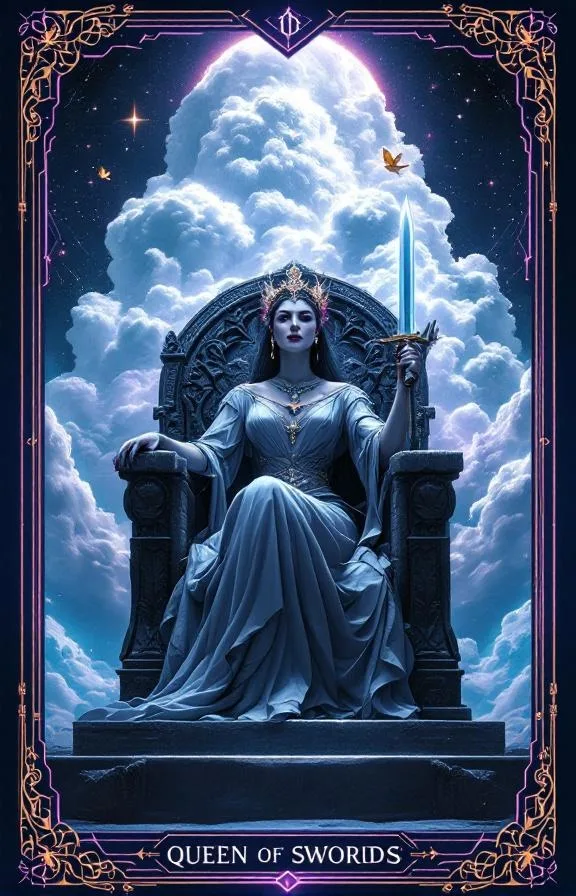
The Queen sits on a throne carved with butterflies and an angel, sword raised in her right hand, left hand extended as if inviting someone to speak. Storm clouds behind her. Clear sky above. She has been through the storm and emerged with her thinking sharpened, not softened.
The Queen of Swords is intellectual honesty at its most refined. She can hold a painful truth without flinching and communicate it without cruelty — not because she is gentle by nature but because she has learned that clarity serves better than brutality. She will tell you what you need to hear. She will not enjoy your discomfort while she does it.
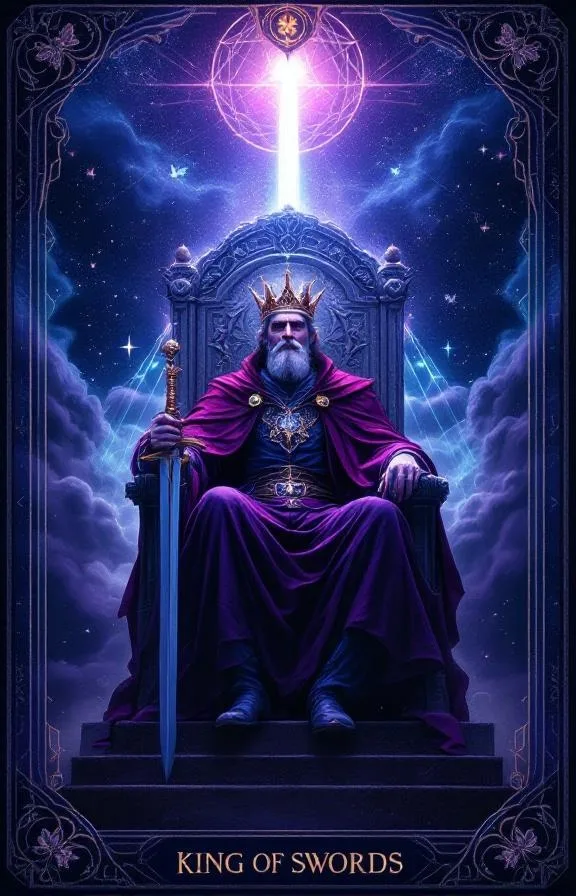
The King sits upright on his throne, sword in his right hand, the blade perfectly vertical. His expression is composed, impartial, and slightly intimidating. The judge. The strategist. The mind that has seen enough complexity to stop being impressed by cleverness and start valuing clarity.
He makes decisions based on evidence, communicates with precision, and does not confuse opinion with analysis. The Knight had speed. The King has judgment.
Pentacles: the earth court
The Pentacles court operates in the domain of material life — money, health, craft, work, body, nature. These cards trace the development of material competence from eager apprenticeship to quiet mastery.
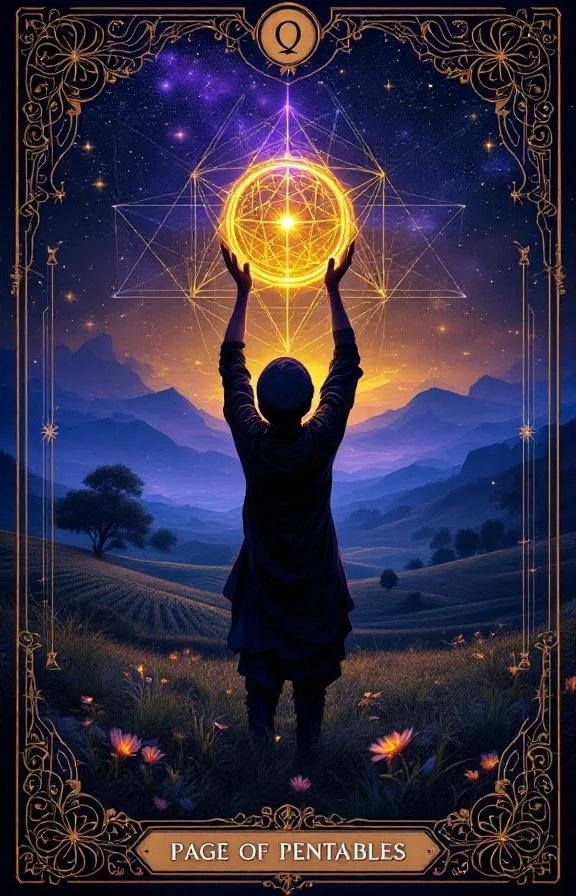
A young figure holds a pentacle at arm's length, studying it with the kind of concentration usually reserved for final exams. The apprentice. The person who just discovered that material skills — investing, cooking, building, coding — are worth learning, and who approaches the work with the earnest intensity of someone who has not yet been told to "be realistic."
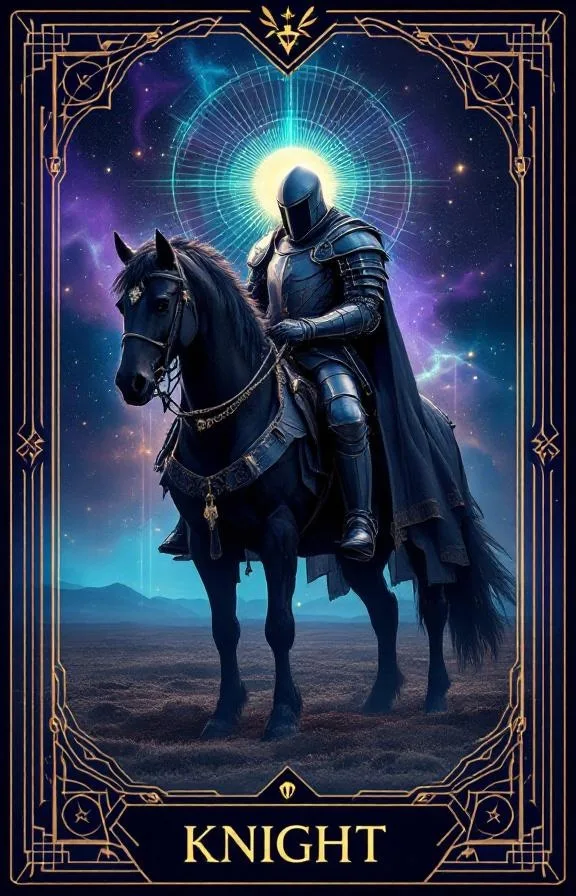
The only stationary Knight in the deck. He sits on a motionless horse, pentacle in hand, surveying a plowed field. The other Knights charge. This one plans. Then executes. Then plans again. Slowly. Reliably. Without anyone noticing until the harvest comes in and it is twice the size of everyone else's.
The Knight of Pentacles makes an argument that contemporary culture resists: some things cannot be rushed, and the people who refuse to rush them are not lazy. They are patient. There is a difference large enough to build a life inside.
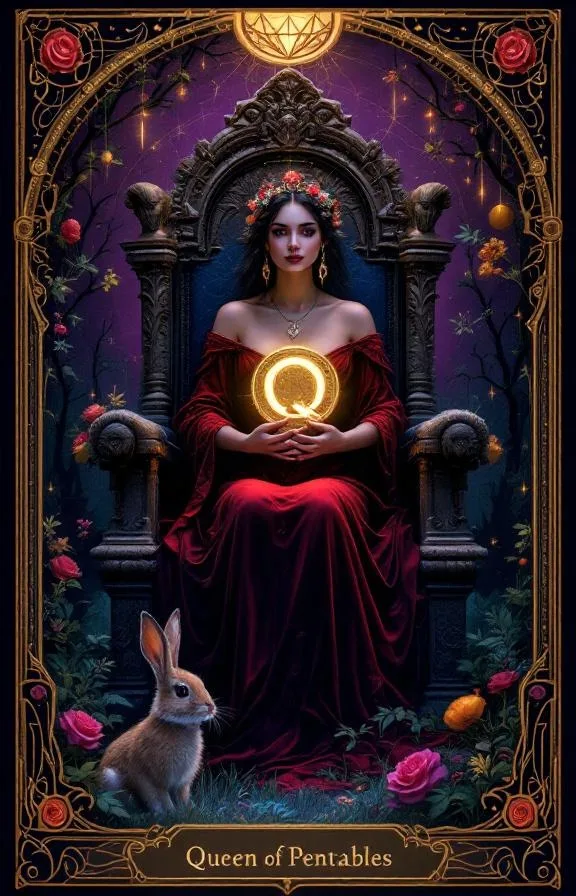
The Queen sits in a garden, pentacle on her lap, rabbit at her feet. Everything around her is alive and growing. She is not just wealthy — she is generative. Her material skill creates environments where other living things thrive. The team that consistently overperforms. The home where people feel fed in more than the literal sense.
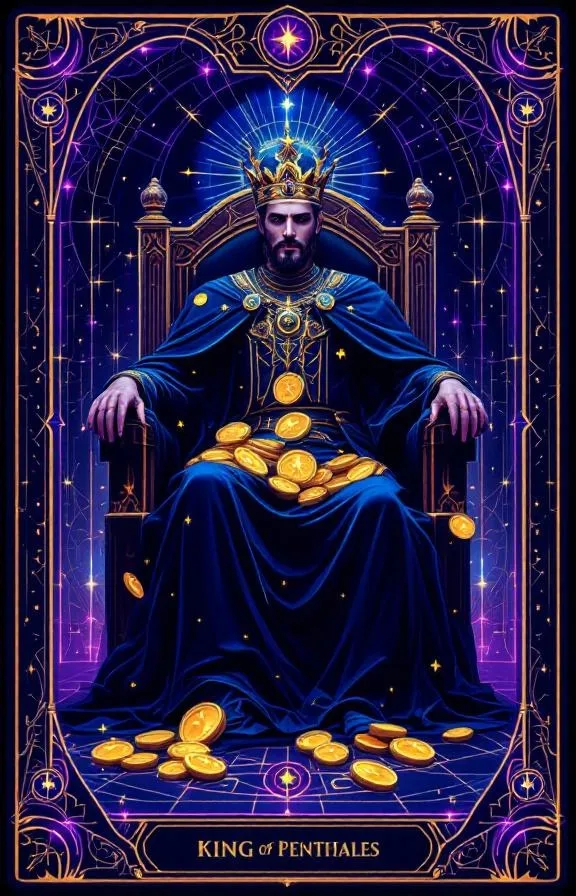
The King sits on a bull-carved throne surrounded by the abundance of everything he has built. Castle, vineyard, garden. A pentacle rests on his knee. Material mastery made tangible — not hoarded (that was the Four), but stewarded.
He is the endpoint of the material arc. His needs are met. His community is stable. His legacy is under construction. And from that solid foundation he is free to direct his wealth toward something larger than his own comfort. The King of Pentacles has money. More importantly, money does not have him.
How to read court cards in practice
Three frameworks. Use whichever fits the question.
As people in your life
The most literal reading. The court card represents a specific person. Their suit tells you which domain they primarily operate in (creative, emotional, intellectual, material). Their rank tells you their maturity level in that domain. A Knight of Cups in a love reading might be the romantic partner who falls hard and fast. A Queen of Swords in a career reading might be the boss who values clear communication above everything else.
Gender is not fixed to rank. Queens can represent men. Kings can represent women. The rank describes a mode of operating, not a body.
As aspects of yourself
The more psychologically productive reading. The court card represents a quality you are currently expressing, suppressing, or being called to develop. The Page of Pentacles in a career spread might signal that you need to go back to beginner's mind — stop pretending you know what you are doing and actually study. The King of Wands in a creative reading might indicate that you have enough vision to lead but are hiding behind execution work instead.
This framework is particularly useful when the court card feels like nobody you know. It is probably you — a version of you that has not fully shown up yet.
As advice
The court card tells you how to approach the situation. Draw the Queen of Cups in a conflict reading? Approach with empathy and containment rather than argument. Draw the Knight of Swords? Stop deliberating and act on what you already know. The card prescribes a posture, a mode of engagement, a way of holding the problem.
Court cards and timing
Each rank carries a temporal signature that shows up consistently in practice:
- Pages signal messages, news, beginnings. Something is arriving. A letter, an offer, an idea, a person entering your life. The timeline is "soon" — days or weeks.
- Knights signal speed and movement. Things are happening now, changing fast, arriving or departing with urgency. The timeline is compressed.
- Queens signal process and development. The situation requires time, attention, and internal work. Weeks to months. Nothing about a Queen is instant.
- Kings signal established conditions and long-term outcomes. What the King represents has been in place for a while and will remain. Months to years.
FAQ
What do court cards mean in a tarot reading? Court cards represent people, personality aspects, or developmental stages. They can point to a specific person in your life, a quality you need to embody, or advice about how to approach a situation. Their suit (Wands, Cups, Swords, Pentacles) identifies the domain; their rank (Page, Knight, Queen, King) identifies the maturity level.
Can a Queen card represent a man? Yes. Court card ranks describe modes of operating, not genders. A Queen card can represent any person who embodies that rank's qualities — depth, nurturing mastery, internal wisdom — regardless of their gender. The same applies to Kings representing women.
Why are court cards so hard to interpret? Because they introduce identity into a reading. Numbered cards depict situations. Major Arcana depict archetypal forces. Court cards depict people — and deciding whether that person is you, someone you know, or a quality you need to develop requires a kind of judgment that the other cards do not demand. The ambiguity is a feature. It forces you to think about who is doing the experiencing, not just what is being experienced.
How do I know if a court card is me or someone else? Ask two questions. First: does this card describe someone I recognize in the situation I asked about? If yes, it is probably that person. If no, it is probably you — specifically, the aspect of you that the reading is calling forward. Second: does the card match the position it landed in? A "you" position or "advice" position suggests self-reference. A "them" or "environment" position suggests another person.
What is the difference between a Queen and a King? Direction of mastery. Queens master inward — they develop depth, nuance, and the ability to hold complexity internally. Kings master outward — they build systems, lead others, and structure their environment. Both have the same level of competence. The Queen processes. The King directs. A fully developed person needs access to both modes.
Ready to meet the court cards face to face? Start a free tarot reading and see which figures appear — they will show you who you are becoming.