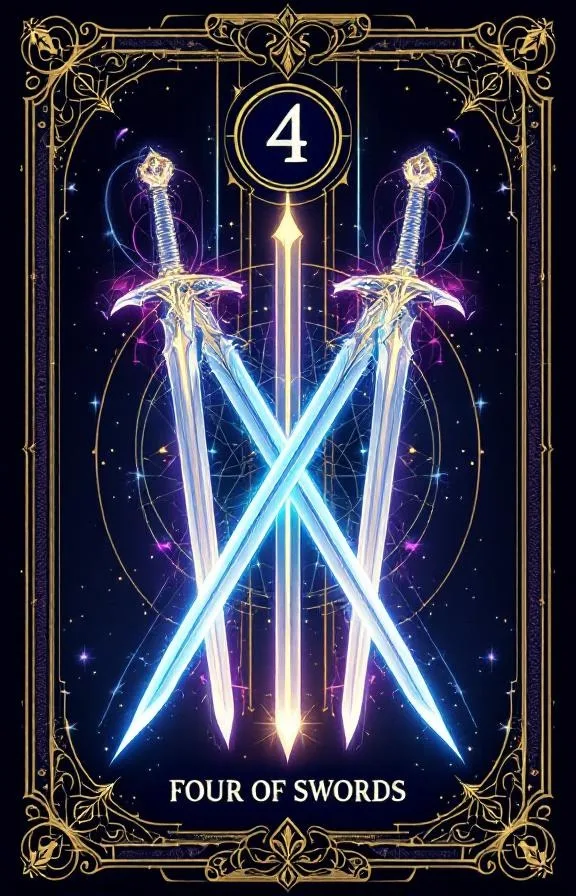
The figure lies still. Hands folded. Eyes closed. Not dead — resting, though the distinction barely matters to the person inhabiting this card's energy. They have reached the point where the body and mind refuse to continue without pause. The Four of Swords as feelings is emotional exhaustion so complete that stillness becomes the only possible response.
The core feeling
Exhaustion, when it reaches Four of Swords depth, is not just tiredness. It is the nervous system declaring a ceasefire. The person has been through something — conflict, grief, prolonged stress, relentless overthinking — and their internal resources are depleted. Not low. Depleted. The emotional equivalent of a phone on 2% that dims its own screen and shuts down non-essential functions to survive.
This is the card that appears when someone has been strong for too long. Researcher Emily Nagoski, whose work on stress cycles demonstrated that completing the stress response is physiologically different from removing the stressor, would recognize this state immediately. The stressor may be gone. The stress is not. The body is still running on cortisol and adrenaline from a crisis that ended days or weeks ago, and the crash has finally arrived.
What the Four of Swords captures that other cards miss is the surrender in this exhaustion. The person is not fighting it anymore. They have stopped trying to push through, power through, fake their way through. They have laid down. And in that laying down, there is something almost sacred — the recognition that rest is not failure but the precondition for everything that comes next.
Four of Swords upright as feelings
Upright, the Four of Swords signals deliberate withdrawal. The person has recognized their emotional state and made a conscious choice to step back. They are not ghosting. They are not punishing anyone with silence. They are conserving what little energy remains because they know, perhaps from painful experience, that engaging while this depleted leads to words they cannot take back and decisions they will regret.
Their emotional landscape is muted. Not flat — muted. Feelings exist but they are experienced through a thick layer of fatigue, like sounds heard through water. Joy is possible but it arrives quietly. Sadness is present but it lacks the sharp edges of active grief. Everything is turned down to a survivable volume.
The person may appear detached or disinterested, and this is a common misreading. They are not disinterested. They are rationing. Every conversation costs energy they do not have surplus of, so they choose carefully which ones to invest in. If they are engaging with you at all during a Four of Swords period, take it as a significant sign — you made the cut when most things did not.
Four of Swords reversed as feelings
Reversed, the Four of Swords represents someone who needs rest desperately and cannot get it — or refuses to. The exhaustion is the same, but the person has not surrendered to it. They are dragging themselves through days on willpower and caffeine, ignoring every signal their body sends, convinced that stopping would be more dangerous than continuing.
Sometimes this is circumstantial. Single parents do not get to take mental health days. People without savings cannot afford to slow down. The reversed Four of Swords can indicate exhaustion compounded by the guilt of not being able to rest, which is its own special cruelty.
Other times the reversal indicates premature re-engagement. The person rested briefly, felt slightly better, and threw themselves back into the situation that broke them before the recovery was complete. The result is a relapse into exhaustion that is worse than the original because it carries the additional weight of "I thought I was past this."
Four of Swords as feelings in love
In romantic readings, the Four of Swords as feelings does not indicate a lack of love. It indicates a lack of capacity. The person may care deeply about you — and be completely unable to show it right now because showing it requires energy they have redirected toward basic survival. Getting through the workday. Eating meals. Sleeping. The bandwidth for romantic engagement has been temporarily sacrificed.
When this card represents someone's feelings toward you, patience becomes either your greatest gift to the relationship or the thing you cannot afford to keep giving. Context matters enormously. If the exhaustion stems from a legitimate crisis — illness, loss, professional catastrophe — then the withdrawal is temporary and the person will return. If the exhaustion stems from a pattern of overcommitment that never changes, waiting for them to recover is waiting for something that will not come.
For couples, the Four of Swords sometimes signals the aftermath of a major fight or betrayal. Both people are emotionally spent. The issue has not been resolved but neither person has the resources to continue the conversation. A truce, not a peace. Sometimes that truce is exactly what is needed. Sometimes it becomes permanent avoidance.
Four of Swords as feelings about you
When the Four of Swords describes how someone feels about you, you are associated with their need for peace. You might be a calming presence they seek out when overwhelmed. Or you might be part of the situation they need distance from — not because you are harmful but because the relationship requires energy they currently cannot spare.
Ask yourself honestly which one it is. The answer usually lives in whether they reach toward you during their withdrawal or pull away.
Four of Swords as feelings in career
Professionally, the Four of Swords as feelings is burnout. The clinical, measurable, increasingly recognized kind. The person has given more to their work than they are getting back, and the deficit has caught up. They are present at their desk and absent from their work. Productivity has not declined because of laziness but because the machine has run out of fuel.
The single most undervalued professional skill is knowing when to stop. The Four of Swords represents someone who has either learned this lesson or is being forced to learn it. The strategic retreat is not a career setback. It is the reason the career survives.
Frequently asked questions
What does Four of Swords mean as feelings?
The Four of Swords represents deep emotional and mental exhaustion — the kind that follows prolonged stress, conflict, or grief. The person has reached a point where rest is not optional but necessary, and their feelings are muted, conserved, turned inward.
Does Four of Swords represent positive or negative feelings?
The Four of Swords is neither positive nor negative — it represents a necessary pause. The exhaustion itself is unpleasant, but the willingness to rest indicates wisdom and self-awareness. Reversed, when rest is refused or impossible, the card leans more negative, signaling burnout without relief.
What does Four of Swords reversed mean as someone's feelings?
Someone feeling the reversed Four of Swords is exhausted but unable or unwilling to stop. They are pushing through fatigue that has reached a critical level, either because their circumstances do not allow rest or because they fear that stopping will mean they cannot start again. The emotional state is brittle, running on empty, and increasingly unsustainable.
Curious what Four of Swords means as feelings in YOUR situation? Try a free AI tarot reading and explore the emotional landscape of your cards.