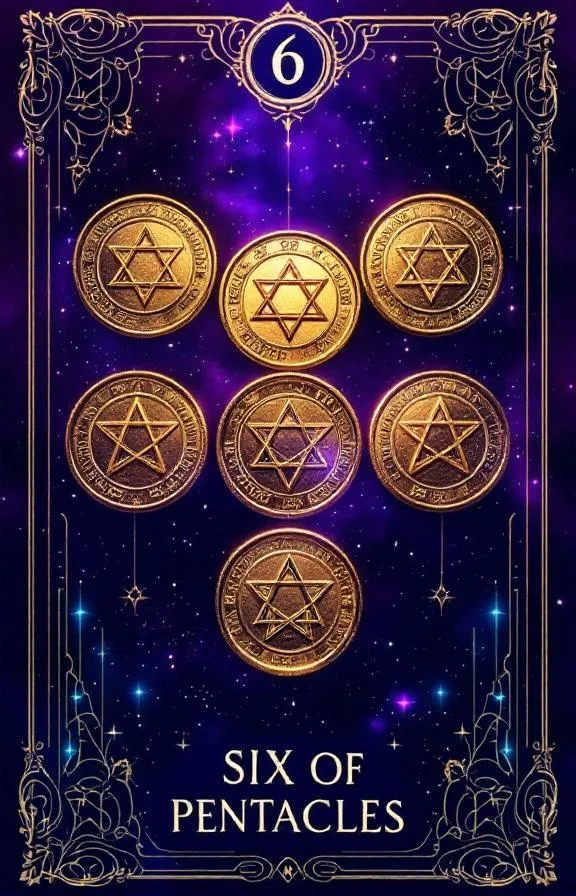
They pick up the check. Every time. And there is something in the way they do it — quietly, without fanfare, folding the receipt into their pocket before anyone can protest — that tells you this is not about showing off. It is about something older and more complicated than generosity. The Six of Pentacles as a person is the philanthropist, and understanding them means understanding that giving is never as simple as it looks.
The personality profile
The philanthropist archetype sits at a fascinating intersection of generosity and power. This is the uncomfortable truth about the Six of Pentacles person: their giving always contains an element of hierarchy. They give because they have more. The act of giving reinforces the fact that they have more. And whether they acknowledge this dynamic or not, it shapes every relationship they enter.
This does not make them bad people. Far from it. Their generosity is often genuine, motivated by real compassion and a sincere desire to ease suffering. But the scales depicted on the traditional card image are there for a reason. The Six of Pentacles person is always weighing — who deserves help, how much help, under what conditions — and that act of judgment, however benevolent, places them above the people they assist.
The best version of this person understands the paradox and works actively to flatten the hierarchy their generosity creates. They give in ways that empower rather than create dependency. They share power, not just resources. They listen to what people actually need instead of deciding for them.
Six of Pentacles upright as a person
Upright, this person's generosity is transformative. Not just for the recipients but for every system they touch. They are the manager who fights for their team's raises before their own. The friend who shows up with groceries when you mention offhand that money is tight. The stranger who pays for the person behind them in line because the impulse to give is as involuntary as breathing.
Their giving extends beyond money. Time, attention, mentorship, connections — they share resources in whatever form they possess them. Adam Grant's research at Wharton on "givers" versus "takers" in organizational settings found that the most successful people in any field tend to be givers, but a specific kind: strategic givers who help generously while maintaining boundaries that prevent exploitation. The upright Six of Pentacles person embodies this balance. They give and give and give — but they are not a doormat.
They have an instinct for fairness that goes beyond simple equality. They understand that giving everyone the same thing is not the same as giving everyone what they need. The person who needs a coat gets a coat. The person who needs a conversation gets a conversation. This discernment is a skill, and they have honed it through years of paying attention.
Six of Pentacles reversed as a person
Reversed, the philanthropist's generosity reveals its shadow. Strings appear. The giving comes with expectations — gratitude, loyalty, deference, the unspoken understanding that the recipient now owes something. It may never be stated outright. It does not need to be. The imbalance does the talking.
This version of the person may use generosity as a control mechanism, sometimes without conscious awareness. By being the one who always provides, they ensure they are always needed. By being always needed, they ensure they are never left. The math is impeccable. The emotional logic is devastating.
Sometimes the reversal shows the opposite problem: a person who gives until they are empty and then resents the emptiness. They have neglected their own needs for so long that compassion has curdled into martyrdom. They are tired. Bitter. Angry at the very people they chose to help, because those people had the audacity to accept what was offered.
Six of Pentacles as a person in love
In romantic relationships, the Six of Pentacles person naturally assumes the provider role. They want to take care of you — materially, emotionally, practically. They will handle the bills, plan the vacations, make the appointments, solve the problems. Their love is action. Tangible. Useful.
The trap is dependency. A relationship where one person always gives and the other always receives is not a partnership — it is a patronage. The Six of Pentacles person may unconsciously construct this dynamic because it gives them the security of being indispensable. If you need me, you cannot leave me. The logic is sound. The relationship is hollow.
The healthiest version of this person in love is one who has learned to receive. Receiving is harder for them than giving. Receiving means admitting need, which means admitting vulnerability, which means giving someone else the power to withhold. For the person who has always been the one holding the scales, setting them down is the bravest thing they can do.
Six of Pentacles as a person at work
They are the leader people actually want to work for. Fair with compensation. Generous with credit. Willing to share information that other managers hoard. Their teams tend to be loyal to a degree that looks like magic from the outside but is actually the predictable result of being treated like a human being with value.
Six of Pentacles as someone in your life
Recognize them by their generosity, but look deeper. Why do they give? Is there joy in it, or obligation? Do they celebrate your independence, or does it unsettle them? The answers to these questions tell you whether you are dealing with the upright or reversed expression.
The best way to honor a healthy Six of Pentacles person is to reciprocate in your own way. You do not need to match their resources. You need to give them something they cannot give themselves — the experience of being cared for by someone who expects nothing in return. Cook them dinner. Ask them how they are and actually wait for the real answer. Let them be the one who is held.
Frequently asked questions
What kind of person does the Six of Pentacles represent?
The Six of Pentacles represents a generous, resource-rich individual whose identity is closely tied to their ability to give. They are often leaders, benefactors, or mentors who derive deep satisfaction from helping others — though the power dynamics embedded in their giving deserve honest examination.
Is the Six of Pentacles as a person positive or negative?
Positive when the giving is genuine and balanced. The Six of Pentacles person at their best creates real, lasting change in people's lives. The shadow side emerges when generosity becomes a tool for control, or when the person gives so much they hollow themselves out and blame others for the emptiness.
How do you recognize a Six of Pentacles person?
They are the first to offer help and the last to ask for it. Their wallet is open before you finish describing the problem. They remember what you needed three months ago and follow up. Generosity is their default setting, so much so that it is easy to forget they might have needs of their own.