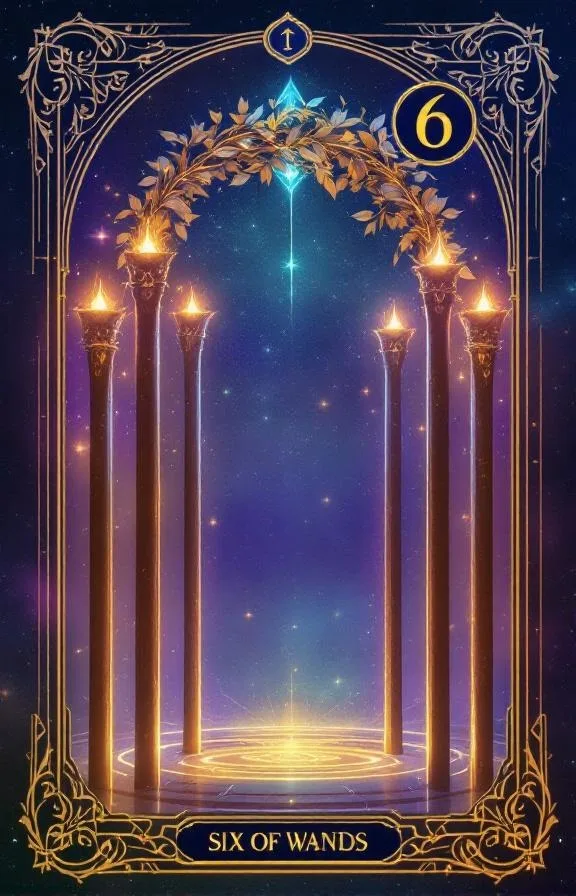
There is a difference between knowing you did something well and having other people confirm it. Both matter. But the second one does something to your nervous system that private satisfaction cannot replicate — a warmth that spreads from the chest outward, the shoulders dropping from a position of tension you did not realize you were holding. The Six of Wands as feelings is that public recognition landing in the body. Victory acknowledged. Worth confirmed. Not by your own assessment, but by the crowd.
The core feeling
Pride is the word, but it needs unpacking. The Six of Wands does not describe the pride of someone admiring their own reflection. It describes the pride of someone being carried on the shoulders of their community — the version that requires witnesses and is intensified by their presence. This is inherently social emotion.
Researchers in affective science distinguish between "authentic pride" and "hubristic pride." Authentic pride comes from specific accomplishments and sounds like "I worked hard and it paid off." Hubristic pride is generalized and sounds like "I am simply better than other people." The Six of Wands upright sits firmly in authentic territory. The person feels they earned what they are receiving. The recognition matches the effort. There is alignment between internal self-assessment and external feedback, and that alignment produces a particular emotional stability that is hard to achieve any other way.
What makes this card psychologically potent is that most people are starved for it. Genuinely starved. They do good work and hear nothing. They show up consistently and nobody notices. The Six of Wands represents the emotional experience of the drought breaking — finally being seen, finally being celebrated, finally having the external world reflect back what they have privately known about themselves.
Six of Wands upright as feelings
Upright, the Six of Wands indicates someone riding a wave of validated confidence. They feel successful, admired, and — crucially — deserving of the admiration. This is not imposter syndrome territory. The person has internalized the win. They believe it.
The emotional state is warm and expansive. Generous, even. People in the grip of authentic pride tend to become more helpful, more encouraging of others, more willing to share credit. The victory has made them feel abundant rather than territorial. They can afford to be magnanimous because their own cup is full.
There is also a performative element to these feelings that is worth naming without judging. The person is aware of their audience. They are enjoying being watched. Not in a narcissistic way — in the way that an athlete enjoys the roar of the crowd after a winning play. The recognition is part of the reward. Removing the audience would diminish the experience, and pretending otherwise would be dishonest.
Six of Wands reversed as feelings
The reversed Six of Wands produces two distinct emotional patterns, and they look nothing alike from the outside.
The first is the hollow victory. The person achieved the thing. Got the promotion, won the argument, landed the partner everyone else wanted. And it does not feel the way they expected. The applause sounds thin. The trophy does not fill the space inside them that they thought it would fill. This is one of the more disorienting emotional experiences a person can have — reaching the summit and discovering that the view does not cure the vertigo.
The second pattern is failed recognition. The person did the work. The results are visible. And nobody cares. Or worse, someone else gets the credit. The emotional fallout of unacknowledged effort is a toxic brew of resentment, self-doubt, and the creeping suspicion that merit is a fiction and outcomes are determined by politics, luck, and willingness to self-promote. Both patterns share a common root: the painful gap between what the person believes they deserve and what they are actually receiving.
Six of Wands as feelings in love
In romantic contexts, the Six of Wands as feelings indicates someone who feels like a winner in love. They landed someone they are proud to be with. They look at their partner and feel a specific kind of satisfaction that blends attraction with social validation — "this person chose me, and everyone can see why."
This is more honest than it sounds. Part of romantic satisfaction — a larger part than most relationship advice acknowledges — comes from the social dimension. Feeling proud of your partner. Wanting to show them off. Enjoying the way friends and family respond to them. The Six of Wands names this openly rather than pretending love exists in a vacuum sealed off from social perception.
When this card represents someone's feelings toward you, it means they feel elevated by the association. You make them look good. You make them feel good about themselves. You are a source of pride in their life, and they want the world to know you are together. Reversed, this same dynamic becomes more complicated — either they feel the relationship is not receiving the recognition or support it deserves from their social circle, or they are privately questioning whether the pride they feel is based on genuine connection or on something more superficial.
Six of Wands as feelings about you
Someone feeling the Six of Wands toward you sees you as a triumph. You are someone they pursued and won, or someone whose presence in their life confirms something they need to believe about themselves. They feel proud when they mention your name. They want to be seen with you.
This is intensely flattering but carries an edge worth being aware of: the person's feelings are partly relational and partly reputational. You matter to them as a person and as a symbol. Both can be genuine simultaneously.
Six of Wands as feelings in career
Professionally, the Six of Wands as feelings describes someone at the peak of career satisfaction. The project succeeded. The leadership noticed. Peers are offering congratulations that sound sincere. The person feels professionally validated in a way that goes beyond the paycheck — they feel that their competence is visible and their contribution matters.
This emotional state is fuel. People who feel genuinely recognized at work produce more, collaborate more effectively, and are more resilient when the next challenge arrives. The Six of Wands is not just about feeling good — it is about feeling good in a way that builds capacity for future performance. The win is not an endpoint. It is a launchpad.
Frequently asked questions
What does Six of Wands mean as feelings?
The Six of Wands represents feelings of pride, recognition, and validated success. It indicates someone who feels emotionally triumphant — their efforts have been acknowledged, their worth has been confirmed by others, and they are experiencing the warm, expansive confidence that comes from earned victory.
Does Six of Wands represent positive or negative feelings?
Predominantly positive. Upright, this is one of the most emotionally affirming cards in the deck — genuine pride backed by genuine achievement. Reversed, the feelings become more painful: either the victory feels hollow despite being real, or the recognition the person craves has been withheld. The desire to be seen and celebrated remains strong in both orientations.
What does Six of Wands reversed mean as someone's feelings?
Someone experiencing the reversed Six of Wands feels that their efforts toward you or a situation involving you are going unrecognized. They may have achieved something meaningful but feel the acknowledgment is missing — or they may be grappling with a victory that delivered less emotional satisfaction than they expected. The result is a restless dissatisfaction that keeps searching for the validation it cannot quite find.
Curious what Six of Wands means as feelings in YOUR situation? Try a free AI tarot reading and explore the emotional landscape of your cards.