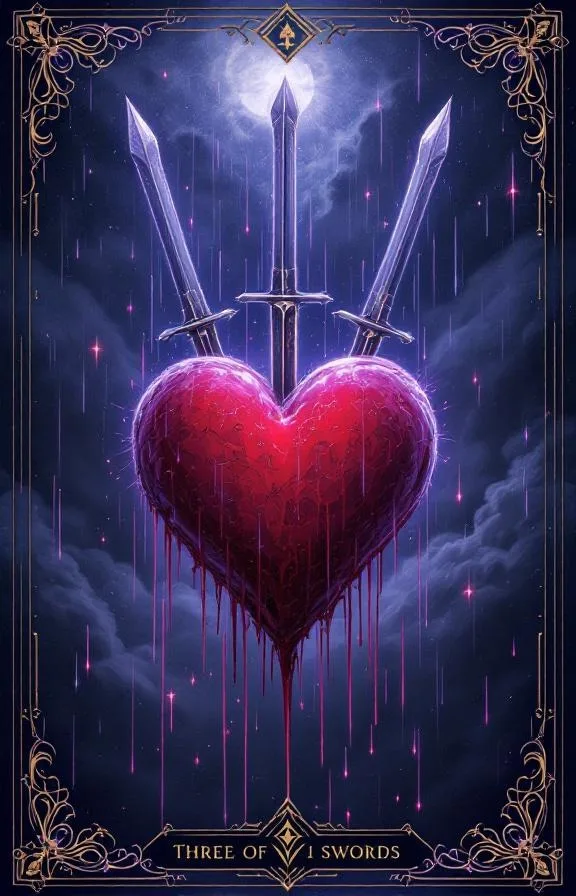
Three blades through a heart. No subtlety in this image. No softening. The Three of Swords is the card people flinch at before they even read the text below it, and for a yes or no question, that instinct is doing exactly what it should — telling you to pay attention to what you already feel about this situation.
The quick answer
No. The Three of Swords signals heartbreak, a painful truth you have been circling, or an emotional disruption tied to your question. The current trajectory points toward grief or disappointment. This is not the universe punishing you. It is an honest reading of where things stand right now. Sometimes the most useful answer the cards can deliver is the one that stings.
What the Three of Swords means upright in a yes or no reading
This card represents the moment a defended position collapses. The story you have been telling yourself — about a person, a situation, your own role in it — stops holding together. That collapse is the pain. Not the event itself, but the reckoning that follows when reality overrides the version you preferred.
Part of you already suspects the answer is no. The Three of Swords confirms what your gut has been whispering for days or weeks.
Where this card shows up most: relationships where trust cracked, decisions where the real cost turned out to be higher than the estimate, moments where somebody's honesty forced you to revise your understanding of the whole picture. The information is painful. But acting on a yes when the truth is no would only defer the hurt and compound it. The card respects you enough to be direct.
What the Three of Swords reversed means for yes or no
The worst is receding. The wound still exists but healing has started, and that shifts the answer from a hard no to a cautious maybe — if genuine recovery has happened, not just time passing.
Here is where people trip up: they take "the pain is passing" as a green light to immediately try again. Reach out to the ex. Revisit the failed plan. Pretend the whole thing never happened. The reversed Three of Swords says slow down. Healing is not the same as healed. Scar tissue needs to form before you test it.
If your question involves a situation that previously hurt you, the direction is right. The pace needs to be honest about where you actually are in the recovery, not where you wish you were.
Three of Swords yes or no in love
One of the most direct no cards in the deck for love questions. Heartbreak, betrayal, separation, the discovery that a relationship was not what you believed it to be — this card covers all of those and does not soften the delivery.
Current dynamic is causing more harm than good. That does not mean the connection is permanently dead — relationships survive heartbreak — but the present course leads to pain. Something foundational has to shift before a yes becomes available.
Asking about someone new? The card warns about complications you have not seen yet. Hidden factors on the other person's side. Disappointment waiting in the gap between presentation and reality.
Reversed: recovery is real. You are healing from the wound and moving toward something more honest. But give it more time before you open back up. The readiness you feel at 80% healed is not the same as actual readiness.
Three of Swords yes or no in career and finances
Professional disappointment lives in this card. A rejection. A project collapsing mid-stride. A colleague who fails you, or the discovery that a role was sold with a different description than its daily reality.
Harsh feedback also shows up here — performance reviews that sting, truths about your abilities that challenge your self-image. The information has long-term value. Short term, it hurts.
Financially: do not make money decisions from emotional pain. Retail therapy, impulsive investments born from frustration, spending to numb a loss — these patterns compound the original problem. And reversed, a setback is fading but jumping into the next thing just to prove you are fine will create a new version of the same problem.
Tips for reading the Three of Swords in yes or no questions
Do not shoot the messenger. The card names a pain that was already present — it did not create it. Ask what the pain teaches you, because the Three of Swords carries information inside the grief. Resist the urge to pull another card hoping for a different answer. Sit with this one. And remember that no is sometimes the most protective thing someone can tell you. A no now saves you from a bigger disappointment later.
Frequently asked questions
Is the Three of Swords always about heartbreak?
Not always romantic heartbreak, but always a form of emotional pain connected to truth or realization. Grief, rejection, betrayal, or the raw sting of understanding something you wished were different. The common thread is honest pain — the kind that comes from seeing clearly.
Can the Three of Swords ever indicate a positive outcome?
In a yes or no reading, it is a no. But the card's long-term gift is that painful truths, once faced, create space for genuine healing and better choices. Clarity lives on the other side of this hurt. Positive outcomes follow — they just require processing the grief first, not skipping past it.
Should I be worried if I draw the Three of Swords?
Concerned, yes. Panicked, no. The card highlights a current source of pain or a truth that needs acknowledgment. Think of it as a weather report: storms are present, take shelter, wait. The storm passes. You come out wiser for enduring it honestly instead of pretending the sky was clear.
