The longest night of the year arrives without announcement. There is no alarm, no notification, no calendar reminder that captures what actually happens on December 21st. The sun sets earlier than it has all year. Darkness stretches out in every direction. And then, at the exact moment the night reaches its maximum, something shifts. Not visibly. Not yet. But deep inside the tilt of the planet, a turning has begun. Tomorrow will be thirty seconds longer. The day after, a minute. Light is returning, but first it asks you to sit in the dark.
This is not a comfortable request. Modern life is organized almost entirely around avoiding darkness. We light our screens at 2 AM. We fill silence with podcasts. We schedule every hour so tightly that stillness feels like failure. The winter solstice quietly refuses all of that. It says: the dark is not a problem to solve. It is a season to inhabit. And what you find there, if you are willing to stay, might be the most honest self-knowledge you collect all year.
Carl Jung understood this. "One does not become enlightened by imagining figures of light," he wrote in The Collected Works (1945), "but by making the darkness conscious." This is not metaphor dressed up as insight. It is a clinical observation. The parts of yourself you cannot see in full daylight, the traits you suppress, the grief you postpone, the ambitions you are too cautious to name, these do not vanish when you refuse to look at them. They operate in the dark. The solstice is the one night a year when the external world matches the internal one, when the longest darkness outside mirrors the unmapped darkness within. That alignment is worth paying attention to.
In short: Winter solstice tarot spreads work with the longest night as an invitation to explore what darkness protects and what grows invisibly beneath the frozen surface. A five-card Longest Night spread descends from hidden truths to fears to the seed of returning light, while a three-card Return of Light spread names what is ending, what is beginning, and the first spark that starts the new cycle.
Why winter changes how we think
The psychological effects of winter darkness are measurable and significant. Matthew Walker, in Why We Sleep (2017), describes how reduced daylight triggers increased melatonin production, which in turn alters the architecture of sleep itself. During winter months, humans spend more time in REM sleep, the phase associated with emotional processing, memory consolidation, and creative problem-solving. The brain is not idling during long winter nights. It is working harder, but differently. It is integrating. It is sorting through the accumulated material of the year and deciding what to keep, what to discard, and what to transform.
This is remarkably close to what happens in a good tarot reading. You lay out the cards not to receive instructions from an external intelligence, but to give your own subconscious a surface on which to project its contents. The cards become the screen; the meaning comes from you. And in winter, when your brain is already primed for deeper processing, this projection carries more weight. The readings tend to be more honest. The defenses are lower. The night is long enough that you stop performing and start listening.
Russ Harris, the acceptance and commitment therapy (ACT) practitioner who wrote The Happiness Trap (2008), makes a related point about discomfort. His core argument is that psychological suffering is not caused by difficult emotions but by our attempts to avoid them. We struggle against sadness, push away fear, distract ourselves from grief, and the struggling itself creates the suffering. The alternative, Harris argues, is not to fix the difficult feeling but to make room for it. To sit with it. To notice it without fusing with it.
The winter solstice asks for exactly this. Make room for the dark. Do not rush to light a candle. Do not immediately plan how you will use the returning light. First, be in the night. First, see what the night contains.
Cards that belong to winter
Certain tarot cards carry the energy of the solstice more than others. Not because they are winter-themed in any literal sense, but because their psychological territory overlaps with what the longest night reveals.
The Moon is the most obvious. This card depicts the boundary between conscious and unconscious, the threshold where known terrain gives way to shadow. In the Rider-Waite image, a path stretches between two towers into an uncertain distance, a dog and a wolf howl at the moon, and a crayfish crawls out of a pool. Everything is half-visible. Nothing is fully known. This is the condition of the solstice night: you cannot see clearly, and the attempt to force clarity will only produce anxiety. The Moon says stop trying to see. Start trying to feel.
The High Priestess sits between two pillars, one dark and one light, with a veil behind her that conceals something. She is the guardian of inner knowing, the part of you that understands things before you have evidence for them. In winter, the High Priestess is not a character in your reading. She is the season itself. The solstice night is the veil. What sits behind it is personal, and it will only reveal itself to someone willing to sit still long enough.
The Star follows The Tower in the major arcana, which means it follows destruction. The Star is not optimism. It is the first flicker of hope after everything has been stripped away. In the solstice context, The Star is December 22nd. It is the morning after the longest night, when the light returns not as a flood but as a whisper. The Star says: you survived the dark. Now something can begin to heal.
The Four of Swords is rest made visible. A figure lies in repose, three swords above them and one beneath. This is not the rest of laziness. It is the rest of recovery. The Four of Swords in a winter reading says that whatever you think you should be doing, the actual work right now is not-doing. Restoration. Integration. The kind of stillness that looks like nothing from the outside but is, internally, rebuilding everything.
Spread 1: The Longest Night (5 cards)
This spread is designed for the solstice itself, or for any winter night when you feel the darkness pressing in and want to understand what it contains rather than escape from it.
Lay five cards in a vertical line. The top card sits in light. The bottom card sits in the deepest dark. The middle three descend like a staircase into the unconscious.
| Position | Meaning |
|---|---|
| 1 | What the darkness is protecting — the thing hidden for your own sake |
| 2 | What rests beneath the surface — the truth you sense but have not named |
| 3 | The fear you carry into winter — the anxiety that intensifies when the world gets quiet |
| 4 | The seed of light within the dark — what is already growing, invisibly, below the frozen ground |
| 5 | What returns with the sun — what becomes available to you as the days lengthen |
How to read it: The architecture of this spread follows the logic of the solstice itself. It begins with what is concealed and ends with what is returning. The movement is downward and then upward, like the sun's arc across the shortest day.
Position 1 deserves careful attention, because it carries a counterintuitive message: the darkness is not your enemy. It is protecting something. Maybe a grief that was too large to process while you were busy. Maybe a desire that felt dangerous to acknowledge in the bright, evaluative light of daily life. The dark hides things not to torment you but to keep them safe until you are ready.
If The Moon appears in Position 1, the darkness is protecting you from premature clarity. You are not ready to understand this yet, and that is fine. The understanding will come when the ground thaws. If The High Priestess appears here, the protected thing is a form of knowledge, an intuition about your life that contradicts the story you have been telling yourself. The Priestess holds it behind her veil until you are sturdy enough to receive it.
Position 3 is where the reading gets uncomfortable. Winter fears are specific: the fear of being alone, the fear of stillness, the fear that if you stop moving you will discover you have been running from something you should have faced long ago. The Ten of Swords here means you are afraid of a collapse that has, in truth, already happened. The worst-case scenario you dread is behind you. The Five of Cups means you are afraid of grief, of confronting a loss you have been stepping around for months. Both of these fears, once named, lose their grip. They do not disappear. They simply stop running your behavior from the shadows.
Position 4 is the heart of the spread and the heart of the solstice. Even in the longest night, something is growing. Seeds germinate underground in winter. Roots extend in frozen soil. The seed of light is not a plan or a goal. It is something alive in you that does not need your permission to grow. The Ace of Cups here means an emotional opening is already underway, beneath your awareness. The Star means hope is regenerating in the dark, like a slow chemical reaction you cannot see but will eventually feel.
Position 5 is the promise. Not a guarantee, but a direction. As the days lengthen after the solstice, something that was unavailable to you in the dark becomes accessible. The Sun in this position is as literal as tarot gets: warmth, clarity, energy, the capacity to see yourself accurately and feel glad about what you see. The Ace of Wands means creative fire returns with the light, a fresh impulse that the darkness incubated without your knowledge.
Sitting in the spread
Do not rush the interpretation. This is a winter reading, and winter readings require winter pacing. Pull the cards. Look at them. Notice which one your eye avoids. Notice which one produces a tightening in your chest or a prickling at the back of your neck. That response is data. It is your psyche telling you where the live wire is.
Write down your first impressions before you consult any reference material. The initial, unfiltered reaction is almost always the most accurate one. Your conscious mind has not yet had time to sanitize it. After you write, sit with the spread for at least ten minutes. In silence, if you can manage it. Let the images work on you the way dreams work on you: not through logic, but through association, resonance, and the slow surfacing of material you did not know you were carrying.
Spread 2: The Return of Light (3 cards)
If the Longest Night spread is about descending into the dark, this spread is about what happens the morning after. It is shorter, simpler, and oriented forward. Use it on the day after the solstice, or whenever you sense that a period of darkness in your life is beginning to lift.
Lay three cards in a horizontal line. Left to right. Past to future. Dark to light.
| Position | Meaning |
|---|---|
| 1 | What is ending — the chapter, pattern, or season that has reached completion |
| 2 | What is beginning — the first stirring of new growth |
| 3 | The first spark — the initial action, feeling, or recognition that starts the new cycle |
How to read it: This spread is deceptively simple. Three cards. Three questions. But the simplicity is the point. After the density of the longest night, you do not need complexity. You need direction.
Position 1 asks you to name what is over. Not what you wish were over, but what actually is. Sometimes these are the same thing. Often they are not. The Death card here is honest: a transformation has completed, and the old form is gone. You cannot return to it. The Eight of Cups means you have already walked away from something, even if you have not consciously acknowledged the departure. Look at your life. What have you quietly stopped doing, stopped attending, stopped investing in? That is what Position 1 is naming.
Position 2 is tender. New beginnings are fragile. They do not arrive with confidence. They arrive like the extra thirty seconds of daylight on December 22nd: barely perceptible, easy to miss, requiring faith that something real is happening even when you cannot measure it. The Ace of Pentacles here means a material beginning, something concrete and practical, a new foundation being poured. The Page of Cups means an emotional beginning, a softening, a willingness to feel something you had been blocking.
Position 3 tells you what to do first. Not the whole plan. Just the first move. The spark that lights the longer fire. If the Six of Wands appears, the first spark is public: share something, show something, let yourself be seen. If the Two of Pentacles appears, the spark is in finding balance, in admitting that two things you have been treating as separate are actually connected and need to be held together.
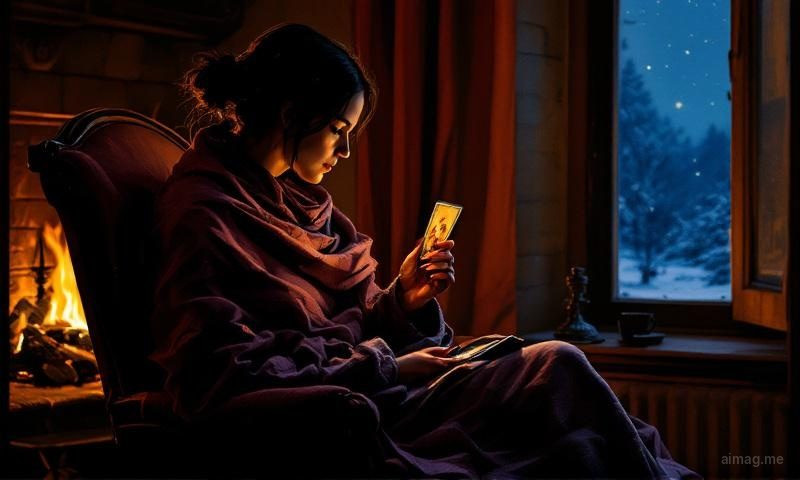
The psychology of turning points
The solstice is a turning point, but not the kind we are trained to expect. Modern culture treats turning points as dramatic: the revelation, the breakthrough, the sudden insight that changes everything. The solstice is the opposite. It is a turning point so slow you cannot detect it without instruments. The day after the longest night is thirty seconds longer. That is all. Thirty seconds.
And yet, that is enough. That is how real change works. Not in explosions of insight, but in barely perceptible shifts that accumulate over weeks and months until one day you notice the light has changed and you have changed with it.
This is what makes solstice readings different from other tarot work. They are not about answers. They are about the turn itself, the moment between descent and ascent, the pause at the bottom of the pendulum's swing before it reverses direction. If you read tarot regularly, you know that the most powerful readings are not the ones that tell you what to do. They are the ones that show you where you are. And during the solstice, where you are is at the exact point of maximum darkness, facing the precise direction from which the light will return.
Jung, again, is instructive here. In Mysterium Coniunctionis (1955-56), he described the psychological process he called the nigredo: the blackening, the stage of alchemical transformation in which everything familiar dissolves into darkness before new forms can emerge. The nigredo is not failure. It is the necessary precondition for transformation. Without it, the old structures remain intact and the new cannot be born. The winter solstice is the nigredo of the year. It is the annual blackening that makes spring possible.
The practical implication for your reading is this: if the cards you pull are dark, difficult, or uncomfortable, they are not warnings. They are the nigredo doing its work. The darkness is not something to escape. It is something to complete. The light returns only because the night was allowed to reach its fullest expression.
Creating a solstice ritual
A solstice reading benefits from context. Not elaborate ceremony, but a few deliberate choices that signal to your unconscious mind that this is different from an ordinary evening.
Timing. Read after sunset on the solstice itself. The sky should be fully dark. If you can see stars, even better. The visual input of actual darkness supports the psychological process of turning inward.
Light. One candle. Not several. Not ambient lighting. One flame in a dark room creates the kind of focused attention that scatters in brighter conditions. The single flame is also a visual anchor for Position 4 of the Longest Night spread: the seed of light within the dark.
Silence. No music, no background noise. Shadow work requires the absence of distraction, and the solstice reading is shadow work at its most elemental. The silence is not empty. It is the container for whatever surfaces.
Writing. Keep a notebook open beside your cards. Write before, during, and after. The solstice reading is not a performance. It is a conversation between your conscious mind and the parts of you that only speak when the world gets quiet enough to hear them.
Intention. Before you shuffle, say or write one sentence about what you are bringing into the dark. Not a question. A statement. "I am bringing my fear of being alone." "I am bringing my unfinished grief." "I am bringing the ambition I have been too afraid to name." This frames the reading and gives the cards a direction.
When solstice cards reappear
Pay attention to the cards that appear in your solstice readings over successive years. Patterns emerge. You might notice that The Moon appears every winter, or that the Four of Swords keeps showing up in the "seed of light" position, insisting that rest is your recurring lesson, the one you keep learning and forgetting and learning again.
These recurring cards are not random. They are your psyche returning to unfinished material, circling back to the same themes the way the earth circles back to the same point in its orbit every December. The repetition is not failure. It is deepening. Each time you encounter the same card in the same seasonal context, you bring a year's worth of additional experience to the interpretation. The card has not changed. You have.
Frequently asked questions
Can I do a winter solstice reading if I live in the Southern Hemisphere? Yes, but your solstice falls in June, not December. The psychological principle is the same: find the longest night of your local year and use it as your anchor point. The darkness is real wherever you are. The turning of the light is real wherever you are. Adjust the calendar but keep the practice.
What if I pull only bright, positive cards in the Longest Night spread? It happens. And it is worth questioning. Ask yourself whether the brightness is genuine or whether your unconscious is performing optimism to avoid the dark material. If the Sun appears in Position 3 (the fear you carry into winter), it might mean your fear is that you will not be able to maintain the brightness you currently project. Even positive cards carry shadow in a spread designed to explore the dark.
Is there a best deck for solstice readings? Any deck works, but decks with darker, more atmospheric imagery tend to resonate with the solstice energy. The Rider-Waite works because its imagery is psychologically rich enough to support deep readings. Ultimately, the deck you know best will serve you best, because familiarity allows your projections to flow more freely.
How is this different from a new moon reading? A new moon reading happens monthly and focuses on planting intentions for the coming lunar cycle. A solstice reading happens once a year and addresses something larger: the annual reckoning with darkness, the year's worth of accumulated shadow material, and the slow return of light over the months that follow. The new moon is a seed. The solstice is the soil in which all seeds will be planted for the next six months.
The longest night and the returning light
There is a reason nearly every human culture has marked the winter solstice with ritual. Not because our ancestors understood orbital mechanics, but because they understood something more immediate: darkness is not the absence of light. It is the condition that makes light meaningful. A candle in a bright room is decoration. A candle on the longest night of the year is a declaration of faith.
Your solstice tarot reading is that candle. It does not banish the dark. It does not explain the dark. It simply sits inside it, burning steadily, giving you just enough light to see the outlines of what the night contains. And when morning comes, when the sun rises a few seconds earlier than it did the day before, you carry that knowledge forward into a world that is, in the most literal and measurable sense, getting brighter.
Not dramatically. Not all at once. Thirty seconds at a time.
Ready to explore what your own longest night reveals? Try a free reading and bring one of these spreads to the cards.