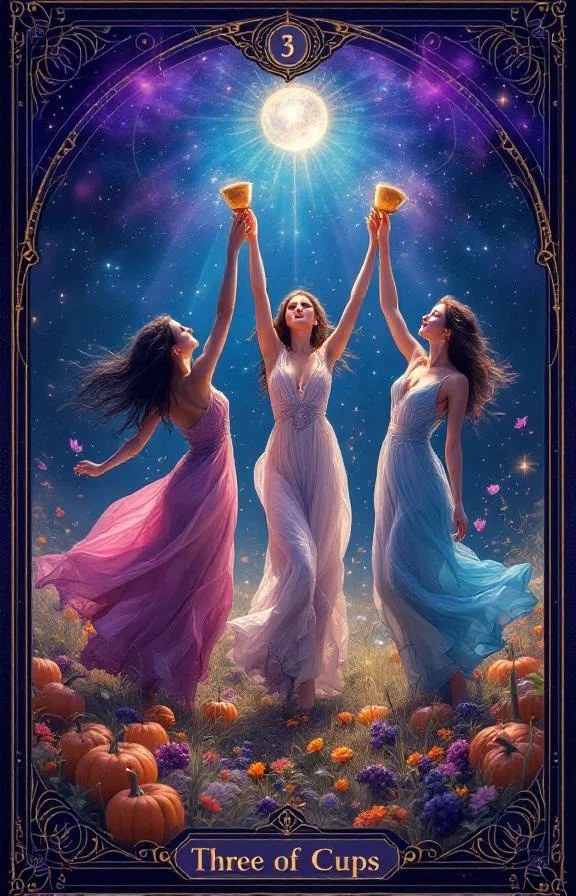
Entrez dans n'importe quelle librairie ésotérique ou parcourez la section cartes d'un revendeur en ligne, et vous remarquerez immédiatement deux catégories : les jeux de tarot et les jeux oracle. Ils sont rangés sur les mêmes étagères. Ils sont souvent créés par les mêmes artistes. Ils semblent servir le même objectif — tirer des cartes et y trouver du sens. Alors quelle est vraiment la différence ?
La réponse est plus importante qu'on ne pourrait le croire, car la différence entre le tarot et les cartes oracle n'est pas cosmétique. Elle est structurelle, historique et psychologique. Choisir le bon outil dépend de la compréhension de ce que chacun fait bien et là où il montre ses limites. Ce n'est pas une compétition — les deux systèmes ont une vraie valeur. Mais ce sont des outils genuinement différents, et les utiliser de manière interchangeable revient à alterner entre un dictionnaire et un recueil de poèmes en attendant le même type d'information des deux.
En bref : Les jeux de tarot ont une structure fixe de 78 cartes avec des siècles de significations stratifiées, produisant des lectures complexes et analytiquement profondes. Les jeux oracle n'ont pas de structure standard, offrant des messages plus simples et plus intuitifs. Choisissez le tarot pour la reconnaissance de schémas et l'analyse multi-facteurs ; choisissez les cartes oracle pour une guidance quotidienne, un réconfort émotionnel ou des déclencheurs créatifs. Les deux fonctionnent par l'attention focalisée, non par des mécanismes surnaturels.
La différence structurelle : 78 cartes fixes contre tout ce qu'on veut
Un jeu de tarot contient exactement 78 cartes. Toujours. Chaque jeu de tarot dans le monde — du classique Rider-Waite-Smith à la réinterprétation moderne la plus avant-gardiste — contient 22 cartes des Arcanes Majeurs et 56 cartes des Arcanes Mineurs divisées en quatre suites (Coupes, Pentacles, Épées, Bâtons), chacune allant de l'As au Dix avec quatre figures (Valet, Cavalier, Reine, Roi). Cette structure est non négociable. Si un jeu n'a pas cette structure, ce n'est pas un jeu de tarot.
Un jeu oracle a la structure que son créateur décide. Il peut contenir 36 cartes, 44, 52 ou 100. Les cartes peuvent être thématisées autour des animaux, des déesses, des chakras, des affirmations, des phases de la lune, des cristaux, ou n'importe quoi d'autre. Il n'y a pas de suites obligatoires, pas de numérotation fixe, pas de vocabulaire universel partagé entre les jeux. Chaque jeu oracle est son propre système autonome.
Cette différence structurelle a des implications profondes sur la façon dont on lit avec chaque outil.
La structure fixe du tarot signifie que chaque carte existe en relation avec toutes les autres. Le Fou est significatif en partie parce qu'il est la carte 0, placé avant la progression structurée des Arcanes Majeurs. Le Quatre de Coupes porte un sens tiré du système des quatre suites — il parle de retrait émotionnel précisément parce que les Coupes représentent le monde émotionnel et les Quatres représentent la stabilité poussée jusqu'à la stagnation. Quand vous tirez une carte, vous ne voyez pas seulement une image. Vous localisez un point dans une carte symbolique cohérente.
Les cartes oracle fonctionnent différemment. Chaque carte est essentiellement autonome. Le sens vient de l'image, du mot ou de la phrase imprimée dessus, et de l'explication du livret. Il n'y a généralement pas de séquence numérique, pas de système de suites, pas de réseau de relations entre les cartes. La carte que vous tirez est un message indépendant.
Aucune approche n'est intrinsèquement meilleure. Mais elles produisent des types de lectures différents.
Une brève histoire : des siècles d'écart
Le tarot a une histoire documentée remontant à l'Italie du Nord du XVe siècle, où les premiers jeux connus — la famille de jeux Visconti-Sforza, créés vers les années 1440 — étaient utilisés pour un jeu de cartes appelé tarocchi. Les cartes n'étaient pas conçues pour la divination. C'étaient des cartes à jouer avec une suite supplémentaire d'atouts (les Arcanes Majeurs) représentant des figures allégoriques : des vertus, des corps célestes, des rôles sociaux et des concepts spirituels.
Le passage du jeu à l'outil divinatoire s'est fait progressivement, la première utilisation divinatoire documentée apparaissant au XVIIIe siècle. Le jeu Rider-Waite-Smith, publié en 1909 et illustré par Pamela Colman Smith sous la direction d'Arthur Edward Waite, a standardisé le langage visuel auquel la plupart des jeux modernes se réfèrent.
Les cartes oracle, en revanche, sont une invention moderne. Si la consultation d'outils symboliques pour obtenir des conseils est ancienne (le Yi Jing, le tirage des runes, les oracles grecs à Delphes), le jeu de cartes oracle comme produit commercial est essentiellement un phénomène de la fin du XXe siècle, dont le marché a explosé dans les années 2000 avec l'industrie du bien-être au sens large.
Cette différence historique est importante parce que le tarot a eu des siècles d'interprétation collective stratifiée sur ses images. Quand vous tirez Le Magicien, vous vous engagez avec un symbole que des centaines de milliers de lecteurs, sur plusieurs siècles et cultures, ont interprété et réinterprété. Ce sens accumulé donne à chaque carte une profondeur et une complexité qu'aucun créateur individuel ne pourrait fabriquer de toutes pièces. Les cartes oracle, étant la création d'un seul auteur ou artiste, portent le sens que leur créateur y a investi — ce qui peut être beau et perspicace, mais n'a pas la même profondeur archéologique.
La différence psychologique : réflexion structurée contre invitation ouverte
C'est là que la distinction devient la plus utile en pratique. Le tarot et les cartes oracle font appel à des mécanismes psychologiques différents, et comprendre lequel vous avez besoin détermine quel outil saisir.
Le concept d'archétypes de Carl Jung — des modèles symboliques universels ancrés dans l'inconscient collectif — correspond presque parfaitement aux Arcanes Majeurs du tarot. Le Fou, la Mère (l'Impératrice), le Père (l'Empereur), le Vieux Sage (l'Ermite), l'Ombre (le Diable), le Soi (le Monde) — ce ne sont pas des images aléatoires. Ce sont des structures psychologiques que chaque être humain porte, quelle que soit sa culture. Quand vous tirez une carte des Arcanes Majeurs, vous interagissez avec un symbole qui se connecte à un matériel psychologique profond et partagé. Votre réaction personnelle à ce symbole universel est ce qui rend la lecture personnelle.
C'est similaire au fonctionnement de la Thérapie Cognitive-Comportementale (TCC). La TCC fournit un cadre structuré et vous demande de situer votre expérience spécifique à l'intérieur. La structure ne limite pas votre connaissance de vous-même ; elle l'organise. Le système fixe du tarot fonctionne de la même manière. La contrainte est la caractéristique.
Les cartes oracle opèrent davantage comme l'association libre — la technique psychanalytique où vous dites ce qui vous vient à l'esprit en réponse à un déclencheur. La carte oracle vous montre une image ou une phrase, et vous répondez. Il n'y a pas de système vous indiquant où cette carte s'inscrit dans un cadre plus large. Il n'y a pas de relation entre cette carte et la précédente (sauf si le créateur en a conçu une, ce qui est rare). Votre réponse est plus ouverte, plus intuitive et moins structurée.
Les recherches d'Ellen Langer sur la prise de décision consciente offrent un éclairage intéressant ici. Langer a constaté que lorsqu'on donne aux gens des catégories et des structures, ils traitent l'information plus soigneusement et arrivent à des conclusions plus nuancées. Quand les catégories sont absentes, les réponses tendent à être plus superficielles — pas moins authentiques, mais moins analytiquement profondes. Cela correspond à ce que la plupart des lecteurs expérimentés observent : les lectures de tarot tendent à produire des insights plus riches et complexes, tandis que les lectures oracle tendent à produire des messages plus clairs et plus simples.
Quand utiliser le tarot
Le tarot excelle quand vous avez besoin de profondeur. Plus précisément :
Les situations complexes avec plusieurs facteurs. Une décision de carrière qui implique la sécurité financière, l'épanouissement personnel, l'impact sur les relations et la peur de l'échec. Une dynamique relationnelle impliquant vos besoins, les leurs, des schémas anciens et des circonstances actuelles. Les tirages multi-cartes utilisant le système structuré du tarot peuvent aborder chacun de ces facteurs simultanément et vous montrer comment ils interagissent.
La reconnaissance de schémas. Parce que le tarot utilise un langage symbolique cohérent, vous commencez à remarquer des schémas au fil du temps. La Reine de Coupes apparaissant régulièrement dans vos lectures sur le travail — que signifie le fait qu'une carte de maturité émotionnelle revient sans cesse dans un contexte professionnel ? Ce type de reconnaissance de schémas entre les lectures n'est possible qu'avec un vocabulaire symbolique fixe.
L'examen de soi en profondeur. Quand vous voulez comprendre non seulement ce que vous ressentez mais pourquoi, comment cela se connecte à votre passé et ce que cela révèle de vos schémas inconscients, le système stratifié du tarot fournit le cadre pour cette excavation. La progression numérique au sein de chaque suite — de l'As (potentiel) au Dix (achèvement) — vous donne une carte pour comprendre où vous en êtes dans un processus.
L'apprentissage et la croissance. Le tarot récompense l'étude. Plus vous comprenez son architecture, plus vos lectures deviennent profondes. Pour un aperçu complet, le guide sur comment lire les cartes de tarot couvre tout, de la structure du jeu à votre premier tirage.
Quand utiliser les cartes oracle
Les cartes oracle excellent quand vous avez besoin de clarté et de simplicité :
La guidance quotidienne. Quand vous voulez un message unique et clair pour la journée — non pas une analyse complexe, mais un mot, une image ou une direction à garder à l'esprit. Les cartes oracle sont conçues pour ça : une carte, un message, sans interprétation poussée requise.
Le réconfort émotionnel. De nombreux jeux oracle sont explicitement conçus pour être affirmatifs. Si vous traversez une journée difficile et que vous avez besoin d'un message compatissant plutôt qu'analytique, un jeu oracle construit autour de la guérison, de la bienveillance envers soi-même ou de l'encouragement le donnera directement. Le tarot pourrait vous donner le Dix d'Épées quand vous êtes déjà épuisé — juste, peut-être, mais pas ce dont vous aviez besoin à cet instant.
L'inspiration créative. Les artistes, les écrivains et les musiciens utilisent souvent les cartes oracle comme déclencheurs créatifs — tirer une carte non pas pour la réflexion sur soi mais pour un point de départ dans le travail créatif. La variété des thèmes des jeux oracle (animaux, mythologie, couleur, photographie de nature) les rend polyvalents pour cet usage.
L'accessibilité. Si le système à 78 cartes du tarot semble intimidant, les cartes oracle offrent une entrée plus accessible. Il n'y a pas de système à apprendre, pas d'interprétation "incorrecte", pas de relations complexes entre les cartes à comprendre. Vous tirez, vous lisez, vous répondez. Pour certaines personnes, cette simplicité n'est pas une limitation — c'est exactement ce dont elles ont besoin.
Peut-on utiliser les deux ensemble ?
Oui, et de nombreux lecteurs expérimentés le font. L'approche la plus courante consiste à utiliser les cartes oracle pour un thème général ou un message d'ouverture, puis à lire le tarot pour l'analyse détaillée.
Par exemple : vous tirez une carte oracle qui dit « Confiance ». Puis vous posez un tirage tarot à trois cartes pour explorer : en quoi précisément dois-je faire confiance ? Qu'est-ce qui rend la confiance difficile en ce moment ? À quoi ressemblerait la confiance en action ?
La carte oracle donne la direction. Les cartes de tarot apportent la profondeur. Ensemble, ils combinent la qualité ouverte et intuitive de l'oracle avec la qualité structurée et analytique du tarot.
L'essentiel est de ne pas les mélanger au sein du même système. N'essayez pas de lire une carte oracle comme si c'était une carte de tarot (en cherchant des significations de suites, des progressions numériques) ni une carte de tarot comme si c'était une carte oracle (en ignorant sa position dans le système et en lisant seulement l'image de surface). Chaque outil fonctionne mieux selon ses propres termes.

Pourquoi la structure du tarot est en réalité sa force
Il y a une perception courante selon laquelle le tarot est "plus difficile" que les cartes oracle, et que cette difficulté est un inconvénient. Mais la difficulté est précisément le sujet.
Les recherches sur le paradoxe du choix ont montré que des options illimitées mènent souvent à de moins bonnes décisions et à moins de satisfaction que des choix contraints. Quand tout est possible, rien n'est spécifique. Les jeux oracle, avec leurs images ouvertes et l'absence de système, peuvent parfois produire des lectures qui semblent agréables mais vagues — "Soyez bienveillant envers vous-même" est vrai mais pas particulièrement actionnable.
La contrainte du tarot — seulement 78 cartes, seulement quatre suites, seulement des significations numérotées spécifiques — force à la fois les cartes et votre interprétation à être spécifiques. Le Cinq de Pentacles ne dit pas "les choses sont difficiles." Il dit : vous traversez des difficultés matérielles et vous vous sentez exclu, et l'aide dont vous avez besoin est juste derrière vous mais vous êtes trop absorbé dans votre souffrance pour vous retourner et la voir. Ce niveau de précision est possible parce que le Cinq (crise) de Pentacles (monde matériel) a une position précise dans le système qui contraint son sens de manière productive.
Ce n'est pas un argument contre les cartes oracle. C'est un argument pour comprendre ce que vous obtenez de chaque outil. Si vous voulez une légère impulsion, une carte oracle vous servira bien. Si vous voulez une carte détaillée de votre terrain psychologique — où vous en êtes, comment vous y êtes arrivé et quelles options vous avez — le système structuré du tarot fournit cette fonction de cartographie.
Faire votre choix
Si vous partez de zéro et souhaitez choisir un système à apprendre, voici un cadre de décision simple :
Choisissez le tarot si : Vous aimez apprendre des systèmes. Vous voulez des lectures qui gagnent en profondeur avec le temps. Vous êtes attiré par la psychologie, le symbolisme et la reconnaissance de schémas. Vous voulez une pratique qui grandira avec vous pendant des années.
Choisissez l'oracle si : Vous voulez une guidance immédiate et accessible. Vous êtes attiré par un thème spécifique (animaux, déesses, affirmations) plutôt que par un système symbolique universel. Vous voulez quelque chose que vous pouvez utiliser significativement dès le premier jour sans étudier.
Choisissez les deux si : Vous voulez de la polyvalence — le tarot pour la profondeur, les cartes oracle pour des messages quotidiens rapides ou une inspiration créative.
Quoi que vous choisissiez, le mécanisme est le même : vous utilisez des images symboliques pour faire remonter des pensées et des sentiments que votre esprit conscient n'a pas encore traités. La carte est le déclencheur. Vous êtes la lecture.
Foire aux questions
Une carte oracle peut-elle remplacer le tarot pour des lectures sérieuses ?
Tout dépend de ce que vous entendez par "sérieux". Pour la guidance émotionnelle, la réflexion quotidienne et l'auto-questionnement doux, les jeux oracle fonctionnent très bien. Pour l'analyse complexe multi-facteurs — comprendre comment différents aspects d'une situation interagissent, reconnaître des schémas profonds, retracer une dynamique psychologique à travers plusieurs lectures — le système structuré du tarot offre des outils que les jeux oracle n'ont tout simplement pas. La plupart des lecteurs professionnels qui travaillent avec les deux utilisent le tarot pour des lectures approfondies et les cartes oracle comme suppléments ou tirages quotidiens indépendants.
Dois-je me "faire offrir" un jeu de tarot ou oracle, ou puis-je l'acheter moi-même ?
C'est un mythe persistant qui n'a de base dans aucune tradition établie. Achetez votre propre jeu. Choisissez celui dont l'art vous parle, dont la taille des cartes vous convient dans les mains, et dont le thème correspond à vos intérêts. L'idée qu'un jeu doit être offert est un mythe de contrôle qui empêche les gens de commencer leur pratique. Entrez dans une boutique, parcourez, et achetez ce qui vous appelle. Cet instinct a plus de valeur que n'importe quelle tradition de don.
Les cartes oracle sont-elles moins "puissantes" que le tarot ?
Non, mais elles sont moins structurées. La puissance dans une lecture de cartes vient de la qualité de votre attention, pas du prestige du jeu. Une lecture oracle profondément focalisée avec une seule carte peut produire plus d'insight qu'un tirage tarot distrait de dix cartes. Cela dit, la structure du tarot offre plus de points d'entrée pour l'insight — plus de façons de lire une carte, plus de relations entre les cartes, plus d'angles d'interprétation.
J'utilise déjà le tarot — vaut-il la peine d'ajouter un jeu oracle ?
Si vous trouvez que votre pratique du tarot est parfois trop analytique — si vous souhaitez occasionnellement une interaction plus simple et plus intuitive avec les images de cartes — un jeu oracle ajoute un outil complémentaire. De nombreux lecteurs de tarot gardent un jeu oracle pour le matin (guidance quotidienne simple) et utilisent le tarot pour leurs lectures plus profondes et plus focalisées. Cela vaut aussi la peine d'essayer si vous lisez pour d'autres : certains consultants répondent mieux à la directivité de l'oracle qu'à la complexité du tarot, et avoir les deux options fait de vous un lecteur plus polyvalent.
Les cartes de tarot et les cartes oracle se trouvent sur la même étagère, mais ce sont des outils différents construits pour des finalités différentes. Le tarot vous donne un langage symbolique structuré — un vocabulaire complet de l'expérience humaine, affiné sur six siècles. Les cartes oracle vous donnent un message focalisé tiré de la vision d'un seul créateur. L'un est un dictionnaire avec grammaire et syntaxe. L'autre est une carte postale avec une note manuscrite. Les deux peuvent vous dire quelque chose de vrai. Mais ils le disent différemment, et savoir lequel saisir dépend de si vous avez besoin d'une carte ou d'une boussole. La plupart du temps, une carte est plus utile qu'on ne le réalise.
Essayez une lecture gratuite propulsée par l'IA sur aimag.me/reading