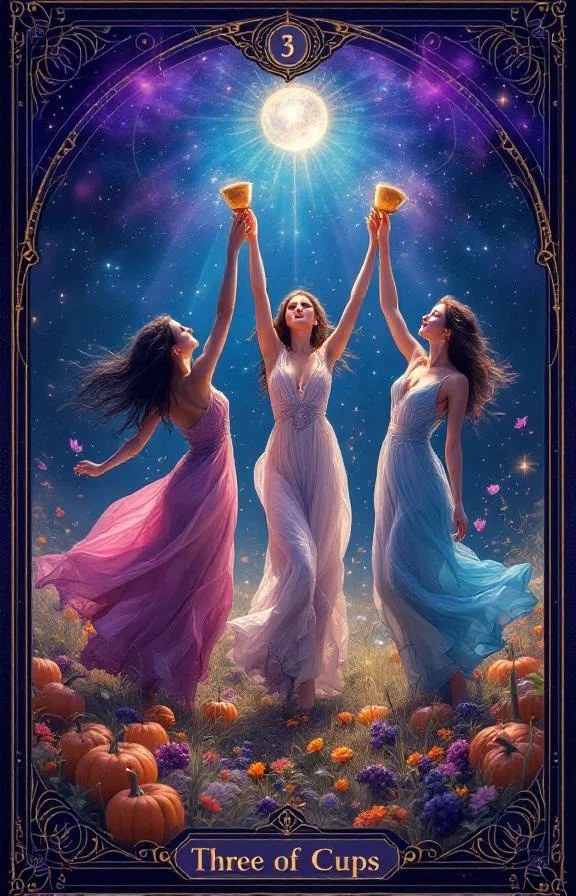
Vous tirez une carte. L'image montre un personnage seul au bord d'une falaise, un petit baluchon sur l'épaule. En un instant, votre esprit construit une histoire : aventure, imprudence, optimisme, naïveté, liberté. Ce n'est pas la carte qui choisit cette histoire. C'est vous.
Rien de mystique là-dedans. Il s'agit de l'un des phénomènes les mieux documentés en sciences cognitives, et le comprendre ne diminue en rien l'utilité du tarot — au contraire, cela explique précisément pourquoi il fonctionne.
En résumé : Vous vous voyez dans les cartes de tarot à cause de la projection et de l'apophénie — les mêmes mécanismes cognitifs à l'œuvre dans les taches d'encre de Rorschach et la reconnaissance de formes. Quand le stimulus extérieur est ambigu, votre esprit y insuffle du sens à partir de votre propre vécu, de vos préoccupations et de votre état émotionnel. Les cartes ne vous connaissent pas. Ce que vous y projetez révèle ce qui est le plus actif dans votre vie intérieure en ce moment.
Ce qu'est vraiment l'apophénie
Les scientifiques en cognition utilisent le terme apophénie pour désigner la tendance humaine à percevoir des schémas significatifs dans des informations aléatoires ou sans lien entre elles. Cela ressemble à un défaut. C'est en réalité un trait évolutif.
 Nos ancêtres qui voyaient un prédateur dans chaque bruissement de buisson survivaient plus souvent que les autres. Le coût d'un faux positif — détecter un tigre inexistant — était relativement faible. Le coût d'un faux négatif — rater un vrai tigre — était fatal. Au fil de centaines de milliers d'années, nos systèmes nerveux ont été façonnés pour pencher du côté de la détection de schémas.
Ce même mécanisme s'active quand vous regardez des nuages, des taches d'encre de Rorschach, des peintures abstraites ou les images symboliques d'un jeu de tarot. Votre esprit ne reçoit pas passivement l'information. Il construit activement du sens à partir de ce qu'il rencontre.
La vraie question n'est pas de savoir si vous projetez — vous le faites toujours. La question est : que projetez-vous, et qu'est-ce que cela révèle ?
La neurologie du chercheur de schémas
Les régions cérébrales impliquées dans l'apophénie ne sont pas obscures ou marginales — ce sont certaines des parties les plus anciennes du cerveau sur le plan évolutif. Le réseau mode par défaut, qui s'active quand vous rêvassez, que vous vous souvenez du passé ou imaginez l'avenir, est aussi fortement actif lorsque vous donnez du sens à des stimuli ambigus.
Ce n'est pas anodin. Cela signifie que la recherche de schémas — le moteur derrière l'utilité du tarot — est profondément liée aux mêmes processus impliqués dans le récit de soi, l'intégration des souvenirs et la planification de l'avenir. Quand vous interprétez une carte, vous faites appel exactement au machinerie neuronale que vous utilisez pour comprendre votre propre histoire de vie.
Des recherches en psychologie cognitive ont montré de façon constante que les gens sont plus enclins à trouver des schémas dans des stimuli aléatoires quand ils sont anxieux, incertains ou traversent des transitions importantes. C'est intuitif : quand nous avons le plus besoin de clarté, notre pulsion à chercher des schémas s'intensifie. Une pratique du tarot est, entre autres choses, une façon structurée de travailler avec cette pulsion plutôt que contre elle.
La science des surfaces projectivess
En psychologie clinique, une surface projective est tout stimulus ambigu qui invite l'individu à y imposer un sens personnel. Le test de Rorschach, le Thematic Apperception Test, et même les questions d'entretien ouvertes fonctionnent tous sur ce principe.
 Ce qui rend ces outils utiles, c'est que lorsque la structure externe est minimale, la structure interne devient visible. Quand un stimulus est suffisamment ambigu, vous ne pouvez pas en déduire le sens à partir du stimulus lui-même — vous devez le fournir. Et le sens que vous fournissez vient de votre expérience, de vos préoccupations, de votre état émotionnel et de vos croyances.
Les 78 cartes du tarot constituent une surface projective exceptionnellement riche. Chaque carte contient un personnage, une scène, des objets symboliques, des couleurs et un récit implicite — mais le sens n'est jamais figé. La Grande Prêtresse peut évoquer sagesse et intuition pour une personne, inaccessibilité et information retenue pour une autre, version idéalisée de la féminité pour une troisième. Chaque tirage révèle quelque chose de vrai sur la personne qui tire.
Le parallèle avec Rorschach
Comprendre ce que fait réellement le test de Rorschach vaut la peine, car le parallèle avec le tarot est précis.
Hermann Rorschach a développé son célèbre test de taches d'encre dans les années 1920 à partir d'une observation simple : quand on montrait à des personnes des taches d'encre ambiguës et symétriques, leurs interprétations variaient considérablement — et la nature de ces variations semblait corréler avec leurs états psychologiques et leurs structures de personnalité.
Les taches étaient conçues pour être maximalement ambiguës : pas de bonne réponse, pas d'interprétation évidente unique. Le test ne porte pas sur la précision de la perception. Il porte sur ce que vous apportez à l'acte de percevoir. Les cliniciens formés à l'interprétation du Rorschach ne lisent pas les taches — ils lisent le rapport de la personne à l'ambiguïté, à la structure et à la création de sens.
Le tarot fonctionne sur un principe analogue, avec un ajout important : les cartes ne sont pas générées aléatoirement. Elles portent des siècles de sens symbolique accumulé depuis l'histoire du tarot. Votre projection ne se fait donc pas sur un écran blanc — elle se déroule sur fond d'archétypes culturellement riches. La carte apporte son poids symbolique ; vous apportez votre état intérieur du moment. Ce qui en émerge est un sens négocié qui appartient aux deux.
Le transfert et la carte comme « autre »
En psychothérapie, le transfert décrit la redirection inconsciente de sentiments depuis une personne significative de votre vie (souvent un parent ou une figure d'attachement précoce) vers le thérapeute. Le thérapeute devient une surface sur laquelle le client projette des schémas relationnels formés tôt dans la vie.
 Ce n'est pas un dysfonctionnement de la thérapie — c'est l'un de ses mécanismes les plus puissants. La relation thérapeutique offre un espace sûr pour remarquer et examiner ces schémas projetés, et ainsi les réviser.
Quelque chose d'analogue se produit avec les cartes de tarot. La carte devient un « autre » — quelque chose hors de vous-même sur lequel projeter. Quand vous rencontrez la Reine d'Épées et ressentez une pointe de ressentiment ou d'admiration, vous ne répondez pas seulement à l'image. Vous répondez à travers le filtre de toutes les personnes de votre vie qui incarnaient quelque chose de cet archétype : l'enseignante à la langue acérée, le parent exigeant, l'ami sûr de lui que vous admiriez et enviiez, la version de vous-même que vous aspirez à devenir ou que vous craignez d'être.
La carte tient tout cela, silencieusement, et vous laisse y répondre dans l'espace relativement peu risqué d'un tirage plutôt que dans une relation en direct. Ce n'est pas rien.
Pourquoi le hasard ne compromet pas le processus
Une objection courante au tarot comme outil d'introspection va ainsi : « Si les cartes sont tirées au hasard, l'interprétation est sans sens. »
Cette objection mécomprend ce à quoi sert l'outil. La valeur ne réside pas dans la carte tirée. Elle réside dans ce que vous remarquez, ressentez et pensez lorsque vous la rencontrez.
Imaginez que vous demandiez à dix personnes d'interpréter la même tache de Rorschach : vous obtiendriez dix réponses substantiellement différentes. La tache est identique pour les dix. Les réponses révèlent quelque chose de distinct chez chaque personne. Le caractère aléatoire du stimulus est précisément ce qui le rend utile — il supprime les indices externes qui ancreraient l'interprétation et permet à l'état intérieur de remonter plus librement à la surface.
Quand vous commencez un tirage sur aimag.me/reading, l'interprétation par l'IA ne fabrique pas du sens à partir de rien — elle fournit un vocabulaire structuré pour explorer le sens que votre propre esprit a déjà commencé à générer.
Ce que « ce qui vous touche » révèle
Il y a une version de ce principe qui circule en psychologie populaire : l'observation selon laquelle ce qui déclenche une forte réaction émotionnelle en vous pointe souvent plus précisément vers votre propre matériau non résolu que vers une qualité objective de l'événement déclencheur.
Ce n'est pas toujours vrai — certaines choses méritent une réponse émotionnelle forte. Mais quand la réaction est disproportionnée par rapport à la cause apparente, ou quand la même situation vous touche régulièrement dans des contextes très différents, ce schéma est instructif.
Appliqué au tarot : si vous tirez la même carte trois fois en un mois et ressentez à chaque fois de l'irritation, du dédain ou une anxiété sourde, la carte n'est pas le message. Votre réaction l'est.
La pratique "Ce qui vous touche" : La prochaine fois qu'une carte suscite en vous une réaction forte — positive ou négative — notez l'émotion en un mot. Puis notez la première personne, le premier souvenir ou la première croyance que la carte évoque. Sans vous censurer. Sans analyser encore. Écrivez, c'est tout.
Après une semaine de tirages, regardez votre liste. Y a-t-il des thèmes récurrents ? Certaines relations qui reviennent sans cesse ? Certaines croyances sur vous-même qui réapparaissent ? Ce ne sont pas des coïncidences — c'est la structure de votre vie intérieure actuelle qui devient visible à travers la surface projective des cartes.
La projection n'est pas toujours confortable
L'effet de projection fonctionne dans les deux sens. Vous projetez vos espoirs, mais aussi vos peurs. Vos aspirations, mais aussi vos schémas non reconnus. Votre récit sur qui vous êtes, mais aussi vos doutes sur ce récit.
C'est pourquoi certaines cartes suscitent régulièrement un malaise chez certaines personnes. Le Cinq de Coupes (deuil, perte, un personnage détourné de ce qui reste) peut être facile à analyser froidement pour une personne, et provoquer une vague de tristesse non traitée chez une autre. Le Chariot (contrôle, volonté, élan vers l'avant) peut sembler inspirant à quelqu'un qui valorise l'autonomie, et subtilement menaçant pour quelqu'un qui commence à sentir que son extérieur contrôlé lui coûte cher.
Aucune de ces réactions n'est fausse. Les deux sont instructives. Les deux vous appartiennent.
L'inconfort est une donnée. Ce que vous ressentez en regardant une carte — avant de savoir ce qu'elle « signifie » — est souvent la pièce d'information la plus utile que le tirage génère.
Biais cognitifs et interprétation des cartes
Comprendre la projection, c'est aussi reconnaître les biais cognitifs qui façonnent ce que vous voyez dans une carte.
Le biais de confirmation — la tendance à rechercher et à favoriser les informations qui confirment des croyances existantes — est actif dans les tirages de tarot. Si vous croyez être bloqué dans votre carrière, vous lirez le Quatre de Coupes (un personnage assis sous un arbre, les bras croisés, ne tendant pas la main vers la coupe offerte) comme une confirmation de votre stagnation. Si vous croyez traverser une période de discernement nécessaire, vous pourriez lire la même carte comme une retenue sage.
Ce n'est pas un problème à résoudre. C'est une caractéristique à utiliser. En remarquant quand vous glissez immédiatement vers une interprétation confirmante, vous pouvez vous demander : que dirait l'interprétation contraire ? Qu'est-ce que cela signifierait si cette carte challengeait l'histoire que vous portez actuellement, plutôt que de la soutenir ?
L'heuristique de disponibilité joue aussi un rôle. Les cartes qui vous rappellent des expériences récentes et émotionnellement vives seront interprétées à travers ce prisme. Si vous venez de traverser une rupture, le Trois d'Épées se lira différemment qu'il ne le ferait six mois plus tard. Ce n'est pas une distorsion du tirage — c'est le tirage situé temporellement dans votre expérience réelle.
Comment travailler avec cette connaissance
Comprendre l'effet de projection ne requiert pas d'abandonner la tradition interprétative du tarot. Cela ajoute une couche d'engagement conscient de soi.
Pratique 1 : Première réaction avant le sens
Avant de lire n'importe quelle interprétation d'une carte tirée, notez vos trois premières réactions en mots simples ou en courtes phrases. Que voyez-vous ? Que ressentez-vous ? À quoi cela vous fait-il penser ?
Lisez ensuite l'interprétation. Observez où votre première réaction rejoignait le sens traditionnel et où elle en divergeait. Les divergences sont généralement plus intéressantes.
Pratique 2 : Complétion narrative
Regardez la carte comme s'il s'agissait du premier plan d'un court métrage. Écrivez trois phrases décrivant ce qui se passe ensuite dans l'histoire. N'essayez pas d'être correct — il n'y a pas de bonne réponse. Quelle histoire votre esprit complète-t-il instinctivement ?
Les personnes qui traversent une période de stagnation complètent souvent les récits des cartes différemment de celles qui vivent une période de transition. Celles qui portent un deuil lisent la même carte autrement que celles qui anticipent un changement. Votre complétion narrative est une fenêtre sur votre météo intérieure actuelle.
Pratique 3 : L'autre personnage dans la carte
Si la carte représente plus d'un personnage, choisissez celui auquel vous vous êtes identifié au départ — puis écrivez quelques phrases du point de vue de l'autre personnage. Que voit-il ? Que veut-il dans cette situation ?
Ce léger changement de perspective fait souvent remonter des suppositions dont vous ignoriez l'existence.
Pratique 4 : Le contre-récit
Pour n'importe quelle carte tirée, écrivez l'interprétation qui vous réconforterait le plus. Puis écrivez celle qui vous challengerait le plus. Lisez les deux. Demandez-vous : laquelle m'attire davantage en ce moment — et pourquoi ? La réponse révèle ce que vous espérez et ce contre quoi vous vous défendez.
L'IA et la surface projective
Un environnement de tirage assisté par IA ajoute une dimension intéressante à l'effet de projection. Parce que l'IA travaille à partir du langage naturel, la façon dont vous formulez votre question à l'outil de tirage est elle-même une forme de projection.
La façon dont vous posez votre question — que vous demandiez « Cette relation va-t-elle fonctionner ? » ou « Qu'est-ce que je ne vois pas dans cette relation ? » — révèle quelque chose de vos présuppositions, de votre sentiment d'autonomie et de votre posture émotionnelle actuelle. Les cartes de tarot dans la bibliothèque d'aimag.me comportent chacune un contexte interprétatif détaillé, ce qui vous offre un vocabulaire plus riche pour travailler ce qui émerge.
La structure tarifaire d'aimag.me/pricing permet une pratique régulière, là où l'effet de projection devient le plus utile — non pas comme un instantané unique, mais comme un schéma sur la durée.
Le langage que vous choisissez est aussi une donnée
Ce point mérite qu'on s'y attarde. Quand vous tapez votre question dans un outil de tirage, vos choix de mots ne sont pas neutres. Ils reflètent votre cadre actuel.
Considérez ces variations de la même question essentielle :
- « Est-ce qu'il va revenir ? »
- « Qu'ai-je besoin de comprendre sur cette relation ? »
- « Que suis-je en train de projeter sur cette personne ? »
- « Qu'est-ce que mon envie qu'il revienne dit de moi ? »
Chaque question vous positionne différemment par rapport à votre propre expérience. La première fait de vous un récepteur passif du destin. La dernière fait de vous le sujet de l'enquête. La carte que vous tirez en réponse à chaque question sera interprétée à travers le cadre que vous avez établi avant même que la carte n'apparaisse.
Le Dictionnaire de psychologie de l'APA décrit la projection comme fondamentalement liée à la difficulté de nous voir clairement de l'intérieur. Ce que nous projetons vers l'extérieur — sur d'autres personnes, sur des événements, sur des cartes — est souvent précisément ce qui est le plus vivant en nous et le plus en besoin d'examen.
Le tarot ne crée pas ce mécanisme. Il lui donne un endroit où atterrir.
La mise en garde honnête
La projection comme outil d'introspection a des limites. Elle peut faire remonter des schémas à la surface, mais elle ne peut pas les diagnostiquer. Elle peut pointer vers une zone de votre vie intérieure qui mérite attention, mais elle ne peut pas traiter ce qu'elle trouve. Pour une douleur psychologique persistante, des schémas tenaces d'auto-sabotage, ou tout ce qui semble plus grand que ce que l'introspection peut contenir, un thérapeute agréé est la bonne ressource.
Ce que le tarot fait bien — utilisé avec une conscience psychologique de soi — c'est rendre l'invisible suffisamment visible pour l'examiner. Le schéma que votre esprit crée en regardant une image ambiguë est un schéma réel. Il vous appartient. Et les schémas, une fois vus, peuvent être travaillés.
L'acte de projection n'est pas quelque chose à surmonter ou à éviter dans une pratique du tarot. C'est le mécanisme par lequel la pratique fonctionne. Les cartes ne sont pas sages — mais vous l'êtes. Et quand vous projetez votre sagesse, votre confusion, votre peur et votre désir sur une surface symbolique conçue pour les recevoir, vous faites quelque chose de véritablement précieux : vous rendez votre vie intérieure lisible pour vous-même.
La prochaine carte que vous tirez ne vous dit rien. Elle vous montre ce que vous savez déjà, en attente que la bonne surface apparaisse.
Essayez par vous-même. Commencez un tirage sur aimag.me et observez ce qui surgit avant même que l'interprétation n'arrive.
Lectures associées
- Tirage de tarot par IA : introspection, non prédiction — comment l'IA combine les archétypes jungiens et les images symboliques pour créer un miroir structuré
- Le travail sur l'ombre : ce que votre malaise face à une carte révèle — pourquoi votre réaction émotionnelle à une carte est plus instructive que sa signification traditionnelle
- Jung et le tarot : les racines psychologiques des 78 cartes — le cadre académique reliant la psychologie jungienne au symbolisme du tarot
- Tarot et intuition : apprendre à faire confiance à votre savoir intérieur — comment le mécanisme projectif devient un signal fiable avec une pratique régulière