La plupart des gens qui prétendent comprendre le Scorpion décrivent une caricature. L'amant jaloux. L'ennemi vindicatif. Le froussard obsessionnel qui entretient ses rancœurs jusqu'à la fin des temps. Ces descriptions ne sont pas entièrement fausses, ce qui fait partie du problème. Elles saisissent la distorsion de surface de quelque chose de bien plus intéressant en dessous : un signe construit, en son cœur, pour la seule tâche psychologique que la plupart des êtres humains passent toute leur vie à éviter.
La transformation. La vraie transformation. Celle qui exige que quelque chose meure d'abord.
Le Scorpion naît entre le 23 octobre et le 21 novembre, gouverné par Pluton (et traditionnellement par Mars), appartenant à l'élément Eau avec une modalité Fixe. Cette combinaison seule vous dit quelque chose d'essentiel. L'Eau est émotion, intuition, inconscient. Fixe signifie que vous ne coulez pas facilement. Vous retenez. Vous concentrez. Vous prenez l'océan entier et le comprimez en un seul point sous pression jusqu'à ce que quelque chose se fissure ou se transforme en autre chose. Là où l'eau du Cancer nourrit et celle des Poissons dissout, l'eau du Scorpion corrode, purifie et dépouille les choses de tout ce qui peut être détruit.
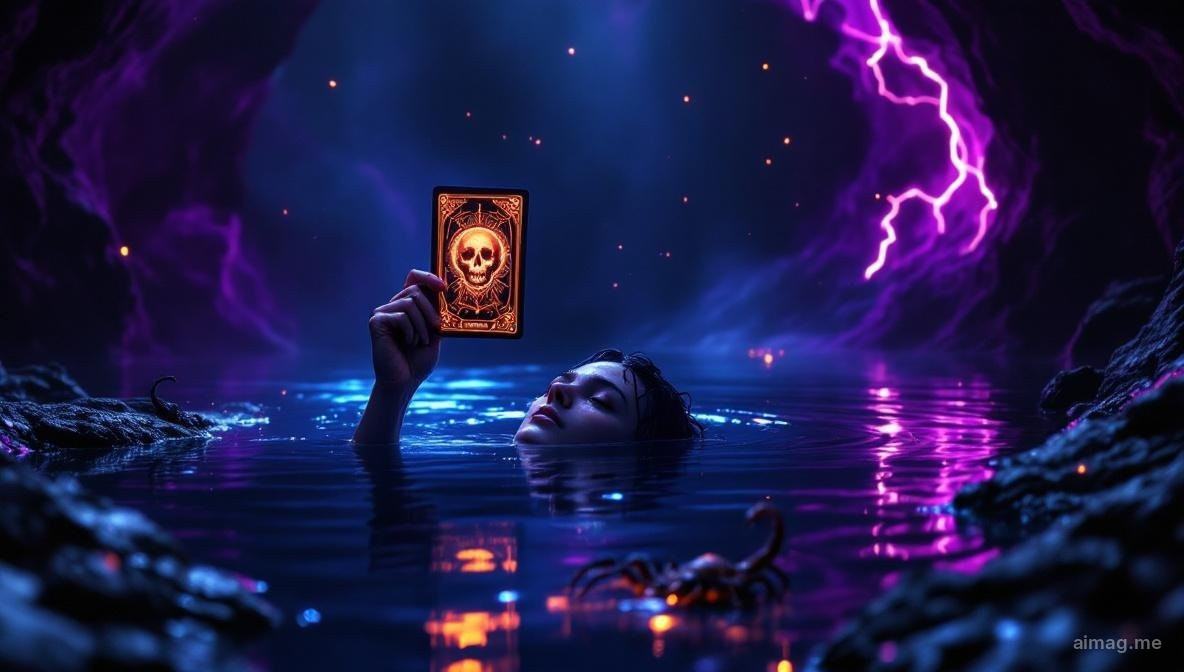
La carte de tarot qui représente le Scorpion est celle que les gens redoutent le plus dans le jeu. Et le fait qu'ils la redoutent vous dit tout sur pourquoi le Scorpion est si systématiquement incompris.
En bref : La Mort (carte XIII) est la carte de tarot principale du Scorpion, représentant non pas une mort littérale mais la transformation qui exige qu'une fin précède le commencement. Les cartes d'appui incluent La Tour, l'As de Coupes, le Roi de Coupes et La Lune, cartographiant le cycle complet du Scorpion — destruction, descente et renouveau. Le Tirage de la Descente du Phénix aide le Scorpion à identifier ce qui est en train de mourir, ce à quoi il s'accroche au-delà de son terme, et la nouvelle vie qui attend dans les cendres.
La Mort (XIII) — la carte maîtresse du Scorpion
Voici la question qui met les gens mal à l'aise : quelle carte de tarot est le Scorpion ? La réponse — la Mort — provoque exactement la réaction que le Scorpion lui-même provoque : un mouvement de recul, de l'évitement, une précipitation à rassurer. « Ça ne signifie pas la mort au sens littéral », dit-on rapidement, comme si la carte avait besoin d'être défendue. « Ça signifie la transformation. » C'est vrai mais insuffisant. C'est comme dire que le feu signifie la chaleur. Le feu signifie aussi la destruction. Les deux sont vrais simultanément, et le Scorpion le comprend mieux que tout autre signe du zodiaque.
La carte XIII des Arcanes Majeurs représente une figure squelettique à cheval, traversant un champ où un roi est tombé, un évêque implore et un enfant offre des fleurs sans peur. Un soleil se lève — ou se couche — entre deux tours à l'horizon. L'image ne parle pas de la fin de la vie. Elle parle de la fin d'une version de la vie. L'identité qui ne sert plus. La relation qui a cessé de croître il y a trois ans. Le système de croyances qui vous protégeait autrefois mais vous confine désormais. Le moi que vous avez construit pour survivre à un monde qui n'existe plus.
Irvin Yalom, le psychothérapeute existentialiste, a passé des décennies à démontrer que la conscience de la mort n'est pas pathologique mais thérapeutique. Dans sa pratique clinique, il a observé que les patients qui confrontaient la mortalité directement — non pas comme un concept abstrait mais comme une réalité personnelle — vivaient systématiquement ce qu'il appelait une « expérience d'éveil » : un changement radical de priorités, un abandon des préoccupations inauthentiques, et une capacité approfondie pour la connexion genuine (Yalom, 2008). Le Scorpion vit instinctivement dans ce territoire. Vous n'avez pas besoin d'un thérapeute pour vous dire que la conscience des fins aiguise tout. Vous le sentez dans vos os. Vous l'avez toujours senti.
La carte de la Mort est à la fois le don et le fardeau du Scorpion. Vous voyez ce qui est en train de mourir dans des situations où tous les autres font encore semblant que tout va bien. Vous pressentez la date de péremption des relations, des projets, des phases de vie, bien avant que les preuves deviennent visibles aux autres. Cela vous rend extraordinairement perspicace. Cela vous rend aussi épuisant à côtoyer pour ceux qui préfèrent les illusions confortables aux vérités inconfortables.
Il existe une phrase dans la littérature sur le deuil : « les personnes les plus belles que nous ayons connues sont celles qui ont connu la défaite, la souffrance, la lutte, la perte, et qui ont trouvé leur chemin hors des abysses. » Elle aurait pu être écrite sur le Scorpion. La carte de la Mort ne représente pas quelqu'un qui évite la souffrance. Elle représente quelqu'un qui la traverse et en ressort changé — non pas intact, mais transmué. Le phénix qui s'élève des cendres du Scorpion n'est pas la même créature qui a brûlé. C'est quelque chose de nouveau. Quelque chose qui n'aurait pas pu exister sans le feu.
Les cartes d'appui — la constellation transformatrice du Scorpion
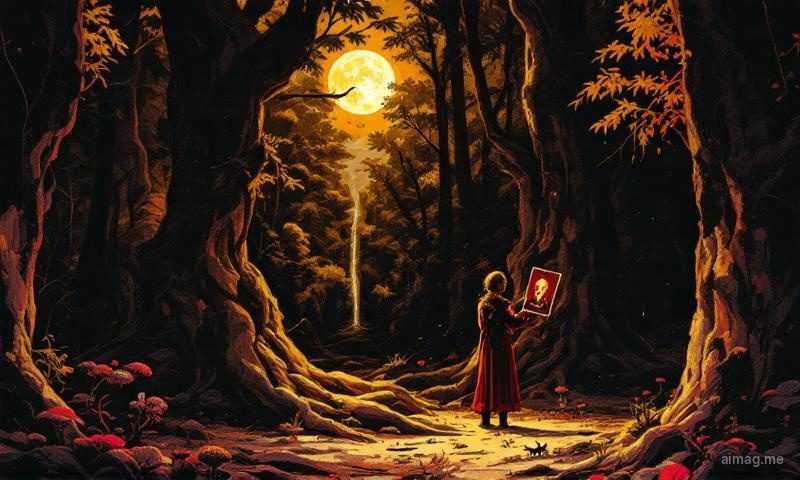
Aucun signe n'est capturé par une seule carte. La complexité psychologique du Scorpion se déploie à travers plusieurs archétypes du tarot qui cartographient ensemble le terrain intérieur de ce signe dans sa totalité.
La Tour — révélation soudaine, destruction nécessaire
Si la Mort est la transformation lente et inévitable — la chenille se dissolvant dans son cocon — alors La Tour est la foudre qui fend d'un seul coup la structure. La Tour montre un grand édifice frappé par la foudre, sa couronne arrachée, deux silhouettes tombant dans le vide, des flammes jaillissant des fenêtres.
Le Scorpion entretient une relation complexe avec La Tour parce qu'il est souvent la foudre lui-même. Vous êtes la personne qui pose la question que personne ne veut entendre. Vous remarquez le mensonge qui maintient le système en place et vous le nommez — non par cruauté, mais par incapacité à feindre de ne pas l'avoir vu. La Tour représente la capacité du Scorpion à l'honnêteté radicale, celle qui démantèle les structures fausses pour que quelque chose d'authentique puisse être construit à leur place.
Le danger est dans le timing. Toute vérité n'a pas besoin d'être dite au moment où vous la percevez. Toute illusion n'a pas besoin d'être détruite aujourd'hui. La Tour rappelle au Scorpion que la révélation sans compassion n'est que destruction — et que l'objectif n'est pas de tout abattre, mais de créer les conditions où quelque chose de réel peut tenir debout.
L'As de Coupes — renaissance émotionnelle
L'As de Coupes est la carte qui apparaît après que la Mort a accompli son travail. Une main émerge d'un nuage, offrant un calice doré débordant d'eau. Cinq flots en jaillissent. Une colombe descend. C'est le début d'une nouvelle réalité émotionnelle — non pas une répétition de l'ancienne, mais quelque chose de genuinement frais.
Pour le Scorpion, cette carte représente la capacité qui rend le cycle de mort et renaissance digne d'être vécu. Après avoir brûlé quelque chose, après avoir mué, après avoir traversé les enfers d'un deuil, d'une perte ou d'une fin nécessaire — vous pouvez à nouveau ressentir. Pas moins qu'avant. Plus. Plus profondément. Avec cette intensité particulière que seul quelqu'un qui a perdu quelque chose peut apporter à l'acte de recevoir quelque chose de nouveau.
C'est l'optimisme secret du Scorpion. Sous la réputation de noirceur et d'intensité se cache une foi presque religieuse dans le renouveau. Vous ne croyez pas aux fins comme à des conclusions. Vous croyez aux fins comme à des portes.
Le Roi de Coupes — maîtrise émotionnelle par la profondeur
Le Roi de Coupes est assis sur un trône entouré d'une eau tumultueuse, tenant une coupe d'une main et un sceptre de l'autre. La mer s'agite autour de lui, mais il reste stable. Il n'a pas calmé l'eau. Il a appris à régner depuis son intérieur.
Pour le Scorpion, le Roi de Coupes représente la maturité émotionnelle — la version de vous-même qui a intégré la profondeur sans en être consumée. C'est le Scorpion qui a fait le travail : qui a exploré les ombres, confronté les obsessions, traité les trahisons, et qui en est ressorti non pas endurci mais genuinement sage. Le Roi de Coupes ne supprime pas l'émotion. Il la contient. Il la canalise. Il met toute la force de sa conscience émotionnelle au service de la clarté plutôt que du contrôle.
La Lune — l'inconscient, ce qui se cache en dessous
La Lune représente un chemin entre deux tours, un chien et un loup hurlant à une pleine lune, une écrevisse émergeant d'un bassin. Rien dans cette carte n'est clairement éclairé. Tout existe dans une demi-lumière, une suggestion, une ambiguïté.
Le Scorpion vit là. Votre habitat naturel est le territoire entre ce que les gens disent et ce qu'ils signifient, entre ce qui est visible et ce qui est caché, entre le moi conscient et l'ombre qui le suit. Carl Jung décrivait l'ombre comme le réservoir de tout ce que la personnalité consciente a rejeté, nié ou omis de reconnaître en elle-même — non seulement les qualités négatives, mais tout aspect du moi qui reste inconscient (Jung, 1951). Le Scorpion est attiré par le matériau de l'ombre comme un chirurgien l'est par la salle d'opération. Non pas parce que vous aimez l'obscurité, mais parce que vous comprenez que ce qui est caché mène le jeu jusqu'à ce que quelqu'un ait le courage de le regarder en face.
La Lune valide l'instinct du Scorpion selon lequel la surface des choses n'est presque jamais l'histoire complète. Votre méfiance n'est pas de la paranoïa. C'est une reconnaissance de schémas opérant dans des conditions de faible luminosité.
Le Scorpion en amour — intensité, confiance et l'épreuve qui n'en finit pas
Le Scorpion ne tombe pas amoureux. Le Scorpion descend dans l'amour. L'expérience ressemble davantage à une plongée contrôlée en eaux profondes qu'à une dérive douce vers l'affection. Vous allez tout au fond, immédiatement, et vous attendez que l'autre vous rejoigne à cette profondeur ou admette qu'il ne peut pas.
C'est simultanément le plus grand don du Scorpion en tant que partenaire et la raison principale pour laquelle ses relations deviennent soit la connexion la plus profonde que deux personnes peuvent partager, soit explosent de façon spectaculaire, sans grand milieu de terrain.
La question de la confiance n'est pas un bug dans la programmation du Scorpion. C'est la fonctionnalité centrale. Vous testez les gens. Pas consciemment, pas cruellement, mais de façon persistante. Vous observez comment ils se comportent quand ils pensent que vous ne regardez pas. Vous notez les incohérences entre ce qu'ils disent et ce qu'ils font. Vous créez de petites situations — parfois sans vous en rendre compte — qui révèlent si quelqu'un sera honnête avec vous quand l'honnêteté est coûteuse. La raison est simple : le Scorpion donne tout en amour, et donner tout à quelqu'un en qui on ne peut pas avoir confiance est une forme d'autodestruction que le Scorpion a appris, généralement par une expérience douloureuse, à éviter.
En amour, les cartes de tarot du Scorpion racontent une histoire précise. La carte de la Mort représente ce que le Scorpion exige d'un partenaire : la volonté d'être transformé par la relation. Le Scorpion ne veut pas d'un compagnon qui reste identique à lui-même. Vous voulez quelqu'un qui soit prêt à brûler à vos côtés et à en ressortir différent. L'As de Coupes représente ce que le Scorpion offre en retour : une renaissance émotionnelle totale. Être aimé par un Scorpion à pleine capacité, c'est être vu plus complètement qu'on ne l'a jamais été — y compris les parties qu'on préférerait garder cachées. Le Roi de Coupes représente le Scorpion en amour dans sa forme la plus évoluée : présent, puissant, pleinement ressentant, et maître de ce ressenti plutôt que dominé par lui.
La dimension sexuelle mérite d'être reconnue honnêtement. Le Scorpion vit l'intimité physique comme une communication émotionnelle — non comme une distraction, non comme une performance, mais comme une forme de vérité qui opère sous le langage. Quand elle est accueillie avec une profondeur égale, elle crée un lien genuinement transformateur pour les deux personnes. Quand elle se heurte à la superficialité ou à la performance, le Scorpion se retire dans une déception difficile à articuler et impossible à feindre.
Le Scorpion au travail — le stratège qui voit ce que les autres manquent
Le Scorpion excelle dans les rôles qui exigent investigation, analyse, gestion de crise, et la capacité à opérer efficacement dans des situations qui déstabiliseraient la plupart des gens. Psychologie, chirurgie, médecine légale, recherche, travail de renseignement, analyse financière, conseil en situation de crise, journalisme d'investigation — toute profession où la profondeur importe plus que l'étendue, où la capacité à tolérer l'ambiguïté est essentielle, et où l'histoire de surface n'est jamais l'histoire complète.
La force professionnelle du Scorpion est la patience stratégique. Vous observez. Vous recueillez des informations. Vous attendez le bon moment. Puis vous agissez avec une précision qui surprend ceux qui avaient pris votre silence pour du désengagement. Le Scorpion ne joue pas la politique d'entreprise de façon évidente. Il joue le long terme, avec une mémoire des détails qui signifie que quiconque l'a sous-estimé ne le fait qu'une seule fois.
L'ombre professionnelle, c'est le contrôle. Les managers Scorpion peuvent devenir des micro-managers, non pas parce qu'ils apprécient la surveillance, mais parce que faire confiance à quelqu'un d'autre pour gérer quelque chose d'important leur semble physiquement dangereux. Déléguer exige du Scorpion d'accepter que les choses puissent être faites différemment de ce qu'il ferait, et « différemment » est perçu dans son système nerveux comme « mal ». Le Roi de Coupes est l'antidote ici : le leader qui fait confiance à la profondeur du lien qu'il a construit avec son équipe, qui dirige par une autorité émotionnelle plutôt que par un contrôle informationnel.
La dimension de la recherche compte. Le Scorpion se perd volontiers dans des investigations approfondies — que le sujet soit un audit financier, une étude de cas psychologique, ou un projet qui exige de comprendre des systèmes à un niveau que la plupart des gens n'ont pas la patience d'atteindre. Donnez au Scorpion un problème avec des couches cachées et le temps adéquat, et ce qui en reviendra sera plus exhaustif, plus perspicace et plus implacable que ce que n'importe qui d'autre dans l'équipe aurait produit.
L'ombre du Scorpion — ce que la profondeur vous cache
Chaque signe a une ombre, et celle du Scorpion est peut-être la plus puissante parce qu'elle puise son énergie dans l'intensité même qui rend le Scorpion extraordinaire.
Le contrôle. Le désir de sécurité émotionnelle du Scorpion peut se métastaser en un besoin de contrôler les personnes, les situations et les résultats. La logique est séduisante : si je contrôle tout, rien ne peut me surprendre, et si rien ne peut me surprendre, rien ne peut me blesser. Mais le contrôle n'est pas la sécurité. C'est une prison qui rétrécit à mesure qu'on y vit. Les gens que vous contrôlez ne sont pas loyaux. Ils sont captifs. Et la différence se manifeste au pire moment possible.
La jalousie et la possessivité. La profondeur d'attachement du Scorpion crée un sentiment de propriété envers les personnes qu'il aime. Vous ne partagez pas facilement. Vous gérez mal l'ambiguïté dans les relations. L'idée que quelqu'un que vous aimez donne à une autre personne ce qu'il vous donne active quelque chose de primaire — non pas une jalousie rationnelle mais une réponse de menace existentielle, comme si votre identité même était en train d'être effacée. Jung y reconnaîtrait l'ombre du don du Scorpion pour le lien : le côté obscur de la capacité à fusionner profondément avec une autre personne est la terreur que cette fusion soit remplacée.
La vengeance. La mémoire du Scorpion pour la trahison est légendaire, et non sans raison. Vous n'oubliez pas ce qu'on vous a fait. Vous n'oubliez pas qui l'a fait. Et une partie de vous — une partie dont vous n'êtes peut-être pas fier — tient un registre. Le désir de rétribution n'est pas une question de justice. C'est une question de restauration du sentiment d'agentivité que la trahison a arraché. Mais la vengeance, comme dit le proverbe, est un poison que vous buvez en espérant que l'autre mourra. La croissance la plus profonde du Scorpion implique souvent d'apprendre que lâcher prise n'est pas la même chose qu'approuver ce qui s'est passé.
L'attachement obsessionnel. Le Scorpion s'accroche. Aux personnes, aux souvenirs, aux rancœurs, aux versions de la réalité qui ont déjà expiré. La combinaison Eau Fixe signifie que vous ne relâchez pas facilement. Vous agrippez. Vous comprimez. Vous refusez de reconnaître que quelque chose est terminé parce que le reconnaître signifie vivre la mort que la carte de la Mort représente — et même le Scorpion, qui comprend la mort mieux que tout autre signe, recule parfois quand ce qui est en train de mourir est quelque chose qu'il aime.
La Lune éclaire ces schémas d'ombre en demandant au Scorpion de distinguer entre perception véritable et projection. Le silence d'un partenaire n'est pas toujours une trahison en cours. L'indépendance d'un collègue n'est pas toujours un jeu de pouvoir. Toute fin n'est pas une blessure. Certaines choses se complètent simplement, et la complétude n'est pas la même chose que la perte.
Le Tirage de la Descente du Phénix — un tirage tarot pour le Scorpion
Ce tirage de six cartes est conçu spécifiquement pour l'énergie du Scorpion — que vous soyez Scorpion Soleil, Lune ou Ascendant, ou que vous traversiez simplement des thèmes de transformation, de contrôle, de confiance, et la relation entre ce qui doit mourir et ce qui attend de renaître.
Disposition : Tirez six cartes et placez-les selon ce schéma :
| Position | Carte | Signification |
|---|---|---|
| 1 — Ce qui est en train de mourir | Haut | L'identité, le schéma ou l'attachement qui atteint actuellement sa fin naturelle |
| 2 — Ce à quoi vous vous accrochez | En haut à droite | Ce que vous refusez de lâcher — ce que vous retenez au-delà de son terme |
| 3 — Ce qui se cache en dessous | En bas à droite | Le matériau de l'ombre qui alimente votre résistance — ce que vous évitez en contrôlant la surface |
| 4 — La vérité des profondeurs | Bas | L'insight disponible uniquement par la descente — ce qui devient visible quand vous cessez de résister à la transformation |
| 5 — La graine du phénix | En bas à gauche | Ce qui se forme déjà dans les cendres — la nouvelle vie qui ne peut émerger que lorsque vous lâchez prise |
| 6 — Votre pouvoir plutonien | En haut à gauche | Votre ressource la plus profonde pour cette transformation — la capacité du Scorpion qui vous portera à travers |
Comment le lire : Commencez par la Carte 1 et restez honnêtement avec elle. Le Scorpion sait ce qui est en train de mourir. Il le sait depuis un moment. La question n'est pas la perception mais l'admission. La Carte 2 révèle l'emprise — l'attachement qui maintient la chose morte artificiellement en vie. La Carte 3 va en dessous : quelle peur, quelle blessure, quelle expérience non traitée rend le lâcher-prise impossible ? La Carte 4 est la récompense de la descente. Dans chaque transformation du Scorpion, il y a une vérité accessible uniquement à ceux qui sont prêts à aller tout au fond. La Carte 5 est le phénix — ce qui ne peut pas naître pendant que vous vous agrippez aux cendres de ce qui était avant. La Carte 6 vous rappelle que vous avez déjà fait cela et survécu. Vous en avez la capacité. La question est de savoir si vous l'utiliserez.
Ce tirage fonctionne particulièrement bien pendant la saison du Scorpion (de la fin octobre à la fin novembre), lors des éclipses, dans les moments de crise ou de fin, ou quand vous sentez que quelque chose dans votre vie a atteint sa limite et que la prochaine version de vous-même attend de l'autre côté d'une reddition que vous n'avez pas encore accomplie.
Questions fréquentes
Quelle carte de tarot est le Scorpion ?
La Mort (carte XIII des Arcanes Majeurs) est la carte de tarot principale du Scorpion. Cette association alarme les gens qui prennent la carte au pied de la lettre, mais la Mort dans le tarot représente la transformation, les fins nécessaires, et le dépouillement de ce qui ne sert plus — précisément le territoire psychologique qu'habite le Scorpion. Tout comme le Scorpion est le signe le plus incompris du zodiaque, la Mort est la carte la plus incomprise du jeu. Les deux parlent du courage de laisser quelque chose se terminer pour que quelque chose de nouveau puisse commencer.
Quelles cartes de tarot sont les plus importantes pour un tirage du Scorpion ?
Au-delà de la Mort, les cartes les plus significatives pour le Scorpion sont La Tour (révélation soudaine et destruction nécessaire), l'As de Coupes (renaissance émotionnelle après la transformation), le Roi de Coupes (maîtrise émotionnelle par la profondeur), et La Lune (l'inconscient, le travail sur l'ombre, et ce qui se cache sous la surface). Ces cartes ensemble cartographient le cycle complet du Scorpion — mort, descente et renouveau.
Comment le Scorpion peut-il utiliser le tarot pour son développement personnel ?
Le Scorpion tire le plus grand bénéfice du tarot comme outil pour distinguer entre intuition véritable et contrôle mu par la peur. Des tirages réguliers aident le Scorpion à externaliser le traitement interne intense qui peut autrement spiraler en obsession ou méfiance. Le Tirage de la Descente du Phénix ci-dessus est conçu spécifiquement à cette fin, aidant le Scorpion à identifier ce qui doit mourir, ce à quoi il s'accroche au-delà de son terme, et quelle nouvelle vie attend dans les cendres. La profondeur naturelle du Scorpion fait que le tarot ressemble moins à une lecture qu'à une conversation avec l'inconscient — ce qu'il devrait être exactement.
L'intensité du Scorpion est-elle une force ou une faiblesse dans le tarot ?
C'est l'avantage déterminant du Scorpion, avec une mise en garde importante. Le Scorpion lit le tarot avec une profondeur et une honnêteté émotionnelle que la plupart des signes ne peuvent pas égaler. Vous n'effleurez pas la surface d'une carte. Vous l'interrogez. Vous la ressentez dans votre corps. Vous la reliez à des choses que vous avez vécues, redoutées et survécues. La mise en garde est le biais de confirmation — la tendance du Scorpion à trouver l'interprétation sombre parce que l'interprétation sombre semble plus honnête. Les cartes ne vous avertissent pas toujours. Parfois elles vous félicitent. Parfois elles décrivent simplement ce qui est, sans le sous-texte sinistre que le système de reconnaissance de schémas du Scorpion ajoute automatiquement. Une pratique utile : après avoir tiré une carte, demandez-vous : « Et si cela signifiait quelque chose de moins dramatique que ce que je pense ? »
Scorpion, vous portez déjà la capacité que le tarot exige à son niveau le plus profond : la volonté de regarder ce que les autres détournent les yeux de voir. Vos cartes — la Mort, La Tour, l'As de Coupes, le Roi de Coupes, La Lune — ne sont pas des cartes confortables. Ce sont des cartes de pouvoir. Un pouvoir transformateur. Celui qui exige de perdre quelque chose avant d'en gagner un autre, de descendre avant de pouvoir s'élever, de laisser une version de soi mourir pour que la suivante puisse respirer.
La littérature sur le deuil insiste sur le fait que « c'est seulement quand nous savons et comprenons vraiment que notre temps sur terre est limité — et que nous n'avons aucun moyen de savoir quand il prendra fin — que nous commencerons à vivre chaque jour pleinement. » Vous avez toujours su cela. Non pas comme une théorie, mais comme un sentiment dans votre poitrine. Votre profondeur n'est pas de l'obscurité. C'est la précondition de la transformation. Le tarot lui donne simplement un nom.
Explorez vos cartes du Scorpion dans un tirage IA personnalisé sur aimag.me/reading