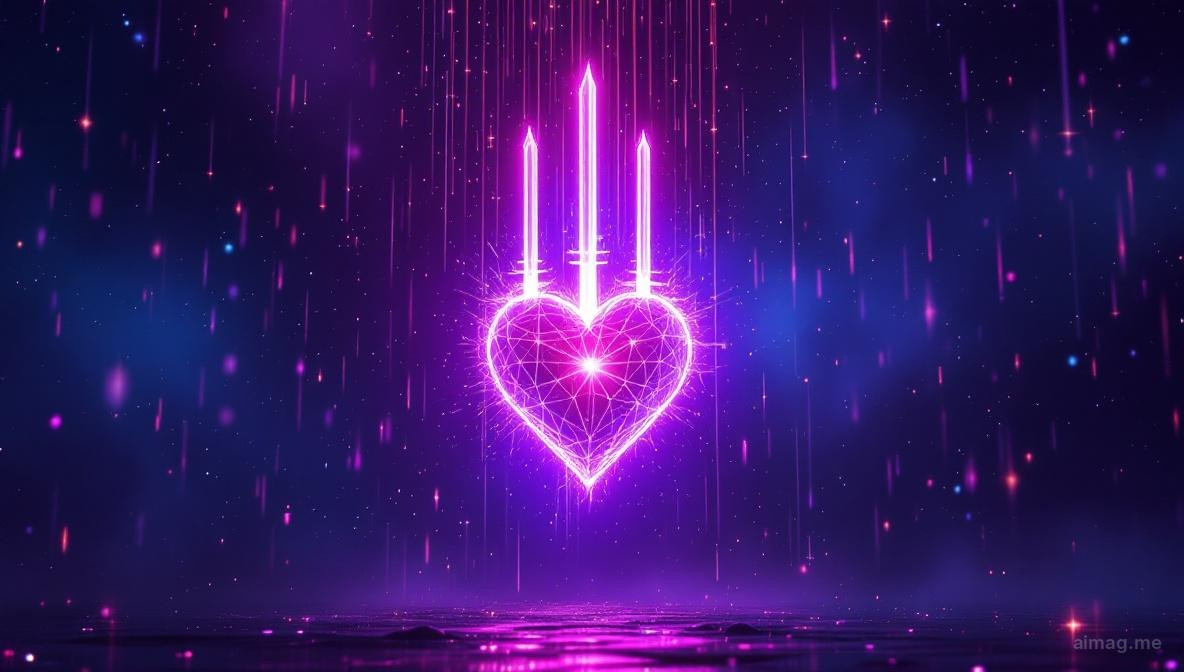
When the Three of Swords appears as feelings, someone is in the grip of genuine heartbreak. This is not mild disappointment or passing sadness. It is the searing recognition that something cherished has been damaged or lost — a truth that arrived like a blade and left no room for denial. The heart on this card is not decorative. It is wounded, and the wound is precise.
In short: The Three of Swords as feelings represents the raw experience of emotional pain that follows truth, betrayal, or loss. Neuroscientist Naomi Eisenberger's research at UCLA demonstrated that social pain activates the same brain regions as physical pain — heartbreak is not metaphorical but neurologically real. Upright, this card signals grief, painful honesty, or the sting of betrayal. Reversed, it points to recovery, the slow release of pain, or the beginning of forgiveness.
The emotional core of the Three of Swords
The Three of Swords is tarot's most visceral image of pain. Three blades pierce a heart against a backdrop of rain — nothing is hidden, nothing is softened. As a feeling, it represents the moment when emotional pain becomes impossible to ignore.
Prenditi un momento per riflettere su ciò che hai letto. Cosa risuona con la tua situazione attuale?
Eisenberger's neuroimaging studies showed that the anterior cingulate cortex and anterior insula — regions central to processing physical pain — light up with equal intensity during experiences of social rejection and heartbreak. When someone says "my heart hurts," they are reporting something the brain treats as literally true. The Three of Swords captures this neurological reality: emotional pain that registers in the body as acutely as a physical wound.
What distinguishes the Three of Swords from general sadness is its specificity. This is not vague melancholy or existential malaise. Each sword represents a specific source of pain — a particular betrayal, a specific lie uncovered, a concrete loss acknowledged. The feeling has a cause, and that cause is known.
Psychologist James Pennebaker's research on emotional disclosure found that unexpressed pain creates physiological stress, while articulating painful experiences — naming them precisely — initiates healing. The Three of Swords sits at the threshold between these states: the pain is fully felt but not yet processed. It is the moment of naming, the instant when you can finally say "this is what happened, and this is how much it hurts."
Three of Swords upright as feelings
When the Three of Swords appears upright as someone's feelings, the dominant experience is acute emotional pain connected to a specific cause. This person is not sad in the abstract. Something has happened — a betrayal discovered, a painful truth spoken, a loss that cannot be undone — and they are in the immediate aftermath.
In relationships, this card frequently signals the pain of a truth that changed everything. Perhaps infidelity was revealed, a fundamental incompatibility became undeniable, or someone said something that cannot be unsaid. The feeling is shock mixed with grief — the world was one thing before the truth, and it is something else after.
Eisenberger's work is especially relevant here because it explains why heartbreak feels so disproportionately devastating. The brain does not distinguish between social and physical threats with the precision we might expect. When a romantic bond is threatened or broken, the body responds with the same emergency protocols it would deploy for physical danger: elevated cortisol, disrupted sleep, compromised immune function. The Three of Swords upright describes someone whose body and mind are both in crisis.
Imagine discovering that someone you trusted completely has been dishonest about something fundamental. The feeling is not just sadness — it is a recalibration of reality. Every memory is reinterpreted through the new information. Things that seemed caring now look strategic. Moments that felt genuine now feel performed. That wholesale revision of meaning is the Three of Swords' emotional signature.
In self-reflection, drawing this card suggests you are confronting a painful truth about yourself or your situation that you can no longer avoid. The pain is real, but so is the clarity it brings.
Three of Swords reversed as feelings
Reversed, the Three of Swords does not erase the pain — it shifts its position in time. The worst has already happened. What remains is the process of recovery, the slow and unglamorous work of integrating painful experience into a life that continues.
The dominant feeling here is pain in retreat. Not gone, but no longer at its peak intensity. The person is beginning to breathe normally again, beginning to imagine a future that is not defined entirely by what went wrong. This is the feeling of the morning after weeks of morning-afters, when you realize the first thought upon waking was not about the loss.
Pennebaker's disclosure research is especially relevant to this reversal. His studies showed that writing about traumatic experiences for just fifteen to twenty minutes over several days produced measurable improvements in physical health and emotional well-being. The Three of Swords reversed suggests someone who has begun this process of articulation — speaking the pain, writing it, or simply allowing themselves to feel it fully instead of suppressing it.
Forgiveness may be part of this picture, though not the performative forgiveness that others demand on a schedule. The kind of forgiveness the Three of Swords reversed describes is internal: a loosening of the grip on anger and hurt, not because the other person deserves it but because holding on has become more painful than letting go.
The caution here is premature closure. Some people rush to "I'm over it" to escape the discomfort of grief, declaring themselves healed before they have actually healed. The Three of Swords reversed asks for patience with the recovery timeline.
In love and relationships
In romantic readings, the Three of Swords as feelings carries the weight of love that has been wounded. When someone feels this card toward you, they are experiencing real pain connected to the relationship — not indifference, not casual disappointment, but the deep ache that only genuine attachment can produce.
This connects to attachment theory as developed by John Bowlby. Bowlby proposed that the distress of separation from an attachment figure is not weakness or dependency — it is a biological response calibrated by millions of years of evolution. The Three of Swords as a feeling in love is this attachment system in distress, signaling that a bond it depends on has been threatened or broken.
Upright in love, this card can also indicate the pain of loving someone you know is wrong for you. The truth is clear, but the heart has not caught up to the mind. You see the incompatibility, the pattern, the inevitable ending, but the feelings persist. That gap between knowing and feeling is its own form of suffering.
Reversed in love, the Three of Swords suggests the early stages of emotional recovery within or after a relationship. The wound is closing, though the scar will remain. A new beginning is possible, but only if the grief is honored rather than hurried.
When you draw the Three of Swords as feelings in a reading
If the Three of Swords appears as feelings in your reading, do not look away from it. This card respects you enough to be honest, and it asks for the same honesty in return.
Ask yourself: What painful truth am I sitting with right now? Am I allowing myself to grieve, or am I performing recovery before it has actually happened? Is there pain I have been carrying that needs to be spoken?
The Three of Swords is not a curse. It is a card that honors the depth of your capacity to love by acknowledging the depth of your capacity to hurt. The pain it describes is the price of genuine connection, and it will not last forever.
Explore what this emotional truth reveals with a free reading.
Frequently asked questions
What does the Three of Swords mean as feelings for someone?
The Three of Swords as someone's feelings indicates they are experiencing real emotional pain connected to you or the relationship. This is not casual sadness — it reflects genuine heartbreak, betrayal, or the sting of a painful truth.
Is the Three of Swords a positive card for feelings?
It is a difficult card, but it is honest. Upright, it signals real pain that deserves acknowledgment. Reversed, it carries genuine hope — the pain is receding, and recovery is underway. The card's honesty is itself a form of respect.
How does the Three of Swords reversed differ as feelings?
Reversed, the acute phase of pain is ending. The person is moving from heartbreak toward healing. The feelings are still tender, but the intensity has diminished, and the possibility of forgiveness or renewal is emerging.
Explore the full guide to all 78 cards as feelings or discover the Three of Swords' complete meaning. Ready to explore what the cards reflect about your emotions? Try a free reading.