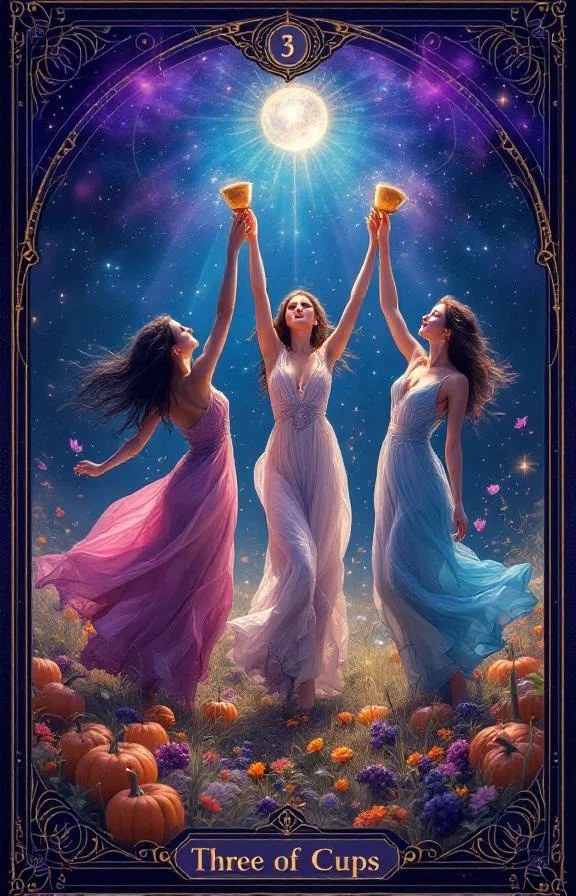
Todo relacionamento é uma conversa entre dois mundos interiores — e a maior parte dessa conversa acontece abaixo da superfície, em suposições, projeções, necessidades não ditas e padrões herdados que nenhuma das duas pessoas enxerga completamente. Uma tiragem de tarô para relacionamentos não lê a mente da outra pessoa. Ela faz algo mais útil: torna visíveis as dinâmicas invisíveis entre vocês, as coisas que ambos trazem para a mesa e que nenhum de vocês nomeou.
Estas quatro tiragens cobrem o espectro completo da conexão humana — da avaliação íntima de uma parceria romântica à arquitetura complexa dos vínculos familiares ao acerto honesto que a amizade às vezes exige. Escolha a tiragem que corresponde ao relacionamento em que você está realmente, não ao que deseja estar.
Em resumo: As tiragens de tarô para relacionamentos tornam visíveis as dinâmicas invisíveis entre duas pessoas — projeções, necessidades não ditas e padrões herdados que nenhuma das duas pessoas enxerga completamente. Quatro layouts são abordados: a Tiragem Ponte de 7 cartas para qualquer relacionamento significativo, uma tiragem de dinâmicas familiares para padrões geracionais, uma verificação de amizade para avaliação honesta, e o Espelho Honesto para examinar seus próprios padrões relacionais. Cada carta reflete sua percepção, não a verdade objetiva.
1. A Tiragem Ponte (7 Cartas)
A tiragem de relacionamento mais abrangente deste guia. Projetada para qualquer relacionamento significativo entre duas pessoas — parceiros românticos, amigos íntimos, sócios de negócios, pai e filho adulto.
| Posição | Significado |
|---|---|
| 1 | Você — sua energia atual neste relacionamento |
| 2 | Eles — a energia atual deles (como você a percebe) |
| 3 | A fundação — sobre o que este relacionamento está construído |
| 4 | A dinâmica atual — o que está acontecendo entre vocês agora |
| 5 | O que você precisa deste relacionamento |
| 6 | O que eles precisam deste relacionamento |
| 7 | A ponte — como fortalecer a conexão |
Como ler: Coloque as cartas em linha — Posições 1 e 2 nas extremidades opostas, Posição 4 no centro, Posição 3 abaixo do centro, e Posições 5, 6, 7 construindo para cima. O visual cria uma ponte entre duas pessoas.
Comece comparando as Posições 1 e 2. Estão em harmonia ou tensão? Depois leia a Posição 3 como o alicerce — o que uniu vocês e o que os mantém juntos mesmo quando a superfície está turbulenta. A Posição 4 revela a verdade presente que ambos podem estar evitando. As Posições 5 e 6 são o par mais revelador da leitura: quando o que você precisa e o que eles precisam são compatíveis, o relacionamento tem combustível. Quando se contradizem, você encontrou o atrito central. A Posição 7 oferece o caminho a seguir.
Insight comum: Quando a Posição 3 (fundação) mostra uma carta de um naipe e a Posição 4 (dinâmica atual) mostra um naipe completamente diferente, o relacionamento se afastou de sua energia original. Uma fundação de Copas (vínculo emocional) que se tornou uma dinâmica atual de Ouros/Pentáculos (arranjo prático) sugere que o amor virou logística.

2. A Tiragem de Dinâmicas Familiares (5 Cartas)
Os relacionamentos familiares carregam padrões que se estendem por gerações. Esta tiragem foi projetada para desembaraçar as dinâmicas herdadas que moldam como você se relaciona com membros da família — especialmente pais, irmãos e o sistema familiar como um todo.
| Posição | Significado |
|---|---|
| 1 | Seu papel no sistema familiar |
| 2 | O padrão herdado — o que foi passado para você |
| 3 | A tensão atual — onde o atrito vive |
| 4 | O que você pode mudar |
| 5 | O que você deve aceitar |
Como ler: A psicoterapeuta Virginia Satir identificou cinco papéis familiares comuns — apaziguador, culpador, computador, distrator e nivelador. A Posição 1 muitas vezes revela qual papel você adotou inconscientemente. Um Dois de Ouros/Pentáculos pode sinalizar o malabarista da família. Uma Rainha de Espadas pode revelar a pessoa que diz a verdade que ninguém quer ouvir.
A Posição 2 é o fio geracional — o padrão que não começou em você, mas vive em você. A Posição 3 localiza o ponto de atrito atual. Mas a sabedoria real da tiragem vive na tensão entre as Posições 4 e 5: a fronteira entre o que você pode transformar e o que precisa aprender a segurar sem tentar consertar. Confundir esses dois é a fonte de maior parte do sofrimento familiar.
3. A Verificação de Amizade (3 Cartas)
As amizades são os relacionamentos mais negligenciados no tarô — todo mundo pergunta sobre amantes, poucos perguntam sobre amigos. Esta tiragem simples de três cartas oferece uma avaliação honesta de qualquer amizade.
| Posição | Significado |
|---|---|
| 1 | O que esta amizade te dá |
| 2 | O que esta amizade te custa |
| 3 | Se esta amizade está crescendo ou diminuindo |
Como ler: As Posições 1 e 2 criam um balanço — não frio e transacional, mas honesto sobre a economia emocional da conexão. Toda amizade tem tanto presentes quanto custos. A questão é se a troca está nutrindo as duas pessoas.
A Posição 3 é a trajetória. O Seis de Copas sugere que a amizade vive na nostalgia — quente, mas não evoluindo. O Três de Paus/Bastões sugere crescimento e visão compartilhada à frente. O Cinco de Copas sugere luto — algo nesta amizade foi perdido, e reconhecer essa perda é o primeiro passo para curar ou honrar o que foi.
4. O Espelho Honesto (4 Cartas)
Para a pergunta mais difícil nos relacionamentos: o que estou contribuindo para este problema? Esta tiragem não é sobre a outra pessoa. É sobre você.
| Posição | Significado |
|---|---|
| 1 | O que você traz para seus relacionamentos (seu padrão) |
| 2 | O que você tem medo de receber |
| 3 | Onde você projeta em vez de conectar |
| 4 | Um passo em direção a um relacionamento mais honesto |
Como ler: Esta é a tiragem psicologicamente mais exigente deste guia, e potencialmente a mais transformadora. A Posição 1 revela sua assinatura relacional — a energia que você traz consistentemente para a conexão. Pode ser calor, controle, distância, humor, cuidado ou intensidade.
A Posição 2 é a sombra da Posição 1. Muitas vezes construímos padrões relacionais especificamente para evitar receber algo que secretamente queremos, mas tememos. A pessoa que sempre dá pode estar aterrorizada de receber. A pessoa que mantém distância emocional pode estar desesperada por proximidade, mas convicta de que não merece.
A Posição 3 aborda o mecanismo psicológico da projeção — a tendência de ver nos outros o que não conseguimos encarar em nós mesmos. A Lua aqui sugere que o que você acha mais frustrante na outra pessoa é algo não resolvido em você mesmo.
A Posição 4 oferece um passo prático. Não a jornada toda, apenas o próximo movimento.

Lendo Tiragens de Relacionamento Bem
Lembre-se do princípio do espelho. Cada carta em uma tiragem de relacionamento reflete sua percepção, não a realidade objetiva. Quando a Posição 2 mostra a energia do seu parceiro, está mostrando como você experimenta a energia deles. Isso é útil — sua percepção é a sua realidade — mas não é o mesmo que ler a mente deles.
Observe a dominância de naipe. Se a maioria das cartas são Espadas, o relacionamento está operando no domínio intelectual — discussões, padrões de comunicação, frameworks mentais. Se a maioria são Copas, a dimensão emocional está em primeiro plano. Isso te diz que linguagem o relacionamento fala atualmente.
Preste atenção às cartas da corte. Nas tiragens de relacionamento, as cartas da corte muitas vezes representam as pessoas envolvidas ou os papéis que estão desempenhando. Um Cavaleiro de Copas em uma posição de parceiro sugere idealismo romântico. Um Rei de Ouros/Pentáculos sugere estabilidade e confiabilidade material. Essas não são identidades fixas — são expressões atuais.
Não faça leituras durante uma briga. As leituras de relacionamento feitas no calor do conflito produzem leituras sobre o conflito, não sobre o relacionamento. Espere até poder ler de um lugar de curiosidade genuína em vez do desejo de ser provado certo.
Explore Tópicos Específicos de Relacionamento
Cada guia aprofunda uma dimensão específica dos relacionamentos — com tiragens dedicadas e frameworks de interpretação:
- Tiragem de tarô para amor — 5 layouts para solteiros, amor novo e romance em diferentes fases do relacionamento
- Melhor tiragem de tarô para amor — comparação de layouts de amor baseados em psicologia e quando usar cada um
- Tarô e estilos de apego — por que você continua tirando as mesmas cartas em leituras de amor, e como seu padrão de apego molda as interpretações
- Tiragem de tarô para chama gêmea — tiragens para conexões de alma intensas e dinâmicas kármicas
- Tarô após um término — processamento de luto através das cartas, navegando separação e a decisão de ficar ou partir
- Tarô e ex-parceiros — o que as cartas revelam sobre relacionamentos passados e apegos não resolvidos
- Tiragem de compatibilidade no tarô — uma tiragem de 6 cartas que mapeia a química entre duas pessoas: atração, atrito, valores compartilhados e potencial de crescimento
- Leitura de tarô para casais — como ler o tarô juntos como casal sem começar uma discussão
- Meu relacionamento é saudável? — cinco cartas de tarô que aparecem consistentemente quando um relacionamento precisa de atenção
- Tarô para problemas de confiança — uma tiragem para reconstruir confiança após uma traição, usando a métrica de confiança de Gottman
- Devo ficar ou partir? — a Tiragem do Limiar para a decisão de relacionamento mais difícil
- Ele vai voltar? — tiragem de tarô para clareza de reconciliação e leitura dos sinais
- Como ele se sente sobre mim? — posições de cartas projetadas para revelar a postura emocional de alguém em relação a você
- Ele sente minha falta? — padrões de tarô que surgem quando alguém ainda está emocionalmente apegado
Perguntas Frequentes
O tarô pode me dizer se meu relacionamento vai durar?
O tarô mostra a trajetória atual e as dinâmicas — não um resultado predeterminado. Uma leitura cheia de cartas desafiadoras não significa que o relacionamento está condenado. Significa que há tensões ativas que precisam de atenção. Se o relacionamento vai durar depende do que as duas pessoas fazem com essa informação.
Devo ler para meu parceiro sem ele estar presente?
Você pode, mas entenda que qualquer carta em uma posição de "parceiro" reflete sua percepção deles, filtrada pelo seu próprio estado emocional. Para a leitura mais equilibrada, use a Tiragem do Espelho Honesto (Tiragem 4) para examinar seus próprios padrões primeiro.
Qual tiragem é melhor para um novo relacionamento?
Para conexões completamente novas, a Tiragem do Amor Novo é mais apropriada. As tiragens neste guia foram projetadas para relacionamentos estabelecidos onde os padrões tiveram tempo de se formar.
Com que frequência devo fazer leituras de relacionamento?
Mensalmente no máximo para relacionamentos em andamento. A tentação de ler semanalmente sobre um parceiro geralmente é um sinal de que você precisa de uma conversa, não de uma carta.
E perguntas sobre fertilidade ou gravidez?
Se sua pergunta é sobre fertilidade ou planejamento familiar, consulte nosso guia sobre cartas de tarô que significam gravidez para as cartas e tiragens específicas projetadas para essas leituras.
O espaço entre duas pessoas é o território mais complexo que existe — mais intrincado do que qualquer psique individual, mais imprevisível do que qualquer jornada solo, porque é moldado por dois conjuntos de necessidades, medos, histórias e esperanças colidindo em tempo real. Uma tiragem de tarô para relacionamentos mapeia esse espaço com uma especificidade que a conversa sozinha raramente alcança, não porque as cartas saibam coisas que as palavras não sabem, mas porque a estrutura de uma tiragem te força a olhar para dimensões da conexão que de outra forma você evitaria. A carta na posição "o que você precisa" não pode ser discutida. A carta na posição "fundação" não se importa com sua narrativa. E a carta na posição "o que você pode mudar" não te deixa fingir que o único problema é a outra pessoa. Esse é o presente dessas tiragens — não previsão, mas o tipo de honestidade que torna a conexão real possível.