Le moyen le plus rapide de vider une salle lors d'un congrès de psychologie, c'est de dire, calmement et sans ironie : « J'utilise des cartes de tarot avec mes patients. »
Mentionnez la pleine conscience — approbation générale. Dites que vous pratiquez l'art-thérapie ou le bac à sable thérapeutique — vos collègues vous demandent votre protocole. Mais prononcez le mot « tarot » et quelque chose se fissure. Le terme porte trop de poids culturel : chapiteaux de foire, lignes psychiques nocturnes, la vague promesse qu'un inconnu avec des cartes peut vous révéler l'avenir. Pour la plupart des cliniciens, l'association est si forte que la conversation s'arrête avant même de commencer.
Et pourtant. Un nombre discret mais croissant de thérapeutes — psychologues licenciés, travailleurs sociaux cliniques, conseillers conjugaux et familiaux — intègrent le tarot dans leur pratique thérapeutique depuis des années. Non pas comme divination. Non pas comme substitut à une intervention fondée sur des preuves. Mais comme outil projectif, générateur de métaphores, moyen d'aider les clients à accéder à un matériel que le questionnement direct ne parvient pas à atteindre. Ils ne publient pas encore dans les grandes revues, mais ils l'utilisent en séance, observent des résultats et en parlent lors de conférences, en groupes de supervision, et dans un corpus de littérature restreint mais sérieux que la majorité de la profession n'a pas lu.
Cet article examine ce qu'ils font, pourquoi ça fonctionne, et où se situent les limites.
En bref : Un nombre croissant de thérapeutes licenciés utilisent les cartes de tarot comme outils projectifs, générateurs de métaphores et dispositifs de thérapie narrative en séance clinique. Les cartes fonctionnent comme une version enrichie du Test d'Aperception Thématique, aidant les clients à externaliser leurs problèmes, accéder au matériel inconscient et réécrire des récits de soi trop contraignants. Le tarot n'est pas une thérapie en soi, mais entre des mains formées, il devient un instrument cliniquement utile au sein de la thérapie.
Avertissement important : Le tarot n'est pas une thérapie. Il ne remplace pas les soins de santé mentale professionnels, l'évaluation clinique, le diagnostic ou le traitement fondé sur les preuves. Rien dans cet article ne doit être interprété comme un avis médical ou psychologique. Si vous traversez une crise de santé mentale, veuillez contacter un professionnel de santé mentale licencié ou un service de crise.
La tradition projective : les cousins cliniques du tarot
L'idée d'utiliser des images ambiguës pour accéder au matériel inconscient n'est pas nouvelle en psychologie. C'est même l'une des techniques les plus anciennes de la discipline.
Le test des taches d'encre de Rorschach a vu le jour en 1921. Le Test d'Aperception Thématique (TAT) a suivi en 1935 — une série d'images ambiguës à partir desquelles on demande au client de raconter une histoire. La théorie sous-jacente aux deux instruments est identique : face à une image pouvant signifier plusieurs choses, les individus projettent leur propre matériel psychologique. Ce que vous y voyez dit au clinicien quelque chose sur ce qui se passe en vous — vos préoccupations, vos peurs, vos conflits, vos désirs.
Arthur Rosengarten, psychologue jungien, a rendu cette connexion explicite dans son livre de 2000 Tarot and Psychology: Spectrums of Possibility. Rosengarten a soutenu que les cartes de tarot fonctionnent comme des stimuli projectifs exactement de la même façon que le TAT — avec certains avantages. Les images sont plus riches, plus variées et plus évocatrices sur le plan émotionnel que les photographies délibérément neutres de Murray. Le jeu contient soixante-dix-huit images distinctes couvrant l'ensemble de l'expérience humaine, des débuts innocents (Le Fou) aux intégrations complexes (Le Monde), de l'épanouissement émotionnel (les Coupes) au conflit intellectuel (les Épées). En tant qu'ensemble de stimuli projectifs, il est remarquablement complet.
L'intuition de Rosengarten n'était pas que le tarot est magique. C'est qu'il est psychologiquement dense. Chaque carte contient suffisamment d'informations symboliques — couleur, posture, objets, décor, nombre, couleur de la carte — pour soutenir des dizaines de projections possibles. Quand un client regarde La Tour et dit « c'est mon mariage », il fait exactement ce que fait tout sujet du TAT : reconnaître son propre monde intérieur dans une image externe et, ce faisant, le rendre disponible à l'examen.
La différence entre le tarot et les tests projectifs cliniques n'est pas fonctionnelle mais contextuelle. Le Rorschach dispose d'études de validité et de données normatives. Le tarot, non. Cela signifie que le tarot ne peut pas être utilisé à des fins d'évaluation formelle ou de diagnostic. Mais pour aider un client à accéder à son expérience et à l'articuler, le mécanisme est identique.

La thérapie narrative et la carte comme récit
Si la psychologie projective explique pourquoi les cartes de tarot suscitent des réponses significatives, la thérapie narrative explique pourquoi ces réponses peuvent être thérapeutiques.
Les fondateurs de la thérapie narrative ont proposé dans leur livre de 1990 Narrative Means to Therapeutic Ends que les personnes comprennent leur vie à travers des récits, et que les problèmes psychologiques surgissent quand l'histoire dominante qu'on se raconte sur soi-même devient trop étroite, trop rigide ou trop saturée de problèmes. Une personne enlisée dans la dépression ne vit pas seulement des symptômes — elle vit à l'intérieur d'une histoire dans laquelle elle est le genre de personne qui a toujours été dépressive, qui l'a toujours été, qui le sera toujours. Les symptômes sont réels. Mais l'histoire qui les organise est une construction, et les constructions peuvent être reconstruites.
La technique centrale de la thérapie narrative est la ré-écriture : aider le client à trouver des histoires alternatives qui sont tout aussi vraies mais moins contraignantes. Le thérapeute fait surgir des « résultats uniques » — des moments où l'histoire-problème n'a pas tenu, où le client a agi d'une manière qui contredisait son récit dominant. Ces moments existent dans l'expérience de chacun, mais ils sont généralement invisibles parce que l'histoire-problème les filtre.
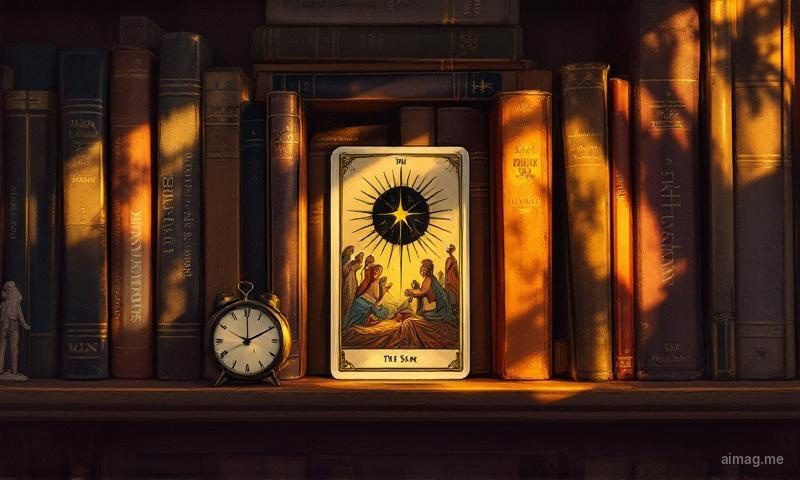
Le tarot est un vecteur extraordinairement efficace pour ce processus. Quand un client qui racontait une histoire d'impuissance tire L'Étoile — espoir, renouveau, la confiance tranquille qui suit la dévastation — la carte offre un cadre narratif alternatif. Non pas un déni de la souffrance. Mais une image qui dit : il y a aussi cela. Il existe une version de votre expérience dans laquelle vous avez survécu au pire, et vous vous tenez sous un ciel ouvert, en train de rendre l'eau au monde.
Le client n'a pas besoin de croire au tarot pour que cela fonctionne. Il lui suffit de réagir à l'image. Et parce que les images sont tirées du même matériel archétypal qui structure la narration humaine — le voyage du héros, la descente et le retour, la rencontre avec l'ombre — les clients y répondent presque toujours. Les cartes parlent un langage que la psyché connaît déjà.
La tradition humaniste soutient que la relation thérapeutique fonctionne quand le thérapeute offre trois conditions : considération positive inconditionnelle, empathie et congruence. Ce que cela décrit, c'est un espace dans lequel le client peut explorer sa propre expérience sans jugement — un espace où chaque sentiment, chaque pensée, chaque contradiction est accepté comme matériel valide d'exploration. Le tarot crée une version structurelle de cet espace. Les cartes ne jugent pas. Elles ne diagnostiquent pas. Elles présentent des images, et ces images contiennent ce que le client y place. Une carte montrant une scène douloureuse — le Trois d'Épées, par exemple, avec son cœur transpercé — ne dit pas « vous êtes blessé ». Elle dit : « le chagrin existe. Quel est le vôtre ? »
Comment les thérapeutes utilisent concrètement les cartes en séance
Les thérapeutes qui intègrent le tarot dans leur travail clinique ne pratiquent pas des tirages au sens traditionnel du terme. Ils ne demandent pas aux cartes de prédire l'avenir ni de révéler des vérités cachées. Ils utilisent les cartes comme ce que Rosengarten appelait des « miroirs psychologiques » — des outils qui renvoient au client son propre matériel sous une forme qu'il peut examiner, discuter et travailler.
Voici à quoi ressemble concrètement cette pratique.
La carte comme point de départ
De nombreux thérapeutes utilisent une seule carte en début de séance. Le client tire d'un éventail face cachée, retourne la carte et décrit ce qu'il voit. Non pas ce que la carte « signifie » selon un quelconque guide — mais ce qu'il voit personnellement dans l'image. Le thérapeute suit ensuite les associations du client en posant des questions ouvertes : « Qu'est-ce qui vous frappe ? Où votre regard se pose-t-il en premier ? À quoi cette image vous fait-elle penser ? Si ce personnage pouvait vous parler, que vous dirait-il ? »
Cette technique contourne l'un des problèmes les plus courants en thérapie : le client qui ne sait pas de quoi parler. Beaucoup de personnes arrivent avec le sentiment qu'elles devraient avoir quelque chose d'important à aborder, et la pression de produire un matériel significatif rend paradoxalement plus difficile l'accès à celui-ci. Une carte supprime cette pression. C'est une troisième chose dans la pièce — une image que thérapeute et client peuvent regarder ensemble.
L'externalisation par l'image
Les thérapeutes travaillant dans un cadre narratif utilisent les cartes pour externaliser les problèmes. On demande au client de choisir, dans un éventail face visible, une carte qui représente son problème — sa dépression, sa colère, sa difficulté relationnelle. Puis une carte qui le représente lui quand le problème n'est pas aux commandes. Puis une carte qui représente ce qu'il veut.
Cet exercice simple accomplit quelque chose que des heures de traitement verbal ne parviennent parfois pas à faire : il sépare la personne du problème. La dépression est là-bas, sur cette carte. Le client est ici, sur celle-ci. Ce ne sont pas la même chose. C'est le geste fondamental de la thérapie narrative — l'externalisation — accompli par l'image plutôt que par le langage. Pour les clients qui ont tellement intellectualisé leurs problèmes que les en parler est devenu une autre forme d'évitement, la voie visuelle peut se révéler dramatiquement plus efficace.
La génération de métaphores
Irvin Yalom, le psychothérapeute existentiel, écrivait dans son Existential Psychotherapy de 1980 que les moments les plus puissants sur le plan thérapeutique arrivent souvent sous forme d'images plutôt que d'insights. Un client ne pense pas pour sortir d'une crise existentielle. Il trouve une image — une métaphore, une histoire, un rêve — qui contient la crise sous une forme avec laquelle il peut vivre. L'image ne résout pas le paradoxe. Elle le contient.
Les cartes de tarot sont, fondamentalement, des machines à métaphores. Chaque carte est un récit compressé — une situation, un sentiment, une expérience humaine réduite à une seule image suffisamment riche pour être dépliée dans une douzaine de directions. Quand un client tire L'Ermite et dit « je me sens comme ce personnage, seul sur la montagne, tenant la lumière mais sans savoir pour qui elle est », il a généré une métaphore avec laquelle le thérapeute peut travailler pour le reste de la séance. La métaphore est sa propre création — la carte a simplement fourni la matière première.
Les cartes que les thérapeutes trouvent particulièrement utiles
Toutes les cartes du jeu ne se prêtent pas également au travail thérapeutique. Certaines produisent systématiquement le matériel clinique le plus profond.
L'Étoile — l'espoir après la dévastation
Dans la tradition Rider-Waite-Smith, L'Étoile suit La Tour — c'est ce qui vient après que tout s'est effondré. Un personnage nu s'agenouille au bord d'une mare, versant de deux cruches, l'une dans l'eau et l'autre sur la terre. Des étoiles brillent au-dessus. La scène est apaisée, ouverte, vulnérable.
Les thérapeutes rapportent que cette carte est particulièrement puissante avec les clients qui traitent un trauma ou une perte majeure. L'image ne promet pas que la douleur disparaîtra. Elle montre quelque chose de plus nuancé : une personne ramenée à l'essentiel, exposée et sans protection, qui verse néanmoins — qui donne, qui coule, qui continue. La carte parle de résilience sans nier la souffrance, ce qui est précisément l'équilibre thérapeutique le plus difficile à atteindre avec les seuls mots.
La Tour — la crise comme percée
La Tour montre une structure frappée par la foudre, des personnages qui tombent, des flammes s'échappant des fenêtres. C'est la carte la plus redoutée du jeu, et aussi l'une des plus riches sur le plan thérapeutique.
Pour les clients en crise — divorce, perte d'emploi, effondrement d'un système de croyances — La Tour offre quelque chose que les mots rassurants ne peuvent pas donner : la validation. La carte dit : oui, c'est aussi grand et destructeur que vous le ressentez. Elle ne minimise pas. Elle montre un bâtiment en feu et des gens en chute libre, sans jugement. Pour un client à qui des amis bien intentionnés ont dit de « rester positif », l'honnête reconnaissance de la dévastation que représente La Tour peut être profondément libératrice.
La Mort — transformation, pas fin
La Mort est la carte la plus mal comprise du tarot. Son sens dans la plupart des traditions interprétatives n'est pas la mort littérale mais la transformation — la fin nécessaire qui précède un nouveau commencement. L'ancienne forme doit mourir pour que la nouvelle émerge.
En contexte thérapeutique, cette carte donne forme au processus terrifiant mais nécessaire du lâcher-prise. Les clients en transition — qui terminent une relation, quittent une carrière, abandonnent une identité qui ne leur convient plus — vivent souvent un deuil qu'ils ne parviennent pas à articuler parce que ce qu'ils perdent n'est pas mort mais dépassé. La Mort fournit l'image : quelque chose qui se termine, quelque chose qui devient, le soleil qui se lève à l'arrière-plan. Elle est honnête sur le coût du changement d'une façon qui aide les clients à cesser de prétendre que ce coût n'est pas réel.
L'Ermite — le travail intérieur
L'Ermite se tient seul sur une montagne, tenant une lanterne. La carte représente la solitude choisie plutôt qu'imposée — le retrait délibéré du monde au service de la compréhension. Pour les clients qui effectuent le travail lent et privé de la thérapie — le travail qui ne produit pas de résultats visibles pour le monde extérieur, qui ne peut pas s'expliquer en dîner, qui donne l'impression de rester immobile pendant que tout le monde avance — L'Ermite est souvent la carte la plus reconnaissable du jeu. « C'est moi », disent les clients. « Je suis là-haut, seul. » Et le thérapeute peut demander : « Que cherchez-vous avec cette lumière ? »
Deux tirages thérapeutiques
Le Tirage du Miroir Thérapeutique (4 cartes)
Ce tirage est conçu pour une utilisation en contexte thérapeutique ou de réflexion profonde. Il n'est pas fait pour la prédiction. Il est fait pour la reconnaissance.
| Position | Question |
|---|---|
| 1 | Comment est-ce que je me vois en ce moment ? |
| 2 | Comment le problème me voit-il ? (externalisation) |
| 3 | Quelle ressource ai-je que le problème ne veut pas que je remarque ? |
| 4 | À quoi ressemblerait le changement ? |
Comment l'utiliser : La position 1 établit l'image que le client a de lui-même. La position 2 effectue le geste narratif qui consiste à donner au problème sa propre perspective — en en faisant un personnage dans l'histoire plutôt que l'histoire elle-même. La position 3 fait surgir les ressources cachées — les résultats uniques que l'histoire-problème a filtrés. La position 4 invite le client à imaginer une alternative, non pas comme une fantaisie mais comme une image visuelle qu'il peut examiner et à laquelle il peut réagir.
Ce tirage est particulièrement utile pour les clients qui se sentent bloqués. La structure en quatre cartes force une progression — de l'état actuel, à travers la relation avec le problème, jusqu'aux ressources non exploitées et au changement possible — que les schémas de pensée habituels du client résistent généralement.
Le Démarrage de Séance (1 carte)
L'utilisation thérapeutique la plus simple du tarot : une carte, tirée en début de séance, utilisée comme point d'appui à la réflexion.
Comment l'utiliser : Mélangez le jeu (ou laissez le client mélanger s'il s'y sent à l'aise). Tirez une carte. Posez-la face visible entre vous. Demandez : « Qu'est-ce que vous remarquez ? Qu'est-ce que cette image vous évoque aujourd'hui ? »
Puis suivez les associations du client. N'interprétez pas la carte. N'expliquez pas ce qu'elle « signifie ». Le sens, c'est ce que le client y projette, et cette projection est le matériel avec lequel vous travaillez.
Cette technique est précieuse parce qu'elle supprime la pression d'arriver en thérapie avec un programme. La carte fournit le programme. Et parce que la carte est aléatoire, elle fait souvent surgir un matériel que le client n'aurait pas consciemment choisi d'aborder — un matériel que l'effet de projection lui arrache avant que ses défenses n'aient pu s'organiser.
Les limites : ce que le tarot peut et ne peut pas faire en thérapie
Cette section importe davantage que tout ce qui précède.
Le tarot, utilisé avec discernement, peut servir d'outil projectif, de point de départ à la conversation, de générateur de métaphores et de dispositif d'externalisation. Ce sont des fonctions thérapeutiques légitimes. Mais le tarot ne peut pas faire ce qui suit, et quiconque — thérapeute ou non — prétend le contraire franchit une ligne qui ne devrait pas l'être.
Le tarot ne peut pas diagnostiquer. Une carte de tarot ne peut pas vous dire, ni dire à votre client, s'il souffre de dépression, d'anxiété, de PTSD ou de toute autre affection clinique. Le diagnostic requiert une évaluation standardisée, une formation clinique et un jugement professionnel.
Le tarot ne peut pas remplacer un traitement fondé sur les preuves. Si un client a besoin de TCC pour un trouble panique, d'EMDR pour un trauma ou d'un traitement médicamenteux pour une condition biochimique, le tarot n'est pas un substitut. Il peut être un complément — un moyen d'accéder à un matériel que le traitement principal traite ensuite — mais ce n'est pas un traitement en soi.
Le tarot ne peut pas prédire les résultats. Un thérapeute qui dit à un client que les cartes montrent que son mariage survivra ou que son cancer sera en rémission a quitté entièrement le domaine thérapeutique. La prédiction n'est pas de la thérapie, et en contexte clinique, c'est irresponsable.
Le tarot exige un consentement éclairé. Tout thérapeute utilisant le tarot en séance doit expliquer ce qu'il fait et pourquoi, être transparent sur le fait que le tarot n'est pas une intervention fondée sur les preuves, et offrir au client la possibilité de refuser. Tous les clients ne seront pas à l'aise avec les cartes. La mission du thérapeute est de servir le client, pas de promouvoir une modalité.
La formation du praticien compte. Un thérapeute licencié utilisant le tarot dans le cadre d'une formation clinique et d'une pratique éthique se trouve dans une position fondamentalement différente de celle d'un lecteur de tarot se positionnant comme offrant des services thérapeutiques sans qualification clinique. Le premier a la formation nécessaire pour reconnaître quand le matériel d'un client dépasse ce que la réflexion par les cartes peut traiter en toute sécurité. Le second peut ne pas l'avoir.
Le territoire en développement
L'intégration du tarot dans la pratique thérapeutique en est encore à ses débuts. Il n'existe pas d'essais contrôlés randomisés. Il n'existe pas de protocoles standardisés. La base de preuves est anecdotique, théorique et dispersée dans une poignée de livres et de présentations de conférences.
Mais les fondements théoriques sont solides. Les techniques projectives bénéficient de décennies de recherche. La thérapie narrative est bien établie. L'utilisation de l'imagerie et des métaphores en thérapie est soutenue par une littérature substantielle. Ce que le tarot apporte n'est pas un mécanisme nouveau mais un ensemble d'images remarquablement riche — soixante-dix-huit cartes tirées d'un matériel archétypal que la psyché reconnaît et auquel elle répond sans instruction préalable.
La position la plus honnête est la suivante : le tarot n'est pas une thérapie. Mais il peut être un outil au sein de la thérapie, utilisé par un clinicien compétent qui comprend à la fois sa puissance et ses limites. Et en dehors du contexte clinique, il peut être une pratique de réflexion sur soi — accessible à quiconque est prêt à s'asseoir avec une carte et à poser une question honnête.
La distinction entre le tarot-comme-outil-thérapeutique et le tarot-comme-thérapie n'est pas académique. C'est la différence entre un stéthoscope et un médecin. Le stéthoscope est utile. Vraiment utile. Mais il ne pratique pas la médecine. La personne qui le tient, si.
Questions fréquemment posées
Un lecteur de tarot peut-il remplacer un thérapeute ?
Non. La lecture de tarot et la thérapie sont des activités fondamentalement différentes qui requièrent des formations, des cadres éthiques et des structures de responsabilité distincts. Un lecteur de tarot compétent peut offrir une réflexion précieuse. Un thérapeute peut évaluer, diagnostiquer, élaborer des plans de traitement et gérer les risques cliniques. Ces rôles ne se chevauchent pas, et substituer l'un à l'autre peut causer un préjudice réel. Si vous rencontrez une difficulté de santé mentale, veuillez demander l'aide d'un professionnel licencié.
Existe-t-il des preuves scientifiques que le tarot fonctionne en thérapie ?
Il n'existe pas d'essais contrôlés randomisés testant spécifiquement le tarot comme intervention thérapeutique. Cependant, les mécanismes par lesquels le tarot opère en contexte clinique — projection, externalisation, génération de métaphores, réécriture narrative — bénéficient tous d'un soutien de recherche substantiel. Les cartes elles-mêmes ne sont pas fondées sur des preuves. Les processus psychologiques qu'elles activent, oui.
Dois-je croire au tarot pour qu'il soit thérapeutiquement utile ?
Non. La valeur thérapeutique du tarot ne dépend d'aucune croyance concernant les propriétés surnaturelles des cartes. Elle repose sur l'effet de projection — la tendance psychologique bien documentée à trouver un sens personnel dans des images ambiguës. Que vous croyiez que les cartes sont guidées par des forces cosmiques ou qu'elles sont simplement des rectangles de carton imprimé, votre réponse aux images reflétera votre propre matériel psychologique. Cette réponse est la partie thérapeutiquement utile.
Comment trouver un thérapeute qui utilise le tarot ?
Cela reste difficile, en partie parce que beaucoup de thérapeutes qui utilisent le tarot ne l'annoncent pas par crainte du stigmate professionnel. Cherchez des thérapeutes qui décrivent leur approche comme intégrative, expressive ou transpersonnelle. Vérifiez toujours que votre thérapeute est licencié et que son utilisation du tarot s'inscrit dans un cadre plus large de formation clinique.
Curieux de découvrir ce que vos propres réponses aux cartes pourraient révéler ? Une lecture n'est pas une thérapie — mais elle peut être un point de départ puissant pour la réflexion sur soi. Essayez une lecture →