People call them "minor" and immediately underestimate them. The 56 cards of the minor arcana are where tarot actually meets your life — not in grand archetypal strokes, but in the specific texture of a Tuesday afternoon when you cannot decide whether to send that email, when the argument with your partner is circling the same drain it circled last month, when the raise came through but the satisfaction didn't. The major arcana tells you that your life is transforming. The minor arcana tells you what that transformation looks like at breakfast.
In short: The minor arcana consists of 56 cards divided into four suits — Wands, Cups, Swords, and Pentacles — each mapping a fundamental domain of human experience. The numbered cards (Ace through 10) trace an arc from potential to completion within that domain. The court cards (Page, Knight, Queen, King) represent stages of psychological maturity. Together, they provide the granular, actionable detail that major arcana readings lack.
The four suits as psychological domains
Each suit corresponds to an element and a dimension of human experience. These are not arbitrary associations. They describe four genuinely different ways of engaging with reality — four modes of being that every person uses, though rarely in equal proportion.
Wands — fire, will, and ambition
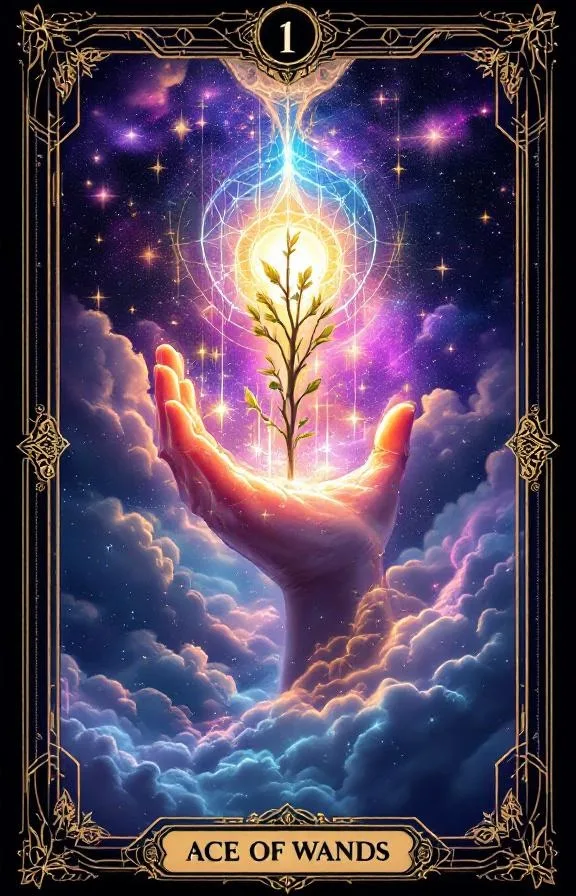
Wands are the suit of doing. Creative energy, ambition, drive, passion, the impulse that makes you start things before you have figured out how to finish them. In Jungian terms, Wands align with the Intuition function — the mode of consciousness that perceives possibilities and moves toward them before rational analysis has caught up.
A spread heavy with Wands is telling you the situation is about energy, initiative, and purpose. What fires you up. What burns you out. The difference between the two is smaller than you think.
The full arc of Wands moves from the Ace's raw creative spark through competition (Five), burnout (Ten), and the court cards' progressive mastery of will. When Wands appear, the question is always some version of: what do you want, and are you willing to do what it takes?
Cups — water, emotion, and connection
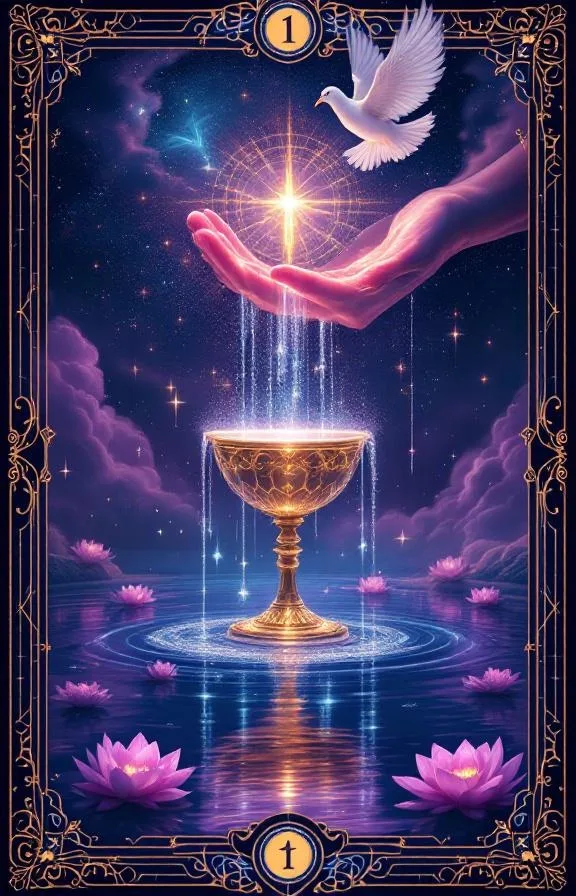
Cups are the suit of feeling. Emotions, relationships, intuition, the unconscious, the inner life that runs beneath everything you do on the surface. Cups map onto Jung's Feeling function — the mode that evaluates experience through values and relational meaning rather than logic.
The suit of Cups traces a full arc of emotional development: from the Ace's first stirring of unnamed feeling through grief (Five), nostalgia (Six), fantasy (Seven), departure (Eight), contentment (Nine), and the emotional mastery embodied in the King. If you have ever loved someone, lost someone, or sat in a room unable to feel anything at all, the Cups have a card for that exact moment.
A reading dominated by Cups says: this situation is fundamentally emotional. The way forward runs through feeling, not thinking, not doing, not managing material circumstances.
Swords — air, mind, and conflict
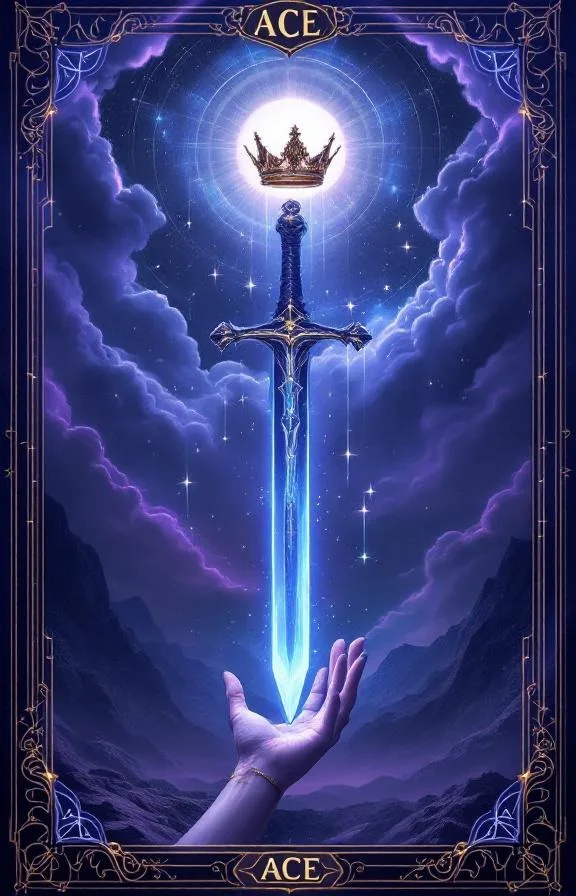
Swords are the suit of thinking — and of the pain that thinking produces. Mental clarity, truth, communication, conflict, analysis, the double-edged capacity of the human mind to both illuminate and wound. Swords correspond to Jung's Thinking function: the mode that evaluates experience through logic, categories, and objective criteria.
Swords are the suit most people dread drawing. Fair enough. The suit contains some of the deck's most painful images: the Three (heartbreak), the Nine (anxiety), the Ten (rock bottom). But this is honest, not cruel. The mind's capacity for suffering is real. Pretending otherwise helps no one.
The arc of Swords moves from the Ace's breakthrough clarity through conflict, loss, mental anguish, and the eventual hard-won peace of the court cards. When Swords dominate a reading, the situation demands honest thinking — even when (especially when) the truth hurts.
Pentacles — earth, material world, and body
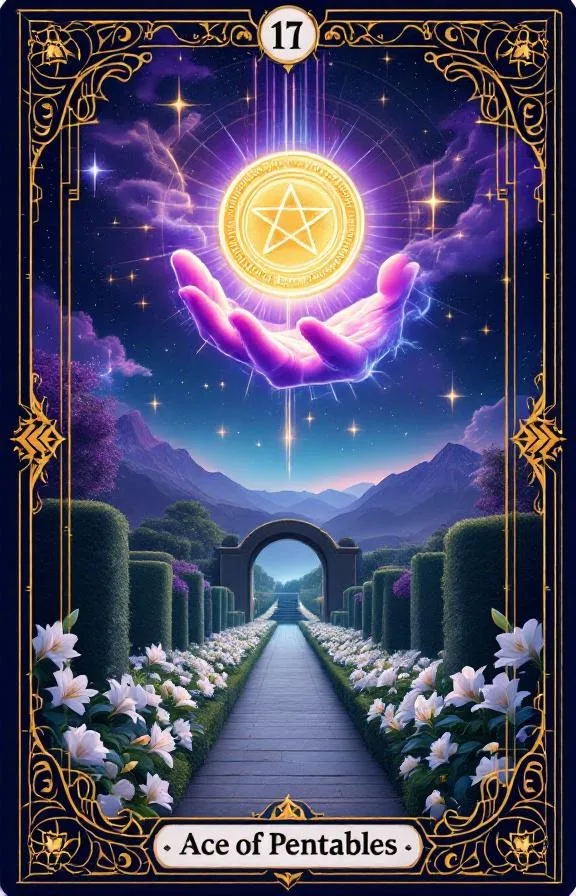
Pentacles are the suit of having and building. Money, health, work, home, physical reality, the tangible structures that support or constrain everything else. Pentacles map onto Jung's Sensation function — the mode that perceives the concrete, the measurable, the real.
Pentacles move slowly. Their arc from Ace to Ten traces the patient construction of something lasting: learning a skill (Three), building security (Four), experiencing material loss (Five), investing in growth (Seven), achieving mastery (Eight), and arriving at generational wealth or legacy (Ten). No drama. No lightning. Just the accumulation of effort over time.
When Pentacles fill a spread, the situation is about practical reality. Finances, career, health, the body, the physical conditions of your life. Ignore them and the rest of the deck loses its foundation.
Court cards: four stages of psychological maturity
The 16 court cards — Page, Knight, Queen, and King in each suit — are the minor arcana's most misunderstood members. Many readers default to "this represents a person in your life." Sometimes true. More often, the court cards represent stages of development or facets of your own psychology.
Page — the beginner
Fresh encounter. Curiosity without competence. The Page is the part of you that is meeting something for the first time — a new emotion (Page of Cups), a new idea (Page of Swords), a new project (Page of Wands), a new practical skill (Page of Pentacles). Enthusiasm is high. Mastery is distant. The Page asks: are you willing to be bad at something long enough to become good at it?
Knight — the pursuer
Intensity in motion. The Knight has moved past curiosity and into pursuit — passionate, single-minded, often reckless. Knights charge. The Knight of Cups rides toward love with the confidence of someone who has not yet learned that feeling and wisdom are different things. The Knight of Swords charges toward truth with an aggression that creates as many problems as it solves.
Knights represent the necessary stage of over-commitment. You have to care too much about something before you can learn to care about it wisely. The Knight's job is not balance. Balance comes later.
Queen — the holder
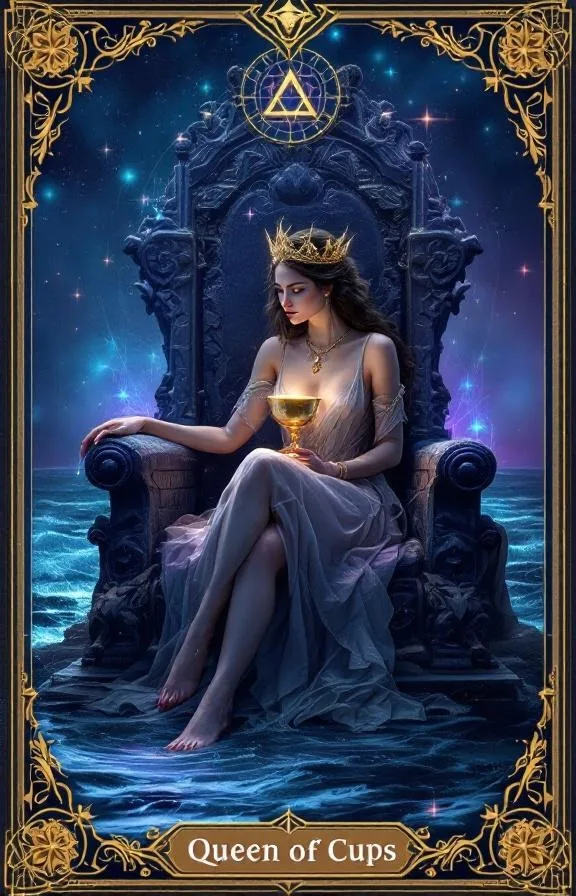
Depth and containment. The Queen has internalized her suit's energy so completely that she no longer needs to chase it — she generates it from within. The Queen of Cups holds emotional space without drowning. The Queen of Pentacles creates abundance through sustained care. The Queen of Wands radiates creative confidence. The Queen of Swords sees truth without flinching.
What distinguishes Queens from Knights is the shift from pursuit to presence. The Knight seeks. The Queen embodies.
King — the master
Integrated authority. The King has so thoroughly developed his suit's domain that he can direct its energy outward — leading, teaching, managing, creating conditions for others to develop. The King of Cups remains centered in emotional turbulence. The King of Pentacles builds lasting prosperity. The King of Wands inspires action. The King of Swords makes decisions with clarity and fairness.
But Kings carry a shadow. Authority can become rigidity. Mastery can become control. The King who stops growing becomes the tyrant of his own domain. Every King reversed is a warning about power that has lost its connection to the humanity that earned it.
Numbered cards: the arc from Ace to Ten
The numbers one through ten trace a consistent developmental pattern across all four suits. The specific content changes — loss in Cups looks different from loss in Swords — but the structural arc holds.
Ace — Pure potential. The seed. An offer of something new in the suit's domain: a new feeling, a new idea, a new opportunity, a new project. Aces do not guarantee anything. They present a possibility. What you do with it is your business.
Two — First encounter with duality. Choice, partnership, balance, the moment when the Ace's unity splits into a polarity that must be navigated. The Two of Cups is mutual connection. The Two of Swords is a decision you are refusing to make.
Three — Initial expression. The energy moves outward for the first time. Celebration (Cups), collaboration (Pentacles), heartbreak (Swords), vision (Wands). Threes are the first test of what the Ace started.
Four — Stability or stagnation. The structure solidifies. Sometimes this is healthy consolidation — the Four of Pentacles holding resources secure. Sometimes it is paralysis — the Four of Cups sitting under a tree unable to care about anything.
Five — Crisis. Loss. Conflict. Disruption of the Four's stability. Fives are the suit's most difficult cards because they represent the moment when what you built stops working. The Five of Cups is grief. The Five of Swords is the hollow aftermath of winning at someone else's expense. The Five of Pentacles is material hardship.
Six — Recovery and adjustment. After the Five's crisis, the Six restores flow — but differently than before. Nostalgia (Cups), generosity (Pentacles), departure from conflict (Swords), victory (Wands). Sixes are not returns to innocence. They are the first functional response to loss.
Seven — Inner challenge. The Seven confronts you with yourself: your fantasies (Cups), your patience (Pentacles), your deceptions (Swords), your resolve under pressure (Wands). These are cards about character — what you do when no one is making you do anything.
Eight — Movement and power. The energy accelerates. Departure (Cups), rapid change (Wands), restriction (Swords), craftsmanship (Pentacles). Eights demand action or response — the luxury of indecision has passed.
Nine — Near completion. Almost there. The Nine carries the suit's energy to its penultimate expression: contentment (Cups), anxiety (Swords), resilience (Wands), independence (Pentacles). Nines are intensely personal cards. Whatever the suit addresses, the Nine shows you facing it largely alone.
Ten — Completion and consequence. The arc concludes. Everything the suit promised, delivered in full — for better or worse. The Ten of Cups is emotional fulfillment. The Ten of Swords is total mental collapse. The Ten of Pentacles is generational legacy. The Ten of Wands is the crushing weight of carrying everything you took on.
Tens are endings, but not closures. They are the fullest expression of each suit's energy, which means they contain both the reward and the cost. The Ten of Cups includes the responsibility of sustaining what was built. The Ten of Swords contains the seed of release — because there is nowhere to go from rock bottom except up.
Minor arcana vs major arcana
The difference is not importance. It is scope.
Major arcana cards describe the turning points that restructure identity. Death, The Tower, The Wheel of Fortune — these are the earthquakes. The minor arcana is the weather. Daily, variable, sometimes dramatic but usually navigable with the resources you already have.
When a spread contains mostly minor arcana, the situation is within your existing capacity to handle. You have the skills, the emotional range, the mental framework to navigate it. The cards are telling you how, not telling you that your life is about to fundamentally change.
When a major arcana card appears among minor arcana, it marks the spot where the daily situation touches something deeper. Three Pentacles and a Death card is not a reading about your career. It is a reading about the death of your professional identity while your daily work continues around it.
The most useful readings contain both. Major arcana provides the archetypal context. Minor arcana provides the actionable detail. One without the other is like a map without street names, or street names without a map.
How to read minor arcana in a spread
Suit balance tells you the situation's nature. Before interpreting individual cards, notice which suits are present and which are absent. Three Swords and a Cup tells you the situation is primarily mental/communicative with one emotional element. No Pentacles at all? The reading is ignoring practical reality — or telling you that practical reality is not the point right now.
Numbers reveal where you are in the cycle. Low numbers (Aces through Threes) indicate beginnings. Middle numbers (Fours through Sixes) indicate development and crisis. High numbers (Sevens through Tens) indicate maturity, challenge, and culmination. A spread full of Aces is about potential. A spread full of Tens is about consequences.
Court cards require a decision: self or other? When a court card appears, ask whether it represents an aspect of yourself or another person in the situation. Context determines this more than any fixed rule. The Queen of Swords in an "advice" position is almost certainly describing a quality you need to develop. The same Queen in a "people around you" position may describe someone specific.
Pay attention to suit conflicts. Cups next to Swords creates tension between heart and mind. Wands next to Pentacles creates tension between vision and practical reality. These tensions are not problems to solve — they are the actual dynamics of the situation, laid out so you can see them clearly.
Reversed minor arcana points to blocked or internalized energy. The Three of Wands upright is expansion and forward planning. Reversed, it may indicate plans stalling, reluctance to move forward, or creative vision that remains internal rather than expressed. Reversals in the minor arcana tend to describe delays and blockages more often than they describe opposites.
Explore the full card library or try a free reading to see how the minor arcana speaks to your specific situation.
FAQ
How many cards are in the minor arcana?
Fifty-six. Four suits of fourteen cards each. Each suit contains ten numbered cards (Ace through Ten) and four court cards (Page, Knight, Queen, King). Combined with the 22 major arcana cards, this gives the standard tarot deck its total of 78 cards.
What is the difference between minor and major arcana?
Scope, not importance. The major arcana (22 cards) represents life's defining psychological turning points — identity shifts, spiritual crises, transformations that change who you are. The minor arcana (56 cards) represents the day-to-day situations, emotions, decisions, and circumstances within those larger patterns. You need both for a complete reading. A spread of only minor arcana gives you practical detail without archetypal context. A spread of only major arcana gives you the cosmic view without telling you what to do Monday morning.
Which minor arcana suit is the most powerful?
None. Each suit addresses a domain that the others cannot cover. Asking which suit is most powerful is like asking which is more important: your heart, your mind, your ambition, or your body. The answer depends entirely on what you are facing right now. A financial crisis makes Pentacles urgent. A breakup makes Cups central. An ethical dilemma makes Swords essential. The deck's design assumes you need all four.
Do court cards always represent people?
No. Court cards can represent actual people, aspects of your personality, developmental stages, or qualities that the situation calls for. The Knight of Wands in an "advice" position is probably not describing a specific person — it is telling you to act with the Knight's passionate initiative. Context determines interpretation more than any fixed rule, which is why rigid "court card = person" systems produce so many forced readings.
Can you read tarot using only the minor arcana?
You can, and it works well for practical, situation-specific questions: career decisions, relationship dynamics, daily guidance. Removing the major arcana focuses the reading on the manageable, the actionable, the human-scaled. You lose the capacity to detect larger archetypal patterns, but you gain specificity. Many professional readers use minor-arcana-only draws for quick daily pulls or practical consultations.
Curious which of the 56 minor arcana cards reflects what you are navigating right now? Start a free tarot reading — the suits have a way of showing you exactly what needs attention today.