Você tirou uma carta e ela saiu de cabeça para baixo. E agora? Se você já leu algum conteúdo de tarô na internet, provavelmente se deparou com a ideia de que uma carta invertida significa o oposto do seu significado normal. A Torre normal significa destruição; A Torre invertida significa... construção? Isso não pode estar certo. E não está.
Cartas de tarô invertidas são um dos aspectos mais mal compreendidos da leitura de tarô. O equívoco transforma um sistema simbólico cheio de nuances em um instrumento grosseiro: normal = bom, invertida = ruim. Esse binário não é só impreciso — ele impede ativamente que você obtenha informações úteis das suas leituras.
Aqui está o que as cartas invertidas realmente são, como lê-las de forma inteligente, e se você deve usá-las.
Em resumo: Uma carta de tarô invertida não é o oposto do seu significado normal. Ela sinaliza que a energia da carta está complicada: bloqueada, internalizada, excessiva ou apenas emergindo. Quatro abordagens práticas incluem ler inversões como energia atrasada, expressão interna versus externa, sombra junguiana ou intensidade reduzida. Iniciantes devem dominar os significados normais primeiro e depois introduzir as inversões gradualmente, começando pelos Arcanos Maiores.
O que uma inversão realmente é
Quando uma carta de tarô aparece de cabeça para baixo numa leitura, ela não é o oposto da carta. É a complicação da carta.
Pense assim: cada carta de tarô descreve uma energia, um tema ou um estado psicológico. Quando a carta está normal, essa energia flui na sua forma mais reconhecível. Quando invertida, essa mesma energia ainda está presente — mas algo na sua expressão está errado. Pode estar bloqueada, internalizada, excessiva, resistida, ou apenas começando a emergir.
A diferença entre "essa energia flui claramente" e "essa energia está presente mas complicada" não é a mesma que a diferença entre "bom" e "ruim". Algumas cartas são genuinamente difíceis normais (o Dez de Espadas é brutal de qualquer jeito), e algumas cartas são mais suaves invertidas (A Torre invertida frequentemente significa que o pior já passou). A inversão modifica a energia. Não nega. Modifica.
O conceito de enantiodromia de Carl Jung — a tendência das coisas de se tornarem o seu oposto quando levadas ao extremo — é útil aqui. Jung observou que expressões excessivas de qualquer força psicológica tendem a virar. Controle rígido demais se torna perda de controle. Abertura demais se torna falta de forma. Uma carta invertida frequentemente aponta para essa dinâmica: a energia da carta foi longe demais numa direção, ou não foi longe o suficiente, e o resultado é uma versão distorcida do que a carta normal representa.
Quatro abordagens para ler inversões
Não existe um método único "correto" para interpretar cartas invertidas. Diferentes leitores usam diferentes frameworks, e parte do desenvolvimento da sua própria prática é descobrir qual abordagem produz os insights mais úteis para você. Aqui estão quatro métodos legítimos.
1. Energia bloqueada ou atrasada
A abordagem mais simples. A energia da carta está presente, mas não consegue fluir livremente. Algo está no caminho — medo, circunstâncias externas, outra pessoa, sua própria resistência.
Exemplo: O Ás de Copas normal representa um novo começo emocional — amor fresco, abertura emocional, uma centelha criativa do coração. Invertido, essa energia está presente mas bloqueada. Você quer se abrir emocionalmente, mas algo está impedindo. Talvez você não esteja pronto. Talvez o timing esteja errado. Talvez uma dor passada tenha criado uma barreira que você ainda não enfrentou.
Essa abordagem funciona bem para perguntas práticas: O que está impedindo o progresso? O que está travado?
2. Expressão interna vs. externa
Cartas normais tendem a se manifestar externamente — em eventos, relacionamentos, mudanças visíveis. Cartas invertidas apontam a mesma energia para dentro. A experiência está acontecendo dentro de você, não no mundo ao seu redor.
Exemplo: O Louco normal pode significar um salto real para algo novo — uma mudança, um novo projeto, uma decisão espontânea. O Louco invertido sugere que a mesma energia de novos começos está se agitando, mas internamente. Você está se preparando mentalmente para começar algo, reimaginando sua vida, ou processando o desejo de liberdade sem ainda agir sobre ele.
Essa abordagem se baseia na distinção da psicologia profunda entre experiência interior e exterior. O que importa psicologicamente nem sempre aparece na superfície.
3. Expressão sombria
Esta é a abordagem junguiana, e tende a produzir as leituras psicologicamente mais ricas. Toda carta tem uma sombra — uma versão de sua energia que opera inconscientemente, defensivamente ou de forma autodestrutiva. A inversão aponta para essa sombra.
Exemplo: O Imperador normal representa estrutura, autoridade, limites protetores. O Imperador invertido, em sua expressão sombria, pode ser rigidez, autoritarismo, comportamento controlador ou a incapacidade de soltar o poder. A energia é a mesma — ainda é sobre autoridade e estrutura — mas foi distorcida por necessidades inconscientes.
Jung argumentava que aspectos da sombra não são maus; são simplesmente as partes de nós mesmos que ainda não integramos. Uma carta invertida lida pela lente da sombra não é uma condenação. É um convite para olhar como uma energia humana natural foi distorcida pelo medo, pelo hábito ou pela esquiva.
4. Espectro ou grau
A abordagem mais sutil. Em vez de ver normal e invertida como dois estados distintos, este método trata a carta como um espectro de totalmente expressa (normal) a minimamente expressa (invertida). A inversão indica intensidade reduzida ou estágio inicial.
Exemplo: O Dez de Ouros normal representa abundância material plena — legado, riqueza familiar, segurança de longo prazo. Invertido, pode sugerir abundância parcial, segurança financeira que ainda não chegou lá, ou um legado familiar que é complicado em vez de puramente sustentador. A energia é a mesma, apenas em volume mais baixo.
Iniciantes devem usar inversões?
Essa é uma das perguntas mais debatidas na comunidade de tarô, e há argumentos genuinamente bons dos dois lados.
O argumento para esperar
Carga cognitiva. Quando você está aprendendo setenta e oito significados de cartas, adicionar inversões efetivamente dobra sua tarefa. Dominar os significados normais primeiro dá uma base sólida.
Binário falso. Iniciantes que usam inversões tendem a cair na armadilha de "normal = bom, invertida = ruim", o que distorce cada leitura. Sem experiência suficiente para ler inversões com nuance, elas adicionam ruído em vez de sinal.
Muitos leitores profissionais as pulam. Alguns leitores experientes com décadas de prática optam por não usar inversões, achando que a posição no jogo e as cartas ao redor fornecem nuance suficiente.
O argumento para começar cedo
Inversões adicionam dimensionalidade desde o primeiro dia. Uma carta normal diz qual energia está presente. Uma carta invertida diz como essa energia está se expressando — ou falhando em se expressar.
Você aprende a tolerar a ambiguidade. O tarô é fundamentalmente uma prática de sentar com a complexidade. Inversões treinam esse músculo cedo.
Elas refletem a vida real. A maior parte do que vivenciamos está parcialmente bloqueada, focada internamente ou ainda não totalmente formada. Inversões tornam a leitura mais honesta.
Um caminho do meio
Considere isso: comece lendo só as normais pelo seu primeiro mês. Familiarize-se com as cartas, suas imagens, suas energias centrais. Depois introduza inversões gradualmente, começando pelos Arcanos Maiores. As vinte e duas cartas dos Arcanos Maiores têm a imagética simbólica mais clara, o que torna seus significados invertidos mais intuitivos. Quando você se sentir fluente com os Arcanos Maiores invertidos, estenda para os Arcanos Menores naipe por naipe.
Exemplos específicos com cartas conhecidas
Teoria é útil, mas exemplos são melhores. Aqui estão três cartas com as quais as pessoas frequentemente têm dificuldade em inversão, com leituras que vão além de "o oposto".
A Torre invertida
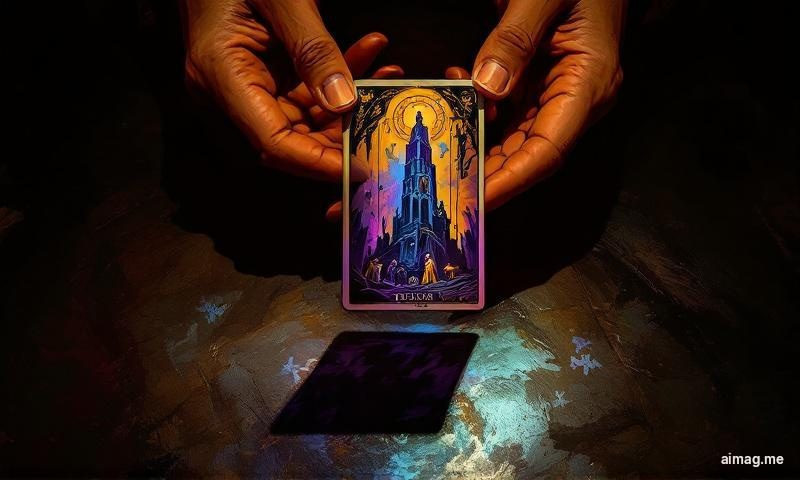
A Torre normal é uma das cartas mais temidas do baralho. Ela retrata uma torre atingida por raios, figuras caindo, chamas explodindo. Normal, significa destruição repentina e inevitável de algo que você construiu — um relacionamento, um sistema de crenças, uma identidade, um plano. Não é gentil.
Invertida, A Torre não significa "sem destruição". Frequentemente significa uma dessas coisas:
- A crise foi evitada ou adiada — você viu o raio chegando e mudou de curso a tempo. A estrutura ainda está de pé, mas danificada. Você sabe que precisa cair eventualmente.
- Turbulência interna — a destruição está acontecendo dentro de você. Sua vida externa parece bem, mas internamente, suas crenças estão desmoronando, seus pressupostos estão colapsando. Ninguém mais pode ver ainda.
- Resistência à mudança necessária — você está se agarrando a uma estrutura que precisa cair. O raio já bateu, mas você está tentando reconstruir sobre uma fundação rachada em vez de começar de novo.
- As sequelas — a torre já caiu. Você está entre os escombros, começando a olhar ao redor. O pior já passou.
Nenhuma dessas é o "oposto" de A Torre. São todas variações do mesmo tema — ruptura, destruição, mudança forçada — expressos de formas diferentes.
A Morte invertida
A Morte normal representa transformação através do fim. Algo precisa morrer para que algo novo nasça. Normal, esse processo está acontecendo com ou sem sua cooperação.
Invertida, A Morte frequentemente significa algo mais sutil:
- Resistindo a um fim necessário — você sabe que algo precisa terminar, mas não consegue soltar. Um relacionamento que esgotou seu curso, um emprego que não serve mais, uma versão de si mesmo que você já superou. A transformação está sendo adiada pelo seu aperto.
- Transformação lenta — a mudança está acontecendo, mas gradualmente em vez de dramaticamente. Isso pode ser genuinamente mais suave do que A Morte normal, que tende a ser súbita.
- Medo da mudança paralisando você — a energia de A Morte está presente (você sente que a mudança é necessária), mas o medo te congelou. Você está vivendo numa espécie de limbo, nem no antigo nem no novo.
Um modelo bem conhecido de transições distingue entre mudança (o evento externo) e transição (o processo psicológico interno de soltar, existir na zona neutra e fazer um novo começo). A Morte invertida frequentemente aponta para alguém preso nessa "zona neutra" — o antigo terminou psicologicamente, mas o novo ainda não começou.

O Louco invertido
O Louco normal é espontaneidade pura, novos começos, dar um passo no desconhecido com confiança. É a carta número zero — antes da experiência, antes da cautela, antes do peso de saber o que pode dar errado.
Invertido, O Louco frequentemente significa:
- Imprudência em vez de espontaneidade — você está correndo um risco calculado, ou ignorando perigos reais porque pensar neles é desconfortável? O Louco invertido sugere que você pode estar cruzando essa linha tênue.
- Hesitação na beira do precipício — você está de pé na beira do abismo, mas não vai dar o passo. O desejo de algo novo está lá, mas o medo também.
- Segundas chances — às vezes O Louco invertido significa que você já esteve aqui antes. A questão é se você aprendeu algo da última tentativa ou está repetindo o mesmo padrão.
A psicologia da resistência a cartas "negativas"
Há uma razão pela qual as pessoas ficam ansiosas com cartas invertidas, e vale a pena examinar essa ansiedade diretamente porque ela revela algo importante sobre como usamos o tarô.
A pesquisa de Daniel Kahneman sobre aversão à perda — documentada extensivamente em Rápido e Devagar (2011) — demonstra que os seres humanos sentem as perdas aproximadamente duas vezes mais intensamente do que ganhos equivalentes. Uma carta invertida parece uma perda: algo era bom, e agora foi diminuído ou complicado. Mas esse sentimento é um viés cognitivo, não uma leitura da realidade.
Um Três de Espadas invertido (desgosto, luto, verdade dolorosa) pode ser uma carta bem-vinda — pode significar que o desgosto está diminuindo, o luto está sendo processado, a verdade dolorosa está sendo aceita em vez de ser fresca. O sentimento de "invertida = pior" é sua aversão à perda falando, não a carta.
A prática de ler inversões bem é, em parte, uma prática de notar seus próprios vieses. Quando uma carta invertida te deixa ansioso, pergunte: Estou respondendo ao que a carta realmente sugere, ou à minha suposição automática de que complicado equivale a ruim?
Como obter inversões fisicamente nas suas leituras
Se você decidir usar inversões, elas precisam aparecer naturalmente. Dois métodos: divida o baralho após embaralhar, gire uma metade 180 graus, remonte e embaralhe novamente. Ou espalhe todas as cartas com a face para baixo numa mesa, misture-as com as duas mãos, depois junte-as de volta. Ambos produzem orientações aleatórias sem arranjo deliberado.
Para uma base completa na estruturação das suas leituras — com ou sem inversões — veja nosso guia para ler cartas de tarô.
Quando pular as inversões completamente
Inversões são uma ferramenta, não uma regra. Pule-as quando:
- Você está emocionalmente sobrecarregado. Se você está lendo sobre um tema doloroso e já está lutando com os significados normais, adicionar inversões aumenta a complexidade no momento exatamente errado.
- O jogo já é matizado. Um jogo detalhado como a Cruz Celta tem dez posições, cada uma com seu próprio significado contextual. Alguns leitores acham que a nuance posicional torna as inversões redundantes.
- Sua intuição diz não. Se uma carta sai invertida e seu instinto diz para lê-la normalmente, ouça. O tarô é, em última análise, uma ferramenta para acessar sua própria sabedoria. Se a ferramenta está atrapalhando, coloque essa parte de lado.
Guias individuais de cartas invertidas
Cada carta dos arcanos maiores tem seu próprio aprofundamento invertido — cobrindo amor, carreira, crescimento pessoal e conselhos práticos para trabalhar com essa energia específica:
- O Louco Invertido — paralisia, imprudência, medo de começar
- O Mago Invertido — manipulação, potencial desperdiçado, síndrome do impostor
- A Sacerdotisa Invertida — ignorar a intuição, segredos, pensamento superficial
- A Imperatriz Invertida — sufocamento, bloqueio criativo, codependência
- O Imperador Invertido — tirania, rigidez, abdicação
- O Hierofante Invertido — conformidade cega, dogma, rebelião espiritual
- Os Amantes Invertidos — valores desalinhados, esquiva, desarmonia
- O Carro Invertido — agressão, perda de direção, forçar resultados
- A Força Invertida — autodesconfiança, força bruta, fadiga da compaixão
- O Eremita Invertido — isolamento, solidão disfarçada de independência
- A Roda da Fortuna Invertida — mentalidade de má sorte, resistindo à mudança
- A Justiça Invertida — injustiça, desonestidade, evitando responsabilidade
- O Enforcado Invertido — procrastinação, martírio sem propósito
- A Morte Invertida — resistindo à transformação, estagnação
- A Temperança Invertida — excesso, desequilíbrio, pensamento tudo ou nada
- O Diabo Invertido — se libertando, soltando padrões tóxicos
- A Torre Invertida — evitando a destruição necessária, reconstrução silenciosa
- A Estrela Invertida — perda de fé, seca criativa
- A Lua Invertida — clareza emergindo, verdade revelada
- O Sol Invertido — alegria diminuída, otimismo forçado
- O Julgamento Invertido — ignorando o chamado interior, autodesconfiança
- O Mundo Invertido — ciclos incompletos, conclusão atrasada
Para a jornada completa pelas 22 cartas dos arcanos maiores, veja o guia completo dos arcanos maiores.
Mergulhos profundos nas inversões dos arcanos menores
Cada carta dos arcanos menores também tem seu próprio guia invertido — organizado por naipe:
Paus invertidos
- Ás de Paus Invertido — inspiração bloqueada, estagnação criativa
- Dois de Paus Invertido — paralisia no planejamento, medo do comprometimento
- Três de Paus Invertido — atrasos frustrantes, visão limitada
- Quatro de Paus Invertido — fundações instáveis, celebrações canceladas
- Cinco de Paus Invertido — esquiva de conflito, competição suprimida
- Seis de Paus Invertido — fracasso público, deflação do ego
- Sete de Paus Invertido — ceder terreno, perder confiança
- Oito de Paus Invertido — atrasos, energia dispersa
- Nove de Paus Invertido — defensividade crônica, esgotamento
- Dez de Paus Invertido — soltando fardos, colapso por excesso de trabalho
- Pajem de Paus Invertido — falta de direção, projetos abandonados
- Cavaleiro de Paus Invertido — imprudência, problemas de raiva
- Rainha de Paus Invertida — ciúme, autodesconfiança mascarada de confiança
- Rei de Paus Invertido — liderança tirânica, impulsividade
Copas invertidas
- Ás de Copas Invertido — bloqueio emocional, amor retido
- Dois de Copas Invertido — conexões rompidas, parcerias desequilibradas
- Três de Copas Invertido — exclusão social, amizades falsas
- Quatro de Copas Invertido — emergindo da apatia, nova consciência
- Cinco de Copas Invertido — aceitação, começo do perdão
- Seis de Copas Invertido — preso no passado, armadilha da nostalgia
- Sete de Copas Invertido — cortando a ilusão, ação decisiva
- Oito de Copas Invertido — medo de partir, derivando sem rumo
- Nove de Copas Invertido — arrogância, desejos que decepcionam
- Dez de Copas Invertido — disfunção familiar, ideais destruídos
- Pajem de Copas Invertido — imaturidade emocional, bloqueios criativos
- Cavaleiro de Copas Invertido — romance irreal, promessas quebradas
- Rainha de Copas Invertida — manipulação emocional, codependência
- Rei de Copas Invertido — volatilidade emocional, frieza
Espadas invertidas
- Ás de Espadas Invertido — confusão, julgamento obscurecido
- Dois de Espadas Invertido — sobrecarga de informação, decisão forçada
- Três de Espadas Invertido — recuperação de desgosto, soltando a dor
- Quatro de Espadas Invertido — inquietação, recusando o descanso
- Cinco de Espadas Invertido — sequelas de conflito, reconciliação
- Seis de Espadas Invertido — resistência à mudança, assuntos inacabados
- Sete de Espadas Invertido — sendo pego, assumindo a verdade
- Oito de Espadas Invertido — autolibertação, nova perspectiva
- Nove de Espadas Invertido — ansiedade se dissolvendo, esperança voltando
- Dez de Espadas Invertido — recuperação começa, resiliência
- Pajem de Espadas Invertido — fofoca, conclusões precipitadas
- Cavaleiro de Espadas Invertido — agressão sem propósito, erros táticos
- Rainha de Espadas Invertida — distanciamento frio, amargura
- Rei de Espadas Invertido — tirania intelectual, manipulação
Ouros invertidos
- Ás de Ouros Invertido — oportunidade perdida, planejamento ruim
- Dois de Ouros Invertido — sobrecarga, prioridades desequilibradas
- Três de Ouros Invertido — mau trabalho em equipe, objetivos desalinhados
- Quatro de Ouros Invertido — soltando o controle, imprudência financeira
- Cinco de Ouros Invertido — recuperação da perda, encontrando ajuda
- Seis de Ouros Invertido — doação com condições, exploração
- Sete de Ouros Invertido — impaciência, esforço desperdiçado
- Oito de Ouros Invertido — perfeccionismo, trabalho sem inspiração
- Nove de Ouros Invertido — vivendo além dos meios, excesso de trabalho por status
- Dez de Ouros Invertido — disputas financeiras familiares, legado instável
- Pajem de Ouros Invertido — procrastinação, potencial desperdiçado
- Cavaleiro de Ouros Invertido — teimosia, paralisia por perfeccionismo
- Rainha de Ouros Invertida — autoneglecto, desequilíbrio vida-trabalho
- Rei de Ouros Invertido — ganância, vício em trabalho, corrupção
Perguntas frequentes
Cartas invertidas sempre significam algo negativo?
Não. Uma carta invertida significa que a energia daquela carta está complicada, não que seja ruim. Algumas cartas normais descrevem situações difíceis (Dez de Espadas, Cinco de Ouros, A Torre), e suas inversões podem indicar melhora — o pior está passando, a dor está aliviando, o colapso está sendo reconstruído. Sempre leia a inversão em contexto em vez de assumir que adiciona negatividade.
E se eu não quiser usar inversões?
Essa é uma escolha completamente legítima. Muitos leitores experientes e profissionais trabalham exclusivamente com cartas normais e produzem leituras profundas e matizadas. As posições num jogo fornecem contexto suficiente para que as inversões sejam genuinamente opcionais. Confie na sua preferência.
Como sei qual abordagem de inversão usar?
Experimente. Tente a abordagem de energia bloqueada por uma semana, depois a abordagem da sombra, depois a do espectro. A maioria dos leitores eventualmente desenvolve um senso intuitivo de qual abordagem se encaixa em cada carta específica em cada leitura específica, em vez de aplicar um método universalmente.
Uma carta invertida pode ser mais positiva do que a versão normal?
Sim. O Cinco de Espadas normal representa conflito ou vencer às custas de outra pessoa. Invertido, pode significar que o conflito está se resolvendo ou que a reconciliação está se tornando possível. O Diabo normal representa apego a padrões limitantes. Invertido, frequentemente significa que você está começando a se libertar. O contexto sempre determina o significado.